News Summary
- Aleix Espargaró will become the 32nd different rider to participate in MotoGP during the 2026 season
- Only three seasons in the MotoGP era have featured more riders: 2004, 2007 and the record-setting 2015 campaign
- Injuries, replacement riders and wildcards have driven the unusually high turnover — and there are still several rounds remaining
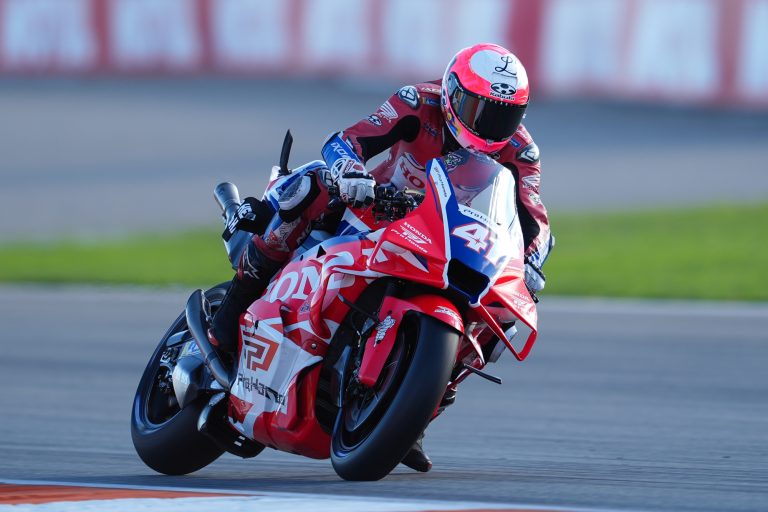
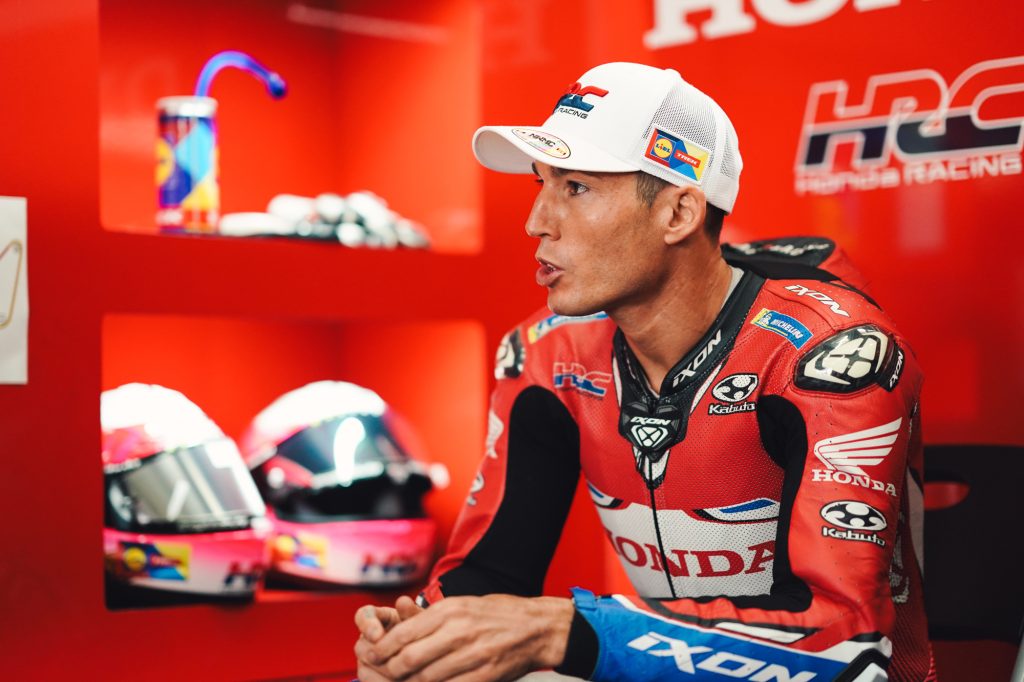
Aleix Espargaró’s unexpected return at the Indonesian GP will add another name to an increasingly remarkable statistic. When the Honda development rider takes part at Mandalika, he will become the 32nd different rider to appear in MotoGP during the 2026 season.
That is 10 more riders than the championship’s 22 permanent competitors.
And while 32 is not yet a MotoGP record, GRANDE PRÊMIO‘s review of every season since the MotoGP era began in 2002 shows that 2026 has already joined a very small group. Only three seasons have featured more riders.
The record belongs to 2015, when 35 different riders competed during the season. The 2004 championship had 34, while 2007 featured 33.
With several rounds of the 2026 championship still remaining, the record is therefore not out of reach.
Who are the 10 extra MotoGP riders in 2026?
MotoGP started the season with its regular 22-rider grid, but injuries have repeatedly forced teams to search for replacements. Espargaró becomes the tenth additional rider used during the campaign.
The group is:
| Rider | Role in 2026 |
|---|---|
| Somkiat Chantra | Substitute |
| Cal Crutchlow | Substitute |
| Augusto Fernández | Wildcard |
| Jonas Folger | Substitute |
| Iker Lecuona | Substitute |
| Takaaki Nakagami | Wildcard |
| Michele Pirro | Substitute/wildcard |
| Pol Espargaró | Substitute |
| Lorenzo Savadori | Substitute/wildcard |
| Aleix Espargaró | Substitute |
That takes the total to 32 different riders.
The official MotoGP rider database currently contains another notable name among its substitutes: Nicolò Bulega. However, the Ducati WorldSBK rider has worked as a MotoGP test rider in 2026 without making a Grand Prix appearance, so he is not included in the total.
The distinction matters. The count used by GRANDE PRÊMIO includes riders who have actually participated in a MotoGP race weekend during the season rather than everybody registered by the championship as a possible substitute, test rider or wildcard.
Injuries have transformed the 2026 MotoGP grid
The extraordinary number is largely a consequence of injuries.
Maverick Viñales’ prolonged recovery led KTM to use both Folger and Pol Espargaró. Álex Márquez’s absence brought Pirro and Lecuona into the Gresini garage, while Ai Ogura’s hand injury resulted in Savadori returning with Trackhouse. Honda has faced its own complicated sequence of substitutions.
Zarco’s absence brought Crutchlow back to LCR, while Mir’s current health problems have required multiple solutions. Honda called Somkiat Chantra back to MotoGP for the Japanese GP, but the Thai rider cannot continue at Mandalika because of his WorldSBK commitments.
Nakagami was another possible solution before suffering a collarbone fracture at Motegi.
That has now produced Aleix Espargaró’s unexpected MotoGP return with Honda in Indonesia.
The 37-year-old has not contested a MotoGP weekend since Valencia in 2025 and has himself spent much of 2026 recovering from four fractured vertebrae suffered during a testing accident at Sepang.

Where 2026 ranks among every MotoGP season
A review of the championship standings from every season since the MotoGP name replaced the 500cc category in 2002 illustrates just how unusual 2026 has become.
| Season | Different riders |
|---|---|
| 2002 | 31 |
| 2003 | 30 |
| 2004 | 34 |
| 2005 | 32 |
| 2006 | 25 |
| 2007 | 33 |
| 2008 | 23 |
| 2009 | 22 |
| 2010 | 22 |
| 2011 | 23 |
| 2012 | 32 |
| 2013 | 32 |
| 2014 | 28 |
| 2015 | 35 |
| 2016 | 29 |
| 2017 | 31 |
| 2018 | 32 |
| 2019 | 27 |
| 2020 | 27 |
| 2021 | 30 |
| 2022 | 32 |
| 2023 | 32 |
| 2024 | 29 |
| 2025 | 29 |
| 2026* | 32 |
*2026 total including Aleix Espargaró’s confirmed participation at the Indonesian GP.
That leaves 2026 tied with 2005, 2012, 2013, 2018, 2022 and 2023 on 32 riders. Only 2007, with 33, 2004, with 34, and 2015’s record of 35 stand above it.
In other words, 2026 already has the joint-fourth-highest number of different riders of any season in MotoGP history. And unlike every other season in the table, its number is not final.
Could 2026 break MotoGP’s record?
Yes — although it would require considerable further turnover.
One more new rider would take 2026 to 33, matching 2007. Two would produce 34, equalling 2004.
Three additional riders would take the championship to 35 and match 2015, while four would establish a new MotoGP-era record of 36.
That may appear unlikely, but the composition of the 2026 substitute list shows why it cannot yet be dismissed.
Bulega, for example, is already registered by MotoGP as a substitute and works within Ducati’s test programme. Any circumstances that led to him entering a Grand Prix would immediately raise the season total to 33. And there are still several rounds remaining after Indonesia.
2015 remains the benchmark with 35 riders
The 2015 season remains the most extreme example of MotoGP grid turnover.
Its 35 riders included a large permanent field alongside numerous substitutes and wildcards. Names outside the regular championship line-up included Michele Pirro, Katsuyuki Nakasuga, Hiroshi Aoyama, Takumi Takahashi, Toni Elías, Alex de Angelis, Claudio Corti, Kousuke Akiyoshi, Anthony West, Michael Laverty, Damian Cudlin and Broc Parkes.
That combination pushed the season to a total that has not been matched in the decade since.
The modern championship has generally operated below that level. The last two completed seasons had only 29 different riders each, meaning 2026 has already used three more riders than the entirety of either 2024 or 2025.
It has also matched the totals recorded in the injury-heavy 2022 and 2023 seasons.
2026 is also the final season with MotoGP wildcards
There is another reason the 2026 number carries historical significance. MotoGP has decided to eliminate wildcards completely from 2027.
That means this is the final season in which manufacturers can enter an additional test rider independently for selected Grands Prix. Yamaha has used that opportunity with Augusto Fernández in 2026, while test and development riders have traditionally provided several additional names each year.
The rule change does not eliminate replacement riders. Teams will still need substitutes when permanent competitors are injured or unavailable.
But removing wildcards reduces one of the mechanisms that has historically pushed the annual number of MotoGP participants beyond the size of the permanent grid.
That makes 2026’s rapidly expanding list particularly notable: it could become one of the last MotoGP seasons for some time to approach the historical record.
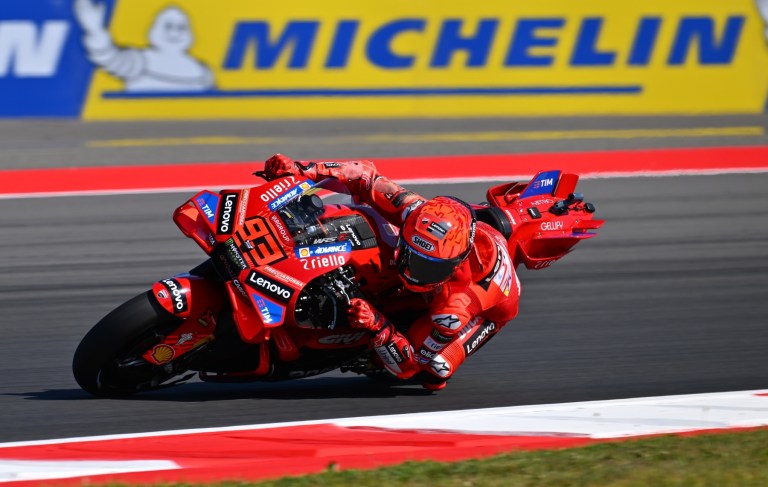
And his return comes during a particularly important weekend for the championship itself. Marc Márquez arrives at Mandalika only two points behind Jorge Martín, at a circuit where the Ducati rider has never finished a MotoGP Grand Prix.
GRANDE PRÊMIO provides full coverage of the MotoGP season.
MotoGP today: FAQ
Who won the Japanese MotoGP race today?
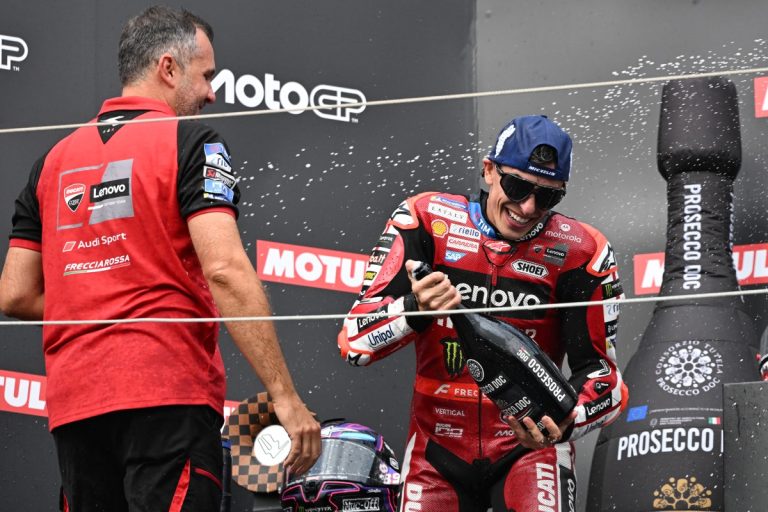
Marc Márquez won the 2026 Japanese Grand Prix at Motegi, finishing 1.363s ahead of Jorge Martín. Marco Bezzecchi completed the podium, while Márquez secured a weekend double after also winning Saturday’s Sprint.
Who leads the MotoGP championship after the Japanese GP?
Jorge Martín remains the MotoGP championship leader with 333 points, just 2 ahead of Marc Márquez on 331. Márquez’s two victories in Japan reduced the gap from 12 points at the start of the weekend.
When is the next MotoGP race?
The next MotoGP race is the Indonesian Grand Prix at Mandalika on Sunday, 11 October 2026. The weekend runs from 9–11 October.
How many different riders have competed in MotoGP in 2026?
Aleix Espargaró will become the 32nd different rider to participate in MotoGP in 2026 when he replaces Joan Mir at the Indonesian GP. The season began with 22 permanent riders, with injuries, substitutions and wildcards adding 10 more names.