News Summary
- Former Russian Grand Prix promoter Rosgonki is seeking the return of approximately $24 million paid in advance for the cancelled 2022 event.
- Formula 1 has filed a counterclaim for a substantially larger, undisclosed amount involving contractual fees.
- A London court has partially supported F1’s request for security for legal costs, but the underlying financial dispute remains unresolved.
Formula 1 is pursuing a financial claim substantially larger than the $24 million sought by the former Russian Grand Prix promoter, according to a newly published ruling from London’s High Court. The dispute concerns the cancellation of the 2022 race following Russia’s invasion of Ukraine and the subsequent termination of the country’s Formula 1 hosting agreement.
The judgment, issued on November 9 by the Commercial Court of England and Wales, reveals that Rosgonki ANO is seeking repayment of approximately $24 million it had paid in advance towards the 2022 Russian Grand Prix.
Formula One World Championship Limited, the championship’s commercial rights holder, disputes the promoter’s entitlement to recover that money and has brought a counterclaim involving additional contractual payments.
The court describes Formula 1’s counterclaim as considerably larger than Rosgonki’s demand, although its precise value has not been publicly disclosed.
The ruling does not determine which party is entitled to the disputed money. Instead, it addresses whether Rosgonki must provide financial security for certain legal costs incurred by Formula 1.
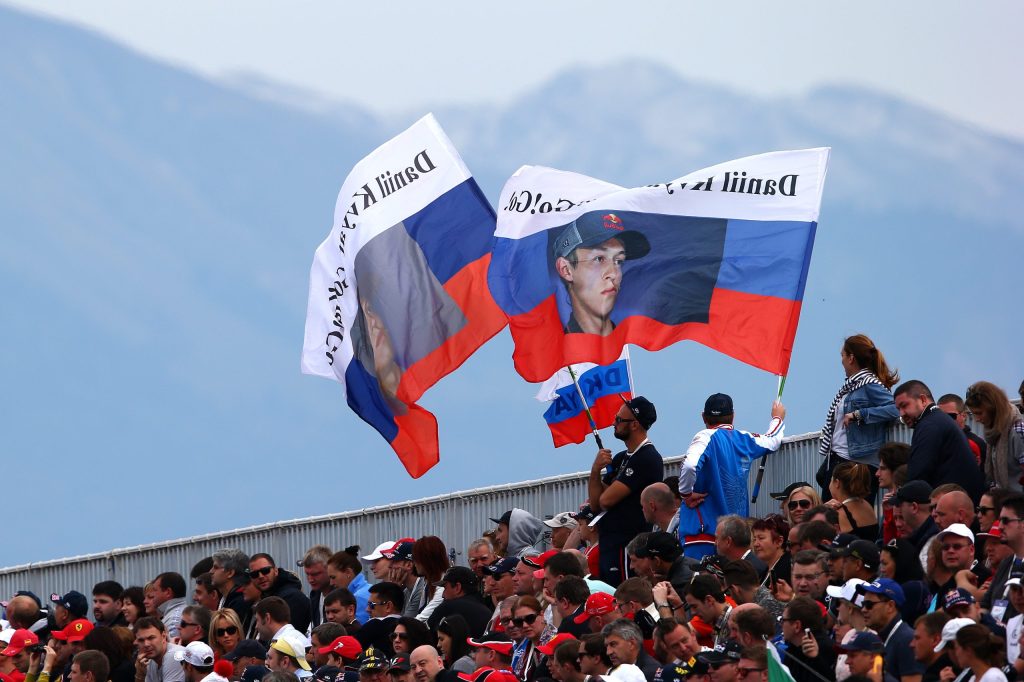
Why the Russian Grand Prix promoter is demanding $24 million
The Russian Grand Prix was removed from the Formula 1 calendar in 2022 following Russia’s military invasion of Ukraine.
The championship initially cancelled that year’s event before terminating the agreement to hold future races in the country.
Rosgonki, which organised the Russian Grand Prix, had already paid approximately $24 million towards the 2022 event fee.
The company argues that the cancellation created an obligation for Formula 1 to return the advance payment.
According to the High Court ruling, Formula 1’s initial force majeure notice gave rise, in principle, to a repayment entitlement.
However, the championship subsequently terminated the race promotion agreement and now argues that the termination affected Rosgonki’s right to recover the money.
The contractual interpretation is central to the litigation.
Formula 1 also maintains that it is entitled to claim outstanding event fees under the agreement.
Those competing positions explain why a dispute that began with a $24 million refund demand has developed into a substantially larger commercial case.
F1 files counterclaim exceeding Russian promoter’s demand
One of the most significant disclosures in the judgment concerns the scale of Formula 1’s counterclaim.
The championship is not merely defending itself against Rosgonki’s attempt to recover the advance payment.
It is also seeking additional money under the terminated race promotion contract.
The court establishes that the counterclaim is much larger than the promoter’s original demand, but the published decision does not provide an exact figure.
That distinction matters because the litigation could potentially expose Rosgonki to a financial liability exceeding the amount it originally sought to recover.
However, Formula 1’s counterclaim remains contested. The court has not ruled that the promoter owes the championship the money being claimed.
The dispute also raises a broader question about the financial consequences of terminating international sporting agreements following geopolitical events.
Formula 1’s decision to end its Russian Grand Prix contract was made in the context of the war in Ukraine, but the commercial consequences are now being examined under English contract law.
UK court considers sanctions and difficulties recovering legal costs
The latest ruling concerns an application by Formula 1 requiring Rosgonki to provide security for legal costs.
Such an order is designed to protect a defendant against the risk that it will be unable to recover certain expenses if it successfully defends a claim.
Formula 1 argued that Rosgonki’s position as a Russian organisation created difficulties in enforcing any eventual order for costs.
The court accepted that there was a significant risk of enforcement difficulties in Russia and that no assets outside the country had been identified against which recovery could readily be pursued.
However, the judge did not accept that Rosgonki had been shown to lack the financial resources necessary to meet a potential costs order.
The evidence indicated that the organisation remained an operating business, despite the substantial reduction in its activities following the loss of the Russian Grand Prix.
The judgment also addresses legal arguments involving international sanctions and public policy.
Formula 1 has raised those issues as part of its defence to Rosgonki’s repayment claim.
They concern the legal restrictions potentially affecting payments connected to Russia and the circumstances surrounding the termination of the contract.
The court has not resolved those substantive sanctions arguments in the latest decision.
Formula 1 wins partial ruling, but amount remains undecided
The Commercial Court concluded that Formula 1 was entitled, in principle, to security for legal expenses associated with specific issues involving sanctions and public policy.
However, the ruling did not grant security for every expense connected to the case.
The judge distinguished between costs arising from Rosgonki’s claim and those associated with Formula 1’s much larger counterclaim.
That distinction is important because an order requiring Rosgonki to secure all the championship’s expenses could effectively force the Russian promoter to finance Formula 1’s pursuit of its own claim.
The court therefore limited the security requirement to particular issues that would generate additional legal work beyond the contractual counterclaim.
The amount of security and the timetable for providing it remain subject to further consideration.
Consequently, the decision represents a partial procedural success for Formula 1 rather than a determination that its contractual position is correct.
Russian GP dispute continues four years after cancellation
The litigation illustrates how the financial consequences of the Russian Grand Prix’s cancellation continue to affect Formula 1 years after the race disappeared from the calendar.
Russia hosted its first Formula 1 Grand Prix in Sochi in 2014 and remained part of the championship until 2021.
The event had been scheduled to move to Igora Drive, near St Petersburg, before Formula 1 ended its agreement with the Russian promoter.
The commercial dispute now centres on whether Rosgonki is entitled to recover its advance payment and whether Formula 1 can enforce the additional contractual fees it claims.
Both questions remain unresolved.
The newly published judgment provides an unusual insight into the scale of the disagreement, revealing that Formula 1’s financial demands extend considerably beyond the original $24 million refund claim.
For now, the High Court has addressed only part of the procedural dispute over legal costs. The central question of who owes money under the cancelled Russian Grand Prix agreement remains for the continuing proceedings.
GRANDE PRÊMIO is following developments involving the championship’s commercial agreements and every session of the 2026 Formula 1 season.