News Summary
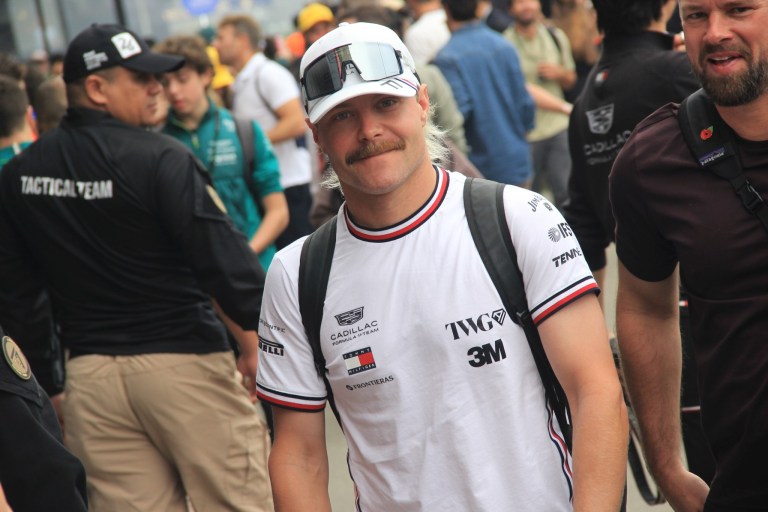
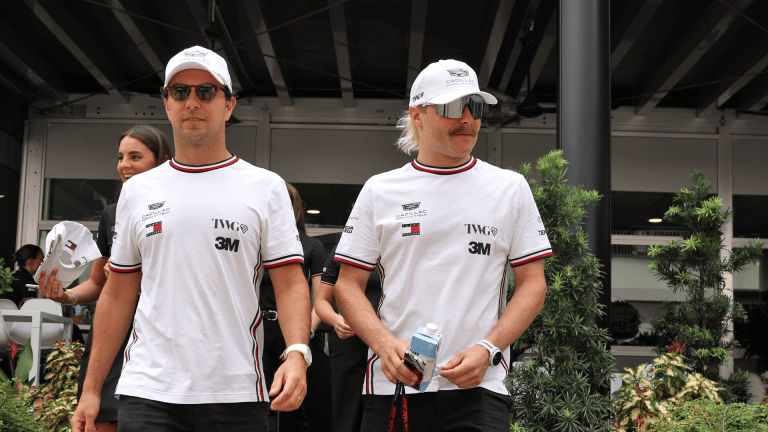
- Cadillac has retained Valtteri Bottas for 2027, despite a difficult debut Formula 1 season and Sergio Pérez’s stronger performances.
- Colton Herta finally secured his FIA superlicence, but his disappointing Formula 2 campaign and extensive FP1 programme have not earned him a race seat.
- The decision raises questions about Cadillac’s ambition, its assessment of available talent and what remains of Herta’s Formula 1 prospects.
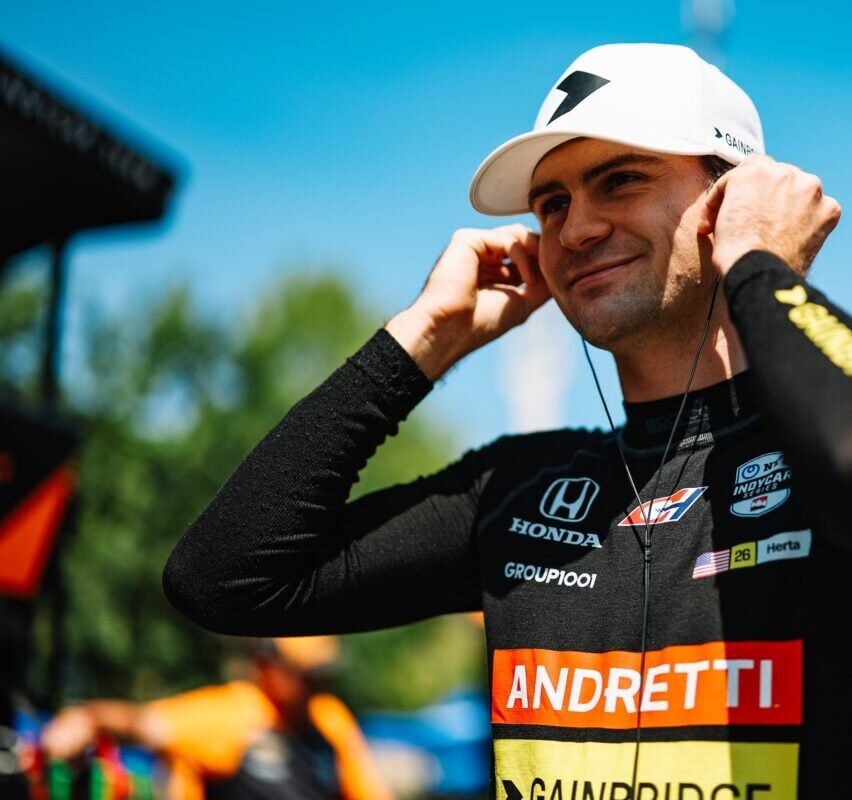
Colton Herta was once much more than Bryan Herta’s son. At just 18 years old, he became the youngest race winner in IndyCar history with a remarkable victory at the Circuit of the Americas in March 2019, driving for the modest Harding Steinbrenner operation. Suddenly, American motorsport appeared to have found a homegrown talent capable of taking the next step towards Formula 1 — or, at the very least, challenging Josef Newgarden for supremacy in IndyCar.
Seven years later, Cadillac has decided that keeping Valtteri Bottas is a better option than giving Herta his Formula 1 debut. That says something about the Finn, certainly. But it says considerably more about Cadillac and, most painfully, about how little Herta has managed to become.
From America’s brightest IndyCar prospect to an unfulfilled promise
Harding Steinbrenner was effectively an extension of Andretti’s IndyCar operation. After Herta finished seventh in the 2019 championship, his entry was absorbed into Michael Andretti’s team for 2020. The result was immediate: third in the standings and another victory. Andretti had found a young American worth building around.
What followed was supposed to establish Herta among IndyCar’s elite. Instead, it became an increasingly frustrating exercise in unfulfilled potential.
Over five seasons as a fully established Andretti driver, Herta produced nine career victories but only one genuine championship challenge, in 2023. His most enduring highlight may well be the extraordinary save he made on the Indianapolis road course rather than any of his trips to the top step of the podium.
Herta was supposed to be Andretti’s answer to Álex Palou at Ganassi, Newgarden at Penske and Pato O’Ward at McLaren. While those drivers increasingly became the defining figures of their respective organisations, Herta never quite established the same authority.
Palou took over the spotlight that had belonged to Scott Dixon at Ganassi. Newgarden remained synonymous with Penske’s most important achievements. O’Ward gave McLaren an unmistakable competitive identity. Herta, meanwhile, remained a promise that never quite became reality.
And when Andretti’s own influence over the team diminished, Herta was increasingly being outperformed by Kyle Kirkwood.
That was the context in which Dan Towriss, now a central figure in both the Andretti IndyCar operation and Cadillac’s new Formula 1 project, decided that the American deserved another opportunity.
Or perhaps another kind of limbo.
The plan was ambitious: remove Herta from IndyCar, send him to Formula 2 and prepare him for a possible Cadillac Formula 1 seat in 2027.
It was also a gamble that has now failed to deliver its intended result.
Cadillac chose experience — or simply the drivers nobody else wanted?
For its first Formula 1 season, Cadillac decided to rely on experience. That was the polite explanation for signing Sergio Pérez and Valtteri Bottas, two drivers returning to the championship after losing their previous seats.
Pérez had endured a brutal final period alongside Max Verstappen at Red Bull. Bottas had spent years being comprehensively overshadowed by Lewis Hamilton at Mercedes before moving to Sauber and eventually finding himself without a full-time drive.
Both had won Grands Prix. Both understood how established Formula 1 teams operated. Both could help a new organisation build its technical foundations.
But neither represented the future.
The assumption was that at least one of them would serve as a temporary solution, a driver whose experience could help Cadillac survive its difficult debut before making way for someone younger.
That assumption has proved wrong.
Pérez has already secured his future with a contract running through 2029. Bottas has now been confirmed for 2027.
And Herta, the driver Cadillac spent so much time preparing for Formula 1, has been left watching from the outside.
Pérez has exposed Bottas — even in a terrible Cadillac
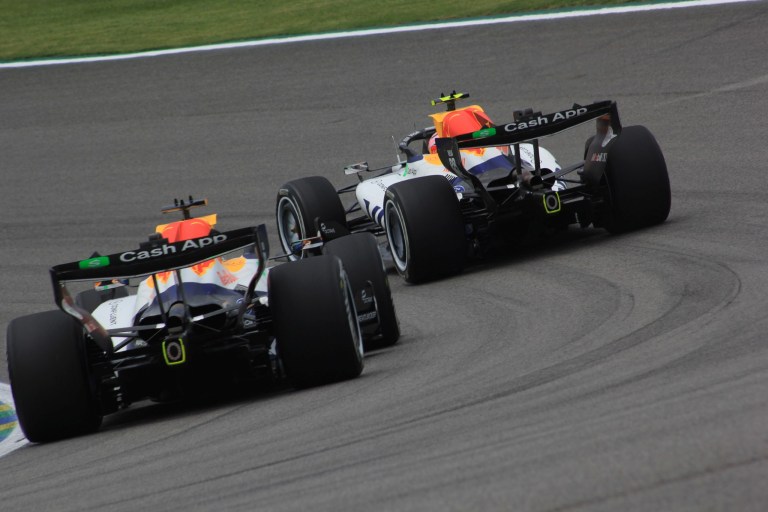
There is an obvious difficulty in evaluating the two Cadillac drivers: the car itself has been dreadful.
Reliability problems have repeatedly prevented the team from completing races normally, while its lack of competitiveness has made meaningful comparisons more complicated than they would be at a leading organisation.
Nevertheless, the available evidence points towards Pérez being considerably more competitive than Bottas.
Take the Canadian Grand Prix. Over a comparable 24-lap sample, Pérez was approximately 1.953 seconds faster. In Azerbaijan, the difference exceeded 1.6 seconds during certain stretches of the race. And in Singapore qualifying, the Mexican was 0.861 seconds quicker.
These are not flattering figures for Bottas.
They are particularly troubling because the Finn was signed precisely for his experience and ability to provide a dependable technical reference. If Cadillac cannot extract competitive performance from its own car, it should at least be able to establish which driver is doing the better job.
The team has hardly concealed the fact that Bottas’s performance has required attention.
Yet there is also something deeply unfair about judging a driver inside an operation that has so frequently failed to provide him with the basic tools to compete.
Cadillac carries the name of a major American manufacturer, but its first season has too often resembled a team struggling simply to reach the finish line.
The organisation has also been surrounded by reports concerning a possible sale at a valuation of approximately $3 billion. The contrast between those commercial ambitions and the results on track is difficult to ignore.
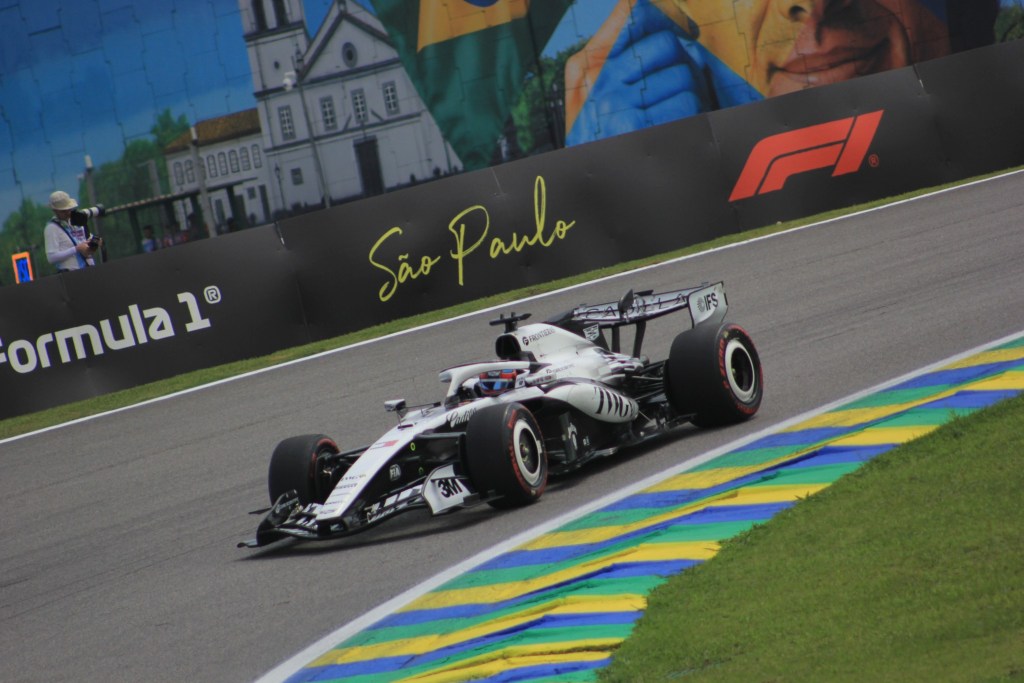
Bottas even managed to show encouraging pace in wet conditions at Interlagos. Come Sunday, however, he did not start the race.
Poor Valtteri. There are only so many ways to demonstrate what a driver can do when the car does not allow him to race.
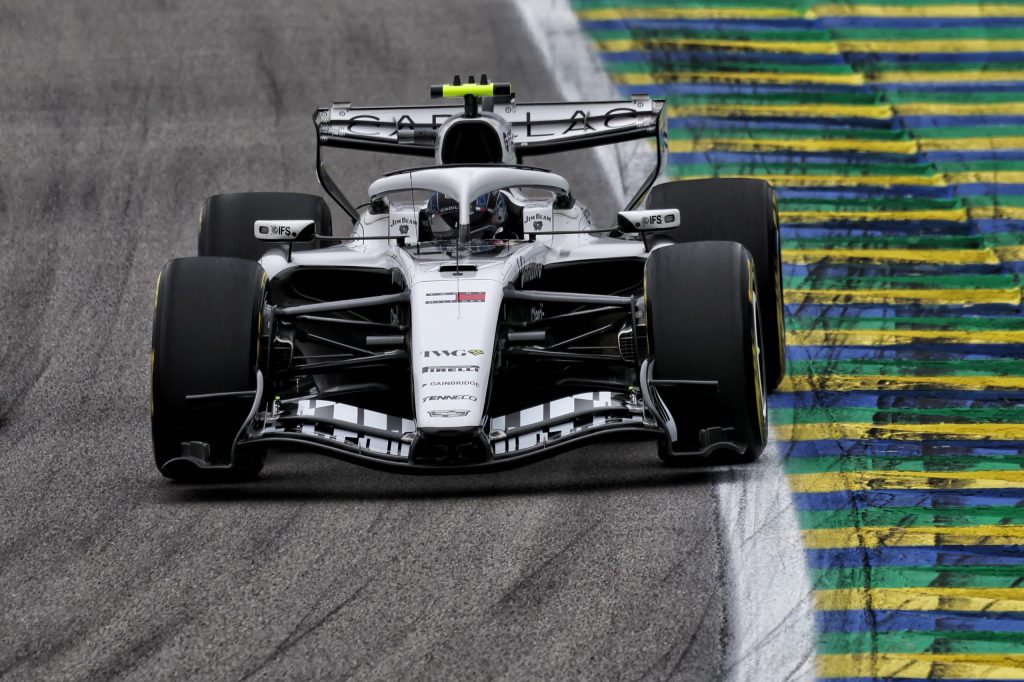
Herta finally earned his superlicence — and achieved absolutely nothing with it
While Pérez arrived in São Paulo with his future already settled, Herta was still fighting to satisfy the FIA’s requirements for a Formula 1 superlicence.
It had become an extraordinary exercise.
Cadillac arranged practice appearances wherever possible to help Herta accumulate the points he had failed to earn through his racing results.
And those results deserve scrutiny.
Herta sits 19th among 23 drivers in the Formula 2 championship, with just 26 points. His Hitech teammate Ritomo Miyata, hardly regarded as the defining talent of his generation, has scored 70.
That is a devastating comparison for a driver who arrived in F2 with years of professional IndyCar experience and the expectation that he could soon become a Formula 1 regular.
The superlicence problem was not simply an administrative inconvenience. It reflected the fact that Herta’s performances were not producing the necessary results.
Cadillac nevertheless continued finding opportunities for him.
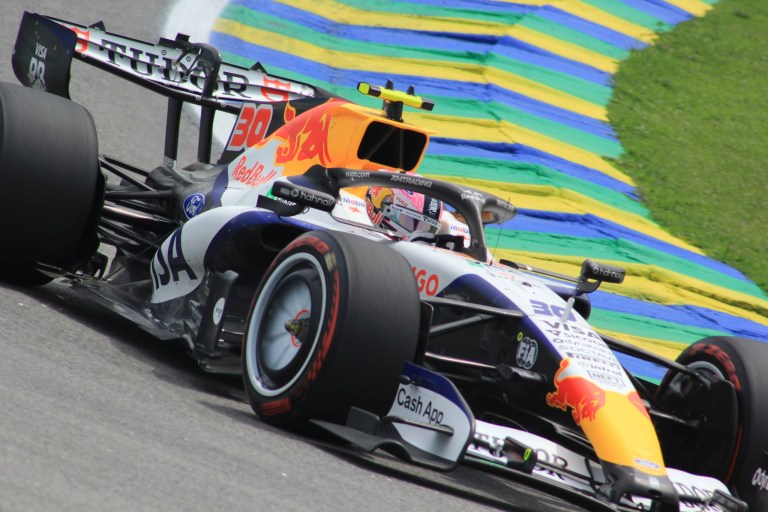
He appeared in FP1 sessions at Barcelona, Budapest, Monza, Austin, Mexico City and São Paulo. The team worked around technical problems, mileage requirements and the complicated calculations of the FIA points system.
Finally, at Interlagos, Herta completed the necessary distance and secured his 40th superlicence point.
He had done it.
After all the effort, the calculations, the additional running and the sacrifices involved in leaving IndyCar, Colton Herta was finally eligible to race in Formula 1.
And then Cadillac renewed Bottas.
The entire exercise had achieved its regulatory objective while failing spectacularly to deliver its sporting purpose.
Herta now possesses something he spent months trying to obtain: the necessary eligibility to apply for a Formula 1 superlicence.
What he does not possess is a Formula 1 seat.
If Bottas was the best option, what does that say about Cadillac?
Esteban Ocon had also been linked with Cadillac’s available seat. But the Frenchman’s difficult situation at Haas, including reports of an internal confrontation published by L’Équipe, hardly made him an uncomplicated alternative.
That does not mean Cadillac had only two choices.
Formula 2 exists. Formula E exists. Super Formula exists. IndyCar itself remains full of drivers capable of making a persuasive case for an opportunity.
Cadillac could have looked more closely at any of them.
Perhaps the team lacks the scouting structure necessary to identify someone more promising. Perhaps its decision-makers genuinely believe that another season of Bottas is the best available option.
Or perhaps the organisation has simply become so cautious that it cannot imagine a different solution.
One might almost suggest looking for a driver in GTA 6. At least that would demonstrate a little imagination.
Instead, the decision came down to Bottas versus Herta.
And Cadillac chose the driver whose debut season has been painfully mediocre over the young American it had spent the entire year preparing.
That is not a particularly convincing endorsement of either candidate.
It is an even less convincing statement about the team’s ambitions.
Herta’s failure is bigger than losing a Formula 1 seat
There is no guarantee that Herta would have been successful had Cadillac promoted him.
In fact, his Formula 2 performances suggest the opposite.
It is difficult to imagine him immediately establishing himself as a competitive Formula 1 driver when he has struggled so badly in the category directly below it.
At best, one could have hoped for a gradual development process. At worst, he might have joined the unfortunate tradition of North American drivers who reached Formula 1 without ever convincing the wider paddock that they truly belonged there.
Nicholas Latifi and Logan Sargeant provide obvious comparisons. Lance Stroll, meanwhile, continues to enjoy a level of job security at Aston Martin that would be unimaginable for almost anyone else.
Herta might have followed a similar trajectory, with the added embarrassment of reviving discussions about the 107% qualifying rule.
That possibility remains hypothetical. What is not hypothetical is the amount of effort Cadillac invested in making him eligible.
Every additional FP1 appearance reinforced the impression that the team was preparing him for a race seat. Every superlicence calculation made the potential promotion seem more deliberate.
And every disappointing Formula 2 result made the eventual decision more uncomfortable.
Now the verdict has arrived.
Cadillac would rather continue with Bottas.
Not a Bottas producing performances worthy of his Mercedes years. Not a Bottas consistently challenging Pérez. Not even a Bottas capable of making an unmistakable case for his own retention.
Just Bottas.
Cadillac’s choice reveals the limits of its own ambition
The comparison with Aston Martin is unavoidable.
Aston Martin operates with the permanent presence of Lance Stroll, whose family connection provides a level of protection that performance alone could never justify.
Cadillac is not in precisely the same situation. Bottas is not related to the team’s ownership, and his experience offers a rational argument for continuity.
But the underlying problem is familiar: a Formula 1 organisation making decisions that do little to demonstrate genuine competitive ambition.
If Bottas is the answer after this season, Cadillac should be prepared to explain why.
And if Herta is not even good enough to replace this version of Bottas, then the American’s position is far worse than the team had encouraged everyone to believe.
Herta has no Formula 1 race seat for 2027. His Formula 2 campaign has provided little justification for remaining in the category. And after abandoning his IndyCar trajectory to chase the Cadillac opportunity, a straightforward return to his previous career is far from guaranteed.
He left one uncertain situation to enter another, much more damaging one.
The youngest winner in IndyCar history, the driver once presented as America’s next great hope, now finds himself with a superlicence but without a clear destination.
Cadillac’s decision says very little about Valtteri Bottas. It says much more about the team itself. And it says that Colton Herta, despite every opportunity he was given, has become something considerably less than the driver everyone once imagined.
Much less.
GRANDE PRÊMIO is following the Las Vegas Grand Prix and the latest developments in Formula 1.
FAQ
Why did Cadillac retain Valtteri Bottas instead of promoting Colton Herta?
Cadillac chose to continue with Bottas and Sergio Pérez for 2027, prioritising an experienced lineup despite Herta becoming eligible for a Formula 1 superlicence.
Did Colton Herta secure enough points for an F1 superlicence?
Yes. Herta reached the required 40-point threshold during FP1 at the São Paulo Grand Prix after an extensive programme of practice appearances.
Can Colton Herta still race in Formula 1?
Yes, he remains eligible to apply for a superlicence, but Cadillac has not offered him a race seat for 2027. His longer-term Formula 1 prospects remain uncertain.