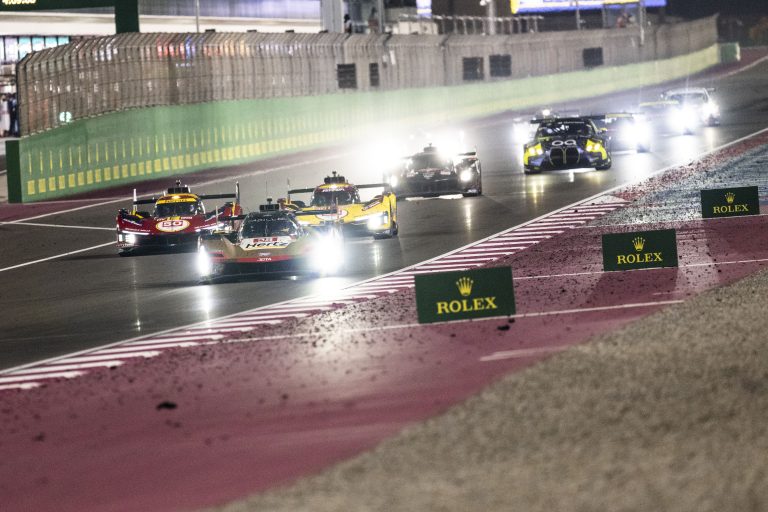

Ferrari and Peugeot have taken advantage of the nearly two-month break between the 6 Hours of São Paulo and the Lone Star Le Mans in the 2026 World Endurance Championship (WEC) to test updated iterations of their respective Hypercars with an eye on the 2027 season. The Italian manufacturer is preparing the biggest update to the 499P since its return to the top class in 2023.
Although the 2026 season is only at its halfway mark, work for next year is already in full swing. The 2027 campaign kicks off on March 27 in Qatar. Speaking of the Qatari round, the WEC announced that Barcelona and Monza will replace the races originally scheduled to take place in the Middle East.
On Tuesday (28), Ferrari released images on social media showing the updated 499P running in a camouflage livery to conceal any aerodynamic modifications. The test took place at Monza, which is set to host the 2026 WEC season finale.
The Italian manufacturer is preparing the largest overhaul of the 499P since the car debuted in 2023. Prior to the 24 Hours of Le Mans, the brand revealed it could deploy all four of its remaining Evo Jokers — performance updates permitted under the regulations to modify Hypercar-class machinery — to revamp the model, though it did not specify where the performance gains would be targeted. To date, Ferrari has used only one of the five Evo Jokers allocated over an LMH/LMDh car’s initial five-year homologation cycle: a brake-cooling upgrade introduced at São Paulo in 2024.
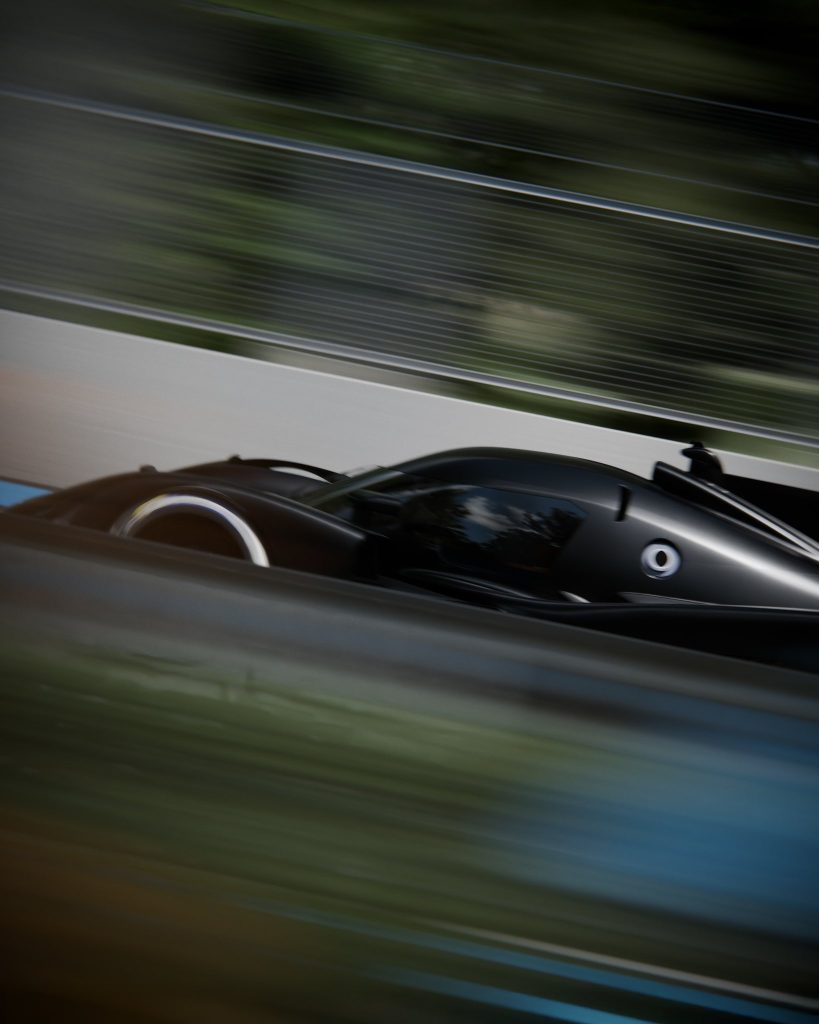
Following in Ferrari’s footsteps, Peugeot also announced it has kicked off the “next chapter in the evolution of the 9X8.” In a statement, the French manufacturer emphasized that it is “working on a series of technical developments aimed at improving performance, efficiency, and competitiveness” for the car, which has yet to score a victory in the Hypercar class. In addition, they released a close-up photo of the car sporting a bare carbon-fiber finish at Circuit Paul Ricard.
Despite having exhausted their initial allocation of Evo Jokers, Peugeot hopes to leverage a new rule that allows struggling manufacturers to obtain additional tokens for performance updates. The planned developments remain subject to approval. Any upgrade involving the use of Evo Jokers — whether within or outside the initial limit of five allowed per manufacturer — must receive the green light from WEC promoters, the Fédération Internationale de l’Automobile (FIA), and the Automobile Club de l’Ouest (ACO).
“Since its debut, the Peugeot 9X8 has been a platform in continuous evolution. Competing at the highest level of endurance racing means constantly learning, adapting, and progressing. The intensity of world-class competition reinforces our determination to keep evolving. Our goal is clear: to consistently position the 9X8 among the frontrunners,” stated Peugeot Team Principal Emmanuel Esnault.
“Looking ahead to 2027, the team is taking the next step in its development, focusing on a revised approach to performance, efficiency, and design. This work marks a key milestone in preparing the next chapter of the 9X8’s story and carrying forward Peugeot’s legacy in endurance racing,” he concluded.
Since debuting in the Hypercar category, the 9X8 has struggled to establish itself among the most competitive cars on the grid, even after last year’s major update package. In the Manufacturers’ World Championship, the French brand currently sits in seventh place, ahead only of Genesis, which is contesting its debut season.
Following the 6 Hours of São Paulo — won by the #15 BMW driven by Magnussen, Marciello, and Vanthoor — the WEC returns on September 6 for the Lone Star Le Mans at Circuit of the Americas in Austin, Texas.