News Summary
- Andrea Kimi Antonelli led FP2 by 0.253s, with just 0.020s covering Lando Norris, Max Verstappen and George Russell behind him.
- Ferrari has work to do after Lewis Hamilton and Charles Leclerc finished sixth and seventh in FP2. George Russell will drop five places on Sunday’s grid.
- Rain could change the qualifying order, while Gabriel Bortoleto and Rafael Câmara go into Saturday with different targets at their home Grand Prix.
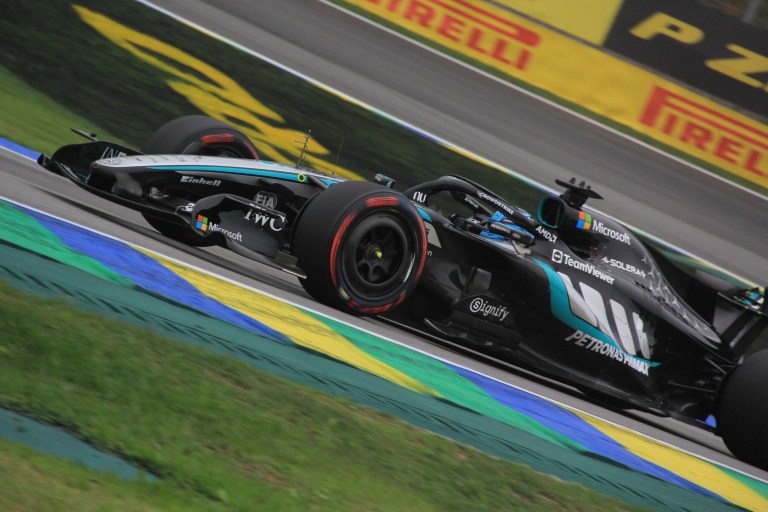
Andrea Kimi Antonelli was the only driver to break the 1:11 barrier at Interlagos on Friday. His 1:10.763 gave Mercedes the fastest lap of São Paulo Grand Prix practice and reversed the order from FP1, when Lando Norris had beaten him by 0.082s.
The full FP2 results show how little separated the next three cars. Norris was 0.253s off the lead, Max Verstappen 0.259s and George Russell 0.273s. That put a Mercedes, a McLaren and a Red Bull within 0.020s of one another behind Antonelli.
Friday’s fastest laps came in largely dry conditions. Saturday could ask a different question of the same cars. Here are five things to watch from final practice through qualifying.
1. Can Antonelli repeat his best lap when the track is at its quickest?
Antonelli was quick before Mercedes fitted the softs. He led the early part of FP2 on hard tyres, then reclaimed first place after Russell and Norris had taken turns at the top during the qualifying simulations. His advantage came from a lap he put together when the field was already improving.
McLaren had a strong Friday across both cars. Norris topped FP1 and finished second in FP2, while Oscar Piastri was fifth on his first outing after handing his car to Leonardo Fornaroli in the opening session. Norris felt a lap-time gain from McLaren’s revised wings and floor, even though the car remained tricky to drive.
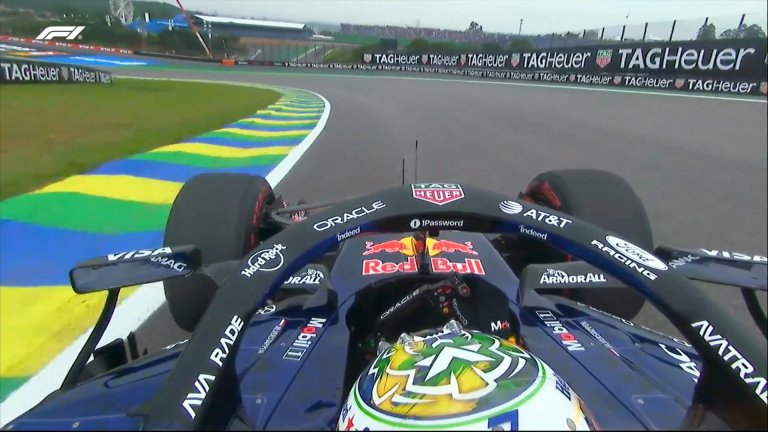
Verstappen finished third in both sessions. He was just 0.006s behind Norris in FP2 despite complaining about the Red Bull’s gearshifts and later ending his running early after reporting difficulty with the car in a straight line. Watch how close he and Norris can get to Antonelli when all three have to deliver on the same set of softs and in the same window at the end of Q3.
2. Will rain change when drivers need to set their laps?
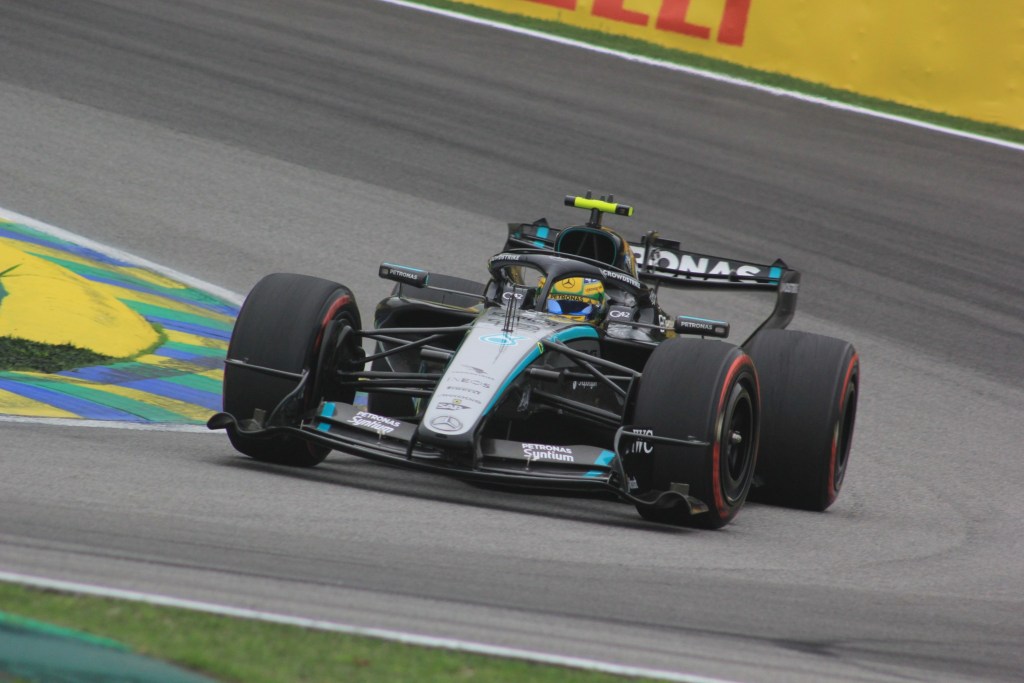
Friday offered a dry reference under heavy cloud, with only a few drops late in FP2. Even then, Turn 1 caught out several drivers under braking. Hamilton described the track as “very bumpy and slippery”, while Norris expected Saturday to be very wet.
Interlagos also has fresh asphalt on two sections of the lap, from the exit of Turn 3 to the exit of Turn 5 and from the exit of Turn 8 to the exit of Turn 9. If rain arrives in FP3, watch where the grip is and how quickly a usable line develops across those sections.
The timing of the rain matters as much as its intensity. If conditions deteriorate during qualifying, an early lap can secure a place in the next phase. If the track dries, the last driver across the line may get the best conditions. Watch the queue at pit exit as well as the timesheet.
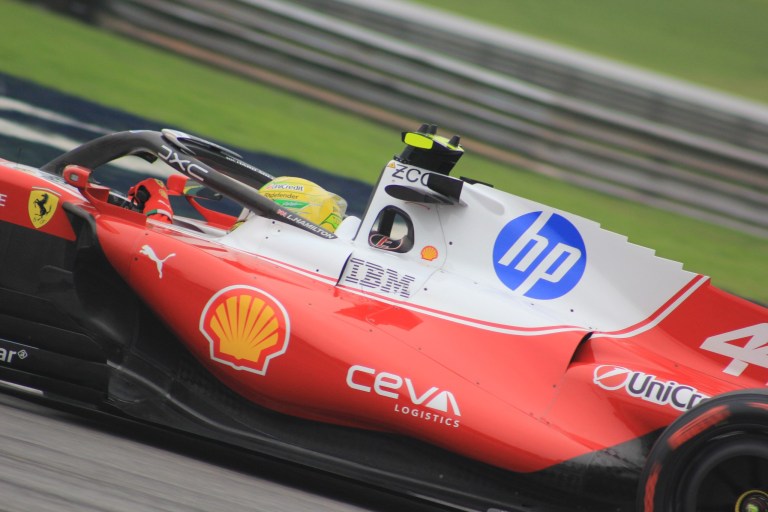
3. Can Ferrari get both cars into the pole fight?
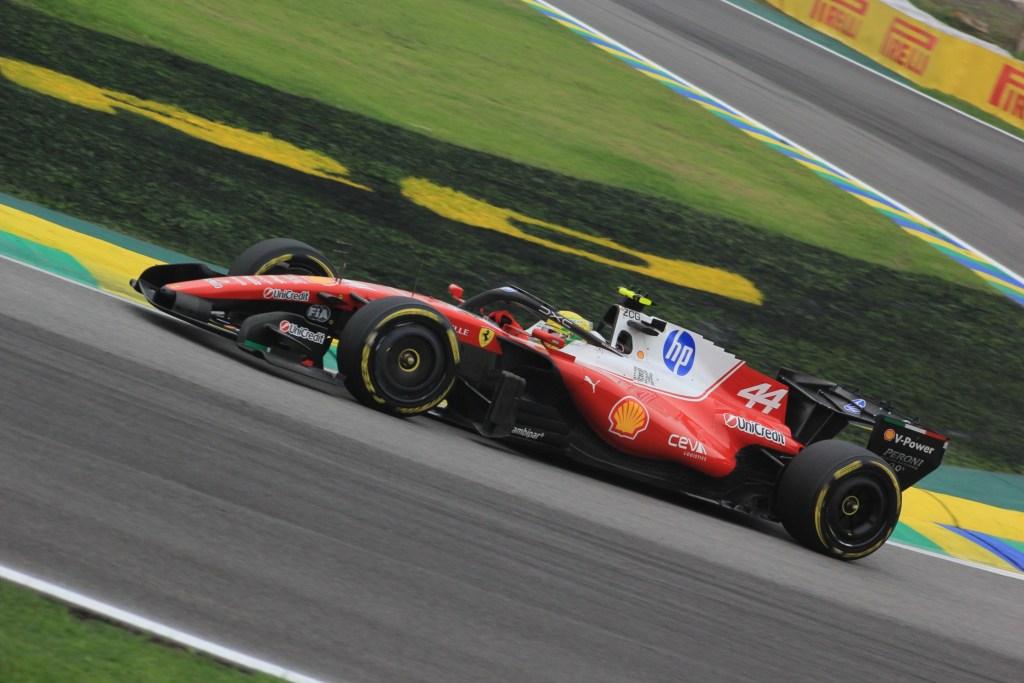
Lewis Hamilton was fourth in FP1 and sixth in FP2. He locked up at the Senna S in the afternoon and struggled to get the tyres into their operating window. His best lap still put him within 0.450s of Antonelli and 0.177s of Russell in fourth.
Charles Leclerc had only one Friday session after Dino Beganovic took his car in FP1. He finished seventh, 0.270s behind Hamilton, and came away with a direction for overnight set-up changes. His afternoon also included a close call with Rafael Câmara at Turn 15. The stewards reprimanded the Haas driver for impeding him.
FP3 is Ferrari’s first chance to see whether those changes give Leclerc a car he can lean on for a flying lap and help Hamilton prepare his tyres more consistently. If final practice is wet and qualifying dries out, Ferrari may have to find out during qualifying itself.
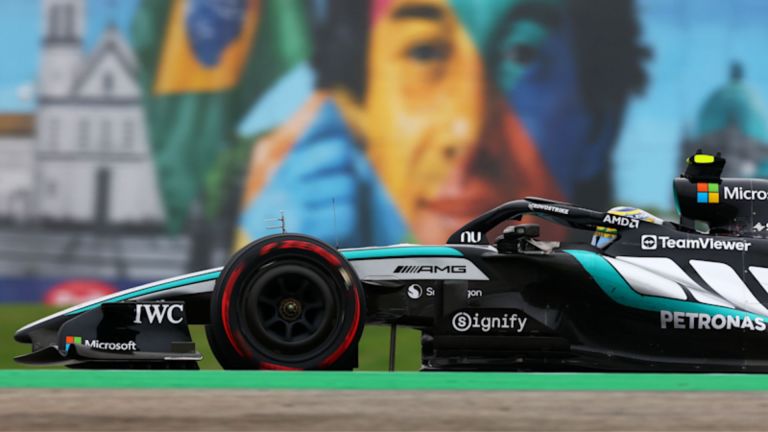
4. How much can Russell recover before the race starts?
Russell’s fourth place in FP2 put him in the group chasing his team-mate, but his Saturday result comes with a separate calculation. He has a five-place grid penalty for an engine change, which applies to Sunday’s starting grid. Pole in qualifying would ordinarily put him sixth on the grid. Fourth would put him ninth, before any other grid adjustments.
Russell felt more competitive over longer runs than on a single lap and identified understeer as an area Mercedes could work on overnight. That was his assessment of his own car. Friday’s quickest laps establish how close he was over one lap, while his race-pace comments give a reason to watch what he can do from farther back.
The difference between qualifying first and fourth could determine whether he starts among the cars he was fighting on Friday or has to clear a group of midfield runners first.
5. Can Bortoleto reach Q3 and how far can Câmara close on Bearman?
Gabriel Bortoleto was eighth in both sessions. His 1:11.780 in FP2 put him 0.216s clear of Franco Colapinto in 11th. Repeating that position across two sessions gives Audi a credible shot at Q3. Saturday’s test is whether Bortoleto can put that lap together when the midfield converges on the same tyre and the same track conditions.
Rafael Câmara improved from 18th in FP1 to 16th in FP2 on his first Friday as a Haas race driver. He took 1.135s off his opening-session time, while Oliver Bearman ended FP2 tenth and 0.570s ahead. Haas praised Câmara’s feedback and progress through its programme, which included practice starts.
Bearman gives Câmara the clearest benchmark for his first F1 qualifying session. For Bortoleto, the reference is the Q2 cut. Friday put him on the right side of it in both sessions, with little room to spare if the midfield tightens.
GRANDE PRÊMIO is following every session of the São Paulo Grand Prix in Formula 1 live from Interlagos.