News Summary
- Audi was forced to replace Gabriel Bortoleto’s power unit after the driver reported an engine problem during final practice in Mexico City.
- Smoke was seen coming from the rear of the Audi, which returned to the garage without completing a timed lap.
- The failure followed another disrupted session on Friday, leaving Bortoleto with extremely limited preparation for qualifying.
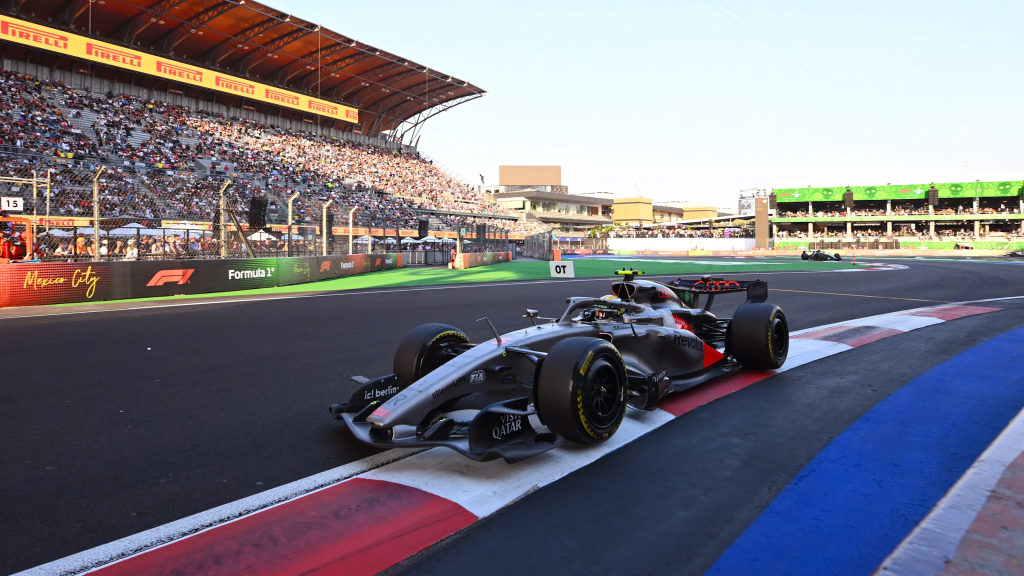
Audi suffered another reliability setback during Saturday’s (31) final practice session for the 2026 Mexico City Grand Prix, with Gabriel Bortoleto reporting a power unit problem before smoke emerged from the rear of his car. The German manufacturer subsequently decided to replace the unit, ruling the driver out of the remainder of FP3 as the team concentrated on preparing the car for qualifying.
Bortoleto managed to return to the garage after detecting an abnormal sound from the engine. Television images showed smoke coming from the rear of the R26, prompting Audi’s mechanics to begin investigating the failure.
Audi faces another reliability setback in Mexico
The incident compounded an already difficult weekend for Audi, which has struggled to complete its planned programme with Bortoleto’s car.
The driver missed Friday’s FP1 because the team assigned the car to Freddie Slater as part of Formula 1’s mandatory rookie practice requirements.
His return for FP2 was also disrupted by a technical problem, restricting him to the closing stages of the session. Bortoleto finished 22nd, leaving Audi with little representative information about his car’s performance.
Saturday’s failure eliminated his final opportunity to complete qualifying simulations, particularly important at the Autódromo Hermanos Rodríguez, where the high altitude places additional demands on power units and cooling systems.
Audi subsequently confirmed that the power unit would be changed before qualifying. The team did not provide a detailed technical explanation identifying the component responsible for the failure.
No additional grid penalty has been confirmed in connection with the replacement. Any sanction will depend on the components installed and their permitted allocations.
Hülkenberg provides Audi’s only representative FP3 time
While Bortoleto remained in the garage, teammate Nico Hülkenberg completed his programme and finished 11th with a 1:18.560, 0.960s behind session leader Lando Norris.
The German narrowly missed the top ten, with Racing Bulls driver Arvid Lindblad finishing tenth on 1:18.137.
Audi therefore enters qualifying with a significant difference in preparation between its two drivers.
Bortoleto will have to rely on limited running from Friday and the information collected by Hülkenberg, while the team must complete the power unit replacement in time for the session.
The reliability problems also add to the manufacturer’s challenges during its first Formula 1 season as a full works operation, with Audi developing its own power unit under the 2026 regulations.
Elsewhere, Cadillac experienced a similar interruption when Sergio Pérez failed to set a timed lap in FP3 because of a precautionary power unit change.
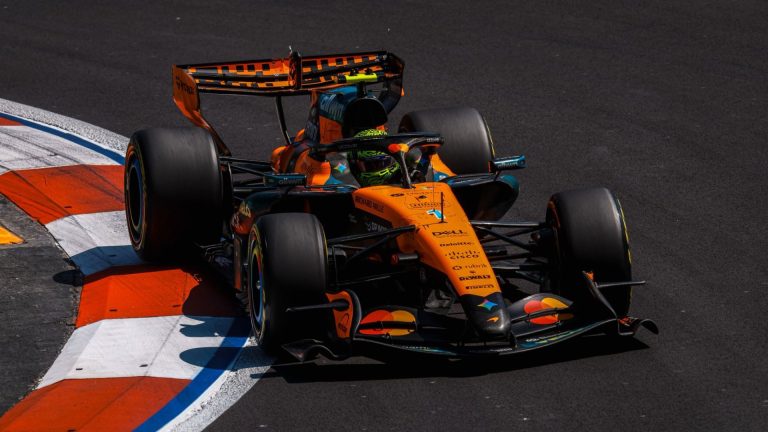
Norris topped the session with a 1:17.600, beating Mercedes driver Andrea Kimi Antonelli by just 0.001s, while Charles Leclerc finished third for Ferrari.
The Mexican Grand Prix weekend has already produced several technical and disciplinary setbacks, with Cadillac’s Valtteri Bottas receiving a 50-place grid penalty for exceeding his permitted power unit allocations.
GRANDE PRÊMIO is following every session of the Mexican Grand Prix this weekend, with breaking news, full coverage and real-time updates in its Formula 1 section.
FAQ
Why did Audi replace Bortoleto’s engine in Mexico?
Bortoleto reported a power unit problem during FP3, and smoke was seen emerging from the rear of his car. Audi decided to replace the unit before qualifying.
Did Bortoleto complete a timed lap in FP3?
No. The technical failure prevented him from recording a timed lap.
Will Audi receive a grid penalty for the engine change?
No additional penalty had been confirmed at the time of the report. A sanction depends on the components installed and whether their permitted allocations have been exceeded.