Summary
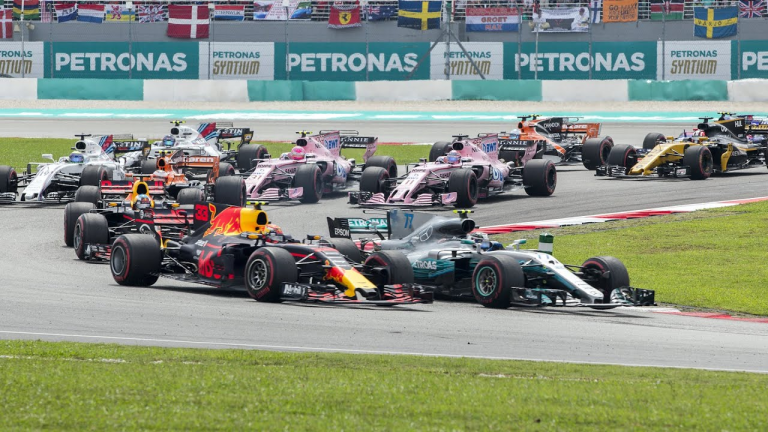
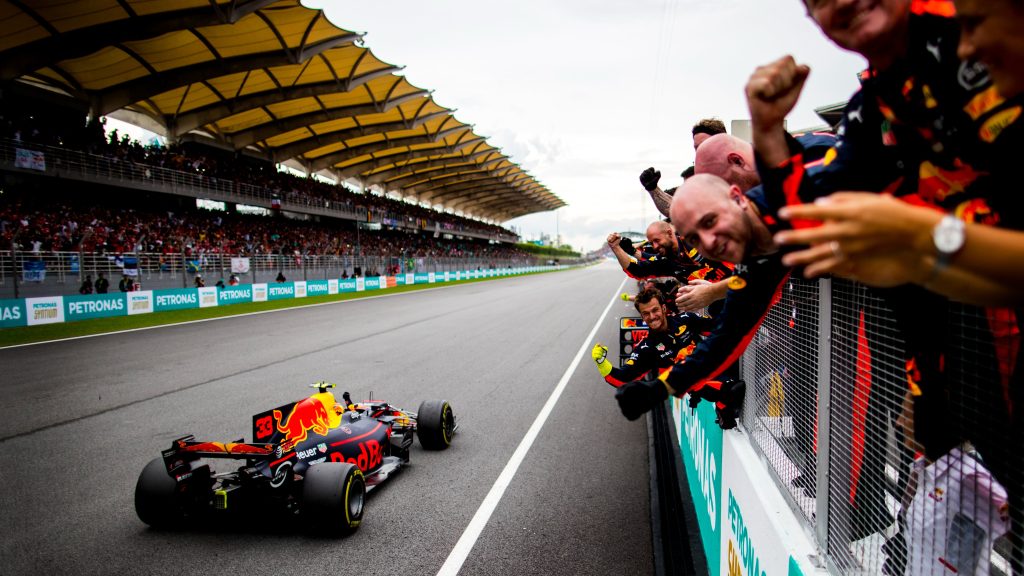
- Verstappen won the last F1 race at Sepang, on 1 October 2017.
- The 2026 cars use active aerodynamics and place much greater demands on electrical energy management.
- Teams must learn how this generation of cars and tyres behaves at Sepang during Friday practice.
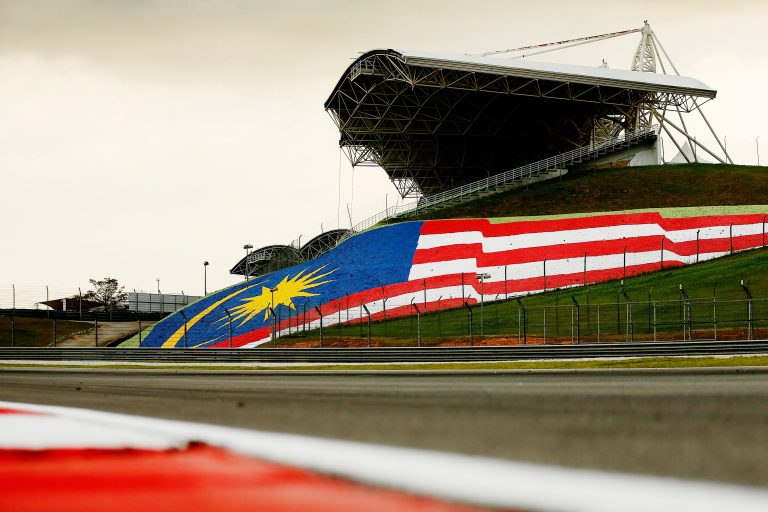
When Formula 1 last raced at Sepang, Max Verstappen drove a Red Bull to victory ahead of Lewis Hamilton and Daniel Ricciardo. The date was 1 October 2017. Nine years later, the circuit returns to the calendar on 2–4 October 2026 as the venue for the Bahrain Grand Prix in Malaysia.
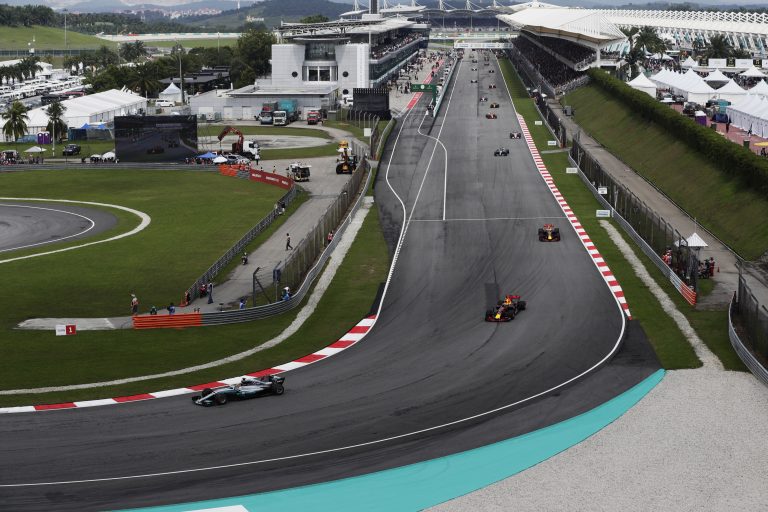
The name of the event is unusual, but the larger sporting question is what teams can learn from a circuit they have not visited with any of their current cars. Sepang still asks drivers to negotiate long straights, heavy braking, fast changes of direction, heat and humidity. The machinery responding to those demands has changed substantially.
A lap time or strategy sheet from 2017 offers historical context. It cannot tell a team how much electrical energy its 2026 car will have available at the end of a straight, how its active aerodynamics will affect the next braking zone or how the current tyres will perform over a race stint.
What is different from F1’s last visit to Malaysia?
| Area | Sepang in 2017 | Sepang in 2026 |
|---|---|---|
| Race | Malaysian Grand Prix | Bahrain Grand Prix in Malaysia |
| Last winner / current reference | Verstappen won for Red Bull | The 2026 competitive order will be established in practice |
| Cars | Built to the 2017 aerodynamic rules | Shorter, narrower 2026 cars with active aerodynamics |
| Power units | Earlier generation of turbo hybrids | Greater electrical contribution and a different energy-management challenge |
| Wheels | 13-inch specification | 18-inch specification with narrower 2026 tyres |
| Teams | Ten teams | Eleven teams, following Cadillac’s arrival |
| Race distance | 56 laps | 56 laps |
The 2026 power unit changes the question on Sepang’s straights
Sepang has two long straights connected by a slow final hairpin. In 2017, acceleration, aerodynamic drag and the performance of the turbo-hybrid power unit shaped a car’s speed through that section. Those factors still matter, but the 2026 regulations give electrical deployment a much larger role.
The new power units are designed around a roughly equal split between combustion and electrical power. Drivers can harvest energy under braking and through other phases of a lap, then deploy it where it is most useful. At Sepang, teams must establish how much energy they can recover through the braking zones and how to spend it across the circuit’s straights without compromising another part of the lap. The FIA also introduced active aerodynamics to work with the new power-unit concept.
That makes Friday more than an exercise in finding a qualifying setup. Engineers need to compare the expected energy profile from simulations with what happens on track, particularly as tyre wear, traffic and changing conditions alter the way a driver completes the lap. GRANDE PRÊMIO has examined why Sepang poses a different test from Baku for the 2026 cars; the first practice sessions will provide the evidence that simulations cannot.
Tyres offer another break with 2017
The cars that raced at Sepang in 2017 used 13-inch wheels. Formula 1 moved to 18-inch wheels in 2022, and the 2026 tyres are narrower than those used immediately before the latest regulation change. It is therefore unsafe to carry a 2017 tyre-life estimate straight into this weekend’s strategy.
Pirelli has selected C2, C3 and C4 for Sepang: hard, medium and soft respectively. That is a different selection from the softer C3–C5 range chosen for Baku and Singapore. Long runs in practice should help establish how the three compounds respond to the Malaysian circuit and whether the conditions support more than one competitive race strategy.
Weather can change that work quickly. A dry practice session provides useful information about degradation and cooling; rain would instead bring a different set of decisions about tyres, visibility and track conditions. Neither outcome should be assumed before the cars run.
Some drivers know Sepang. The 2026 field does not know it together
Verstappen has a winning memory of Sepang. Hamilton finished second to him in 2017, while Fernando Alonso, Carlos Sainz, Sergio Pérez and several other current drivers also raced there during Formula 1’s previous Malaysian run. Many of their present rivals have never competed in a Formula 1 Grand Prix at the circuit.
Experience helps a driver recognise braking points, changes in grip and the physical demands of the venue. It does not provide a direct setup for a 2026 car. Teams also have new driver pairings, different technical groups and, in Cadillac’s case, an entirely new entrant since the last Malaysian race.
The 2017 result is therefore a useful marker for the story of F1 at Sepang, rather than a prediction for Sunday. Friday’s sessions will show which teams have arrived closest to a workable answer. FP1 begins at 12:30 local time on 2 October, followed by FP2 at 16:00. Qualifying is on Saturday and the 56-lap race starts at 15:00 local time on Sunday.
F1 today: FAQ
What time does F1 practice start at Sepang?
Friday practice begins on 2 October. FP1 starts at 05:30 BST in the UK, 10:00 IST in India and 14:30 AEST in Sydney and Melbourne. In New York and Toronto, it starts at 00:30 EDT; in Los Angeles and Vancouver, at 21:30 PDT on Thursday. FP2 begins three and a half hours later.
Is Esteban Ocon leaving Haas and retiring from F1?
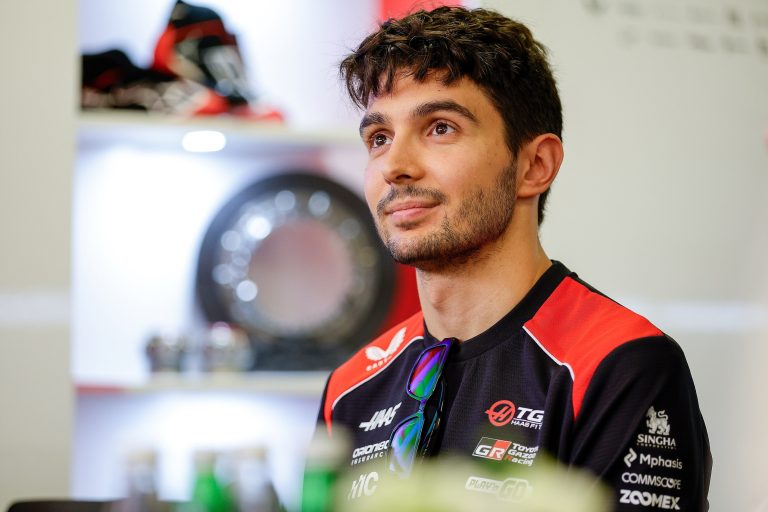
Ocon will leave Haas at the end of 2026, but says he intends to remain in Formula 1. He has not announced retirement and would consider a reserve role while seeking another race seat.
What happened to Oscar Piastri at the Azerbaijan Grand Prix?
Piastri was running near the front in Baku before a mistake during a Safety Car restart dropped him out of podium contention. He finished 14th, adding to a difficult 2026 season for the McLaren driver.
Who won the last F1 race at Sepang?
Max Verstappen won the 2017 Malaysian Grand Prix for Red Bull, ahead of Lewis Hamilton and Daniel Ricciardo.