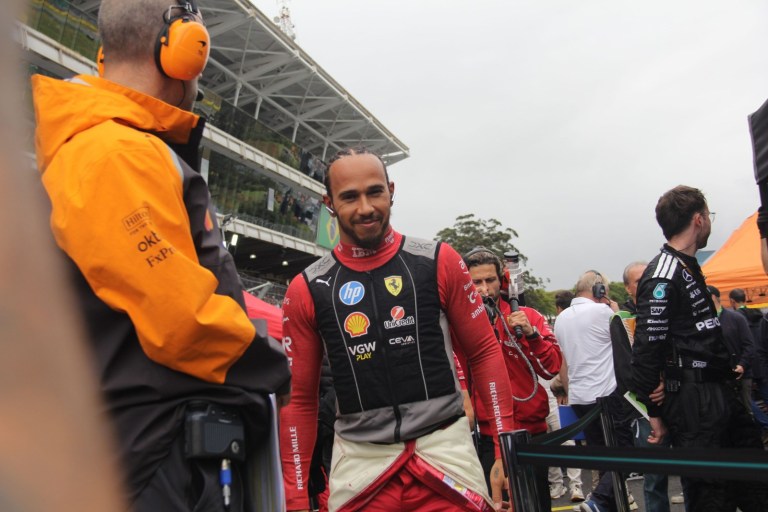
Ferrari endured a disappointing home Italian Grand Prix on Sunday, with Charles Leclerc crashing out early and Lewis Hamilton unable to challenge for the leading positions. Team principal Fred Vasseur admitted Monza had accentuated one of the SF-26’s biggest weaknesses: performance at high speed.
Ferrari had arrived at Monza with an updated power unit and hopes that the changes would improve its competitiveness at the team’s home race. Leclerc and Hamilton, however, qualified only fourth and fifth, while Pierre Gasly took a surprise pole position for Alpine.
Hamilton eventually finished sixth after recovering from the first-lap incident with Leclerc, but struggled to make progress in battles with the McLaren drivers. Leclerc’s race, meanwhile, ended on lap 2 after he lost control at the Parabolica and crashed heavily.
Read more about Leclerc’s crash that brought out the red flag at Monza and Hamilton’s difficult Italian GP.
“It was a very difficult day, starting already from the start. Then Charles touched the dirty side of the track at the Parabolica and lost the car. I haven’t spoken to him yet, but he’s okay. I hope so. But the engine is not okay,” Vasseur told Sky Sports after the race.
“The race was complicated by the high speed, which is a weak point of ours, but we already knew that beforehand. It was difficult to fight. The pace was reasonable, but we were losing a lot when we were fighting for position.
“When we lose positions and overtaking is so difficult, the final result is not good. The positive is that our pace in clean air was good, but we lost a lot of opportunities.”
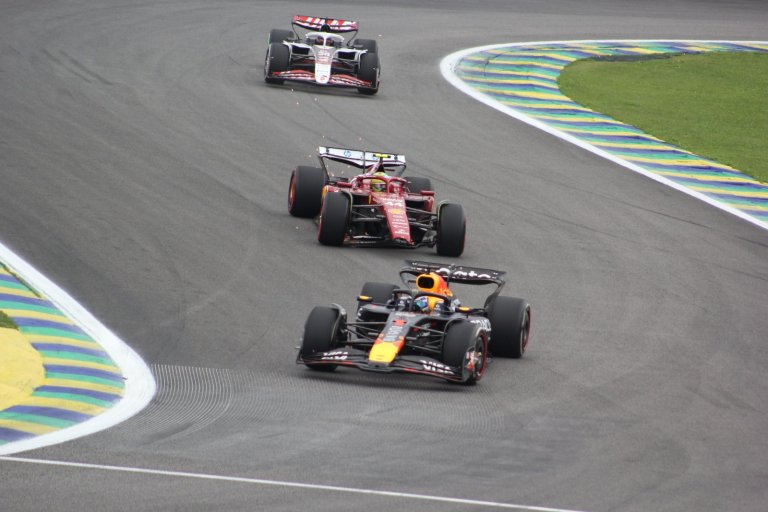
Ferrari’s difficulty in wheel-to-wheel situations was particularly costly at Monza. The circuit’s long straights and low-downforce configuration made straight-line performance crucial, while the inability to overtake efficiently left Hamilton unable to recover further after his early setback.
Vasseur also explained why Ferrari ultimately chose not to alter Hamilton’s strategy, arguing that a pit stop could have left the Briton needing to make overtakes that the car was not particularly well equipped to complete.
“We were 10 seconds behind Max before the stop and finished the race 10 seconds behind. Besides, if we had stopped, we probably would have had to make overtakes to get back to where we were.
“Since overtaking wasn’t our favourite topic, it probably would have made things even more difficult.”
The result represented another missed opportunity for Ferrari at its home race. Hamilton nevertheless secured sixth place, while Leclerc’s retirement left the team with only one car classified at the finish.
The Ferrari drivers had already expressed frustration after qualifying, admitting the team had failed to execute its strategy effectively in a session where the slipstream was crucial.
Kimi Antonelli went on to win the race from 19th on the grid, with Mercedes teammate George Russell second and Max Verstappen third. The Italian’s victory made him the first home driver to win at Monza since Ludovico Scarfiotti in 1966.
Ferrari now has little time to regroup. Formula 1 heads to Madrid next weekend for the Spanish Grand Prix, which takes place from September 11-13 at the new street circuit.
GRANDE PRÊMIO will continue to cover all the action from the 14th round of the 2026 Formula 1 season.
FAQ
Why did Ferrari struggle at the 2026 Italian GP?
Ferrari struggled particularly with the high-speed characteristics of Monza. Fred Vasseur identified high-speed performance as a weakness and said the team lost significant time when fighting other cars.
Where did Lewis Hamilton finish the Italian GP?
Lewis Hamilton finished sixth at Monza after recovering from his opening-lap incident with Charles Leclerc.
What happened to Charles Leclerc at the Italian GP?
Leclerc crashed at the Parabolica on lap 2 after losing control of his Ferrari, bringing out the red flag and ending his home race..