News Summary
- Charles Leclerc topped both Friday practice sessions at the 2026 Mexico City Grand Prix, giving Ferrari an early advantage ahead of qualifying.
- Lando Norris finished just 0.103s behind Leclerc in FP2, with George Russell only 0.003s further back, leaving the battle for pole position wide open.
- Lewis Hamilton’s power unit problem interrupted Ferrari’s preparations, while Mercedes and Red Bull showed enough pace to remain contenders.
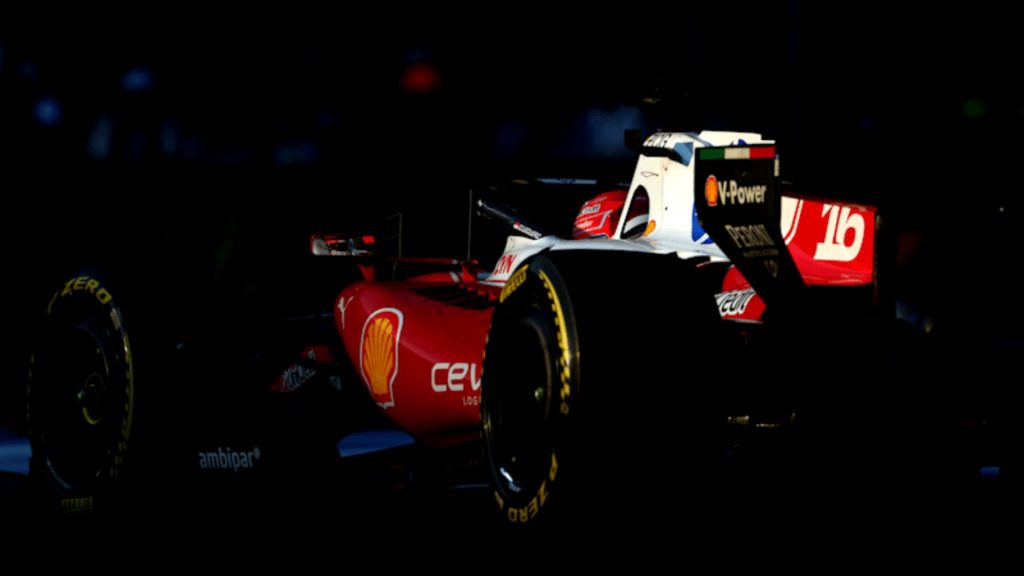
Ferrari heads into Saturday’s (31) qualifying session for the 2026 Mexico City Grand Prix as one of the strongest candidates for pole position after Charles Leclerc led both Friday practices at the Autódromo Hermanos Rodríguez. However, the narrow gap separating Ferrari, McLaren and Mercedes suggests that the Italian team is far from guaranteed its first starting position, particularly after Lewis Hamilton’s running was interrupted by a power unit failure.
Leclerc’s fastest lap of 1:17.827 in FP2 placed him 0.103s ahead of Lando Norris and 0.106s clear of George Russell. Andrea Kimi Antonelli finished fourth, 0.217s behind the Ferrari, while Max Verstappen completed the top five despite damage sustained in a collision with Liam Lawson.
Leclerc’s Friday double puts Ferrari among Mexico pole favourites
Ferrari’s strongest argument heading into qualifying is the consistency demonstrated by Leclerc across the opening two sessions.
The Monegasque led FP1 with a 1:18.128, finishing approximately six tenths ahead of Antonelli. Although that margin was influenced by the different programmes completed by the teams, Ferrari’s pace remained competitive when the full field returned for FP2.
Leclerc initially established the benchmark on medium tyres before improving on the soft compound during the qualifying simulations.
His first attempts were not entirely straightforward. Traffic disrupted one lap, while a mistake over the kerbs and a lock-up prevented him from immediately extracting the maximum performance from the SF-26.
Nevertheless, Leclerc eventually recorded 1:17.966 before improving to 1:17.827, reclaiming first place from Norris.
That progression is significant because it indicates Ferrari had sufficient performance to recover from imperfect preparation laps and remain at the front.
It also suggests Leclerc was able to build confidence as track conditions improved, an important factor at a circuit where grip levels tend to increase substantially throughout the weekend.
Norris and Russell remain within striking distance of Ferrari
Despite Leclerc’s position at the top, the leading three drivers were separated by only 0.106s, making it difficult to identify a clear favourite for pole.
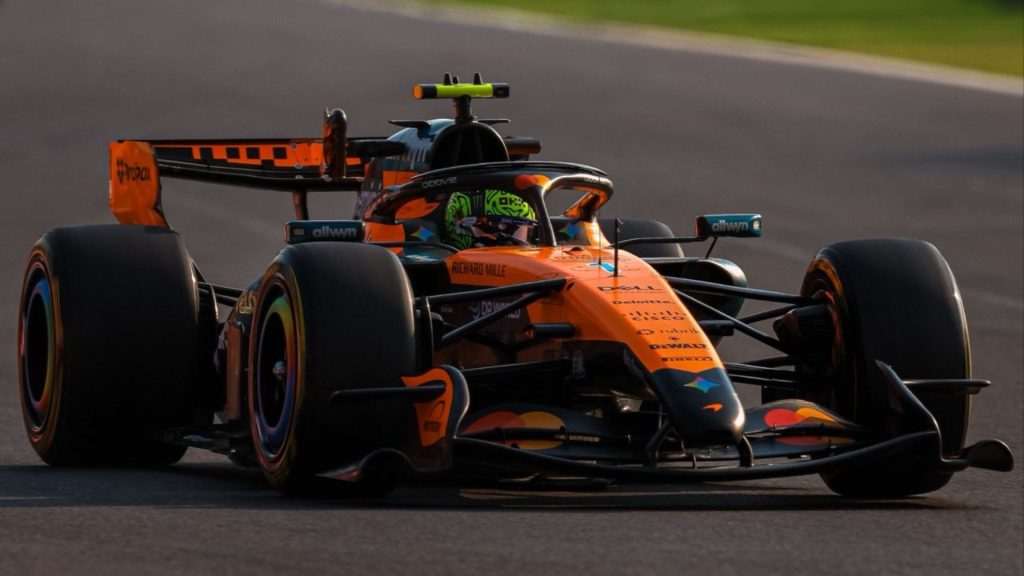
Norris finished second with a 1:17.930, while Russell recorded 1:17.933 for Mercedes.
Both drivers had missed FP1 because their teams were fulfilling the requirement to provide practice opportunities for young drivers. Their performances in FP2 therefore came after less track time than Leclerc had enjoyed.
Norris initially struggled with lock-ups and traffic but improved sufficiently to challenge for the fastest lap.
Russell also made progress throughout the session, eventually finishing just three thousandths behind the McLaren.
Mercedes had another contender in Antonelli, who placed fourth with a 1:18.044.
The Italian arrives in Mexico with an opportunity to secure the 2026 world championship after winning the United States Grand Prix at Austin.
Antonelli’s 0.217s deficit to Leclerc is small enough to keep Mercedes firmly in contention, especially if the team finds improvements in tyre preparation and the final sector.
The four leading drivers were separated by little more than two tenths, leaving considerable scope for changes during FP3 and qualifying.
Hamilton’s engine problem complicates Ferrari’s preparations
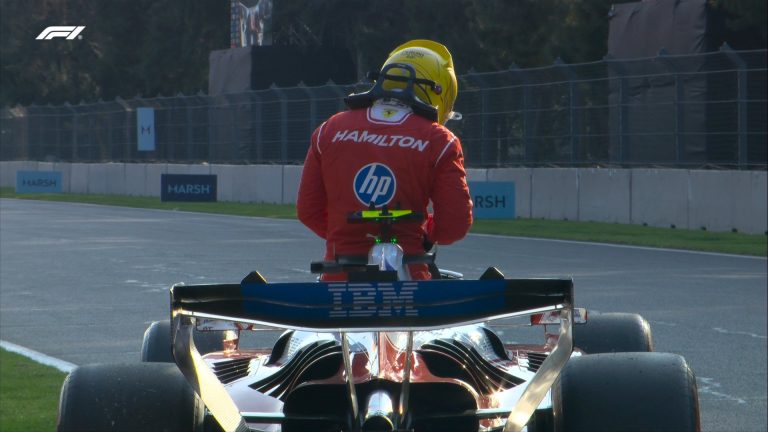
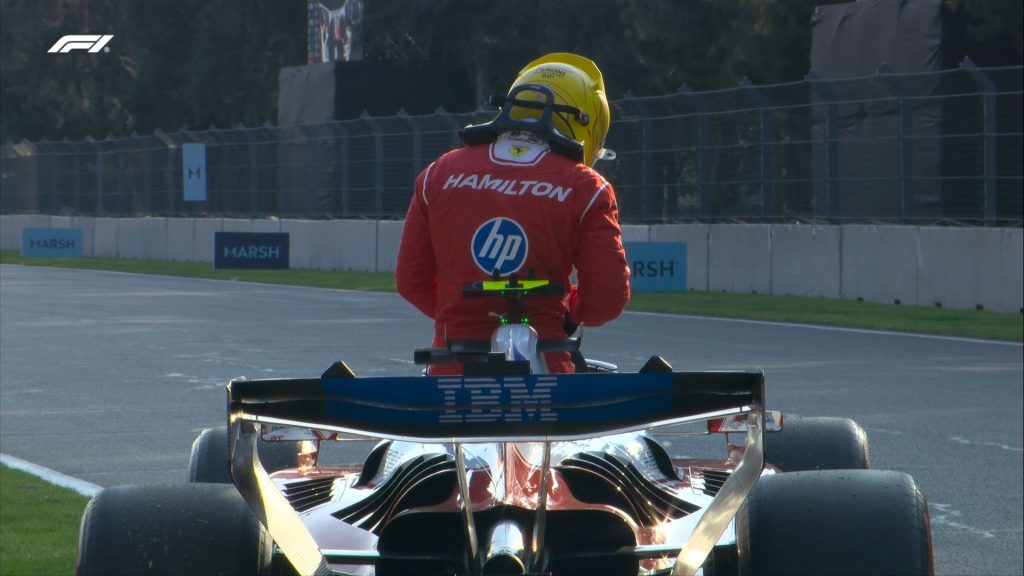
Ferrari’s promising Friday was overshadowed by the mechanical issue that ended Hamilton’s FP2 prematurely.
The seven-time world champion had demonstrated encouraging pace before reporting a loss of power and stopping his car on track.
As detailed in Hamilton’s Ferrari engine failure during Mexican GP practice, the British driver was unable to complete his planned programme and eventually finished 11th.
Hamilton’s position in the classification should not be interpreted as evidence of a substantial performance deficit compared with Leclerc.
He had been running fourth before the interruption, and the problem prevented him from completing the remaining qualifying simulations.
Ferrari therefore has one car with a complete Friday programme and another whose potential remains difficult to assess.
The team must also investigate the cause of the power unit issue before deciding whether any components require replacement.
At this stage, no grid penalty has been confirmed as a consequence of Hamilton’s stoppage.
Mexico’s altitude could influence the fight for pole
The Autódromo Hermanos Rodríguez presents one of Formula 1’s most unusual technical challenges because it is located approximately 2,240 metres above sea level.
The thinner air reduces aerodynamic efficiency and makes cooling more difficult, forcing teams to adopt compromises that would be less necessary at circuits closer to sea level.
Those conditions are particularly relevant to the 2026 cars, which rely on a substantially greater contribution from their electrical systems than the previous generation of Formula 1 machinery.
The balance between cooling, aerodynamic drag and energy deployment can affect performance on Mexico City’s long main straight.
Ferrari’s strong Friday pace suggests that the team has found a competitive operating window, at least over a single lap.
However, Mercedes, McLaren and Red Bull may still improve as they refine their cooling configurations and energy deployment strategies.
The stadium section also places a premium on mechanical grip and traction, while the first sector rewards straight-line speed and efficient braking.
A difference of one tenth could be enough to move a driver from pole position to the second row, given the margins recorded in FP2.
Verstappen remains a threat despite damaged Red Bull
Verstappen finished fifth in FP2, 0.311s behind Leclerc, but his session was affected by contact with Lawson in the stadium section.
The incident damaged the floor of the Red Bull and interrupted the Dutchman’s running.
The stewards subsequently handed both drivers one-place grid penalties, meaning Verstappen will lose one position from wherever he qualifies.
Although that punishment reduces the value of his eventual qualifying result, it does not eliminate Red Bull from the fight for the fastest lap.
Verstappen’s teammate Isack Hadjar finished sixth, 0.410s behind Leclerc, suggesting that the RB22 was competitive even if it lacked Ferrari’s outright speed.
Red Bull’s challenge will be to recover performance over a single lap while ensuring that the damaged components on Verstappen’s car are repaired before FP3.
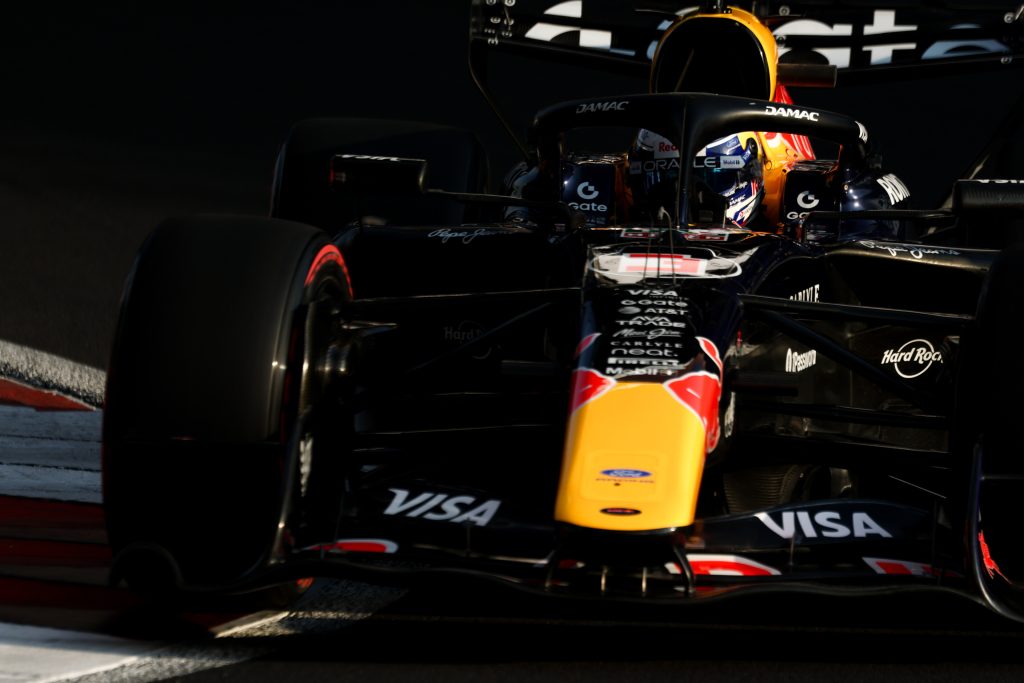
What Friday practice reveals about the Mexico pole battle
The most relevant comparison is the gap between the leading teams during their qualifying simulations.
| Pos. | Driver | Team | FP2 time | Gap |
|---|---|---|---|---|
| 1 | C. LECLERC | Ferrari | 1:17.827 | — |
| 2 | L. NORRIS | McLaren | 1:17.930 | +0.103 |
| 3 | G. RUSSELL | Mercedes | 1:17.933 | +0.106 |
| 4 | A. K. ANTONELLI | Mercedes | 1:18.044 | +0.217 |
| 5 | M. VERSTAPPEN | Red Bull | 1:18.138 | +0.311 |
| 6 | I. HADJAR | Red Bull | 1:18.237 | +0.410 |
The numbers favour Leclerc, but the competitive picture is not definitive.
Ferrari appears particularly effective over one lap, while McLaren and Mercedes remain close enough to challenge with relatively small improvements.
Verstappen’s compromised session also makes Red Bull’s true potential difficult to judge.
Leclerc is the strongest candidate on the evidence of Friday practice, but Ferrari cannot yet be considered an overwhelming favourite for pole. FP3 will provide the final opportunity to assess whether the team’s advantage is sustainable before qualifying.
GRANDE PRÊMIO is following every session of the Mexican Grand Prix this weekend, with breaking news, full coverage and real-time updates in its Formula 1 section.