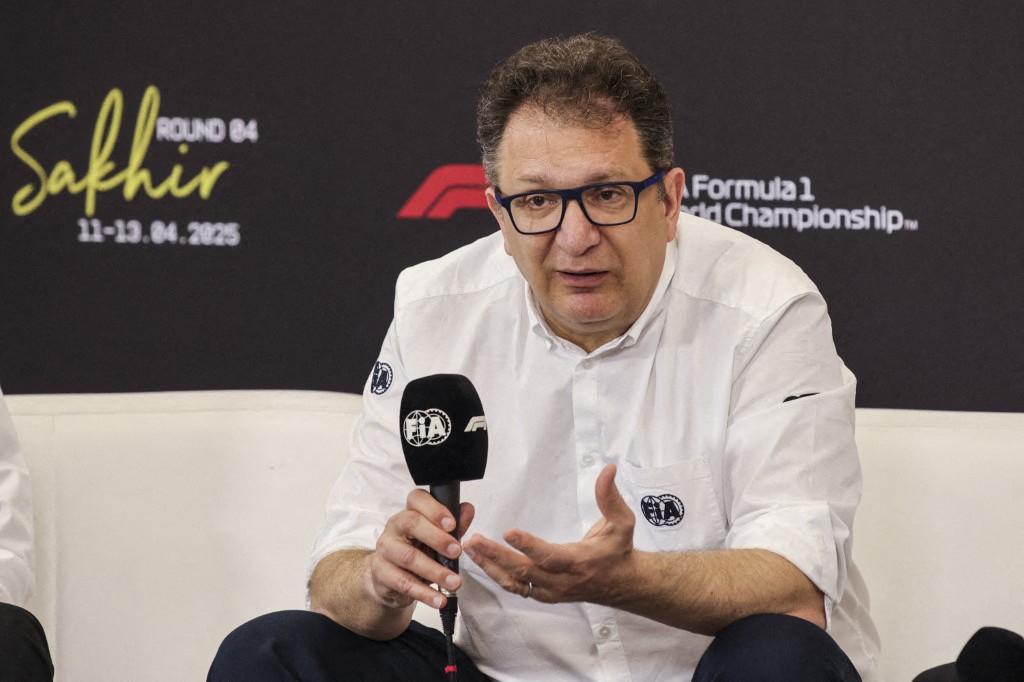
Nikolas Tombazis, single-seater director at the International Automobile Federation (FIA), acknowledged that Oscar Piastri’s complaints regarding the complex algorithms governing Formula 1’s new power units are “understandable.” However, the official admitted that finding a solution is not feasible, though he believes that the shift in the balance between the internal combustion engine and electric power—being phased in through 2028—should ease the situation.
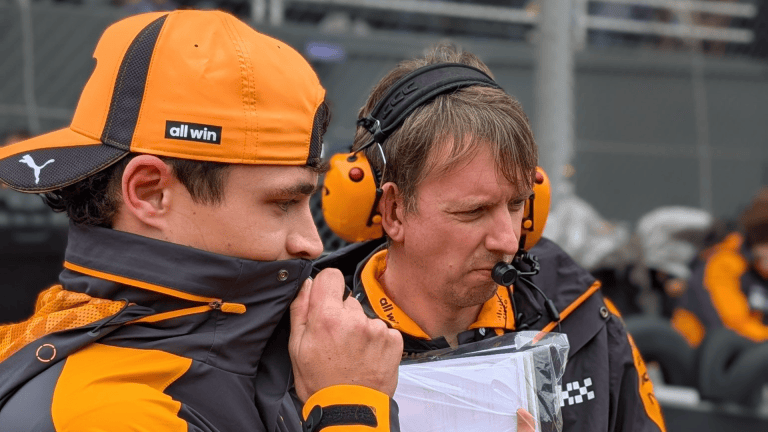
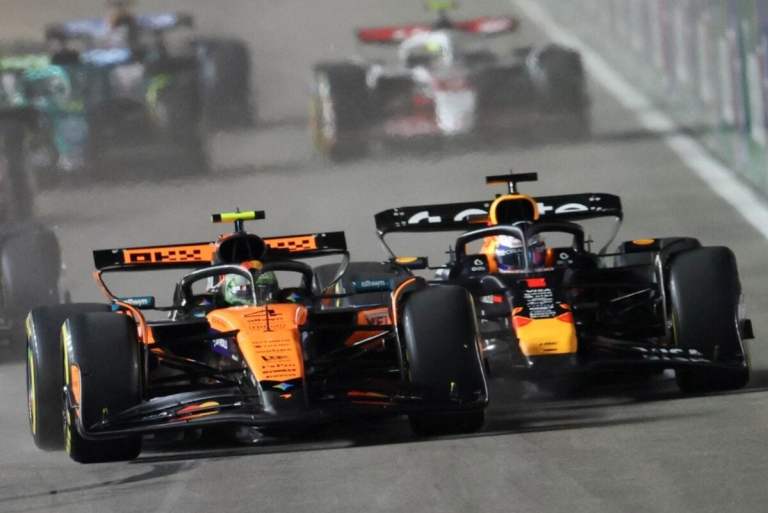
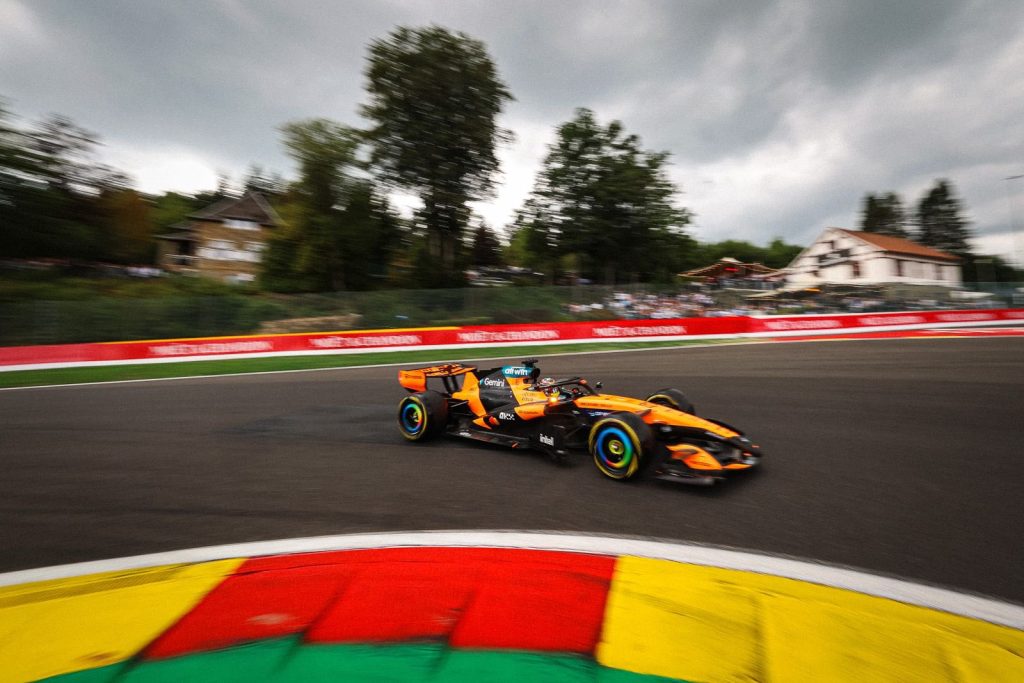
During the Belgian GP weekend, McLaren’s Australian driver pulled no punches against current energy management systems, stating that grids are now “defined by computers.” At Spa-Francorchamps, the driver of the #81 car lost significant time on the straights compared to teammate Lando Norris—a discrepancy the Woking-based squad could not initially explain, given that both cars were running identical system configurations.
Days later, however, team principal Andrea Stella detailed that power units feature automated control and optimization algorithms. In short, the mapping and deployment strategies pre-programmed by teams adapt automatically based on demands. For instance: if a driver consumes too much energy out of a specific corner and runs out on the subsequent straight, the software automatically tweaks parameters within a permitted window to trim output at that same corner on the next lap, reserving more deployment for high-speed sections.
In the case of Piastri and Norris at Spa-Francorchamps, if both were running identical setups, why did their cars behave differently? Simply put, driving style directly influences the system: racing lines, throttle application, battery harvesting points, and various other inputs trigger distinct interpretations by the power unit’s software. This dynamic prompted the Australian to vent over computer-driven outcomes.
“It’s true, and their comments are understandable,” Tombazis began in a conversation with Motorsport-Total. “Those statements stem from the fact that total energy is limited, making optimal deployment critically important. The various strategies required to achieve that are tied directly to this aspect,” he added.
The FIA director was then asked whether these self-learning software systems could be disabled, allowing drivers to manage energy deployment manually via a steering wheel button. “I don’t believe it would be possible to go that far,” he replied.
“First, if it were simply an on/off system for drivers to deploy whenever and for as long as they liked, they would dump all their energy on corner exits over very brief windows. As a result, the very effects people are complaining about would become even more pronounced,” he explained.
“Second, there are regulatory limits on how much energy can be deployed or recovered across a single lap. This includes the so-called SOC delta—the State of Charge Delta—along with similar parameters,” he continued. “These restrictions exist to prevent an arms race and stop teams from building even larger batteries. We didn’t want teams forced into installing double-sized batteries, which would make the cars heavier again. Therefore, I don’t think humans could rationally manage all these variables on the fly,” Tombazis added.
While Piastri remains skeptical that conditions will improve significantly over the next two years as the power ratio between the thermal engine and electric component shifts, the FIA director takes a different view. Even if the issue isn’t fully eliminated, Tombazis remains convinced F1 is moving in the right direction.
“When the electric proportion is high and you aren’t reliant on starting every lap with a fully charged battery, energy management becomes paramount. I think Oscar is a very intelligent driver, but he is reacting to what he feels is dominating the racing at the moment. I believe rebalancing the power output will be a step in the right direction. Will the problem disappear completely? No. But I think it will be a marked improvement,” he acknowledged.
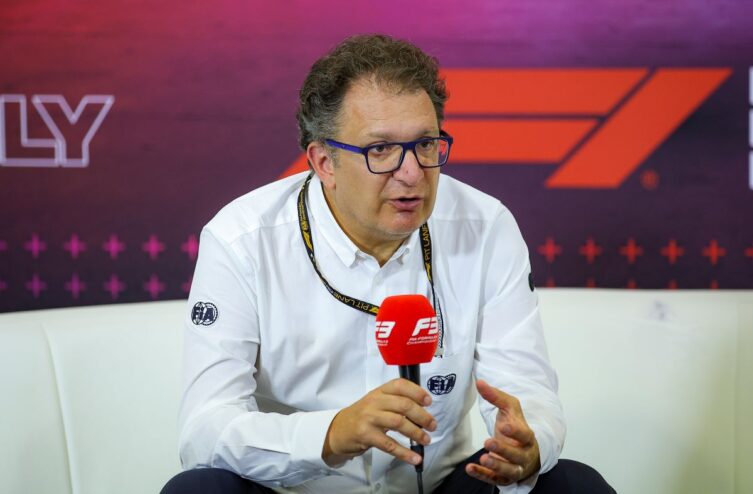
“Undoubtedly, it is complicated and certainly more complex than we would like. 100%, I fully agree. But I believe that is the byproduct of the fundamental challenge at the core of these regulations,” the Greek official concluded.
Formula 1 is currently on summer break. The series resumes 2026 season action from August 21 to 23 with the Dutch Grand Prix at Zandvoort.