News Summary
- The 2026 Las Vegas Grand Prix featured more than 30 changes of lead, with drivers repeatedly overtaking and then losing positions.
- Overtake Mode, electrical energy deployment and exceptionally strong slipstreams created dramatic speed differences between cars.
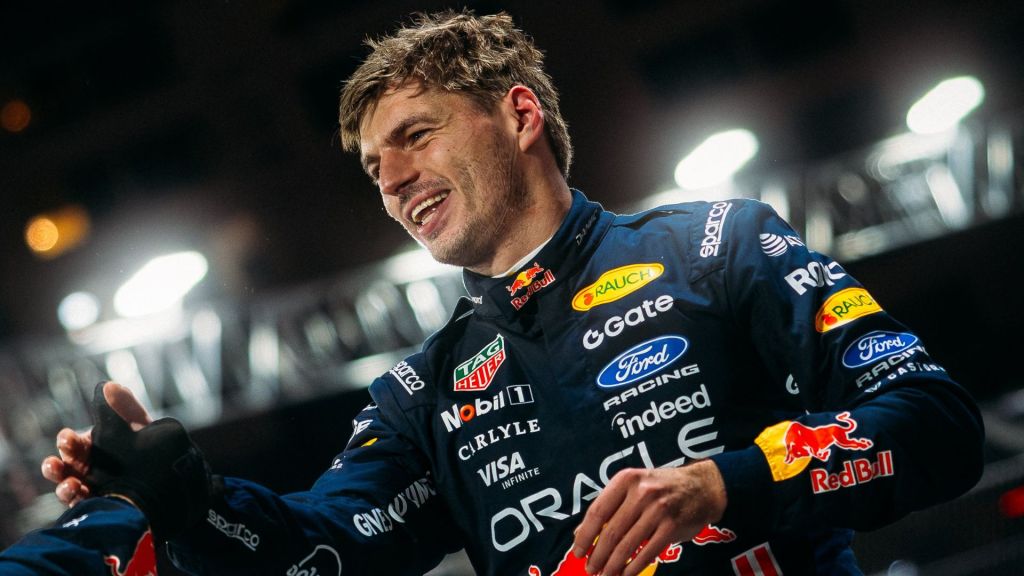
- Max Verstappen won by managing his battery strategically, often allowing rivals ahead before using the next opportunity to retake the lead.
The 2026 Las Vegas Grand Prix produced one of Formula 1’s most unusual overtaking spectacles, with cars repeatedly exchanging positions and drivers discovering that taking the lead was not necessarily an advantage.
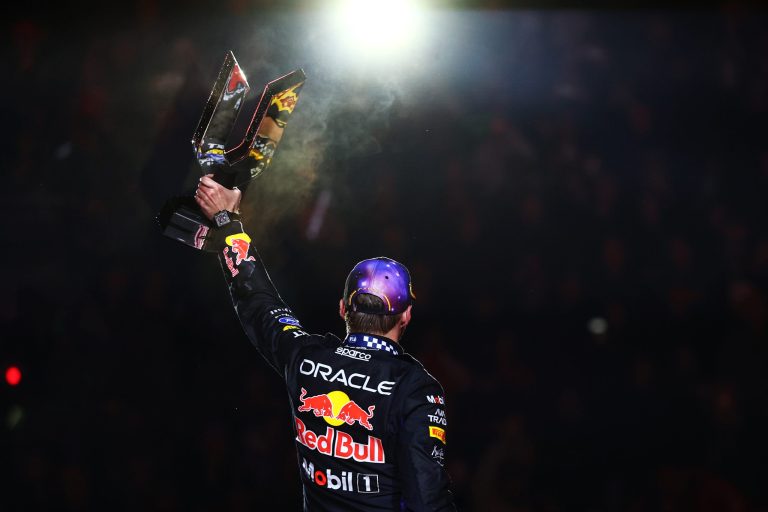
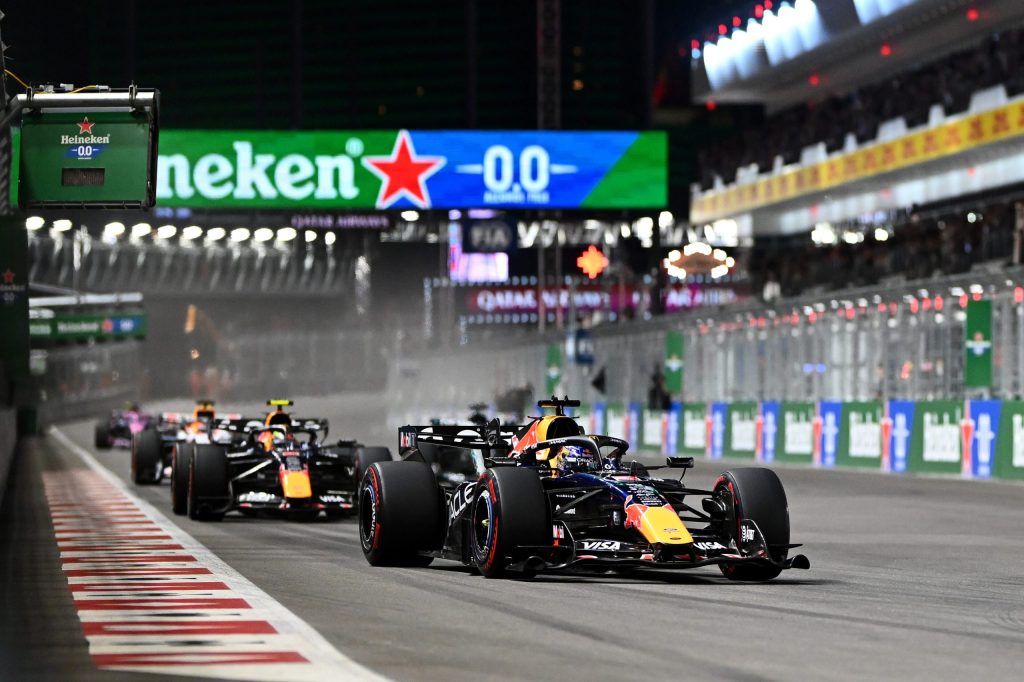
Max Verstappen won the race after fighting George Russell, Kimi Antonelli and Lando Norris throughout the 50 laps, but the Red Bull driver was rarely able to break away.
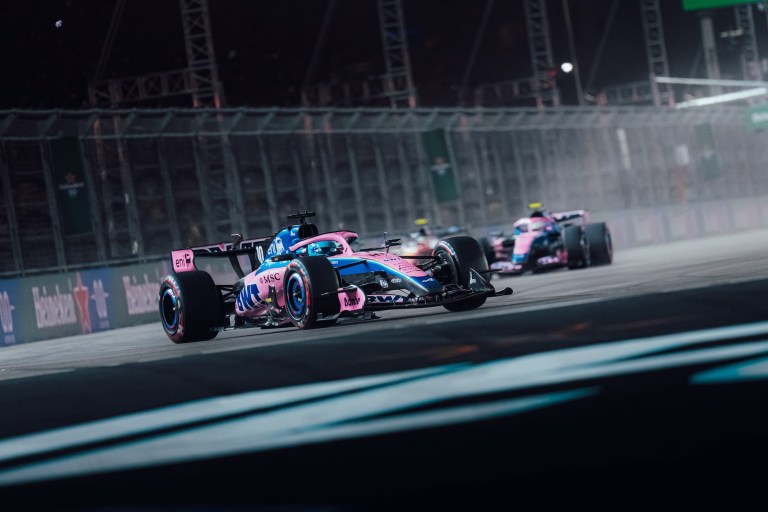
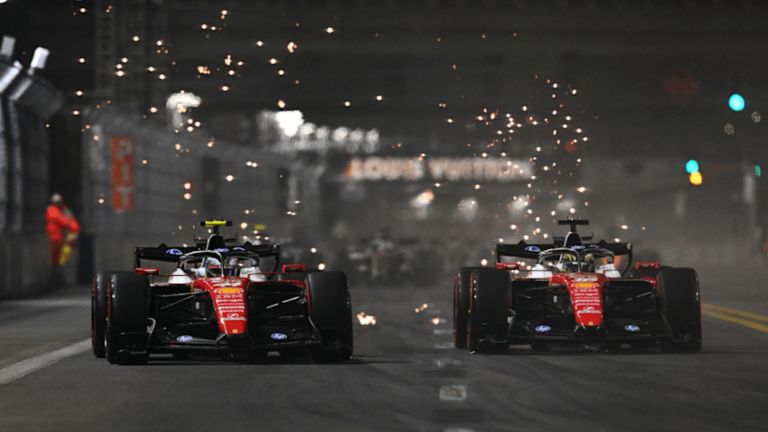
Instead, drivers overtook one another on Las Vegas’ long straights, only to be passed again a few corners later.
The phenomenon was not simply the result of one car having superior straight-line speed.
Formula 1’s new power-unit regulations, energy deployment, Overtake Mode and aerodynamic slipstream combined to produce extraordinary variations in speed.

The 2026 battery rules changed the way drivers fought
The current generation of Formula 1 cars relies far more heavily on electrical power than the previous regulations.
Drivers must constantly decide where to deploy energy from the battery and where to recover it.
Using more electrical power on one straight can provide an immediate advantage, but it also reduces what remains available later in the lap.
Consequently, a driver can overtake an opponent and then become vulnerable almost immediately.
The Las Vegas Strip Circuit magnified this effect because of its long, high-speed sections and relatively limited opportunities to recover energy under braking.
Drivers could achieve a major speed advantage along one straight and then struggle to defend on the next.
Overtaking became a question not only of how fast a car could travel, but also of when its driver chose to use the available electrical energy.
How Overtake Mode contributed to the chaos
Formula 1 introduced Overtake Mode for 2026 as the replacement for the previous DRS overtaking assistance system.
The mode is available to a driver who is within one second of the car ahead at the designated detection point.
It allows additional electrical energy recovery and provides a more favourable power-deployment profile for the following lap.
The attacking driver can therefore sustain a higher speed for longer, particularly on extended straights.
But the driver who completes the overtake may then lose that assistance when leading.
If the former leader remains within one second, the roles can reverse.
That contributed to the repeated exchanges seen between Verstappen and Russell.
The car in front could become the most vulnerable car in the battle.
The slipstream was just as important as the battery
Although battery management became one of the principal talking points, the drivers also highlighted the strength of the slipstream.
At high speed, the leading car displaces air, reducing the aerodynamic resistance faced by the car following closely behind.
The effect becomes particularly powerful on Las Vegas’ long straights.
Formula 1’s 2026 active aerodynamics further changed the cars’ behaviour by allowing different wing configurations in selected high-speed sections.
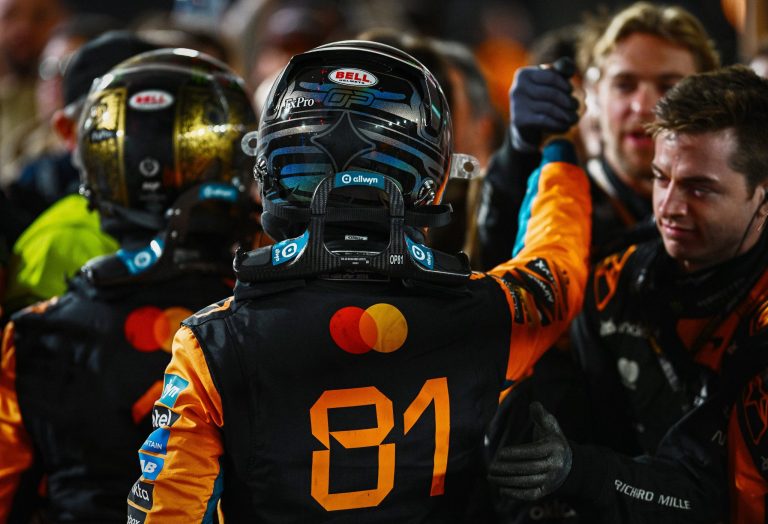
Lando Norris argued after the race that the spectacle could not be attributed solely to the electrical regulations.
“Today was not a race simply because of battery,” the McLaren driver explained.
“It was also a race because the slipstream is just huge with Straight Mode.”
Teammate Oscar Piastri agreed that the slipstream had probably been the more important factor.
That distinction helps explain why cars from different teams could temporarily gain a dramatic advantage before immediately losing it.
Why Verstappen kept losing and retaking the lead
Verstappen repeatedly surrendered first place during the race but rarely remained behind for long.
Russell was particularly aggressive during the opening stages, frequently overtaking the Red Bull only to be repassed.
Antonelli and Norris later joined the fight, with several drivers briefly taking the lead.
The decisive advantage for Verstappen was his ability to anticipate when he needed to conserve energy and when to deploy it.
Rather than attempting to defend every position at any cost, he managed his electrical resources so that he could recover the lead at the next opportunity.
His race was built around controlling the sequence of overtakes, not preventing every individual pass.
That approach also made the final lap particularly important.
A driver who led at the wrong point could become vulnerable to a slipstream-assisted attack before the finish.
Verstappen ultimately crossed the line only 0.639 seconds ahead of Norris, with Piastri 1.529 seconds behind.
Why couldn’t Mercedes convert its speed into victory?
Mercedes had the pace to challenge Verstappen throughout the Grand Prix.
Russell frequently moved ahead of the Red Bull driver, while Antonelli also took turns leading.
However, neither could establish a decisive advantage.
Russell’s race collapsed when he attempted to overtake Antonelli at Turn 5 with three laps remaining.
The British driver locked up, hit the barriers and fell to ninth.
Antonelli then lost positions to the McLaren drivers during the final stages after running short of energy to defend.
Mercedes subsequently acknowledged that the combined effects of slipstreaming and Overtake Mode made gaining positions comparatively straightforward but holding them much harder.
That explained why the team’s promising challenge ended without a podium.
Read Russell’s explanation of his costly late crash and GRANDE PRÊMIO’s report on Verstappen’s victory.
Will Formula 1 produce more races like Las Vegas?
The conditions in Nevada were unusually favourable for repeated overtaking.
The long straights amplified slipstreaming, while the energy-management demands created substantial differences in how drivers could deploy power.
Other circuits may not produce the same effect because their corners, straights and energy-recovery opportunities are different.
Nevertheless, Las Vegas illustrated one of the most significant consequences of the 2026 regulations: the fastest car at one point on the lap may be far from the fastest at another.
The balance between electrical deployment, aerodynamic drag and track position has become central to the way Formula 1 races are contested.
GRANDE PRÊMIO is following every session of the 2026 championship and the latest developments in Formula 1.
FAQ
Why were there so many overtakes in the 2026 Las Vegas Grand Prix?
The combination of long straights, powerful slipstreams, Overtake Mode and differences in battery deployment created major speed variations, allowing drivers to overtake and be overtaken again almost immediately.
What is Overtake Mode in Formula 1?
Introduced in 2026, Overtake Mode provides extra electrical energy and a more favourable deployment profile to qualifying drivers within one second of the car ahead at a designated detection point.
How did Max Verstappen win such a chaotic race?
Verstappen managed his electrical energy strategically, repeatedly retaking the lead after rivals overtook him, and ultimately finished 0.639 seconds ahead of Lando Norris.