Key takeaways
- Front tire thermal management: McLaren introduced modified front wheel rims and closed wheel covers to boost front tire temperatures and improve operating pressures.
- Reduced aerodynamic drag: The enclosed front cover design helped limit ambient air cooling, providing an extra speed boost along high-speed sections.
- Rear wheels left unchanged: The rear assembly remained untouched, as rear tire thermal control and degradation were already well within optimum windows.
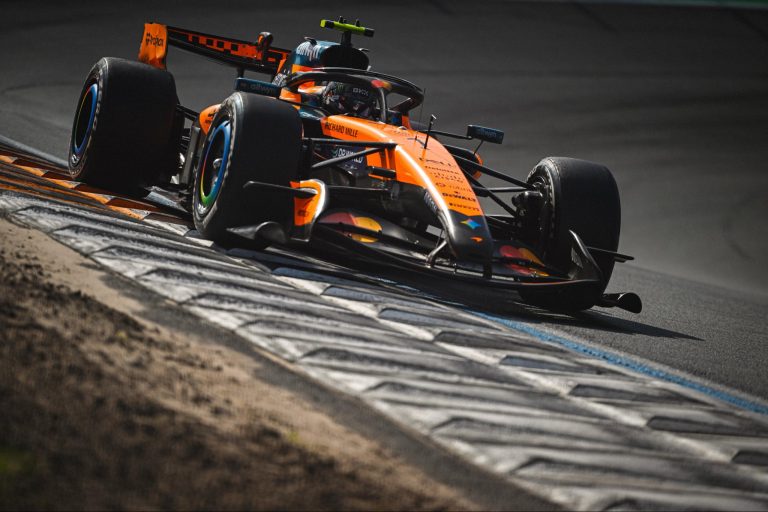
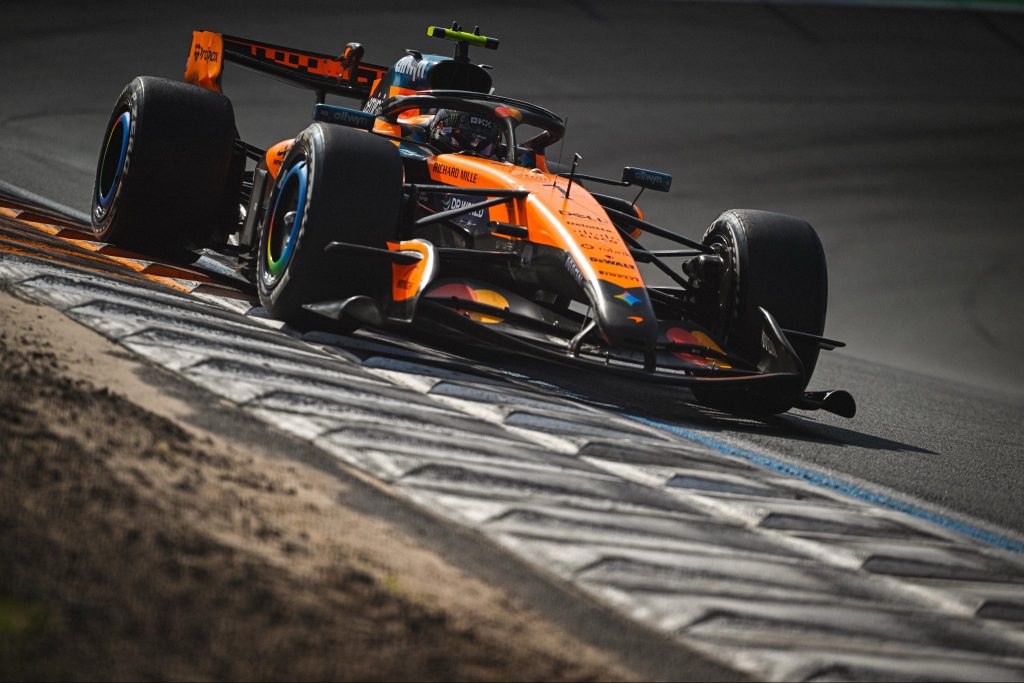
McLaren has revealed technical details surrounding a front wheel rim and cover update that triggered a dominant performance surge at the Dutch Grand Prix in Zandvoort, culminating in a commanding victory for Lando Norris.
The solution was engineered specifically to improve front tire thermal preparation and heat retention. With wheel development once again permitted under updated technical regulations, engineering director Neil Houldey confirmed the team capitalized on passive air-exchange rules to better manage operational tire pressures.

“We introduced a small tweak to the rear floor edge to generate a bit more load, alongside minor adjustments to the rear brake ducts,” Houldey explained. “We also have new front wheel rims that help us raise tire temperatures. These updates aren’t massive in terms of raw lap time, but they make us slightly more competitive.“
The team focused its development on the front axle by adopting a more enclosed wheel cover design. This modification restricted the cooling effect of ambient airflow over the rim structure, allowing heat from the brake assembly to transfer passively into the tire casing. The design also delivered a secondary benefit by smoothing wheel wake to reduce overall aerodynamic drag at high speeds.
Conversely, the rear wheel assembly was left unchanged, as rear tire degradation and heat management already matched McLaren’s target parameters during the Zandvoort weekend.
This technical breakthrough arrives as drivers reflect on long-term team dynamics, including Lando Norris asserting his influence at McLaren following his long-term contract extension and Ferrari bringing low-drag upgrades and an extra 15 hp to Monza.
Formula 1 action resumes from September 4–6 for the Italian Grand Prix at Monza (Round 13 of the 2026 season). GRANDE PRÊMIO will provide complete live coverage of every session. Follow all updates on our news page.
McLaren MCL38 Dutch GP Technical Package Summary
| Component | Modification | Technical Purpose |
|---|---|---|
| Front Wheel Rims | Revised thermal transfer design | Increases passive heat transfer to front tire casings |
| Front Wheel Covers | More enclosed cover profiling | Limits ambient air cooling and reduces high-speed drag |
| Rear Floor Edge | Minor floor geometry tweak | Generates localized downforce load |
| Rear Brake Ducts | Minor internal duct adjustments | Fine-tunes airflow conditioning around rear brakes |
Frequently asked questions (FAQ)
1. What primary problem did McLaren’s front wheel update solve at Zandvoort?
The update solved front tire temperature management issues, helping keep the front tires within their optimal operating window and reducing understeer.
2. Why did McLaren only update the front wheels and not the rears?
Rear tire degradation and temperatures were already performing within target windows, meaning no intervention was necessary on the rear axle.
3. When is the next Formula 1 race on the 2026 calendar?
The next event is the Italian Grand Prix at Monza, taking place from September 4–6, 2026.