Key takeaways
- Monza as the acid test: Team Principal Andrea Stella designated the upcoming Italian Grand Prix at Monza as the true benchmark to determine whether McLaren can challenge Mercedes over the remaining 11 races.
- High-speed vs. low-drag challenge: Unlike the high-downforce layouts of Hungary and Zandvoort where Lando Norris claimed back-to-back victories, Monza’s long straights will put the MCL40’s aerodynamic drag and heavy braking efficiency to the test.
- Crucial momentum: A strong result in Italy would confirm McLaren’s recent upgrade trajectory, giving Woking genuine optimism for a late-season title push against the Silver Arrows.
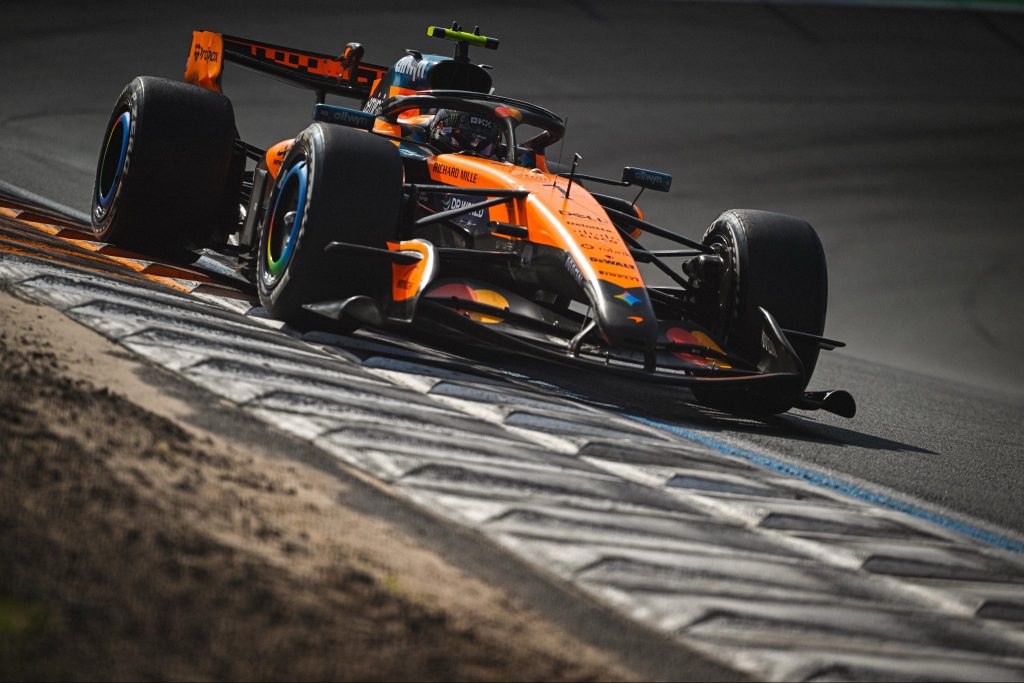
ALando Norris’ second consecutive Formula 1 victory in 2026 raised an inevitable question: does McLaren have enough momentum to turn the tables on Mercedes over the remaining 11 rounds? Andrea Stella has adopted a cautious stance when discussing the topic, but admitted that Monza, host of the Italian Grand Prix in two weeks, will provide that answer.
The McLaren team principal’s analysis is based on the vastly different characteristics presented by the Italian circuit when compared to the Hungaroring and Zandvoort. While Norris’ victories came on technical tracks that place lower demands on engine output, Monza is the fastest circuit on the calendar, comprised primarily of long straights and high-speed corners.
“If we consider the characteristics demanded by Zandvoort and Hungary and compare them to Monza, we enter a completely different scenario,” Stella told journalists present in the Netherlands. “If we can confirm our progress there as well, we will be able to face the rest of the season with a certain optimism.”
Until last year, the papaya machine was considered the most versatile car on the grid for adapting well to all layout types, but that attribute was lost amidst the major regulation overhaul. Long straights remain an area of concern, though recent updates have significantly improved the package’s aerodynamic efficiency.

“We need to verify if we can deliver a good performance on long straights. We know that aerodynamic drag is not necessarily one of our car’s strengths. There are also many heavy braking zones—another area that isn’t necessarily one of our strong points,” the McLaren leader continued.
“So far, we can say that when we race on high-downforce circuits with this type of layout, we have been able to fight for the win,” he concluded.
Formula 1 returns from September 4–6 at Monza, stage of the Italian Grand Prix and 13th round of the 2026 season. GRANDE PRÊMIO covers all on-track action live. Follow all updates on our news page.
World Championship Standings (Top 4 after Dutch GP)
| Pos | Driver | Team | Engine | Points |
| 1 | Andrea Kimi Antonelli | Mercedes | Mercedes | 242 |
| 2 | George Russell | Mercedes | Mercedes | 183 |
| 3 | Lewis Hamilton | Ferrari | Ferrari | 183 |
| 4 | Lando Norris | McLaren | Mercedes | 159 |
Frequently asked questions (FAQ)
1. Why is Monza considered a critical test for McLaren’s 2026 season?
Monza features low-downforce, high-speed straights that contrast sharply with the high-downforce tracks where McLaren recently won, serving as a test for their straight-line aerodynamic efficiency.
2. What are the MCL40’s main technical limitations heading into the Italian GP?
According to Andrea Stella, aerodynamic drag and stability under heavy braking remain areas where McLaren still needs to prove its competitiveness against Mercedes.
3. Where does Lando Norris stand in the championship following his Zandvoort win?
Lando Norris sits 4th in the Drivers’ World Championship with 159 points, 83 points behind leader Andrea Kimi Antonelli.