News Summary
- Mercedes led both Friday sessions at Madring, with George Russell fastest in FP1 before Andrea Kimi Antonelli took over in FP2.
- Ferrari emerged as Mercedes’ closest challenger, while Red Bull and Racing Bulls showed particular strength through Madring’s technical middle sector.
- Limited race simulations, tyre graining, almost 50 track-limits infringements and few obvious overtaking opportunities mean Friday provided only a partial picture of F1’s first weekend at the new circuit.
Formula 1 finally arrived in Madrid for its first weekend at the new Madring circuit, and the anticipation surrounding the unusual layout was quickly replaced by something different: caution.
The combination of fast sections, narrow stretches and walls close to the racing line had generated concern before the cars even left the garages. Yet Friday was considerably calmer than expected. Only Arvid Lindblad’s FP2 accident produced a red flag, while the fresh asphalt provided an unusually high level of grip for a brand-new circuit.
That does not mean Madring has suddenly become straightforward.
Quite the opposite. After the first day, two conclusions stand out: the competitive order has changed remarkably little, and qualifying could carry even greater importance than usual.
Mercedes arrived in Madrid facing an important test. Its dominance at Monza had been aided by characteristics that suited the W17, but Madring represents a much broader examination of the car. As GRANDE PRÊMIO explained before the weekend, Madrid’s combination of 22 corners, a fresh surface and no previous F1 race data offered a genuine opportunity to reshuffle the competitive order.
So far, it has not.
Russell led the first-ever Formula 1 practice session at Madring with a 1:34.077, heading Antonelli in a Mercedes 1-2.
Then the championship leader responded.
Antonelli finds another Mercedes advantage
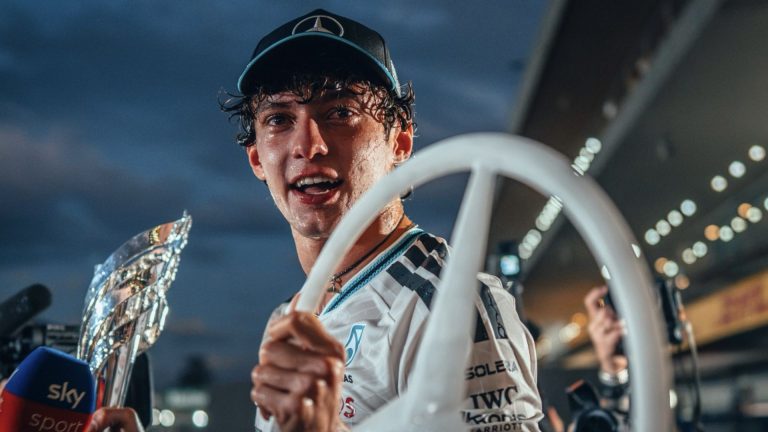
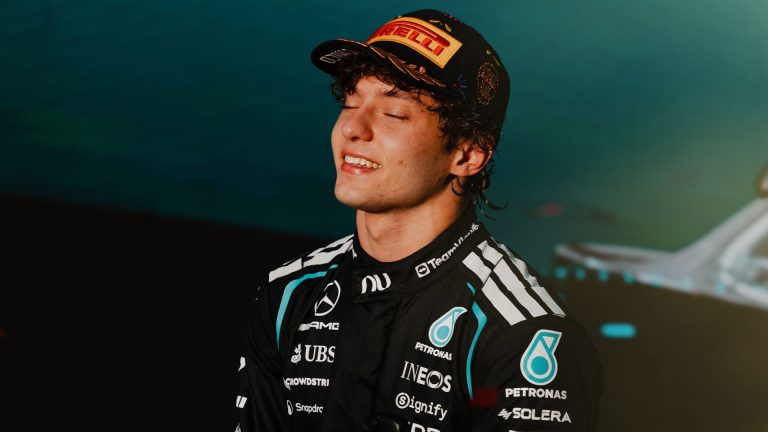
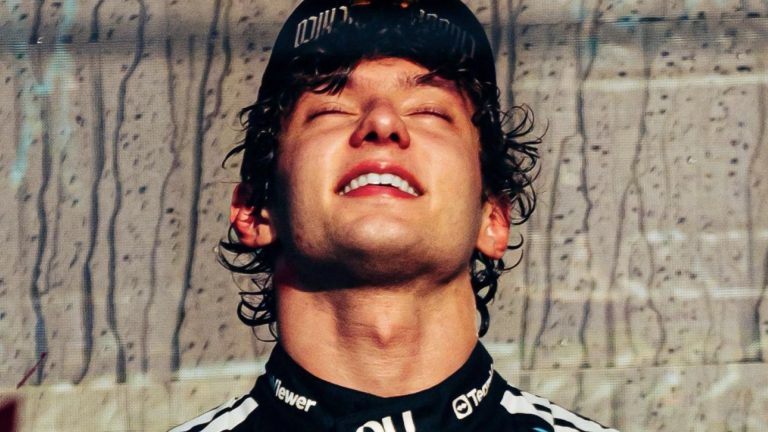
Antonelli looked increasingly comfortable as Friday progressed. In FP2, the Italian produced a 1:33.662, beating Charles Leclerc by 0.113s and Lewis Hamilton by 0.149s.
The lap was another reminder that Antonelli’s current championship advantage is not simply a consequence of Mercedes’ straight-line performance. Madring does not appear, at least theoretically, to emphasize the W17’s strongest characteristics in the same way as Monza did.
Yet nobody was quicker than Antonelli through the third sector, while he also gave away very little in the opening part of the lap.
The result was enough to complete a Mercedes sweep of Friday, with Russell leading FP1 and Antonelli taking FP2. The full FP2 classification also showed how close Ferrari remained, with Leclerc and Hamilton immediately behind Antonelli.
That is significant after what happened at Monza. Antonelli recovered from 19th to win his home race and extended his championship lead over Russell to 66 points, strengthening Mercedes’ control of the season. The Italian’s remarkable Monza comeback also made him the first Italian to win at the circuit since 1966.
Madrid was supposed to provide a very different examination. Friday suggests Mercedes may be capable of passing that test as well.
There is, however, a significant unknown.
Lindblad’s crash late in FP2 compromised the teams’ long-run programs, leaving considerably less representative race data than they would normally have after a Friday.
“Although we managed to complete plenty of qualifying-pace work, our race simulation was disrupted by the red flag in FP2,” Mercedes trackside engineering director Andrew Shovlin said.
“What we saw was that the front tyres are suffering more, which will probably be the story on Sunday as well.”
“Everything is very tight at the front, so we need to find more pace to be in the fight for the front row tomorrow. Overall, the day was encouraging and it looks like we’re as much in the fight as anyone.”
That tyre behaviour deserves attention. Graining appeared during Friday running, and the high temperatures expected throughout the weekend could make thermal management increasingly important.
The problem is that nobody yet has a complete picture of how severe the degradation will become over a Grand Prix distance.
Ferrari emerges as Mercedes’ closest challenger
If Mercedes remains the reference, Ferrari provided the clearest evidence that the fight for pole is far from settled.
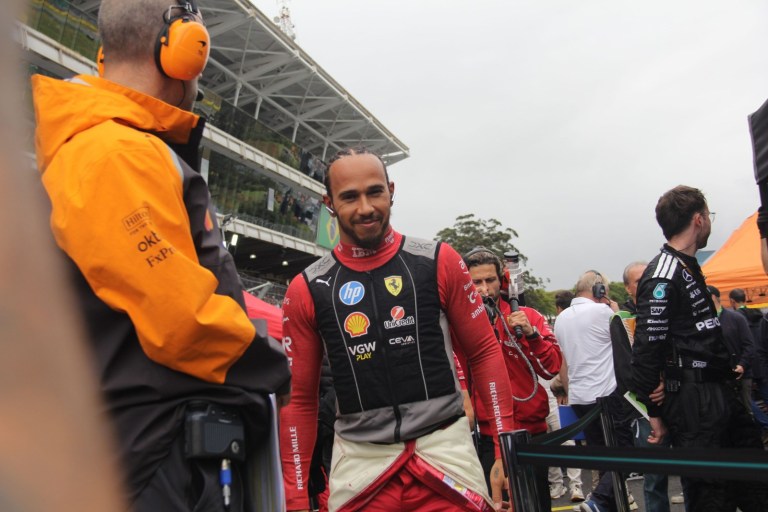
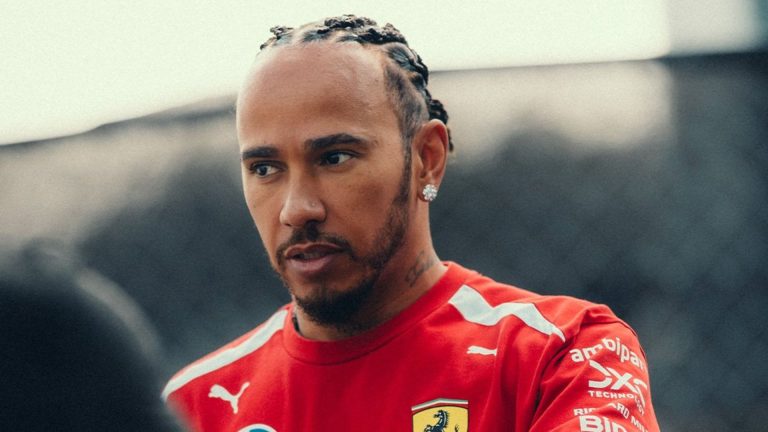
Leclerc finished FP2 only 0.113s behind Antonelli, with Hamilton another 0.036s back. More important than the headline times was where the SF-26 generated its performance.
Ferrari looked particularly competitive through the first two sectors, which combine acceleration zones with several different corner profiles. Its medium-tyre pace was encouraging, while the soft-tyre qualifying simulations suggested that both cars have enough performance to fight near the front.
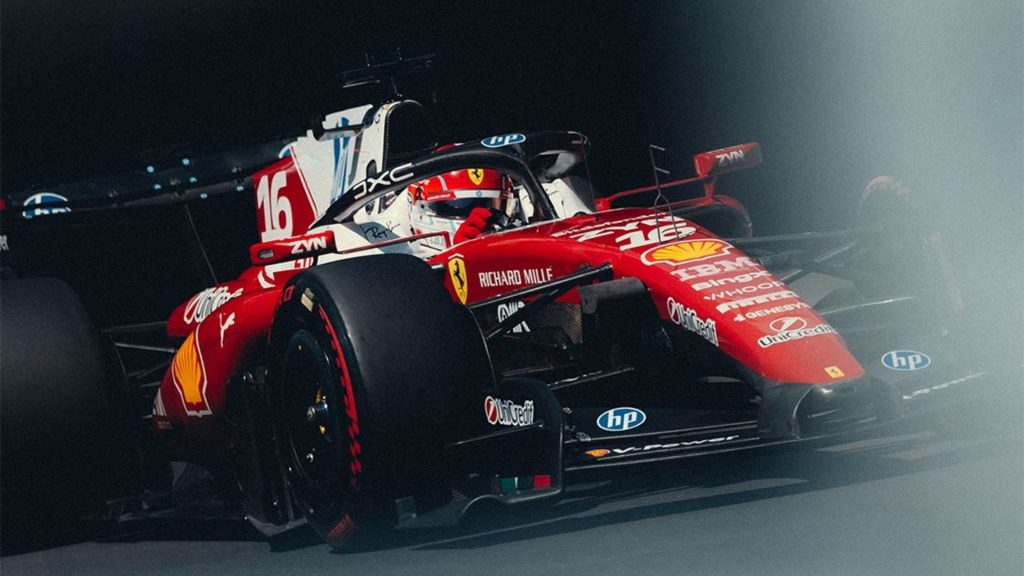
The question is whether Ferrari can preserve that balance as grip evolves.
“The ideal setup is the one that works well in qualifying, not necessarily the one that works in the first free practice session on Friday,” Frédéric Vasseur warned.
“It’s a challenge because the track features practically every type of corner we have during the season, and it’s a good exercise for the engineers.”
“But ultimately, it’s also difficult to estimate how the grip level will evolve between FP3 and qualifying, and even during qualifying itself. Energy management through the high-speed section is also complicated, and I think the key will be estimating the pace we’ll have in Q3.”
That evolution could be crucial. A new track tends to gain grip quickly as rubber is laid down, meaning the setup that worked on Friday may not necessarily provide the same balance late on Saturday afternoon.
Red Bull and Racing Bulls join the fight
Red Bull and Racing Bulls should not be dismissed either.
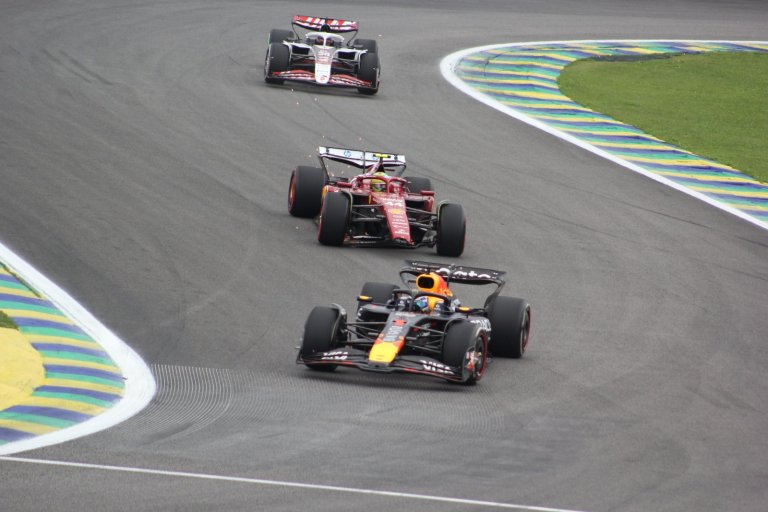
Both demonstrated considerable potential over a single lap, particularly through the more technical middle portion of Madring.
Lindblad was the standout. The Racing Bulls rookie produced a 1:33.890, only 0.228s behind Antonelli, before crashing at Turn 13. Despite missing the closing part of FP2, he remained fourth in the classification.
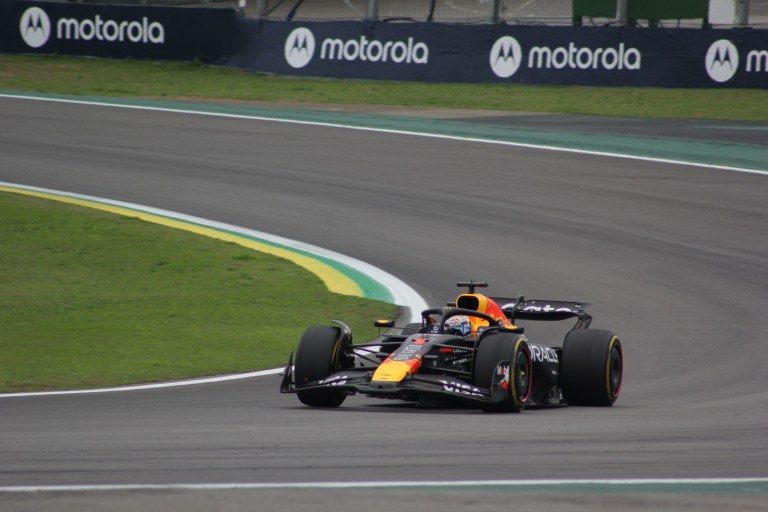
Russell followed in fifth, with Max Verstappen sixth.
That leaves an intriguing battle developing between Mercedes, Ferrari and the two Red Bull-owned teams — but with one conspicuous question mark still hanging over McLaren.
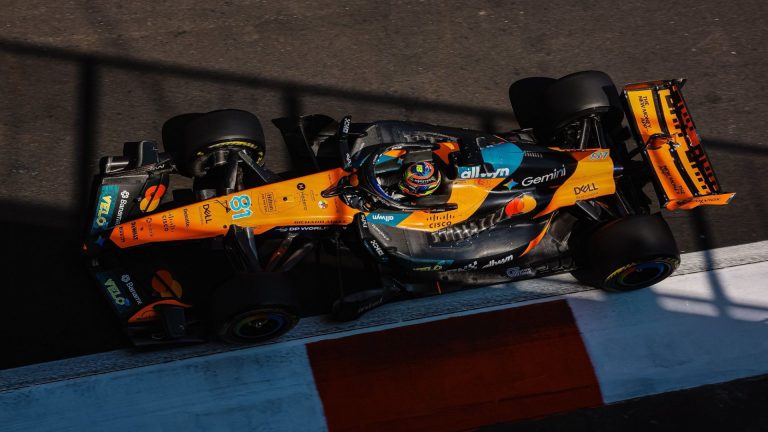
On paper, Madring should contain several characteristics that suit the MCL40, particularly its longer, faster corners. But Lando Norris’ gearbox problem severely restricted his FP2 running.
Oscar Piastri managed seventh, 0.538s behind Antonelli, but McLaren ended Friday looking less settled than expected.
With no historical data from Madring, losing a substantial portion of one of only three practice sessions is particularly costly.
Madring exposes its first warning signs
Friday’s relatively quiet running should not disguise how unforgiving Madring could become when the drivers start pushing to the absolute limit.
Almost 50 lap times were deleted for track-limits infringements during FP2, with Antonelli alone responsible for 10 violations.
Andrea Kimi Antonelli also explored Madring’s track limits during Friday practice (Photo: Mercedes)
That is not a trivial detail ahead of qualifying.
Margins will shrink considerably in Q3, and the combination of track limits, walls, high-speed sections and the changing grip level creates the possibility that the fastest theoretical lap will not necessarily be the one that determines pole.
Madring is also bumpy in places, fast and, crucially, appears to offer relatively few straightforward overtaking opportunities.
Russell perhaps provided the clearest description of what awaits.
“It’s undeniably a high-risk circuit, and I think all the drivers probably left that small safety margin today,” he said.
“It will be difficult to overtake. The grip level is very high, but the cars are sliding around quite a lot.”
That may ultimately be the most important lesson from Friday.
The drivers were learning. They were leaving margins. They were avoiding unnecessary risks on a circuit nobody had previously raced in Formula 1 machinery.
On Saturday, those margins disappear.
And if overtaking proves as difficult as Russell expects, qualifying becomes much more than a battle for prestige: it could determine the structure of the entire Spanish Grand Prix.
Mercedes enters that fight with the advantage. Antonelli has the fastest lap of the weekend, Russell has already led a session and the W17 has so far answered questions that Madring was supposed to ask.
But Ferrari is within 0.113s. Racing Bulls has demonstrated unexpected speed. Red Bull is lurking. McLaren has not yet shown its full hand.
Friday confirmed the familiar hierarchy at the front. Saturday will reveal whether that hierarchy can survive when Madring finally stops being treated with caution.
Formula 1 returns to the track for FP3 at 12:30 local time, followed by qualifying at 16:00. The Grand Prix starts at 15:00 on Sunday. See the complete 2026 Spanish GP schedule and session times.
GRANDE PRÊMIO follows all the action from the first Formula 1 weekend at Madring.
FAQ
What time is F1 qualifying at the 2026 Spanish GP in Madrid?
Qualifying at Madring starts at 16:00 local time on Saturday, September 12, after FP3 at 12:30.
Who was fastest in Friday practice at the Madrid F1 circuit?
Andrea Kimi Antonelli set Friday’s fastest overall lap with a 1:33.662 in FP2. George Russell had earlier led FP1 with a 1:34.077, meaning Mercedes topped both sessions.
Can Ferrari challenge Mercedes for pole at the Spanish GP?
Friday’s times suggest it can. Leclerc finished FP2 only 0.113s behind Antonelli, while Hamilton was third, 0.149s from the Mercedes. Racing Bulls, Red Bull and McLaren remain potential factors, but the changing grip level at the new circuit means the true qualifying order is still uncertain.