News Summary
- Lando Norris found more than 0.7s between his two Q3 attempts to beat Andrea Kimi Antonelli to pole by only 0.011s.
- McLaren progressively solved its low-speed and tyre-confidence problems despite Norris losing almost all of FP2 with a gearbox issue.
- Mercedes, McLaren, Red Bull and Ferrari start inside the top five, separated by less than 0.2s, while tyre degradation and limited overtaking leave Sunday’s race difficult to predict.
Lando Norris’ pole position was the kind of surprise that perhaps only a circuit as unconventional as Madring could produce.
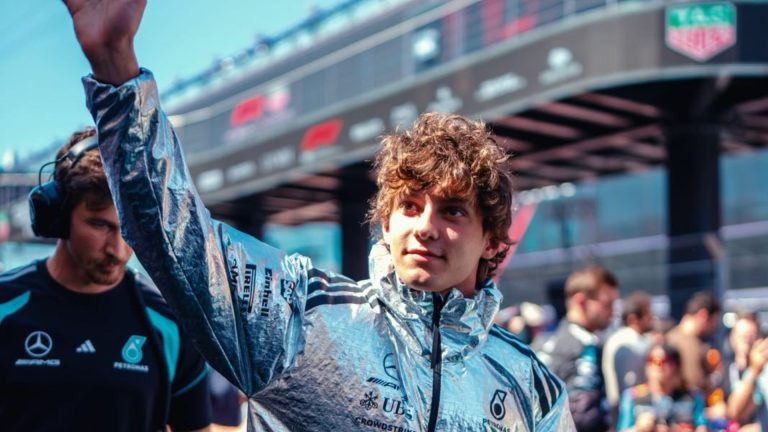
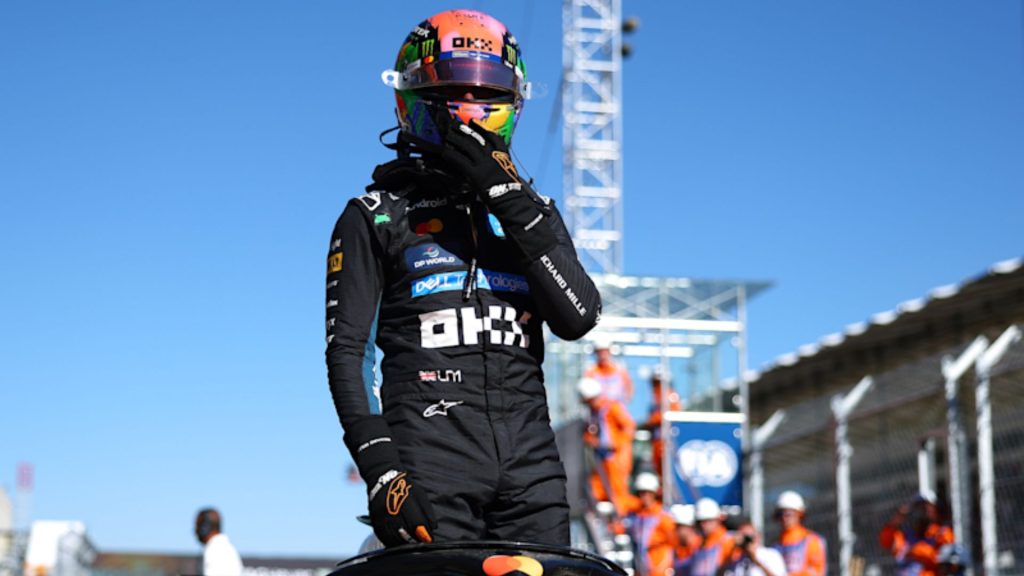
A completely new track, an unusually smooth surface and a weekend repeatedly interrupted by incidents left Formula 1 with fewer reliable references than usual. McLaren had hardly looked like the team to beat, yet Norris transformed his qualifying session one lap at a time before producing a remarkable final Q3 effort to steal what had appeared to be Andrea Kimi Antonelli’s pole position.
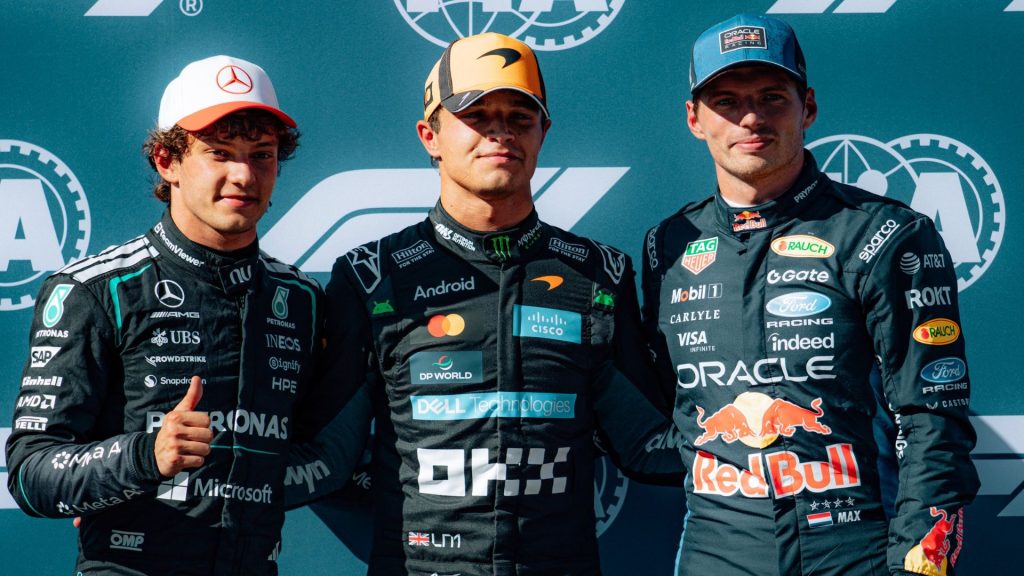
Norris beat the championship leader by just 0.011s to claim the first F1 pole in Madring history. More importantly for Sunday, the result placed McLaren firmly into a victory fight that had previously appeared to favour Mercedes.
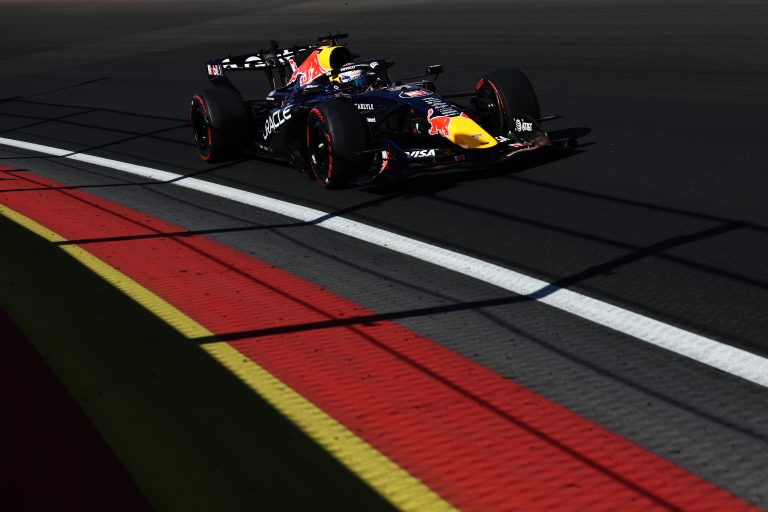
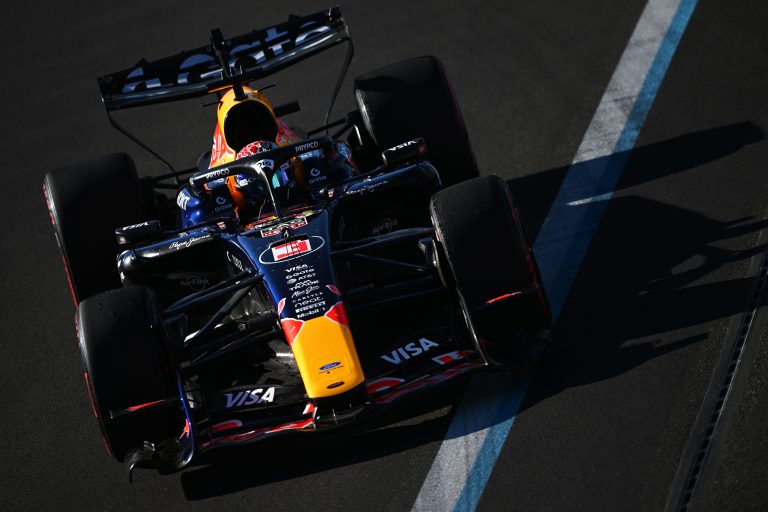
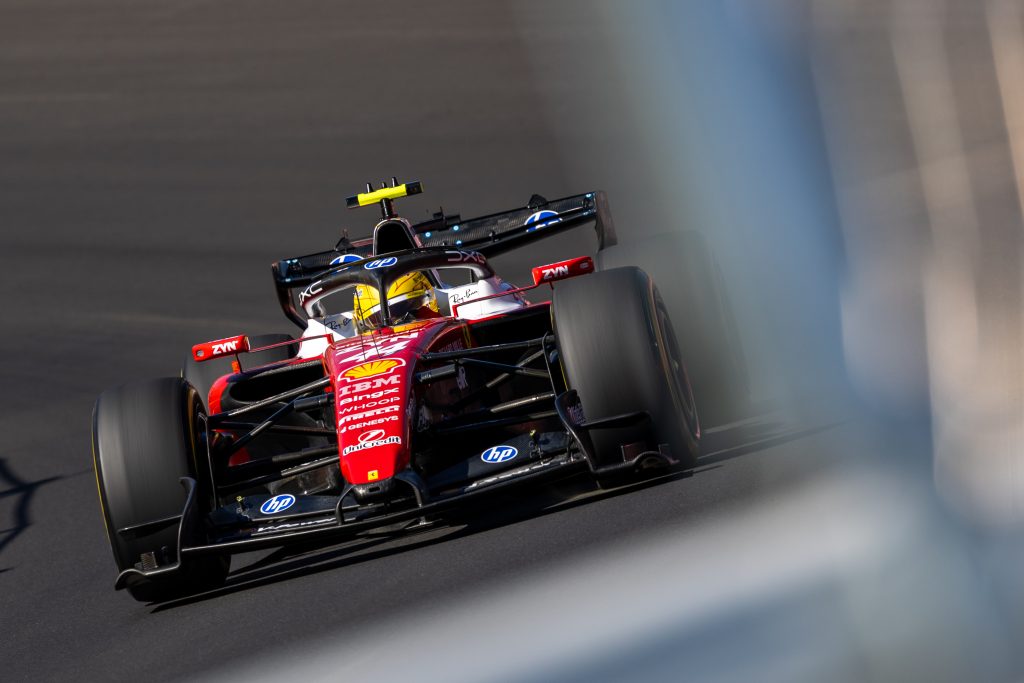
It also brought Red Bull and Ferrari into an unusually compressed picture. Max Verstappen qualified third, Lewis Hamilton fourth and Charles Leclerc fifth, leaving four different teams represented in the first five positions and the entire group covered by only 0.195s.
The question is how McLaren got there.
McLaren transforms its weekend
Nothing before the final minutes of qualifying suggested Norris was about to take pole.
McLaren had identified some characteristics of Madring that naturally suited the MCL40, particularly its faster corners, but the car was much less convincing through the slower sections. Norris and Oscar Piastri lacked confidence under braking and on corner entry, while attacking the kerbs and keeping the tyres in the correct operating window also proved difficult.
The situation became more complicated on Friday when Norris lost almost the entirety of FP2 because of a gearbox problem. On a completely new circuit, that was particularly costly because it deprived him of both qualifying preparation and meaningful long-run data.
McLaren acknowledged on Friday that Norris was “clearly on the back foot”, while technical director Mark Temple said the team needed to explore a wider range of chassis and driving changes than usual overnight.
Saturday did not immediately solve the problem either. FP3 lost more than half an hour following barrier repairs, further restricting everyone’s preparation.
Yet McLaren gradually found answers.
Team principal Andrea Stella explained after qualifying that the MCL40 had shown natural speed through the higher-speed sections from the beginning of the weekend, but the drivers initially lacked confidence when braking and turning into the slower corners.
McLaren worked on both the set-up and driving approach to improve that weakness without sacrificing the car’s strongest areas. By the end of qualifying, Norris was producing the fastest opening sector.
Still, the progression was anything but obvious from the timing screens.
Norris finished Q1 fifth, almost 0.3s away from George Russell. In Q2 he was only seventh as Verstappen set the pace. Even Norris’ opening attempt in Q3 did not suggest that Antonelli’s provisional pole was under serious threat.
Then everything changed.
More than seven tenths in one lap
Norris found more than 0.7s between his first and second Q3 attempts.
His final lap was not even perfect. Stella estimated that Norris lost around 0.3s at the final corner, where the McLaren ran slightly wide. Everything before that, however, was enough to overturn the session.
The Race described the lap as effectively coming from nowhere and reported Stella’s assessment that, aside from the final corner, Norris’ effort was “a masterpiece”.
Norris crossed the line in 1:31.824, beating Antonelli by 0.011s.
“I don’t know how much I lost in the last corner, but luckily it wasn’t far to the finish line,” Norris said.
The reigning world champion ranked the lap among the finest qualifying performances of his career.
“It was a very good lap. I improved seven and a half tenths on my final lap compared to my first attempt in Q3,” he said. “That lap was something I’d never really experienced or felt before.”
Norris compared the feeling with some of his strongest previous qualifying performances, including Monaco, and admitted the scale of the turnaround made it particularly satisfying after McLaren had appeared around half a second away from the ultimate pace.
Norris secured his third pole of 2026 and the 19th of his Formula 1 career.
But there is an important consequence of Friday’s gearbox failure that qualifying cannot erase.
Norris enters Sunday’s race with almost no representative long-run experience from FP2.
“Now I need to do my homework tonight,” he acknowledged. “I’m at a disadvantage on fuel. I didn’t do any. It’s not the ideal situation, but I’ve given myself the best chance possible and we’ll prepare as well as possible.”
That lack of race preparation is one of the biggest uncertainties surrounding the pole-sitter.
Pole could be particularly valuable at Madring
If there is one circuit where Norris would choose to compensate for missing long-run data by starting first, Madring may be it.
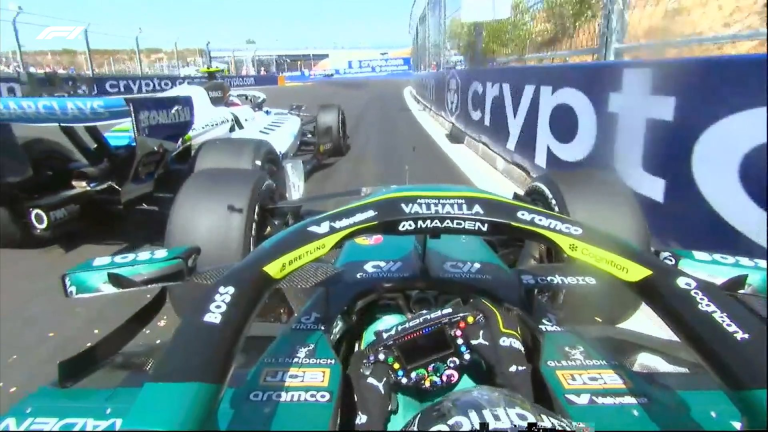
Overtaking proved difficult during Friday practice. Ferrari’s Lewis Hamilton described qualifying as likely to be the key session of the weekend for precisely that reason, while Mercedes also found passing difficult during its limited long-running.
Madring’s combination of narrow sections, sequences of corners and limited conventional passing opportunities places an unusually high premium on track position.
“Luckily, it’s not the best track for overtaking,” Norris said. “So we’ll focus on a good start, a good first lap and see what we can do.”
Controlling the first stint could give the leader considerable strategic influence. It also provides the best possible position from which to react to safety cars or red flags — interventions that cannot be discounted on a circuit where walls sit close to the racing line and several drivers have already crashed during the weekend.
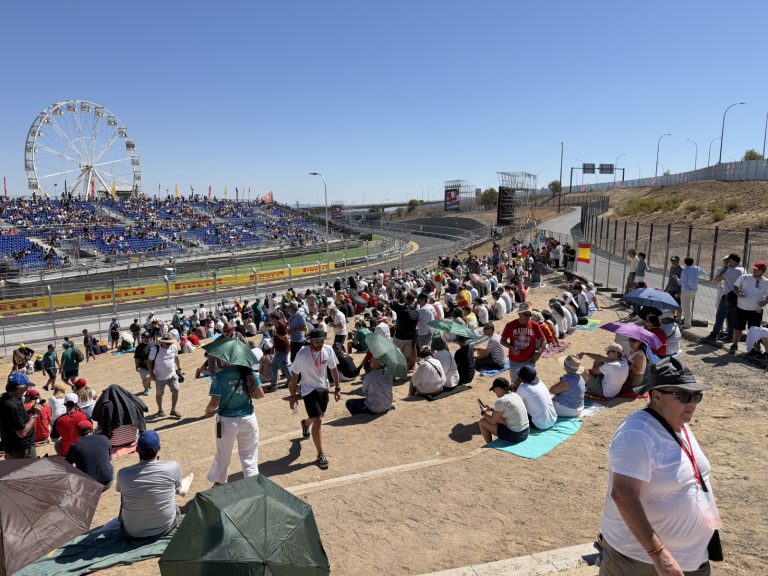
The official circuit configuration features 57 laps over 5.414km, with La Monumental among the defining challenges of a layout combining public roads and purpose-built sections.
Yet the greatest source of unpredictability may not be the walls.
It may be the tyres.
Four teams, less than two tenths
The qualifying order suggests there is no obvious dominant car.
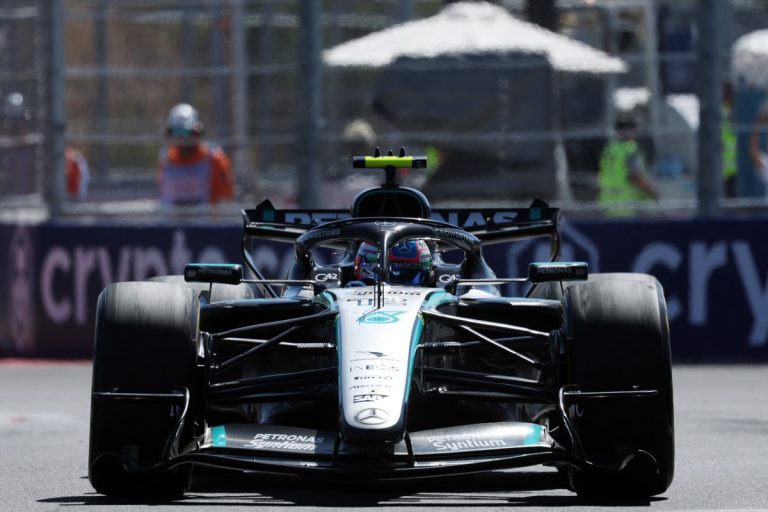
Antonelli has looked particularly comfortable around Madrid and starts alongside Norris. Losing pole by 0.011s is hardly disastrous for the championship leader, particularly given the run towards the first braking zone.
Immediately behind is Verstappen in a competitive Red Bull RBPT Ford.
Hamilton starts fourth after Ferrari repaired his car following his FP3 crash, with Leclerc fifth. Russell is sixth after failing to extract the same performance as Mercedes team-mate Antonelli, while Piastri starts only seventh after what he described as a messy qualifying session.
That leaves McLaren, Mercedes, Red Bull and Ferrari with realistic routes into the race.
There is another potentially important strategic difference.
Verstappen and both Ferrari drivers retained a fresh set of soft tyres, giving them an additional option if Sunday’s race is disrupted or develops differently from the simulations.
Pirelli originally arrived in Madrid expecting the C2, C3 and C4 compounds to favour a two-stop race because of the anticipated loads and high temperatures.
Actual running has complicated that picture.
Friday produced significant graining on both the front and rear left tyres, with Pirelli observing substantial differences between teams in their ability to control sliding and degradation.
That leaves a fundamental tension for Sunday: overtaking is difficult and a pit stop is expensive, favouring fewer stops, but excessive degradation could make extending the stints equally costly.
George Russell had already highlighted the uncertainty after Friday practice, joking that the degradation seen in FP1 was so severe that a six-stop race might theoretically have been quickest. He expected conditions to improve but warned that the long, banked La Monumental would continue to punish the tyres.
So Norris’ extraordinary lap has done more than give McLaren pole.
It has prevented Mercedes from controlling the front row, placed Verstappen and both Ferraris immediately behind the leading pair and left four teams trying to solve a race for which nobody possesses a complete dataset.
Madring could reward track position and produce a procession. Tyre degradation, strategy or incidents could pull it in precisely the opposite direction.
Either way, Norris has changed the equation before the lights have even gone out.
FAQ
How did Lando Norris take pole for the 2026 Spanish GP?
Norris improved by more than 0.7s between his two Q3 attempts and set a 1:31.824 on his final lap. Despite losing time at the final corner, he beat Andrea Kimi Antonelli by only 0.011s.
Who are the main contenders to win the Spanish GP at Madring?
Norris starts ahead of Antonelli, Verstappen, Hamilton and Leclerc. McLaren, Mercedes, Red Bull RBPT Ford and Ferrari were represented inside the top five in qualifying, with all five drivers separated by only 0.195s.
What is the likely tyre strategy for the Spanish GP?
Track position strongly favours a one-stop approach because overtaking is difficult and pit-lane time loss is significant, but tyre degradation and graining could make additional stops competitive. Friday running showed substantial degradation, leaving strategy one of the major uncertainties for the inaugural Madring race.