News Summary
- The FIA deleted posts announcing a preliminary agreement to bring V8 engines back to Formula 1 in 2030, just hours after publishing them.
- According to The Race, manufacturers have not yet reached a consensus on all the technical aspects of the proposed power unit.
- The FIA is pushing to introduce the new engines in 2030, one year earlier than originally planned, with further discussions expected in December.
The FIA’s decision to delete social media posts announcing a potential return of V8 engines to Formula 1 in 2030 raised questions about the status of the proposed change. However, the move appears to have been related more to the timing of the announcement than to a disagreement over the overall concept, as manufacturers have yet to reach a full agreement.
The information was first reported by British publication The Race. According to the report, discussions progressed following a meeting involving the FIA, Formula One Management (FOM) and representatives of the power unit manufacturers. However, several technical details still need to be settled before an official announcement can be made.
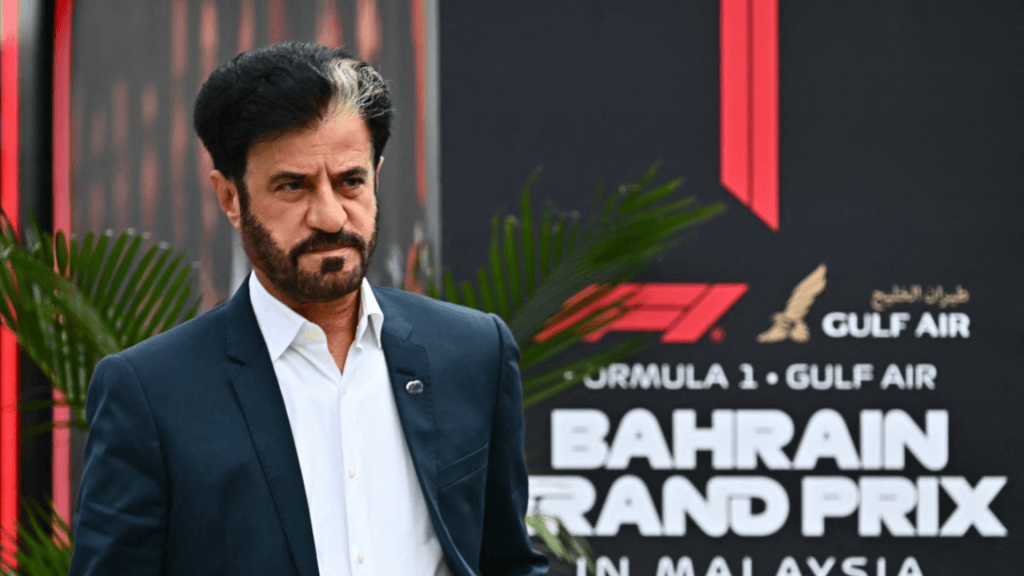
The episode began on Tuesday (November 17), when the FIA published messages on its official channels suggesting that an agreement in principle had been reached to introduce V8 engines in 2030. The posts were subsequently removed, with the federation offering no immediate explanation for the decision.
FIA president Mohammed Ben Sulayem also addressed the subject on his personal Instagram account. Accompanied by the distinctive sound of a V8 engine, the Emirati posted the message: “You spoke, we listened. V8s coming soon.”
Although there is broad agreement on the general concept of the new engines, manufacturers have not yet reached a consensus on every aspect of the technical package. The deletion of the posts may therefore be linked to the need to formalise the process and ensure that all parties are aligned before an official announcement.
F1 considers 2.1-litre turbocharged V8 engines
The proposal gaining momentum in discussions involves 2.1-litre V8 engines, a simpler and more cost-effective alternative for the next generation of power units.
The configuration would also allow manufacturers to build on some of the experience and development infrastructure used for the current 1.6-litre turbocharged V6 engines, while adding two cylinders. The objective is to reduce research and production costs, as well as the complexity of current systems.
The proposal includes retaining sustainable fuels, but with a significantly smaller electrical contribution than under the regulations introduced in 2026.
The current power unit features a 350 kW electrical component. Under the proposal being discussed, that figure would be reduced to 200 kW, with 100 kW available continuously and the remaining 100 kW reserved for an overtaking system.
The new engines would also feature smaller turbochargers operating at lower boost pressure.
FIA also targets lighter F1 cars
The engine changes are part of a broader FIA project aimed at making Formula 1 cars lighter and less complex.
The governing body is considering reducing the cars’ weight by approximately 80 kg compared with current models, with the target of bringing the single-seaters below the 700 kg mark.
Simplifying the power units is also seen as a way to reduce costs for manufacturers. Ben Sulayem had previously argued that the change could cut engine prices by half.
“When you make something simpler, you can cut the price in half. If research and development costs are also reduced by half, simplicity allows you to shorten production times,” the FIA president previously said.
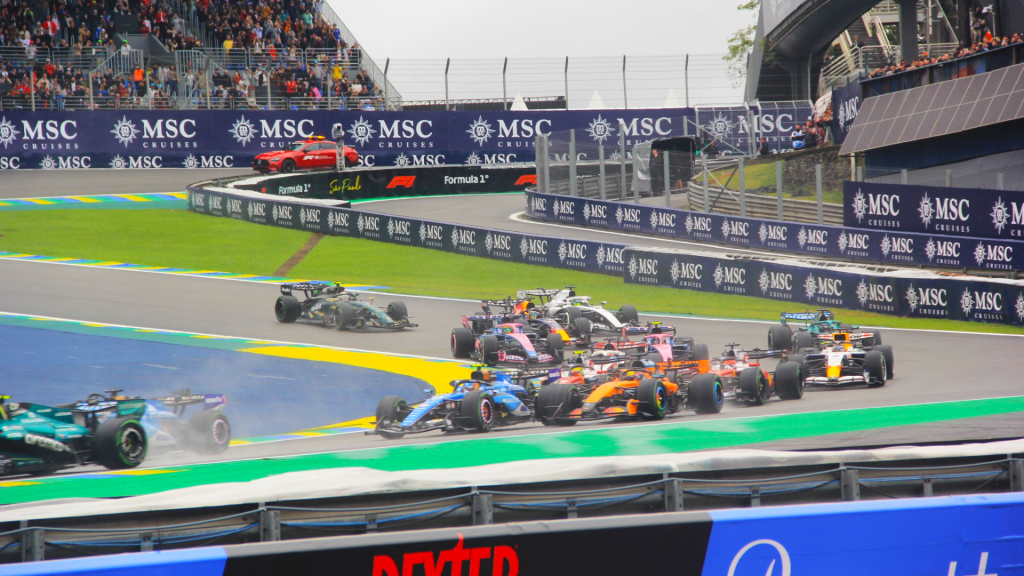
When could V8 engines return to F1?
The main point of discussion at this stage is the implementation date. The current power unit regulations are scheduled to remain in force until the end of 2030, with the next generation originally planned for 2031.
Ben Sulayem, however, is pushing to bring forward the introduction of V8 engines by one year. To achieve that, he will need the support of the teams and manufacturers, as well as concrete proposals that can move the new regulations towards formal approval.
The next major meeting will be the FIA World Motor Sport Council gathering, scheduled for December 10 in Shanghai. The expectation is that the meeting will help advance discussions on the framework for the next generation of engines.
Until then, talks between the FIA, FOM and manufacturers are expected to continue, with the aim of reaching broader agreement before the end of 2026.
GRANDE PRÊMIO is following the Las Vegas Grand Prix and the latest developments in Formula 1.