News Summary
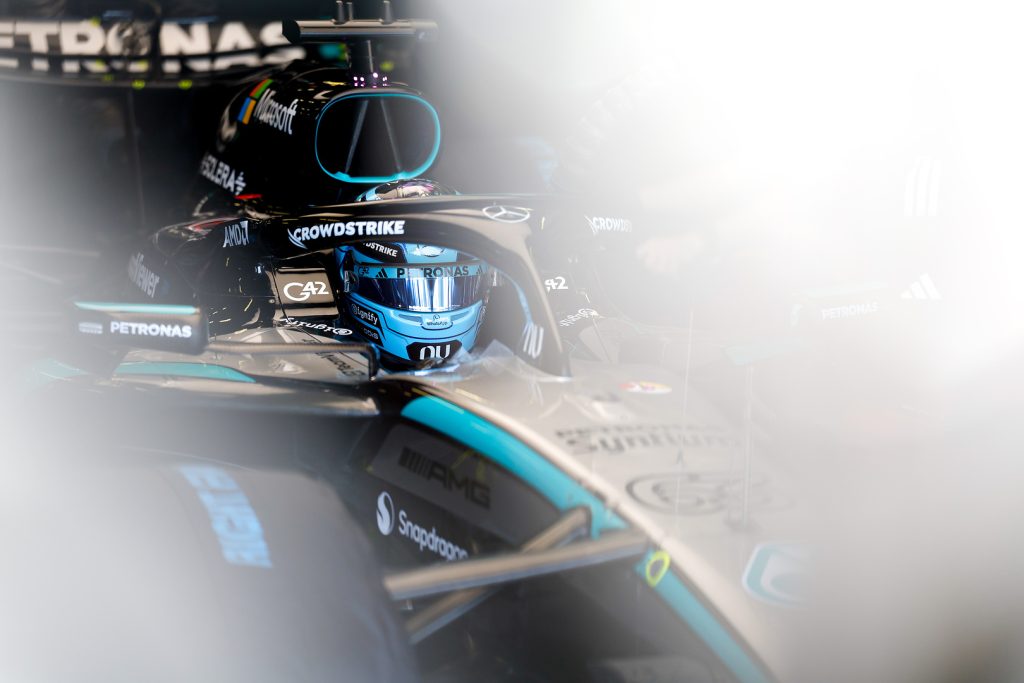
- George Russell led both Thursday sessions and beat Kimi Antonelli by 0.552s in FP2
- Mercedes demonstrated genuine one-lap speed, but rivals faced different tyres, interrupted runs and technical problems
- The W17 enters qualifying as the benchmark, although its apparent half-second advantage is unlikely to be representative
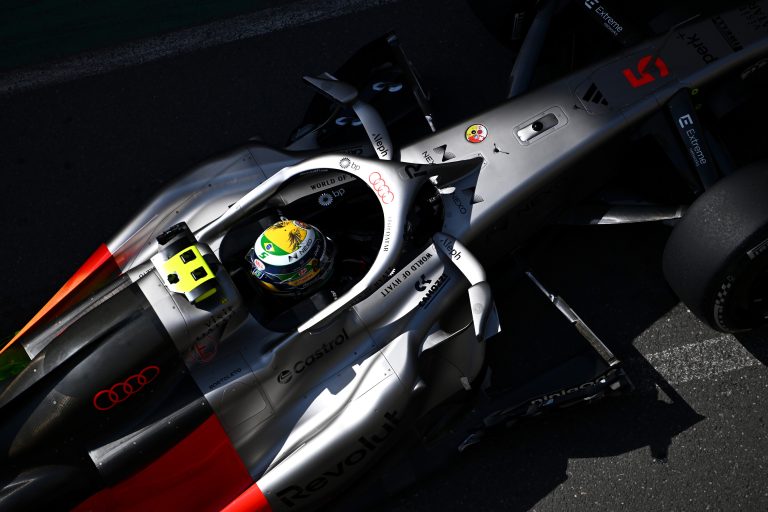
George Russell ended Thursday at the Azerbaijan GP with the kind of advantage that normally suggests Formula 1 qualifying is already under control.
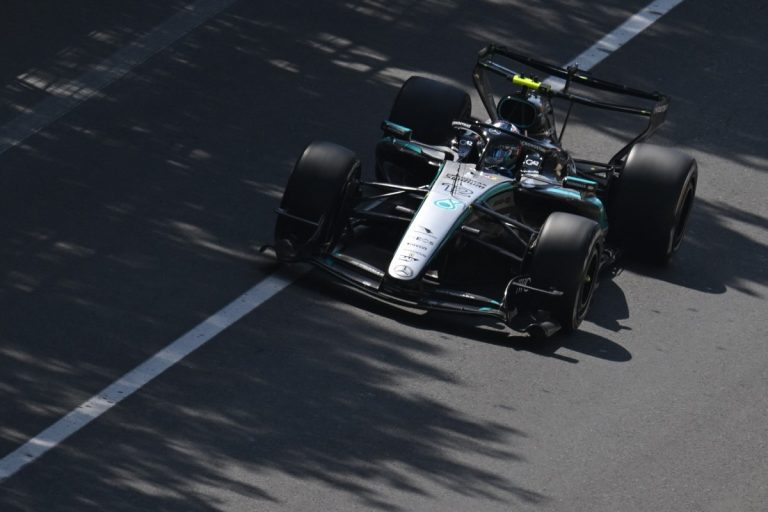
The Mercedes driver led both practice sessions, recording a 1:45.387 in FP1 before lowering the benchmark to 1:43.347 in FP2. Team-mate Kimi Antonelli completed a Mercedes one-two in the afternoon but remained 0.552s behind.
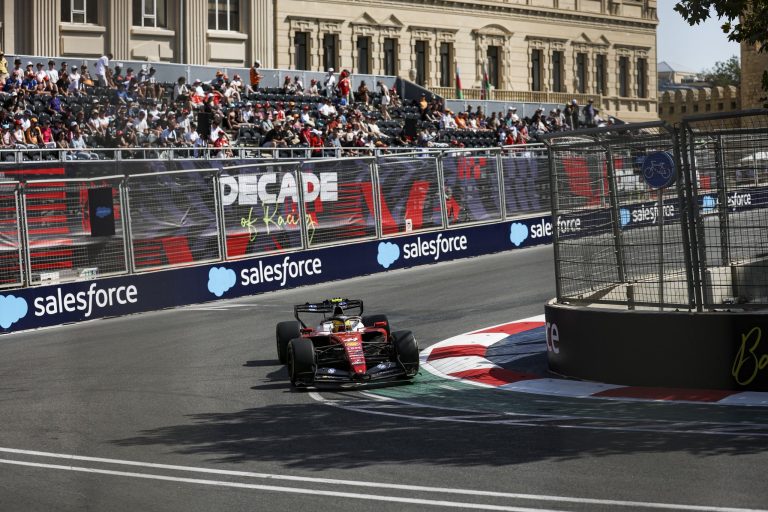
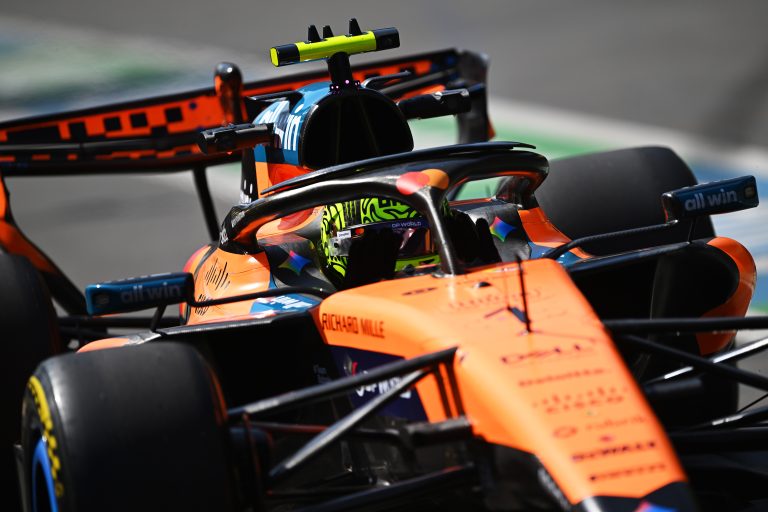
Max Verstappen was 0.827s off the pace, while Charles Leclerc and Lewis Hamilton finished more than one second behind Russell. Lando Norris described McLaren’s 1.484s deficit as “a knife in the heart”.
On the surface, Mercedes appeared untouchable. The underlying details show a less decisive picture.
Mercedes possesses genuine pace in Baku, but Thursday probably exaggerated the gap between Russell and the opposition.
Why Mercedes’ speed should be taken seriously
Russell’s performance was not based on one isolated lap. He topped both sessions and progressively improved during FP2, first producing a 1:43.759 before finding another 0.412s on his final qualifying simulation.
That progression suggests the time came from a well-balanced car rather than a single exceptional tow.
Antonelli’s recovery provides further evidence. His FP1 ended early because of a hydraulic problem, costing him valuable running and preventing him from completing a soft-tyre lap. Despite that disruption, he returned to finish second in FP2.
Mercedes therefore placed both cars at the front even though only Russell completed an uninterrupted programme.
The W17 has also won ten of the opening 14 races and secured ten pole positions. Its performance in Baku is not an isolated surprise but another strong display from the team that has established the reference throughout the 2026 season.
Why Russell’s FP1 advantage was misleading
Russell’s four-tenth margin in FP1 came with two significant qualifications.
He set his fastest lap on soft tyres and received a tow along Baku’s long main straight. Leclerc and Hamilton, who finished third and fourth, recorded their best times on the medium compound.
Antonelli was fifth without setting a representative soft-tyre time, while McLaren lost substantial running through technical problems.
FP1 therefore established that Russell was fast, but it did not demonstrate a four-tenth advantage under equal conditions.
The situation became clearer in FP2, when the leading drivers completed soft-tyre simulations. Even then, several factors prevented a clean comparison.
Verstappen’s medium-tyre pace changes the picture
Verstappen finished FP2 0.827s behind Russell, but their earlier medium-tyre running told a different story.
The Red Bull driver recorded a 1:44.492 and was marginally faster than Russell while both used the same compound. Verstappen achieved that despite complaining that the rear axle was leaving the ground and forcing him to counter-steer repeatedly.
That comparison suggests Red Bull’s underlying pace was closer to Mercedes than the final classification indicated.
Verstappen’s larger deficit on soft tyres may consequently reflect a combination of set-up limitations, tyre preparation and lap execution rather than a pure eight-tenth performance gap.
Red Bull’s task before qualifying is to improve the RB22’s ride through Baku’s uneven sections without compromising its straight-line performance.
McLaren and Ferrari left time on the table
McLaren’s Thursday was too disrupted to provide a reliable measurement.
Oscar Piastri and Norris both lost running in FP1 because of floor problems. The team used a makeshift repair during FP2, while Norris abandoned a lap that appeared capable of improving his sixth-place time.
The Briton still admitted McLaren was “miles off”, but his 1.5-second deficit did not match how the car felt from the cockpit. McLaren expects to recover part of that margin after completing permanent repairs and adjusting the set-up overnight.
Ferrari also showed greater competitiveness than its final soft-tyre times suggested. Leclerc and Hamilton remained close to Russell while using mediums in FP1, but neither converted that pace into a complete FP2 qualifying simulation.
Ferrari’s deficit of 1.126s with Leclerc and 1.318s with Hamilton is therefore unlikely to represent its true qualifying position.
Long-run comparison remains incomplete
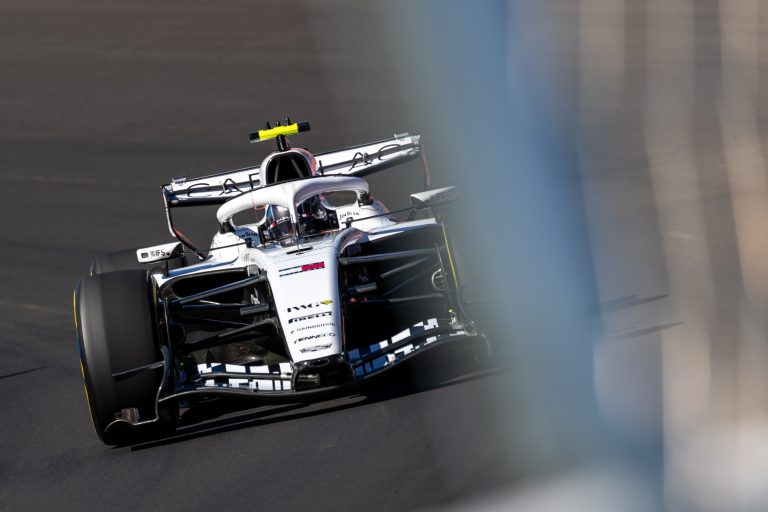
The red flag caused by Arvid Lindblad’s crash and the subsequent stoppage involving Oliver Bearman fragmented FP2. Teams also used different fuel loads and run plans during the closing stages.
That prevents a reliable race-pace comparison.
Baku compounds the uncertainty because electrical deployment, tow position and fuel load can produce unusually large lap-time swings along the 2.2km acceleration zone from Turn 16 to Turn 1.
Friday’s forecast strong winds could reset the order again. Gusts are expected to create instability under braking and through the castle section, while potentially changing the value of a tow on the main straight.
Is Mercedes the favourite for Azerbaijan GP pole?
Yes—but not by the margin shown in FP2.
Russell’s clean sweep, Antonelli’s recovery to second and Mercedes’ season-long form make the W17 the car to beat. The team appears particularly strong under braking and through Baku’s slow corners, while its energy deployment has not produced the same visible compromises affecting some rivals.
However, Thursday does not prove Mercedes holds a genuine half-second advantage over the field. Red Bull’s medium-tyre pace, Ferrari’s incomplete soft runs and McLaren’s technical problems all inflated the final gaps.
Russell acknowledged that the differences should reduce as rivals improve overnight. Qualifying is more likely to produce a fight involving Mercedes, Verstappen and Ferrari than another one-second separation.
FP3 begins at 09:30 UK time on Friday, followed by qualifying at 13:00. The Azerbaijan GP takes place on Saturday at 12:00.
GRANDE PRÊMIO follows every session of the Azerbaijan GP LIVE and in REAL TIME.
FAQ
Who was fastest in Azerbaijan GP practice?
George Russell led both sessions for Mercedes, setting the overall Thursday benchmark of 1:43.347 during FP2.