News Summary
- Team Penske and Chevrolet have signed a new multiyear IndyCar agreement, extending a partnership responsible for 125 wins.
- The deal carries Penske into IndyCar’s new technical era beginning in 2028, when a new chassis and powertrain are scheduled to arrive.
- Penske and Chevrolet have won nine Indianapolis 500s together, alongside 157 pole positions.
Team Penske has signed a multiyear extension with Chevrolet, ensuring one of IndyCar’s most successful technical partnerships will continue into the championship’s next generation of cars.
The agreement was announced on Thursday and means Penske will remain with Chevrolet as IndyCar prepares to introduce a new chassis and engine formula in 2028.
Continuity is particularly significant because manufacturers and teams are already beginning development work around the next-generation package. Chevrolet has also recently secured extensions with Arrow McLaren and Ed Carpenter Racing.
Penske’s relationship with Chevrolet is among the most decorated in American open-wheel racing. Together, they have accumulated 125 IndyCar victories and 157 pole positions.
The partnership has also produced nine Indianapolis 500 victories, involving Rick Mears, Emerson Fittipaldi, Hélio Castroneves, Juan Pablo Montoya, Will Power, Simon Pagenaud and Josef Newgarden.
Roger Penske described Chevrolet as a valuable partner both competitively and beyond the racetrack and said the new deal would allow the organisations to continue building on their shared success.
“We are excited that this extension will take us well into the future,” Penske said.
Penske and Chevrolet prepare for IndyCar’s 2028 reset
The timing makes the agreement more important than a conventional engine-supply renewal.
IndyCar is preparing for one of its biggest technical changes in years in 2028, with teams and manufacturers already becoming involved in the development process.
Maintaining the same manufacturer therefore gives Penske continuity while Chevrolet develops the package that will power the next generation of IndyCar machinery.
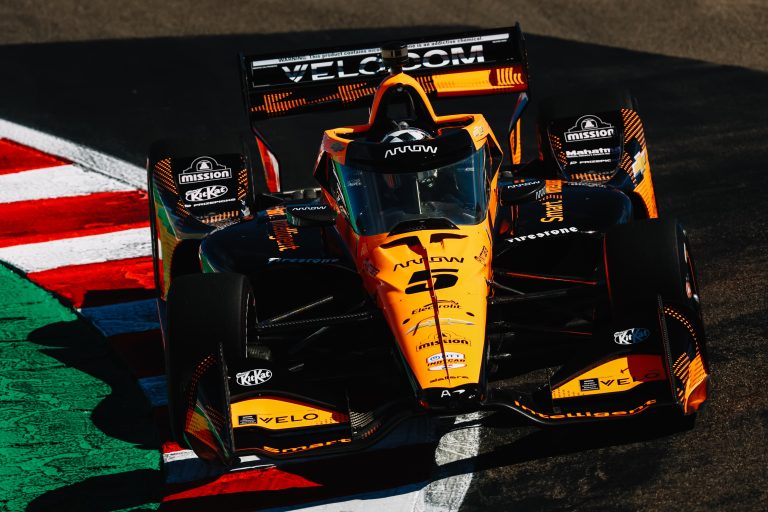
That approach mirrors the decision recently made by Arrow McLaren, which extended its own Chevrolet partnership as it prepares for the same regulatory transition.
The new Penske agreement also arrives after a season in which its historical position within IndyCar shifted.
Chip Ganassi Racing overtook Penske in the championship record books after Álex Palou secured Ganassi’s 18th drivers’ title in 2026.
Penske nevertheless remains the benchmark at the Indianapolis 500 and one of the most successful organisations in the championship’s history.
Chevrolet’s commitment to multiple leading teams also gives General Motors a stable platform as development work intensifies before 2028.
For Penske, the objective remains unchanged: returning to championship-winning form while preserving its extraordinary record at Indianapolis.
The 2027 IndyCar season begins on March 7 in St. Petersburg.
GRANDE PRÊMIO provides complete coverage of the championship at the IndyCar hub.
Indy today: FAQ
Is there an IndyCar race today?
No. The 2026 season has ended. The next race is the 2027 St. Petersburg Grand Prix on 7 March; the race’s start time has not yet been announced.
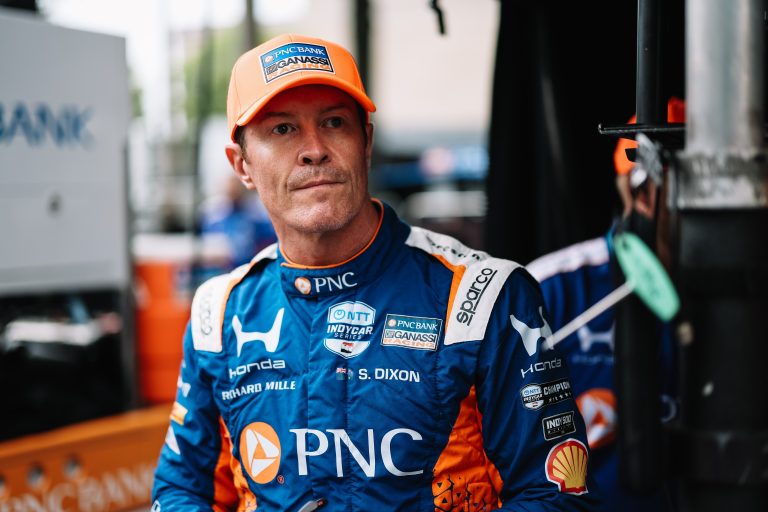
Who will replace Scott Dixon in Ganassi’s No. 9 car?
Christian Lundgaard. Ganassi confirmed his multi-year contract on 29 September, validating the move first revealed by GRANDE PRÊMIO in July. He will drive the No. 9 PNC Bank Honda alongside Álex Palou and Kyffin Simpson.
Where will Scott Dixon race in 2027?
Dixon will join Arrow McLaren after more than two decades with Ganassi. His departure opened the No. 9 seat now assigned to Lundgaard.
Will Team Penske continue using Chevrolet engines in IndyCar?
Yes. Team Penske and Chevrolet have agreed to a new multiyear extension, continuing their long-standing IndyCar partnership.