Key Takeaways (TL;DR):
- Hybrid Vision Shelved: Ducati Corse General Manager Gigi Dall’Igna revealed he pushed to introduce a small electric motor to MotoGP’s 2027 regulations, but the proposal was rejected due to high financial costs.
- Blank Sheet Era: Dall’Igna expressed excitement over the upcoming 2027 technical reset—featuring 850cc engines, a ban on ride-height devices, tighter aero limits, and a switch to Pirelli tires—describing a clean-sheet design as “the best toy for an engineer.”
- Next Milestone: The first private test featuring 850cc prototype bikes alongside primary factory drivers is scheduled for September in Austria.
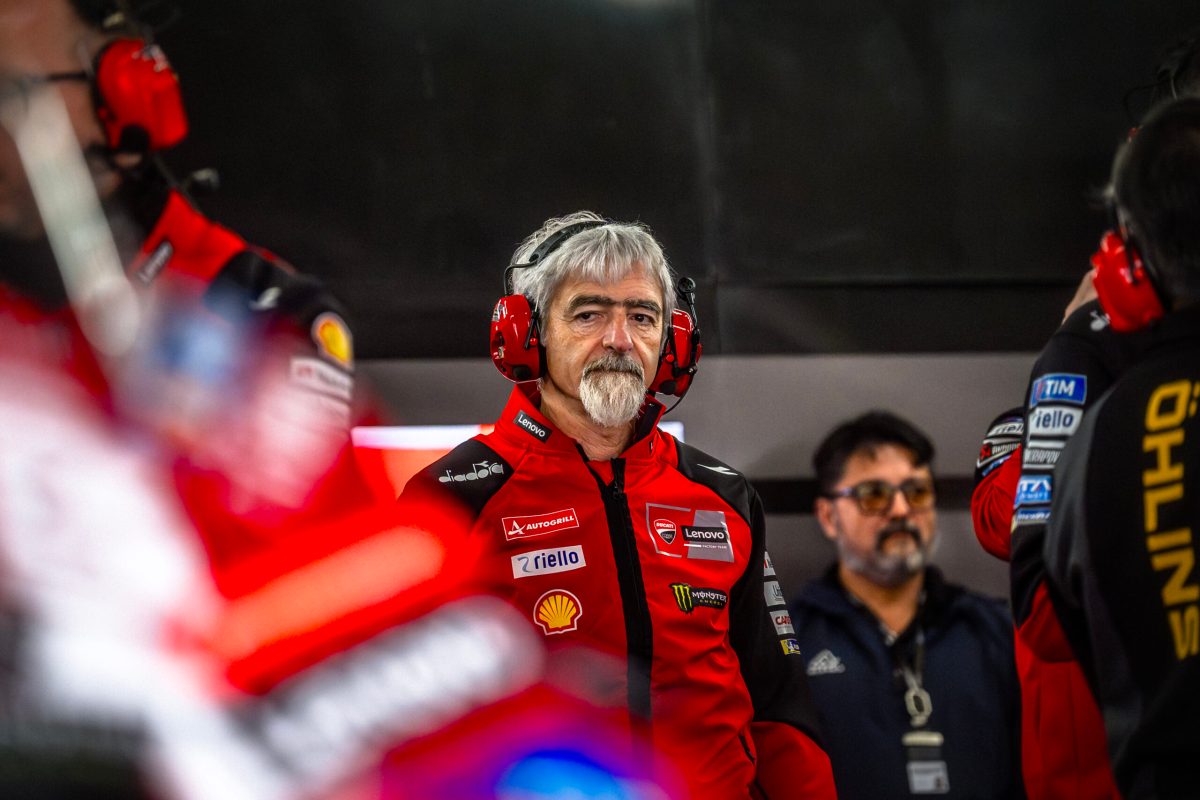
Gigi Dall’Igna, General Manager of Ducati Corse, confirmed that he defended the adoption of hybrid engines featuring a compact electric motor for MotoGP’s upcoming regulatory era. However, the proposal failed to gain traction among manufacturers due to cost considerations.
“Honestly, I would have liked to have a small electric motor on the 2027 bike. In the beginning, I pushed to have that type of hybridization on the motorcycle. But from a cost perspective, it is certainly quite difficult,” Dall’Igna explained to Australian outlet MCNews.
“I think we could learn something from it. Creativity becomes important again when you introduce that type of solution,” he added.
Despite the rejection of hybrid power, the Italian engineer expressed enthusiasm regarding the opportunity to design an all-new motorcycle from scratch for the 2027 MotoGP season. Starting in 2027, MotoGP will transition to 850cc engine displacements, outlaw ride-height devices, implement stricter aerodynamic constraints, and replace long-time tire supplier Michelin with Pirelli.

In Dall’Igna’s assessment, the combination of regulatory changes limits how much data can be carried over from the current Desmosedici platform, which clinched four consecutive MotoGP drivers’ titles with Francesco Bagnaia (2022, 2023), Jorge Martín (2024), and Marc Márquez (2025).
“The most important thing is the knowledge you possess. That, for sure, carries over into the future. But there aren’t many physical components that can be used, because with the ban on ride-height devices, a different engine capacity, and different tires, in the end you have to build a completely new bike,” the executive noted.

The prospect of starting a race project from a clean slate remains an appealing challenge for design teams.
“It certainly excites me. When you can start from a blank sheet of paper, for an engineer, that is the best toy that can exist,” Dall’Igna celebrated.
The next private test session featuring 850cc prototype machinery and primary factory riders is scheduled for next month in Austria.
The 2026 MotoGP World Championship continues August 28–30 with the Aragon Grand Prix at MotorLand Aragón, marking Round 13 of the season.
Frequently Asked Questions (FAQ)
Why were hybrid engines rejected for the 2027 MotoGP regulations?
According to Ducati’s Gigi Dall’Igna, adding electric motors and hybridization was ruled out primarily due to the high financial costs associated with developing the technology.
What are the main technical changes coming to MotoGP in 2027?
The 2027 MotoGP technical overhaul includes:
- Engine displacement reduction from 1000cc to 850cc
- Full ban on ride-height and holeshot devices
- Stricter aerodynamic restrictions
- Official tire supplier transition from Michelin to Pirelli
When is the next 2026 MotoGP race?
The championship resumes August 28–30, 2026, with the Aragon Grand Prix.