Key takeaways
- Engine unsealing approved: KTM unsealed and serviced seven power units during the mid-season break after receiving unanimous permission from rival manufacturers (Aprilia, Ducati, Honda, and Yamaha).
- Supervised repair: The intervention took place at the Munderfing factory under FIM supervision to replace faulty components—suspected to be pneumatic valves—without modifying homologated engine specs.
- Pedro Acosta as main beneficiary: Four of the unsealed engines belonged to Acosta’s allocation, restoring his full engine pool after reliability issues forced KTM to detune his RC16 earlier this season.
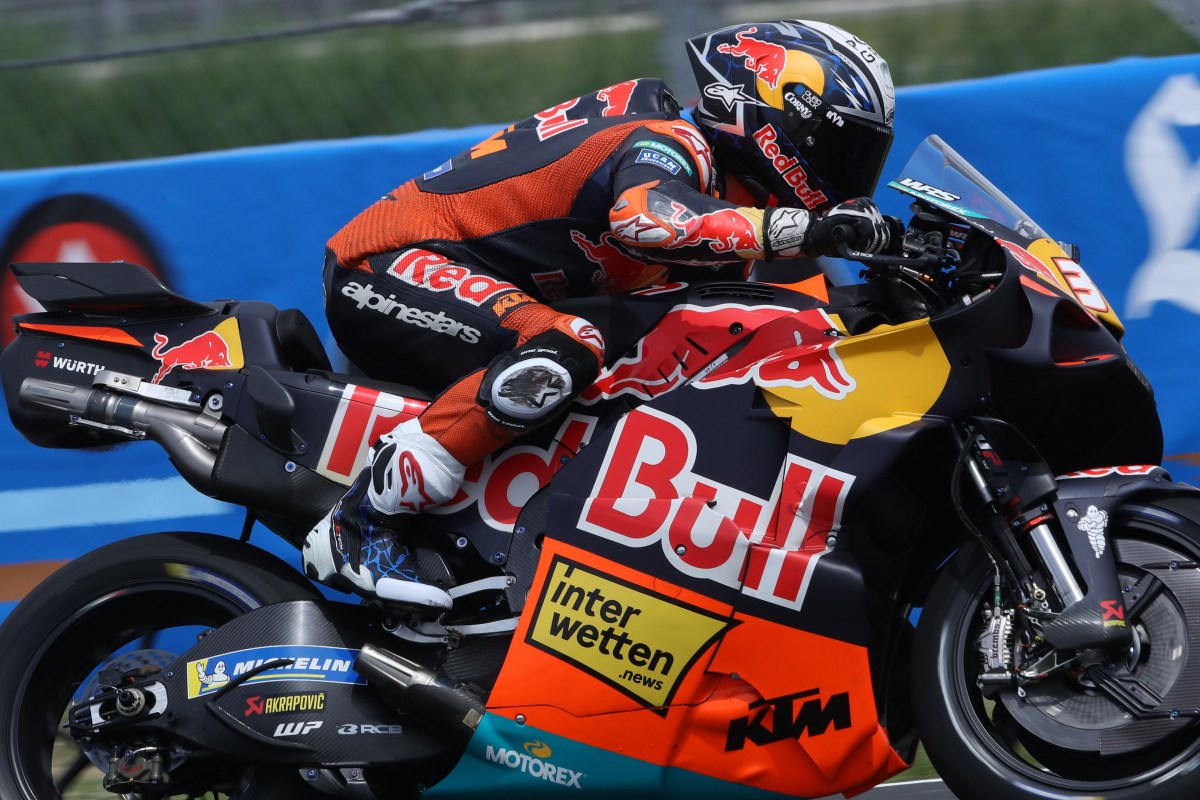
KTM took advantage of the MotoGP break following the British Grand Prix to unseal seven power units at its factory in Munderfing, Austria, replacing components identified as responsible for the reliability issues affecting its prototypes in recent races.
Following the procedure, the Austrian brand resealed the power units so they can be used again starting at this weekend’s Aragon Grand Prix.
The intervention was only possible after KTM received authorization from all other manufacturers competing in the championship. The brand had requested permission to unseal the engines to replace a part causing sudden mechanical failures and engine cutouts.
Initially met with resistance, the request ultimately gained approval from Ducati, Honda, and Yamaha following the summer break, joining an earlier green light granted by Aprilia. The procedure was carried out under the direct supervision of the FIM (Fédération Internationale de Motocyclisme) without altering the specification homologated for the season.

While KTM did not officially name the replaced component, reports from Motorsport’s Spanish edition suggest the issue stemmed from the engines’ pneumatic valves, similar to a situation experienced by Yamaha during the 2020 season. In that instance, the Japanese manufacturer was likewise granted consensus from rival constructors to unseal locked power units.
Pedro Acosta was the primary beneficiary of the intervention. Four of the seven unsealed engines belong to the allocation utilized by the Spaniard, who has suffered multiple mechanical setbacks throughout the season. The most severe incident occurred at the Catalan GP, when Acosta’s RC16 cut out at high speed, causing a major crash involving Álex Márquez.
Since then, KTM had been artificially limiting the revs on Acosta’s engines as a safety measure. The rider had opened six power units over the course of the season, with two rendered unusable, leaving him with four available units. Those four have now undergone the corrective fix, while two remaining units in his allocation have yet to be opened. League regulations permit up to eight engines per rider during the season.

MotoGP returns to action from August 28–30 for the Aragon Grand Prix, the 13th round of the 2026 season. GRANDE PRÊMIO provides complete coverage of the weekend’s schedule across all categories of the World Motorcycle Championship. Follow all updates on our news page.
KTM RC16 Engine Allocation Overview (2026 Season)
| Driver | Max Allowed Engines | Units Unsealed for Repair | Status Post-Intervention |
| Pedro Acosta | 8 | 4 | Re-sealed & fully available |
| Brad Binder / Tech3 Riders | 8 | 3 | Re-sealed & fully available |
Frequently asked questions (FAQ)
1. Why was KTM required to ask permission from rival manufacturers to open its engines?
MotoGP regulations strictly seal engine development and maintenance during the season. Unsealing engines to replace parts requires unanimous consent from all manufacturers under FIM supervision.
2. Which rival teams approved KTM’s engine repair request?
Aprilia initially agreed, followed by Ducati, Honda, and Yamaha after the summer break.
3. What component is believed to have caused the reliability issues on the KTM RC16?
While KTM did not officially specify the exact part, technical reports point toward an issue within the engine’s pneumatic valve system.