
News Summary
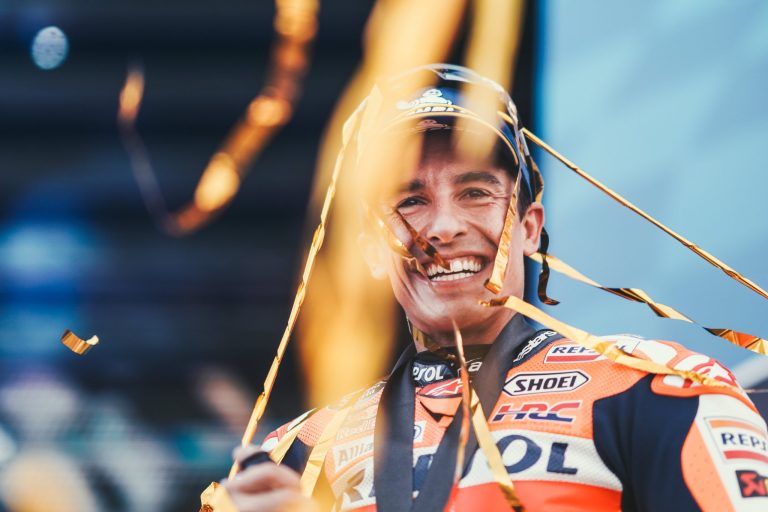
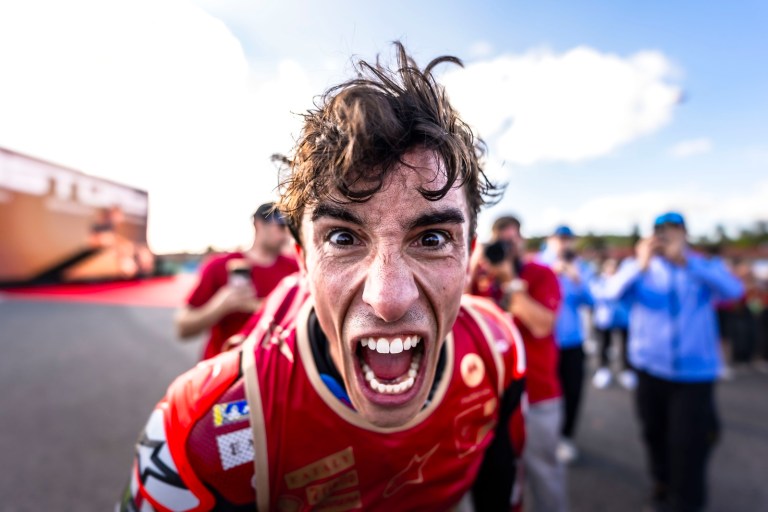
- Marc Márquez’s retirement brings an end to an era in which MotoGP could consistently rely on internationally recognised championship-winning personalities.
- Pedro Acosta, Fabio Quartararo, Francesco Bagnaia and other leading riders have an opportunity to shape the championship’s next generation.
- Liberty Media must develop compelling sporting narratives while MotoGP introduces substantially different technical regulations in 2027.
When Valentino Rossi retired from MotoGP in 2021, motorcycle racing lost the personality who had arguably done more than any other rider of his generation to transform the championship into a global entertainment property.
However, the sport still had Marc Márquez.
Although the Spaniard was recovering from serious injuries, his achievements, rivalries and extraordinary riding style provided MotoGP with an established figure capable of generating international interest.
Five years later, that reference is also disappearing.
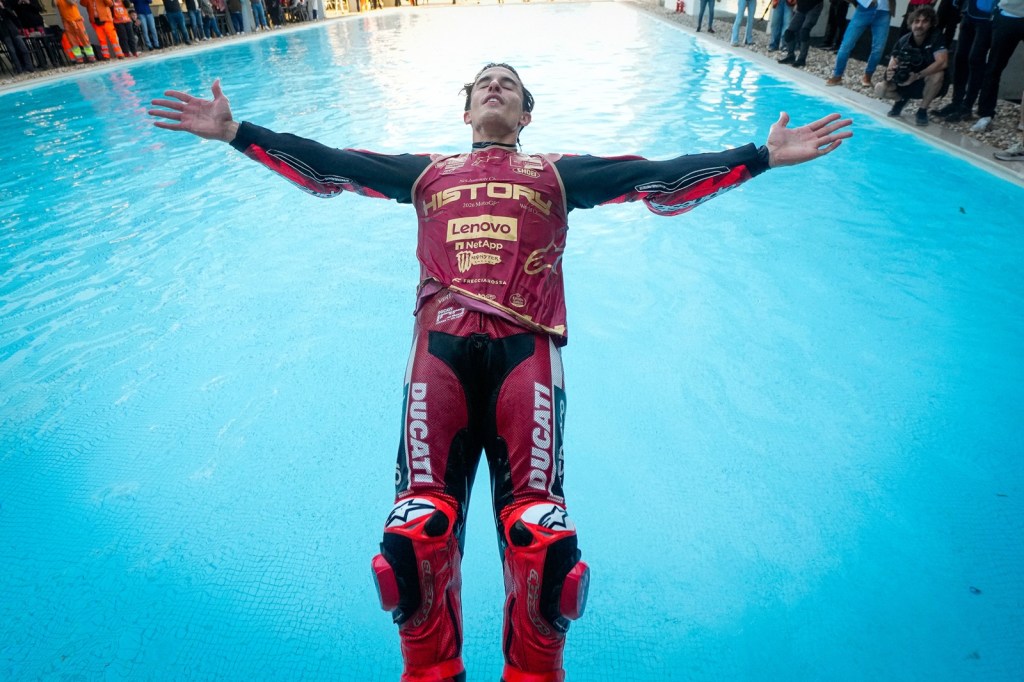
Márquez’s retirement announcement at Valencia brings an end to a career that produced ten world championships and leaves MotoGP confronting a question that extends far beyond its competitive hierarchy.
Who will become the personality capable of connecting motorcycle racing with audiences that do not necessarily follow every Grand Prix?
MotoGP will continue to produce world champions. Its more complicated challenge will be ensuring those champions become internationally recognisable sporting figures.
MotoGP’s extraordinary succession of personalities
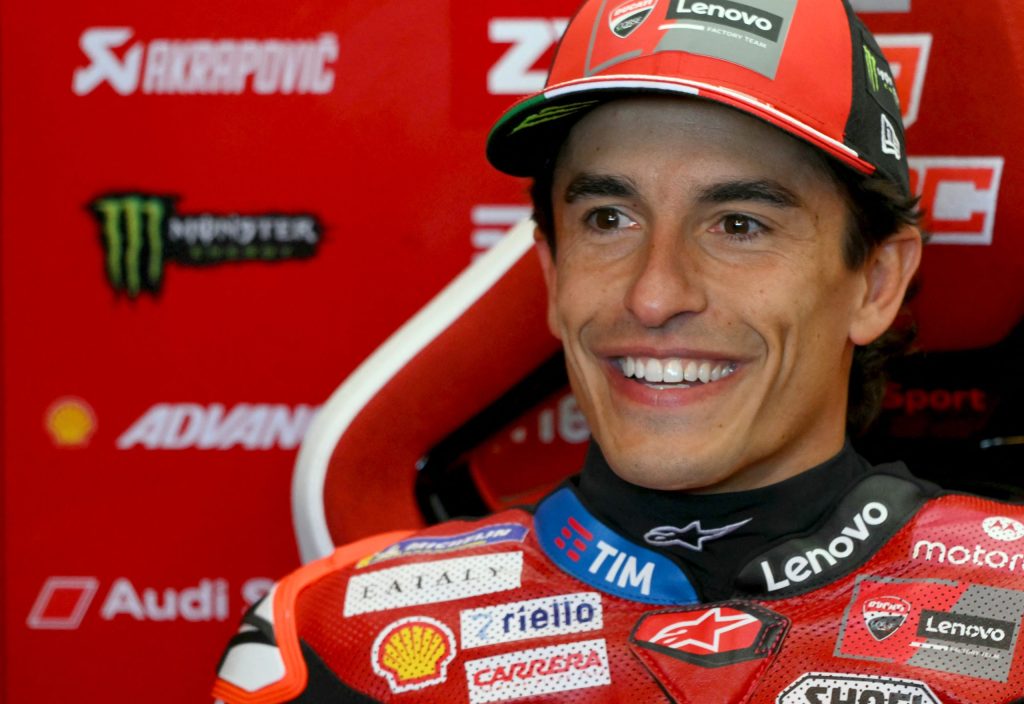
The modern history of Grand Prix motorcycle racing has been shaped by generations of champions whose careers frequently overlapped.
Mick Doohan dominated much of the 1990s, winning five consecutive 500cc championships before injury brought his competitive career to an end.
Rossi arrived in the premier class in 2000 and subsequently transformed the relationship between motorcycle racing and its supporters.
His celebrations, distinctive identity and ability to establish compelling rivalries helped create an audience that extended beyond traditional motorcycle enthusiasts.
Casey Stoner emerged as a particularly important sporting counterpoint.
The Australian’s championships with Ducati in 2007 and Honda in 2011 demonstrated that Rossi’s generation contained considerably more than one exceptional rider.
Jorge Lorenzo subsequently established himself as another multiple world champion, while Dani Pedrosa became one of the most respected competitors of his era despite never winning the premier-class title.
Their different personalities and sporting approaches gave audiences multiple reasons to follow the championship.
Márquez arrived in 2013, immediately won the title and established a new competitive benchmark.
The rivalry with Rossi generated additional attention, particularly during the controversial 2015 season.
What made this period extraordinary was not simply the number of championships won by individual riders.
MotoGP possessed a succession of recognisable characters whose stories continued from one season to the next.
Supporters could follow rivalries, changing relationships, transfers between manufacturers and the development of young riders into established champions.
Márquez provided MotoGP with a story beyond victories
Márquez’s first period of dominance with Honda established his sporting reputation.
His subsequent physical difficulties created a completely different narrative.
The serious arm injury suffered at Jerez in 2020 interrupted a career that had produced six premier-class championships in seven seasons.
Years of rehabilitation, further surgery and declining competitiveness with Honda followed.
His decision to join Gresini Ducati in 2024 effectively created a new chapter in a career that already contained enough achievements to establish him among the greatest riders in history.
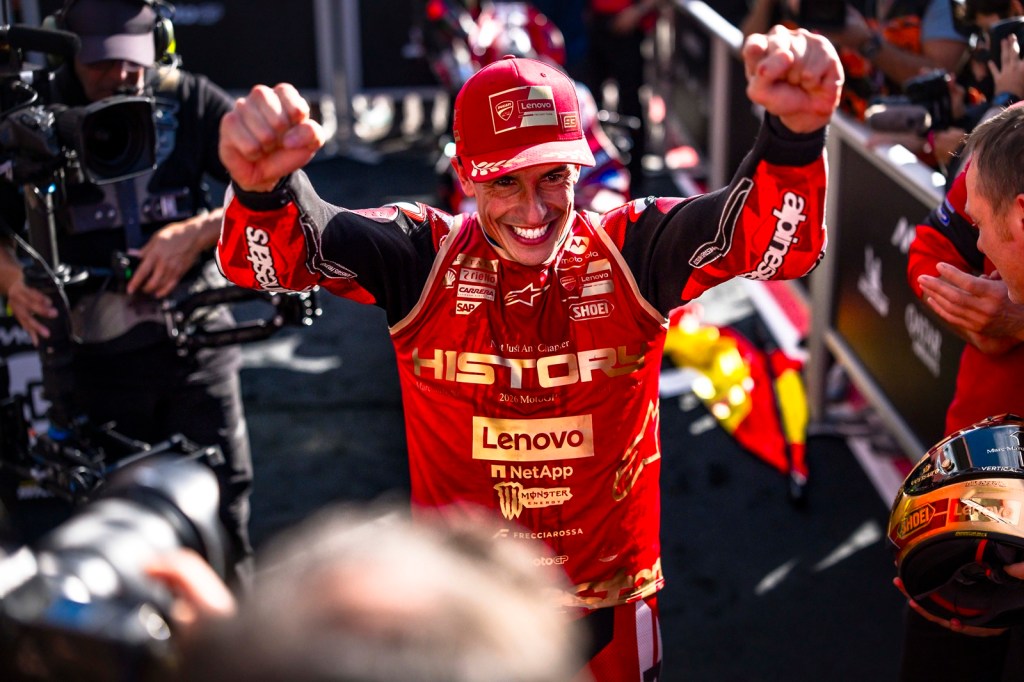
The resulting comeback gave MotoGP something particularly valuable: a story that could be understood without detailed knowledge of motorcycle racing.
A dominant champion had lost his ability to compete at the same level, confronted significant physical difficulties and eventually returned to the top of his sport.
His consecutive championships with Ducati made that narrative even more powerful.
The same physical limitations that accompanied his recovery now form part of the background to his retirement at just 33.
For MotoGP, replacing the competitive results of Márquez is considerably easier than replacing that combination of sporting achievement, recognition and emotional investment.
Why the next champion may not automatically become the next superstar
MotoGP’s 2027 grid will contain several riders with impressive sporting credentials.
Francesco Bagnaia has won two premier-class championships. Fabio Quartararo and Jorge Martín have also secured MotoGP titles.
Marco Bezzecchi has established himself among the leading competitors, while Pedro Acosta represents one of the most promising figures of the younger generation.
However, sporting success and international celebrity are different measurements.
A world champion becomes a global sporting personality through a combination of results, exposure, communication, distinctive identity and narratives that resonate with wider audiences.
The process also requires time.
Rossi did not become the figure he eventually represented through championship results alone. His personality and rivalries developed alongside his sporting success.
Márquez followed a similarly individual path, although his public identity and competitive characteristics were very different.
There is consequently no guarantee that the next dominant MotoGP rider will automatically acquire comparable recognition.
Pedro Acosta offers an opportunity — but not a guaranteed solution
Acosta’s arrival at Ducati creates one of the most compelling opportunities for MotoGP’s next generation.
He has already attracted attention through his progression from the smaller categories and his performances at KTM.
His age and long-term sporting potential make him particularly interesting for a championship attempting to establish new personalities.
However, Márquez’s retirement has fundamentally changed Acosta’s arrival at Ducati.
The younger Spaniard was originally expected to develop alongside the reigning world champion, creating a direct generational comparison.
Instead, he could become one of the central figures in Ducati’s new factory project.
The opportunity to develop a major sporting identity exists, but Acosta must first establish consistent competitiveness within a completely different technical environment.
Placing the entire responsibility for MotoGP’s commercial future on a young rider would also risk creating expectations that extend beyond his immediate sporting development.
MotoGP may need several stars rather than one
The championship’s history suggests that its most compelling periods were not necessarily defined by the presence of a single dominant personality.
Rossi’s era included Stoner, Lorenzo and Pedrosa. Márquez’s arrival introduced another dimension to those rivalries.
MotoGP could therefore benefit from developing multiple recognisable personalities rather than attempting to identify a direct replacement for Márquez.
Quartararo’s career provides a particularly interesting narrative as he seeks to establish another championship-winning project.
Bagnaia’s departure from Ducati creates a different sporting challenge, while Bezzecchi has the opportunity to become a defining figure in Aprilia’s development.
Toprak Razgatlıoğlu offers a connection to WorldSBK and an audience outside the traditional Spanish and Italian concentration of MotoGP.
The important commercial question is whether these different stories can be developed into narratives that audiences recognise and follow consistently.
Liberty Media’s challenge arrives at a decisive moment
MotoGP’s ownership has changed just as its most successful active rider prepares to retire.
Liberty Media’s published corporate strategy identifies international expansion, stronger storytelling and increased commercial value as important objectives.
The company is not simply attempting to attract existing motorcycle racing enthusiasts to more Grands Prix. Its ambitions involve expanding the championship’s relevance beyond its traditional markets.
That process becomes particularly important without Márquez.
The new 850cc technical regulations may produce a different competitive hierarchy in 2027, potentially creating opportunities for new riders and manufacturers.
However, unpredictable racing does not automatically create internationally recognisable sporting personalities.
The challenge is to connect the sporting product with people who have not yet developed a reason to follow it.
A championship entering a new era on and off the track
MotoGP’s next chapter will begin with smaller engines, a different tyre supplier and a substantially revised competitive environment.
Ducati will enter that period having lost both of its current factory world champions.
Aprilia, Honda, Yamaha and KTM will also have opportunities to establish new competitive identities.
The sporting uncertainty could become an important commercial asset if it produces compelling rivalries and identifiable protagonists.
The challenge will become clearer during the opening months of 2027.
MotoGP will discover not only which manufacturers have adapted most successfully to the new regulations, but also which riders can generate sustained interest in a championship no longer featuring Marc Márquez.
FAQ
Who could become MotoGP’s next global superstar?
Pedro Acosta, Fabio Quartararo, Francesco Bagnaia, Marco Bezzecchi and Toprak Razgatlıoğlu are among several riders with different sporting and commercial opportunities. There is no established successor to Márquez.
Why is Marc Márquez’s retirement so important for MotoGP?
His departure removes an eight-time premier-class champion with extensive international recognition, established rivalries and a compelling comeback story.
Does MotoGP need another dominant champion?
Not necessarily. Multiple competitive riders and sustained rivalries could provide an alternative foundation for the championship’s international appeal.