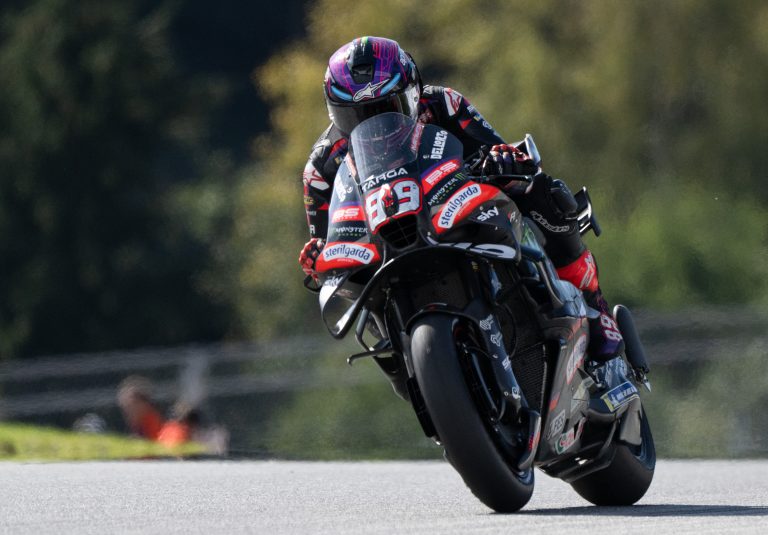

News Summary
- MotoGP is reportedly considering introducing a separate qualifying session for Sprint races from 2027.
- The existing Q1 and Q2 sessions currently determine the starting grid for both Saturday’s Sprint and Sunday’s Grand Prix.
- The proposal remains under discussion and would require approval from the Grand Prix Commission before being implemented.
MotoGP could introduce a separate qualifying session for Sprint races from 2027 as part of a substantial restructuring of its Grand Prix weekend format.
According to Motorsport.com, championship organisers have presented teams and manufacturers with a proposal to create independent grids for Saturday’s Sprint and Sunday’s main race. The system would move MotoGP closer to the format used by Formula 1, where Sprint Qualifying determines the starting order for the shorter race.
MotoGP has not officially announced the change, and the detailed structure of a revised weekend remains unclear. Any amendment must also be ratified by the Grand Prix Commission before it can enter the regulations.
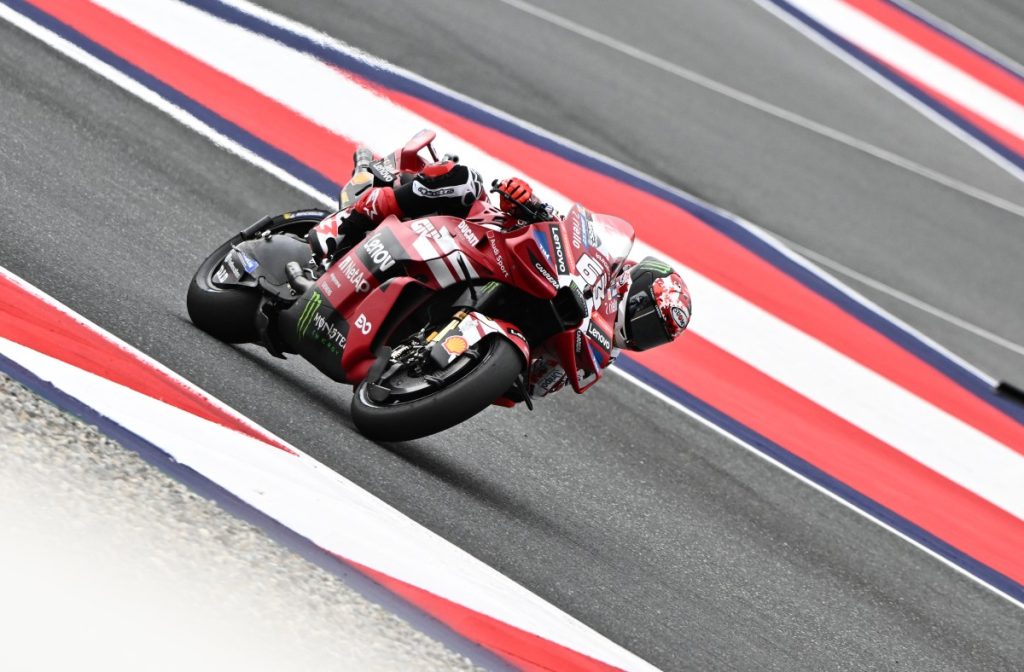
MotoGP introduced Sprint races at every Grand Prix in 2023. Unlike Formula 1, which stages the format at selected rounds, the motorcycle championship holds a Saturday race across its entire calendar.
The current qualifying system produces a single starting grid for both races. Friday afternoon Practice determines which ten riders advance directly to Q2, while the remainder enter Q1 on Saturday morning. The fastest two riders in Q1 then progress to Q2, where the first four rows are decided.
Under the new proposal, the Sprint would receive a separate qualifying session and its own grid. The established qualifying process would continue to determine the starting order for Sunday’s Grand Prix.
How the current MotoGP weekend works
The existing MotoGP weekend begins with a 45-minute FP1 session on Friday, followed by a 60-minute Practice that determines direct passage into Q2.
Saturday starts with a 30-minute FP2 before Q1 and Q2. The Sprint follows later in the day at approximately half the distance of the main race. Sunday includes a ten-minute warm-up before the full Grand Prix.
The proposed Sprint qualifying would need to be fitted into an already compressed programme. It has not been revealed whether MotoGP would shorten or remove an existing practice session, move part of qualifying to Friday or introduce another session on Saturday.
That scheduling question is likely to become one of the principal issues during negotiations. Riders have previously expressed concern about the demands created by the current format, which combines track activity with technical meetings, media commitments and sponsor appearances.
Adding another competitive session without reducing activity elsewhere would increase that workload. It could also affect the time available for teams to prepare their motorcycles and analyse long-run data.
Why MotoGP wants separate grids
Independent qualifying sessions would prevent one mistake from compromising both races. Under the present system, a crash or technical failure during Q1 or Q2 leaves a rider starting from the same position twice during the weekend.
A separate Sprint grid would create another competitive storyline while offering riders a second opportunity to recover from a poor qualifying performance. It would also make the Sprint a more independent event rather than a shorter preview of Sunday’s race.
The concept follows Formula 1’s continuing expansion of its own Sprint programme. F1 will increase from six to ten Sprint weekends in 2027, including a controversial first Sprint at Monaco. However, while Formula 1 uses the format selectively, MotoGP would need to accommodate separate qualifying at every round.
MotoGP’s existing format already guarantees meaningful Friday action because Practice determines the ten riders advancing directly into Q2. Any restructuring would need to preserve that competitive value without making the weekend excessively complicated for viewers.
Proposal still faces approval process
The plan is not yet guaranteed to become part of the 2027 regulations. The Grand Prix Commission, which includes representatives from the FIM, MotoGP rights holder and manufacturers, must formally approve sporting-rule changes.
MotoGP has already abandoned another proposed 2027 measure. A plan to restrict riders to one motorcycle during practice sessions was discussed as a potential cost-saving measure but collapsed after losing support from manufacturers.
Marco Bezzecchi in the garage during the Austrian GP weekend (Photo: Gold and Goose)
It is also unclear how extensively riders have been consulted over the Sprint-qualifying proposal. When MotoGP announced the introduction of Saturday Sprints during the 2022 Austrian GP weekend, several riders said they had learned about the change through the media rather than through direct consultation.
The separate qualifying proposal arrives as MotoGP prepares for its largest technical reset in years. The 2027 season will introduce 850cc engines, reduced aerodynamics, restrictions on ride-height devices and Pirelli tyres in place of Michelin.
The sporting format could therefore change alongside the motorcycles, but no implementation date can be considered final until the Grand Prix Commission completes the approval process.
MotoGP today: FAQ
Who won the 2026 Austrian MotoGP Sprint?
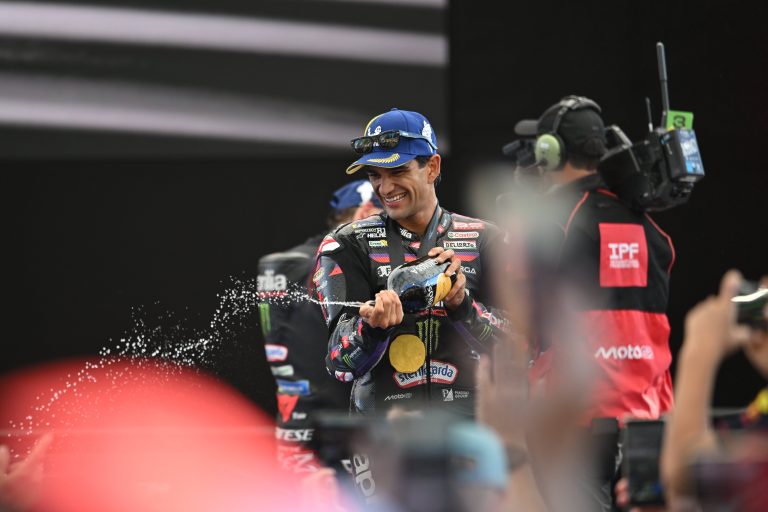
Jorge Martín won the Austrian MotoGP Sprint after recovering from eighth place. He finished 1.026s ahead of Marc Márquez, with Marco Bezzecchi third.
What happened to Pedro Acosta in the Austrian MotoGP Sprint?
Acosta crashed at Turn 2 with three laps remaining while leading by more than 2s. He remounted but subsequently returned to the pits and retired.
Who leads the 2026 MotoGP championship after the Austrian Sprint?
Jorge Martín leads the championship with 286 points, 3 ahead of Marc Márquez. The pair had entered the Austrian weekend level on 274 points, with Márquez ahead on countback. Reuters confirms their pre-Sprint points position.
Will MotoGP introduce separate qualifying for Sprint races in 2027?
MotoGP has reportedly presented the proposal to teams and manufacturers, but it has not been officially approved. The Grand Prix Commission must ratify the change.