News Summary
- Ayao Komatsu says Haas is losing performance because components of apparently identical specification can behave differently, even when installed on the same model of car.
- The team principal warned that the variations can cost approximately ten points of aerodynamic downforce, effectively cancelling out expensive development work.
- Haas has used laser scanning and other investigative methods but has not yet identified the underlying cause, complicating the comparison between Oliver Bearman and Esteban Ocon.
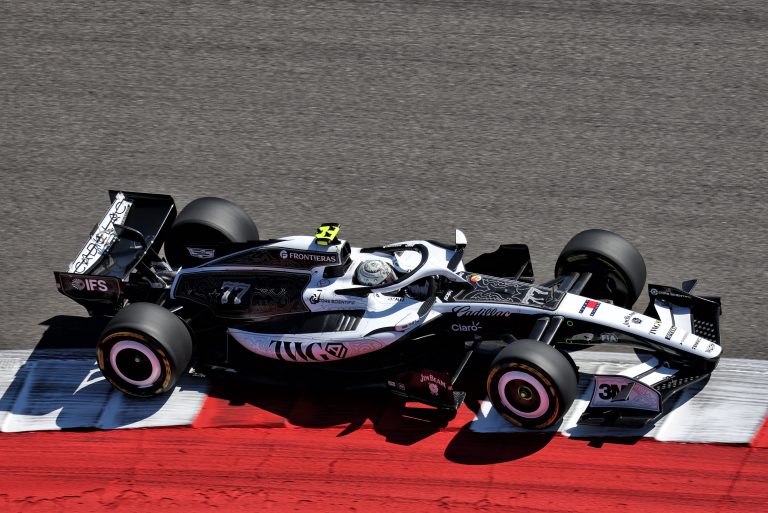
Haas has revealed that unexplained differences in the performance of seemingly identical Formula 1 components are costing the team millions of dollars in development and disrupting entire race weekends. Team principal Ayao Komatsu acknowledged that the American constructor is still struggling to understand why parts produced to the same specification can deliver substantially different results on its VF-26.
Speaking to journalists ahead of the United States Grand Prix in Austin on Thursday (October 22), Komatsu explained that Haas has spent much of the 2026 season investigating inconsistent behaviour between the cars driven by Oliver Bearman and Esteban Ocon.
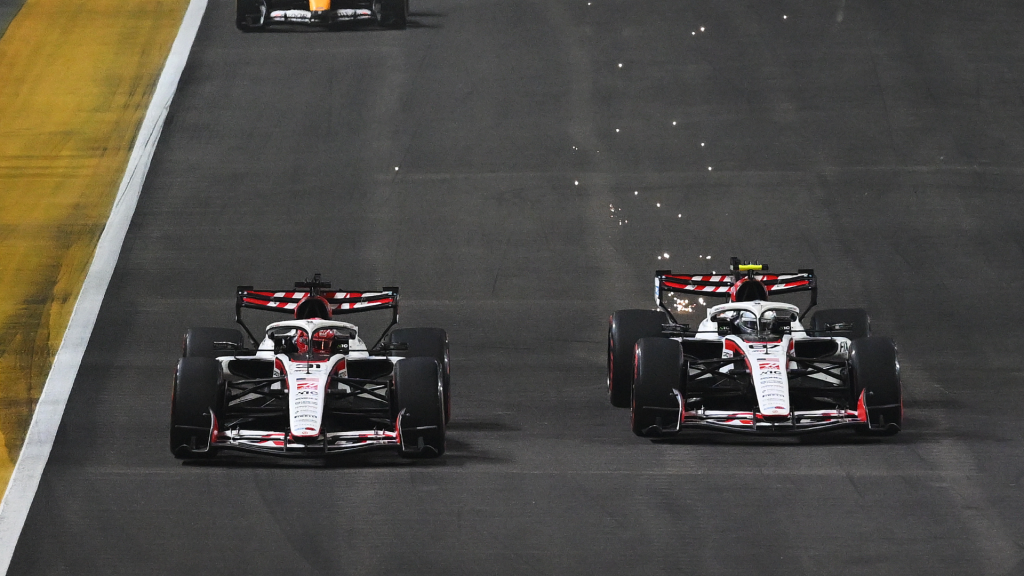
The problem has affected both drivers at different stages of the championship. Haas has sometimes found that one car performs as expected while the other suffers a significant loss of competitiveness, despite the apparent similarity of its components and configuration.
The team has investigated the differences through measurement and analysis, including laser scanning of relevant parts, but has not yet established a definitive explanation.
Komatsu said the issue is sufficiently serious to undermine the development work undertaken at the factory.
Komatsu says Haas can lose ten points of downforce without explanation
One of the most significant concerns involves the possibility of losing aerodynamic performance after fitting components that should behave similarly.
Komatsu explained that a loss of approximately ten points of downforce would be particularly damaging because achieving an equivalent improvement normally requires extensive engineering resources.
The Japanese team principal described the situation as a “multi-million dollar issue”, pointing to the cost of simulation, wind-tunnel development and manufacturing.
For a midfield constructor operating under Formula 1’s financial regulations, the problem has consequences beyond an individual qualifying session.
An upgrade developed to improve the car’s performance may be rendered ineffective if an unexplained variation in another component produces an equivalent loss.
That uncertainty makes it difficult for engineers to establish whether the latest development package has delivered the intended improvement.
It also complicates the team’s understanding of its baseline performance, which is essential when deciding which upgrades should be prioritised.
Haas admits entire weekends have been compromised
Komatsu explained that the inconsistencies have sometimes prevented Haas from making meaningful progress during practice sessions.
If a car begins a weekend with unexpected handling characteristics, engineers must spend time identifying the problem instead of optimising its set-up.
The team principal highlighted the Hungarian and Monaco Grands Prix as particularly costly examples.
At Budapest, Bearman’s car struggled throughout the weekend. Haas made adjustments, but could not restore the level of performance it expected.
Ocon experienced similar difficulties at Monaco, where his car failed to perform consistently despite the team’s attempts to improve its behaviour.
The problem is especially damaging during modern Formula 1 weekends because teams have limited track time to evaluate components and prepare for qualifying.
Losing a practice session investigating an unexplained performance deficit can therefore affect every subsequent part of the weekend.
Komatsu acknowledged that in some cases Haas had been unable to recover fully before the race.
Laser scanning fails to identify source of Haas performance differences
Haas has attempted to identify whether manufacturing variations or physical differences between components explain the performance losses.
Komatsu confirmed that the investigation has included laser scanning, allowing engineers to compare components against their intended specifications.
However, those examinations have not produced a definitive explanation for the differences observed on track.
The team is therefore considering several possible contributing factors.
These include the way components are mounted on the car, differences in set-up and aerodynamic sensitivity to changes in ride height.
Ride height is particularly important under Formula 1’s 2026 regulations because the amount of aerodynamic performance generated by the floor and other surfaces changes as the car moves.
Even relatively small differences in operating conditions can affect balance and grip.
However, Haas has not established that ride-height sensitivity or the installation process is responsible for the problems.
The investigation remains open.
Ocon and Bearman have both complained about inconsistent cars
The issue is not new for Haas, although Komatsu’s latest comments provide a clearer indication of its financial and technical consequences.
Earlier in the season, Ocon repeatedly reported variations in the behaviour of his VF-26.
The Frenchman explained that the car could behave differently from one session to another, even when the team had not made substantial changes.
At the Hungarian Grand Prix in July, he identified inconsistency as the principal obstacle preventing Haas from producing competitive performances.
“The biggest struggle I think has been the consistency of the car,” Ocon said.
He explained that the problems had included losses of straight-line speed, unexpected changes in aerodynamic balance and difficulties maintaining the car’s performance across a race weekend.
Bearman also confirmed that the inconsistencies were not restricted to his teammate’s car.
The British driver acknowledged that he had experienced both advantages and disadvantages depending on how the components performed.
“I’ve been on the bad side of that, I’ve also been on the good side of that,” Bearman said.
He explained that the changes sometimes made it difficult to compare performances between the two drivers because the cars did not always behave as expected.
“It’s not always a fair fight,” he admitted.
Those earlier complaints have gained additional significance following Komatsu’s admission that Haas has not yet found the underlying cause.
Singapore disagreement exposed tensions over Haas upgrades
The technical inconsistency also became a source of disagreement following the Singapore Grand Prix.
Ocon suggested that Bearman’s car had benefited from an upgrade that was not available on his side of the garage.
The French driver argued that the differences between their performances could not be explained exclusively by set-up choices.
Bearman subsequently expressed surprise when journalists asked whether he had received new parts, questioning the account given by Ocon.
The disagreement followed a difficult race for Haas in which neither driver finished inside the points.
Komatsu’s latest explanation does not establish that one driver received preferential treatment or that either driver’s account was inaccurate.
Instead, it confirms that the team has been dealing with performance variations that remain difficult to explain through conventional comparisons of components and set-ups.
The problem also affects Haas’ ability to determine how much of a result comes from a driver’s performance and how much can be attributed to the technical condition of the car.
Haas faces additional challenge before 2027 driver change
The investigation comes as Haas prepares for a change in its driver line-up.
The American team has confirmed that Rafael Câmara will replace Ocon in 2027, ending the French driver’s association with the organisation after two seasons.
Bearman is expected to remain with Haas, although contractual arrangements involving Ferrari have delayed confirmation of his future.
The team’s unresolved technical difficulties will therefore remain relevant beyond the final races of 2026.
Komatsu has acknowledged that the investigation requires continued attention, particularly because unexplained component variations can undermine both development work and race-weekend preparation.
Haas will continue examining its manufacturing processes, installation procedures and aerodynamic behaviour as it works to determine why nominally identical parts produce different results.
The United States Grand Prix takes place at Circuit of The Americas from October 23–25, with Bearman and Ocon returning to the track for Friday’s opening practice sessions.
GRANDE PRÊMIO is following every session of the United States Grand Prix at Circuit of The Americas this weekend, with breaking news, full coverage and real-time updates in its Formula 1 section.