News Summary
- Formula E will introduce 30-minute E-Prix Unleashed races and traditional 45-minute E-Prix events for 2027.
- The two formats will use different aerodynamic settings, Attack Mode durations and Pit Boost requirements.
- Qualifying will award championship points to all eight drivers who reach the Duels stage, increasing the importance of Saturday performance.
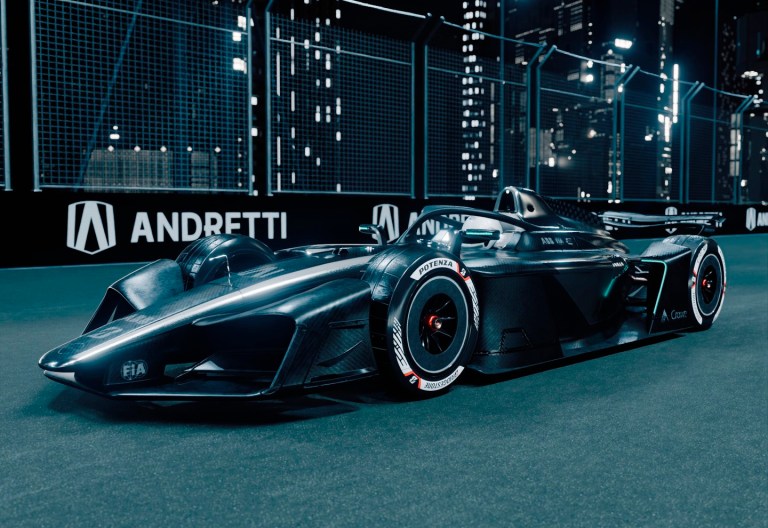
Formula E has confirmed major changes to its sporting regulations for the 2026/27 season, introducing two distinct race formats and expanding championship points awarded during qualifying. The changes accompany the arrival of GEN4, the category’s fastest and most powerful generation of electric racing cars.
The championship published a detailed explanation on November 12, clarifying how race duration, aerodynamic configurations, Attack Mode and Pit Boost will differ between events.
The new system is designed to create contrasting challenges for teams during double-header weekends, rather than requiring drivers to contest two races under identical conditions.
What changes in Formula E’s 2027 race format?
The championship will distinguish between E-Prix Unleashed and standard E-Prix races.
The shorter E-Prix Unleashed format will last 30 minutes and use a high-downforce aerodynamic configuration, allowing drivers to attack corners with greater grip.
The traditional E-Prix will last 45 minutes and use a low-downforce setup, placing greater emphasis on efficiency and energy management.
| Rule | E-Prix Unleashed | E-Prix |
|---|---|---|
| Race duration | 30 minutes | 45 minutes |
| Aerodynamics | High downforce | Low downforce |
| Attack Mode | 6 minutes | 8 minutes |
| Pit Boost | Not used | Mandatory |
| Championship points | Full points | Full points |
At double-header weekends, the two formats will create different strategic demands. At single-race venues, the traditional E-Prix format will serve as the main event.
The distinction is significant because teams will need to adapt the same GEN4 machinery to contrasting aerodynamic and energy-management requirements.
E-Prix Unleashed focuses on outright speed
The shorter race format is intended to demonstrate the GEN4 car’s performance.
High downforce should increase cornering grip, while the absence of Pit Boost removes the requirement for a charging stop.
Drivers will receive six minutes of Attack Mode, creating a shorter window in which to exploit the temporary power advantage.
Although the race lasts only 30 minutes, it will award the same championship points as the longer format.
That means E-Prix Unleashed will not be treated as a lower-value sprint race in the championship standings.
The winner receives 25 points, with the remaining top-ten finishers scoring according to the familiar 25–18–15–12–10–8–6–4–2–1 scale.
Traditional E-Prix retains energy strategy
The 45-minute E-Prix will use a low-downforce aerodynamic configuration designed to reduce drag.
Energy management will remain central to the race, while an eight-minute Attack Mode allocation will provide an additional strategic variable.
Pit Boost will also be mandatory.
The system requires drivers to make a pit stop for a rapid energy recharge, introducing another decision involving timing and track position.
The difference between the two formats could reward teams that can quickly adapt their setups and race strategies across the same weekend.
For spectators, the change means that the two races of a double-header may look and unfold differently, even when they take place on the same circuit.
Formula E expands qualifying championship points
The championship is also changing the rewards for qualifying.
The Duels format will remain, but all eight drivers who reach the knockout stage will score points.
| Qualifying position | Points |
|---|---|
| 1st | 4 |
| 2nd | 3 |
| 3rd | 2 |
| 4th | 2 |
| 5th | 1 |
| 6th | 1 |
| 7th | 1 |
| 8th | 1 |
| Pole position bonus | 1 |
The championship’s official explanation lists a separate one-point pole-position bonus alongside the qualifying position points.
This creates a potentially greater reward for drivers who consistently qualify near the front, even when their race results are compromised.
The standard race points allocation remains unchanged.
Practice sessions also become longer
Formula E has confirmed that free practice sessions will increase to 45 minutes.
Two sessions will take place during a race weekend, providing teams with additional preparation time for the more complex GEN4 cars.
The extra running could prove important as manufacturers learn to optimise permanent all-wheel drive, increased power and the new aerodynamic configurations.
Teams will also need to adapt their energy-management strategies to the different race formats.
When do the new Formula E rules begin?
The sporting changes take effect with the 2026/27 championship, which begins in Mexico City on January 16, 2027.
The opening date changed after the Jeddah double-header was postponed to April.
The GEN4 cars will make their first collective pre-season test appearance at Jarama from November 16–20.
The revised sporting regulations will add another layer of uncertainty to a season already featuring new manufacturers, driver changes and a major increase in car performance.
GRANDE PRÊMIO is following Formula E’s new regulations, teams and drivers throughout the GEN4 era.