News Summary
- George Russell defended his unsuccessful overtaking attempt on Kimi Antonelli, saying he had to take the risk to challenge Max Verstappen for victory.
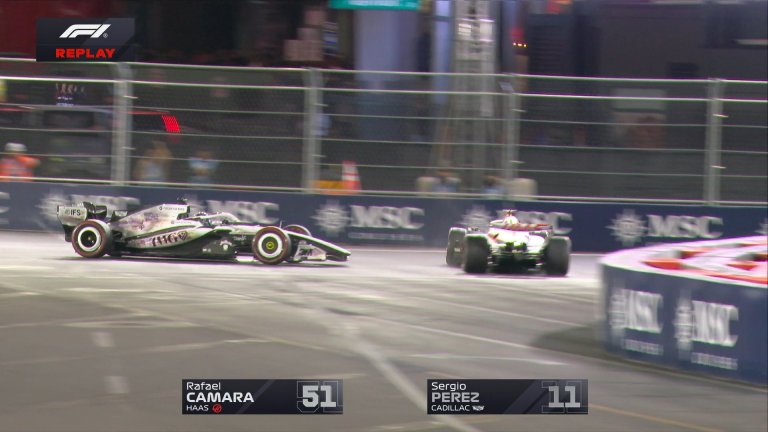
- The Mercedes driver locked up and hit the barriers with two laps remaining, eventually being classified ninth.
- Russell believes the powerful slipstream, rather than battery deployment alone, was responsible for the unusually intense overtaking battles in Las Vegas.
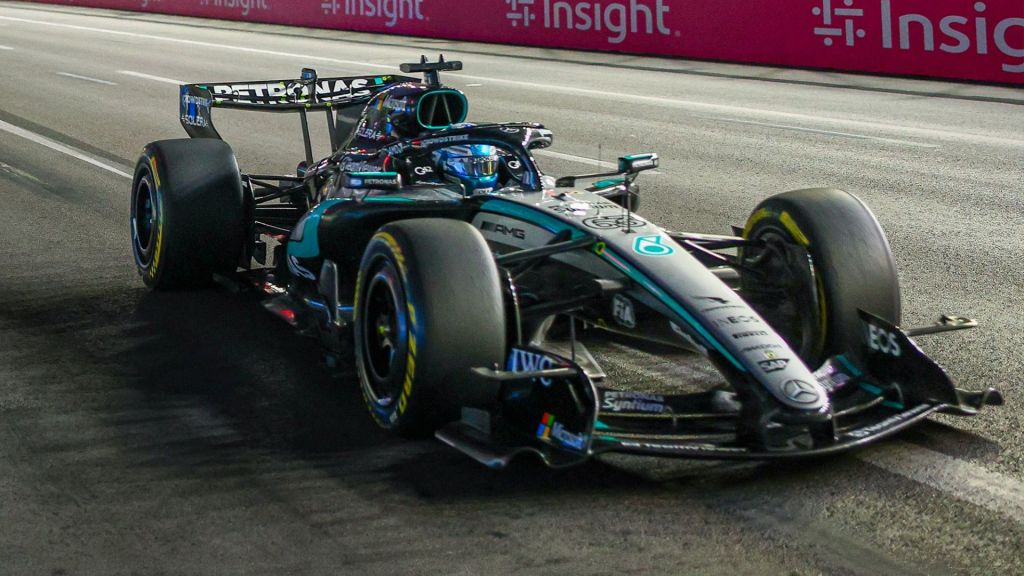
George Russell has defended the aggressive move on Mercedes teammate Andrea Kimi Antonelli that ended in a late crash at the 2026 Las Vegas Grand Prix, insisting he does not regret taking the risk despite losing a potential podium finish and valuable championship points.
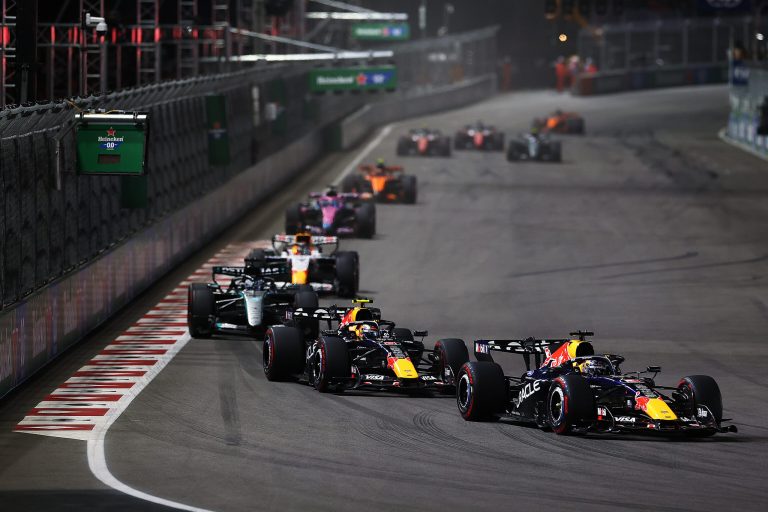
The British driver had spent much of Saturday night’s 50-lap race fighting Max Verstappen for the lead, frequently exchanging positions with the Red Bull driver as slipstreaming and electrical energy management made it extremely difficult to establish a lasting advantage.
However, Russell’s chances unravelled in the closing stages when he attempted to overtake Antonelli while pursuing the race leader.
The Mercedes driver locked up, lost control and struck the barriers with two laps remaining. Although he was unable to finish normally, Russell was classified ninth, scoring two championship points.
Speaking to Sky Sports F1 after the race, Russell made it clear that he considered the attempt necessary.
“Yeah, I mean, I don’t regret it. I felt like I had to go for it if I wanted to win the race,” Russell said.
“In a race like this, it was sort of high risk, high reward and, you know, with two laps remaining, I kind of really wanted to be behind Max going into that last lap.”

Russell admits braking mistake in battle with Antonelli
Russell had started alongside Verstappen on the front row after Antonelli, who recorded the fastest qualifying lap, received a five-place power-unit penalty.
The British driver repeatedly threatened the Red Bull throughout the Grand Prix, overtaking Verstappen on the straights only to lose the lead again as the Dutchman recovered the advantage.
Antonelli followed a different tyre strategy, starting on mediums before switching to soft tyres for the final stint.
The approach brought the newly crowned world champion into contention for victory, creating a late battle involving both Mercedes drivers and Verstappen.
Russell attempted to position himself immediately behind Verstappen for the final lap, but the move against Antonelli ended in the barriers.
The Mercedes driver acknowledged that he had made a small but decisive mistake under braking.
“And obviously just got it very slightly wrong and with the lock-up it was unavoidable,” he explained.
“So, yeah, obviously disappointed and a bit frustrated with it, but I don’t regret it as such.”
The accident changed the race’s final podium order.
Verstappen went on to win, while Lando Norris and Oscar Piastri secured second and third for McLaren. Antonelli finished fourth, just 2.574 seconds behind the winner.
Russell was eventually classified ninth, 13.192 seconds behind Verstappen.
Read the complete race report: Verstappen wins spectacular Las Vegas F1 race as McLaren takes double podium and Russell crashes.
‘More to do with the slipstream’: Russell explains Las Vegas overtaking
The extraordinary amount of overtaking in Las Vegas prompted questions about the influence of Formula 1’s 2026 power-unit regulations, which place greater importance on electrical energy deployment.
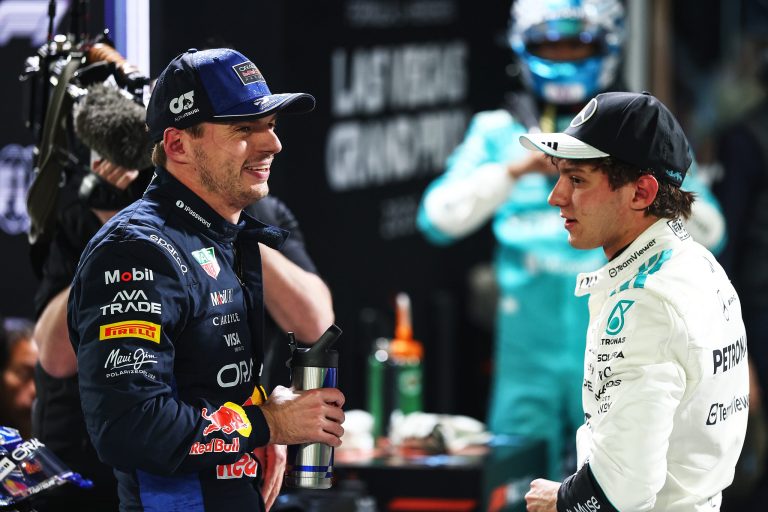
Race winner Verstappen had already explained that Red Bull initially found an effective deployment strategy before its rivals began adapting to the approach.
Russell, however, offered a different interpretation of why drivers repeatedly gained and lost positions.
“No, no, I mean, I don’t think anybody would have been able to get away,” he said.
“That slipstream, I think it’s more to do with the slipstream, to be honest, than necessarily the deployment.”
For Russell, the aerodynamic advantage of following another car was a major reason nobody could escape, regardless of how effectively they managed their batteries.
The Mercedes driver also revealed that he and Antonelli had been using different energy-deployment strategies during the race.
“But it was, yeah, it was tough. You know, even Kimi and I were on different deployment strategies.”
The comments offer a contrasting perspective to Verstappen’s post-race assessment, in which the Red Bull driver emphasised the importance of starting with the correct battery deployment before competitors learned how to counter it.
Both drivers agreed that the Las Vegas Grand Prix had made establishing a comfortable lead unusually difficult.
Russell loses ground to Verstappen in F1 championship
The late mistake also damaged Russell’s prospects of finishing second in the 2026 Drivers’ Championship.
Verstappen collected 25 points for victory, moving to 304, while Russell scored only two and reached 264.
The gap between the two drivers increased to 40 points, with 58 still available across the Qatar sprint weekend and the Abu Dhabi finale.
Russell also lost third place in the standings to Lewis Hamilton, who finished seventh for Ferrari and moved to 267 points.
Lando Norris is level with Russell on 264 following his second-place finish.
The complete championship positions are available in GRANDE PRÊMIO’s updated 2026 F1 standings after Las Vegas.
Despite the result, Russell insisted that accepting a lower finishing position without attempting to win would have left him equally dissatisfied.
“And, yeah, obviously in the end, really not the result I wanted,” he said.
“But I would have also been disappointed if I was just standing here in P3 or P4 and not having attempted to go for the win at that point.”
Formula 1 returns on November 27–29 for the Qatar Grand Prix, where Russell