News Summary
- Max Verstappen said the Las Vegas Grand Prix was unlike anything he had experienced in Formula 1, describing the racing as “really, really surreal”.
- The Red Bull driver explained that his team initially had the correct energy-deployment strategy before rivals began adapting to it.
- Verstappen won by just 0.639 seconds over Lando Norris, with Oscar Piastri third and Andrea Kimi Antonelli fourth.
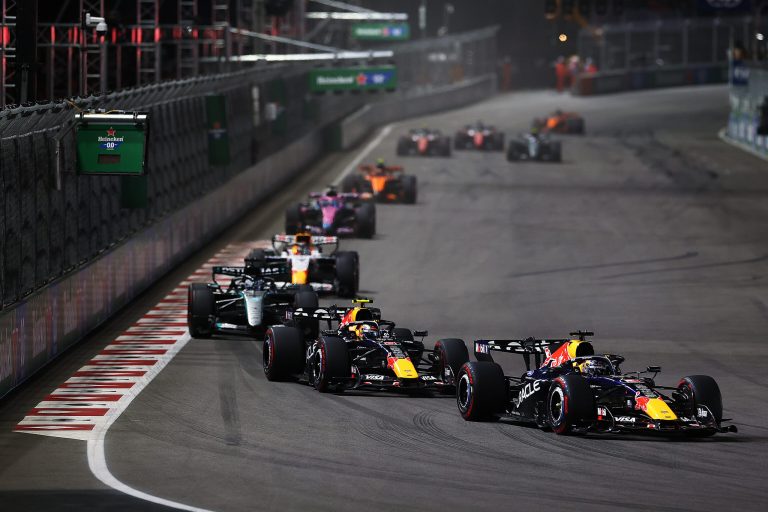
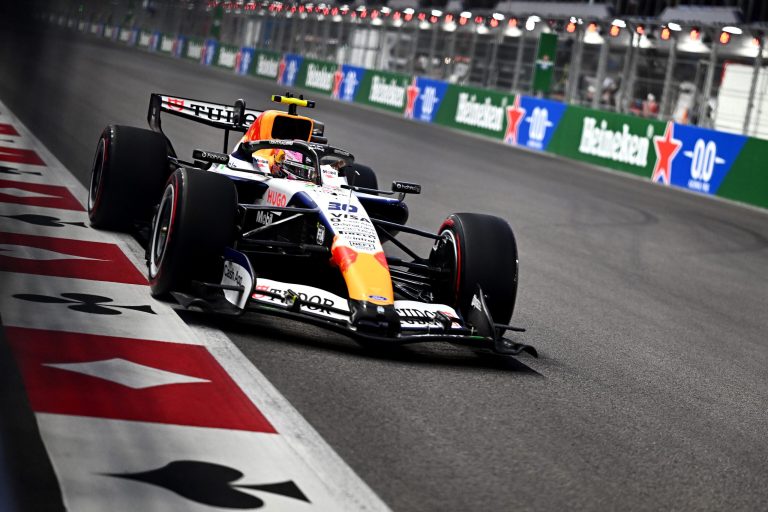
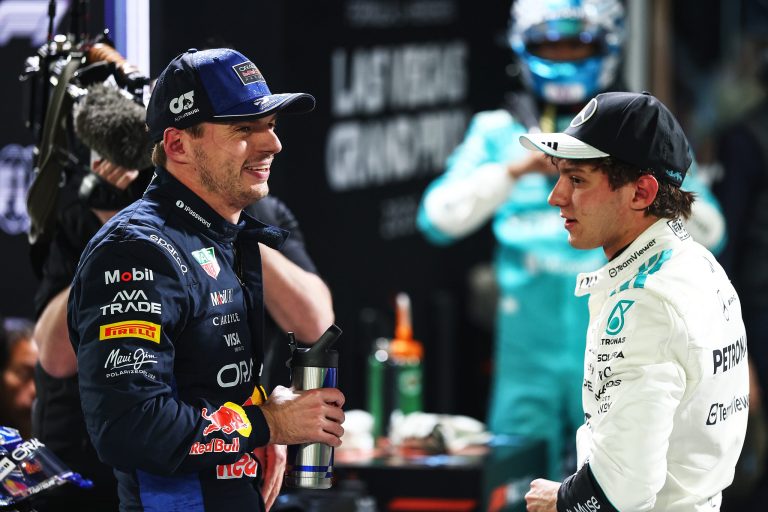
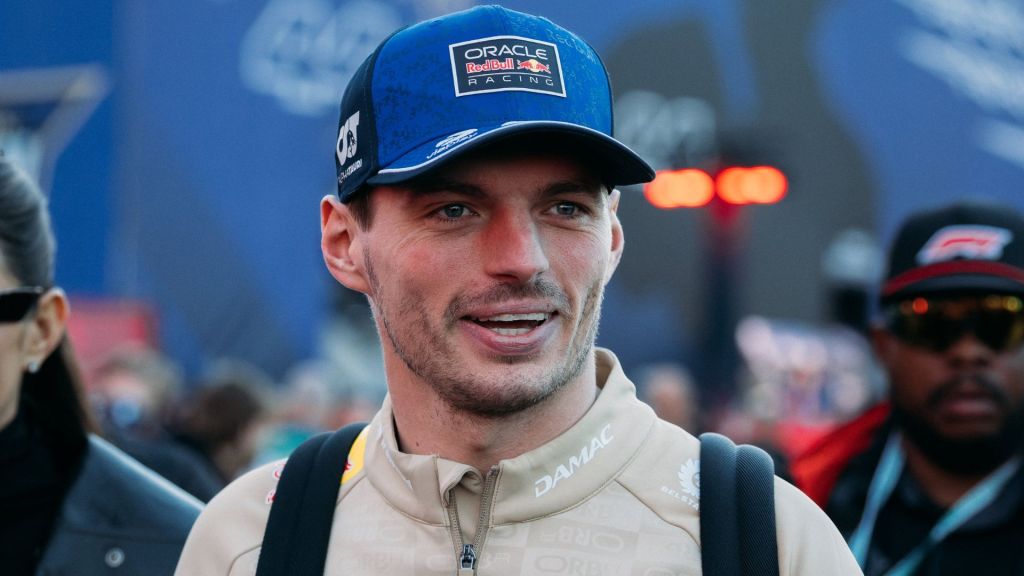
Max Verstappen admitted he had never experienced anything like the 2026 Las Vegas Grand Prix in Formula 1, describing the extraordinary battle for victory as “really, really surreal” after holding off McLaren and Mercedes to win Saturday night’s 50-lap race.
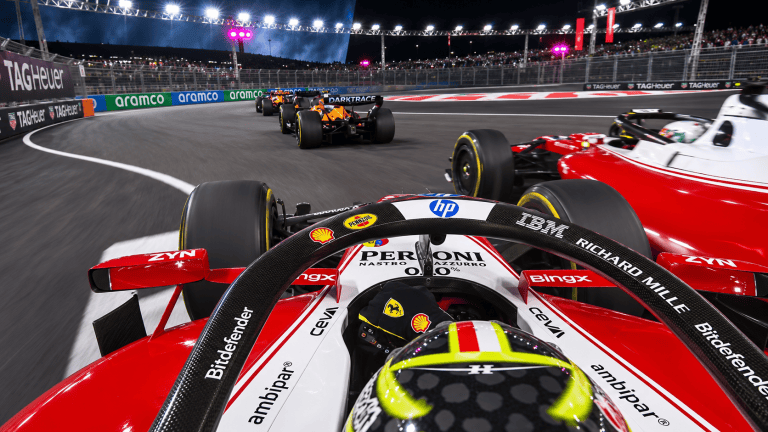
The Red Bull driver repeatedly exchanged the lead with George Russell, Lando Norris and Andrea Kimi Antonelli as energy management created dramatic changes in straight-line performance throughout the race.
Verstappen ultimately prevailed by just 0.639 seconds over Norris, while Oscar Piastri completed the podium and Antonelli finished fourth.
Speaking after the race, the Dutchman struggled to compare the contest with anything he had previously encountered in the championship.
“Not in Formula 1, that’s for sure. Crazy. Really, really surreal and something I have never seen before in Formula 1 myself,” Verstappen said.
His comments reflected a race in which outright speed was only part of the equation. Drivers were repeatedly able to attack on the straights, only to find themselves vulnerable to a counterattack moments later.
Verstappen explains how Red Bull managed battery deployment
The Las Vegas Strip Circuit features long straights and heavy braking zones, making the distribution of electrical energy particularly important under Formula 1’s 2026 power-unit regulations.
For Verstappen, the key to victory was not simply deploying as much energy as possible. It was understanding where to use it and how the opposition would respond.
Red Bull appeared to have an effective deployment strategy from the opening laps, allowing Verstappen to respond whenever rivals overtook him.
However, the advantage became increasingly difficult to maintain as the other drivers learned from his approach.
“I think in the beginning we had the deployment correct, and people were learning and watching what you were doing,” Verstappen explained.
“We had it set up well, but crazy amount of fighting… It was impossible to drive off.”
The final sentence was particularly revealing.
Despite leading substantial portions of the race, Verstappen could not establish the kind of gap normally associated with a dominant performance.
Russell repeatedly attacked the Red Bull, while Norris and Antonelli later joined the fight for first place.
The result was a constant exchange of positions rather than a conventional battle in which the leading driver could gradually escape.
Verstappen frequently recovered the lead near the end of the lap, making effective use of the available energy as his rivals attempted to defend.
McLaren and Mercedes keep Verstappen under pressure
Verstappen’s biggest threats changed throughout the Grand Prix.
Russell was particularly competitive during the opening stages, repeatedly moving ahead of the Red Bull driver on the straights before losing the position again.
Antonelli followed a different strategy from most of the field, starting on medium tyres and saving soft tyres for the final stint.
The newly crowned world champion, who started sixth because of a power-unit penalty, used the alternative approach to move into contention.
Norris also briefly led during the closing stages, but Verstappen regained the advantage.
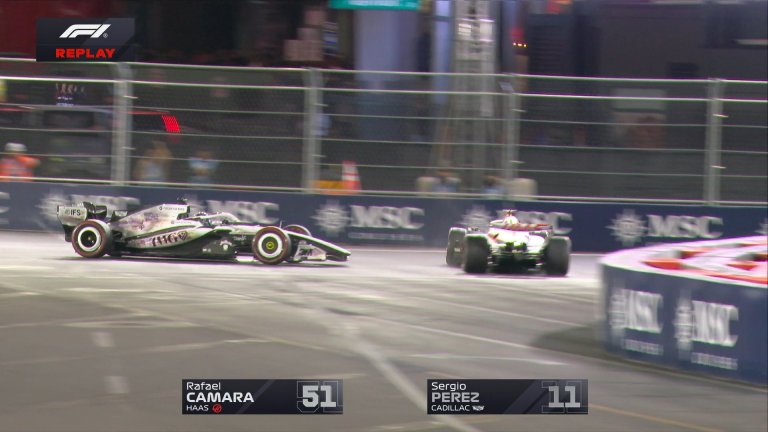
The battle was further complicated by a Safety Car period following contact between Sergio Pérez and Rafael Câmara.
Arvid Lindblad subsequently crashed behind the Safety Car, while Isack Hadjar suffered front-wing damage after the restart.
Russell’s own late accident opened the door for McLaren to take second and third.
The first five finishers were separated by just 2.927 seconds, illustrating how closely matched the leading group remained despite the repeated changes of position.
‘Very happy’ after victory in extraordinary circumstances
Verstappen’s victory strengthened his position in the Drivers’ Championship with two rounds remaining.
He moved to 304 points, retaining second place behind already-crowned champion Antonelli, who leads with 402.
The result also helped Red Bull defend third place in the Constructors’ Championship, although McLaren’s double podium reduced the gap between the teams to just nine points.
For Verstappen, however, the immediate satisfaction came from surviving a race in which maintaining the lead was unusually difficult.
“Very happy with such a crazy race to come out on top,” he said.
The victory came after the Dutchman inherited pole position from Antonelli, whose five-place power-unit penalty had overturned the qualifying result.
For the updated championship positions, read GRANDE PRÊMIO’s complete F1 2026 standings after Las Vegas.
The qualifying circumstances are covered in Verstappen inherits Las Vegas pole as Antonelli loses fastest lap to grid penalty.
Formula 1 returns on November 27–29 with the Qatar Grand Prix, the penultimate round of the 2026 season.
GRANDE PRÊMIO is following every session of the championship and the latest developments in Formula 1.
FAQ
What did Max Verstappen say about the Las Vegas Grand Prix?
Verstappen described the race as “really, really surreal” and said he had never experienced anything similar in Formula 1.
How did Verstappen win the Las Vegas Grand Prix?
Verstappen used effective battery deployment to repeatedly recover the lead during battles with Mercedes and McLaren, eventually beating Lando Norris by 0.639 seconds.
How many points does Verstappen have after Las Vegas?
Verstappen has 304 points and sits second in the 2026 Drivers’ Championship, behind Kimi Antonelli on 402.