News Summary
- Verstappen recovered from 24th to ninth in just 45 minutes, gaining 15 positions during his first GT World Challenge Europe race.
- Chris Lulham had brought the Mercedes #3 into sixth before receiving a drive-through penalty for contact with Luca Stolz.
- Verstappen praised the car’s race pace and admitted the penalty was deserved, but the available evidence does not establish that his team could have won.
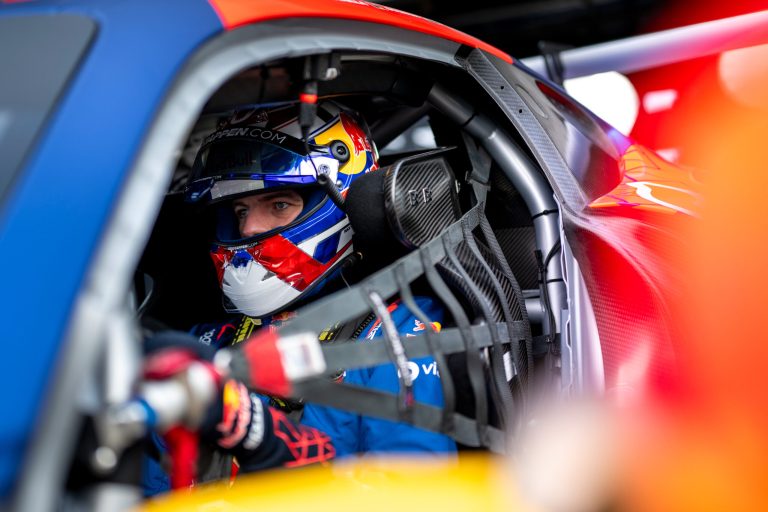
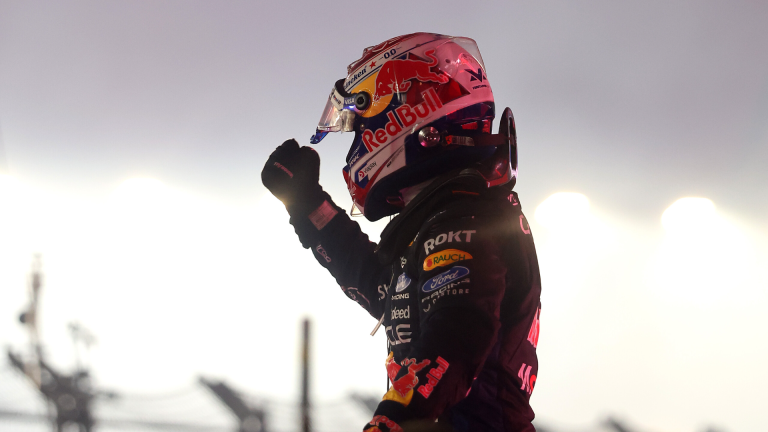
Max Verstappen needed just 45 minutes to demonstrate why his talent extends well beyond Formula 1, recovering from 24th to ninth in the GT World Challenge Europe Endurance Cup finale at Portimão on Saturday, October 17. The four-time world champion gained 15 positions after taking over a Mercedes-AMG GT3 that had been dropped down the order by a penalty, delivering one of the race’s most striking recovery drives.
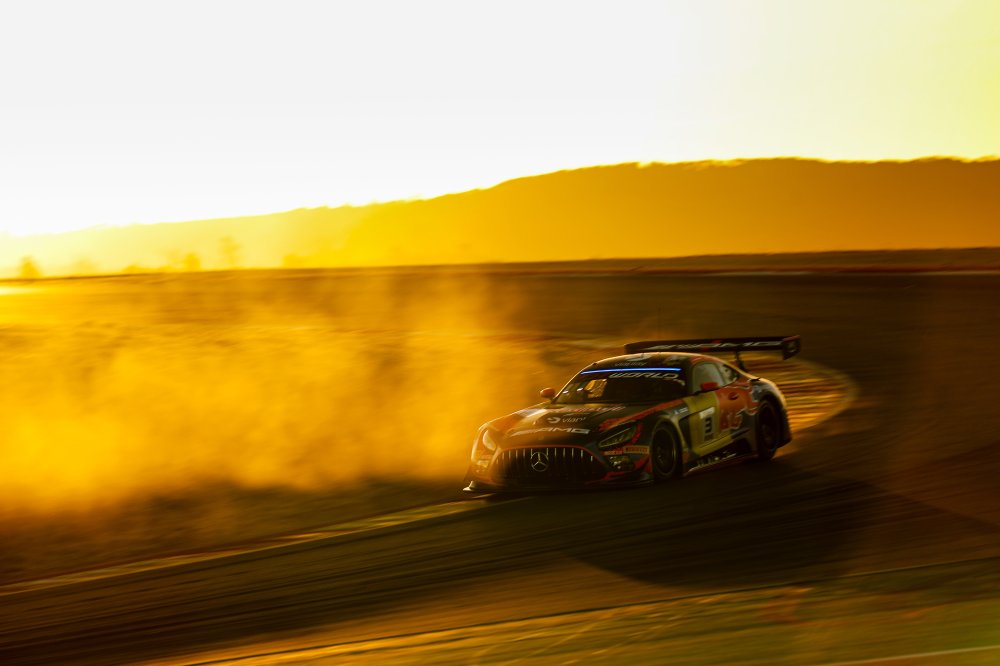
The final result told only part of the story. Mercedes-AMG Team Verstappen Racing had been running sixth before Chris Lulham collided with Luca Stolz’s No. 48 Mercedes, earning a drive-through penalty that effectively ended the team’s hopes of fighting near the front. By the time Verstappen took the wheel from Lulham, the No. 3 car had fallen to 24th.
The Dutchman subsequently worked his way through the field, making several overtakes in rapid succession after a late safety-car period and finishing just 18.556 seconds behind the winning No. 17 GetSpeed Mercedes, shared by Ralf Aron, Maximilian Götz and Fabian Schiller.
His recovery raised an obvious question: without the penalty, could Verstappen Racing have challenged for victory?
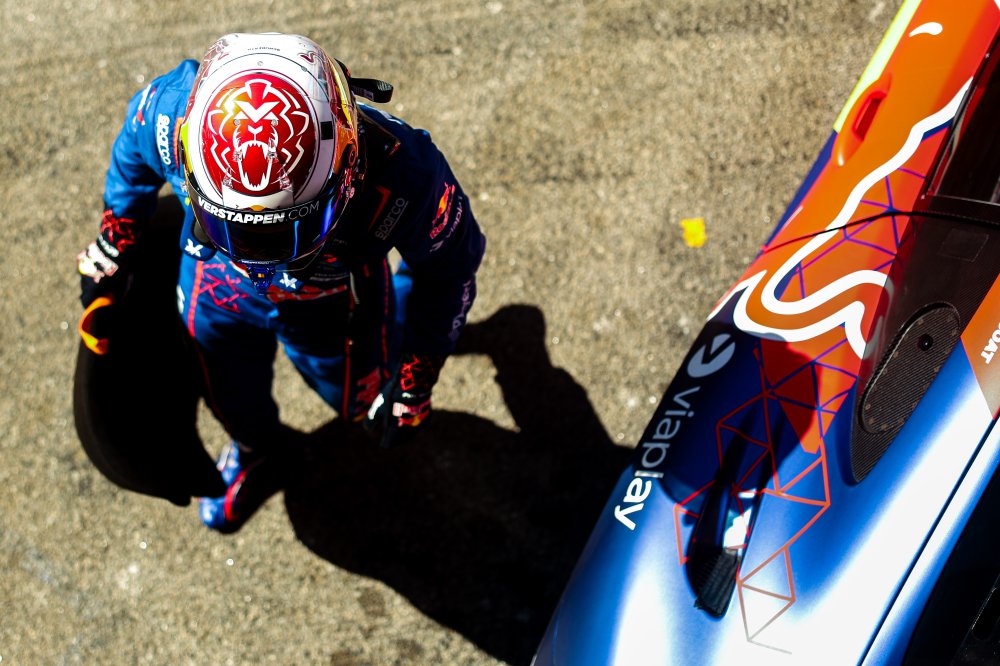
How Verstappen Racing went from sixth to 24th
The race had begun with Ben Barnicoat at the wheel of the No. 3 Mercedes. After a difficult qualifying session, in which the team struggled with excessive bouncing and an unsuitable setup, the car proved considerably more competitive in race conditions.
Barnicoat avoided the incidents that disrupted the opening stages and progressively moved into the top ten. The team’s decision to extend its first stint also helped its position during the pit-stop sequence.
Lulham took over in a net seventh position and quickly passed Thomas Drouet’s No. 64 Ford Mustang around the outside at Turn 7, moving into sixth. He then began closing on the leading group, with the Mercedes showing enough pace to remain competitive against established GT3 specialists.
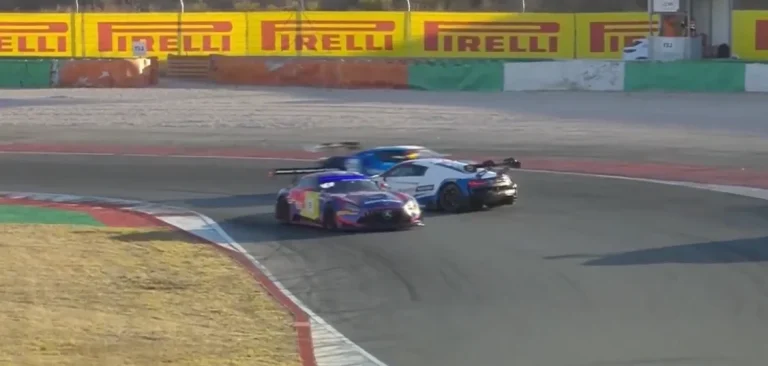
The decisive incident came after a safety-car restart, when Lulham attempted to overtake Stolz’s No. 48 Winward Racing Mercedes at Turn 8. The cars made contact, sending Stolz into a spin.
Race control considered Lulham responsible and imposed a drive-through penalty. The British driver served the sanction before handing the car to Verstappen, leaving his teammate with a substantial deficit to recover.
Verstappen subsequently acknowledged that the penalty had been justified.
“Chris also started his stint really strong, putting himself in a good position,” he said, before describing the attempted overtake as an opportunistic move that resulted in a deserved drive-through.
The four-time champion also praised Barnicoat for navigating the chaotic opening stint and moving the team towards the front.
The contrast with qualifying was significant. As GRANDE PRÊMIO reported after Friday’s session, the Mercedes had struggled with its setup and finished only 15th in the combined classification.
Verstappen explained that the team corrected the problem before the race, making the car much more competitive.
Fifteen positions in 45 minutes: How Verstappen recovered
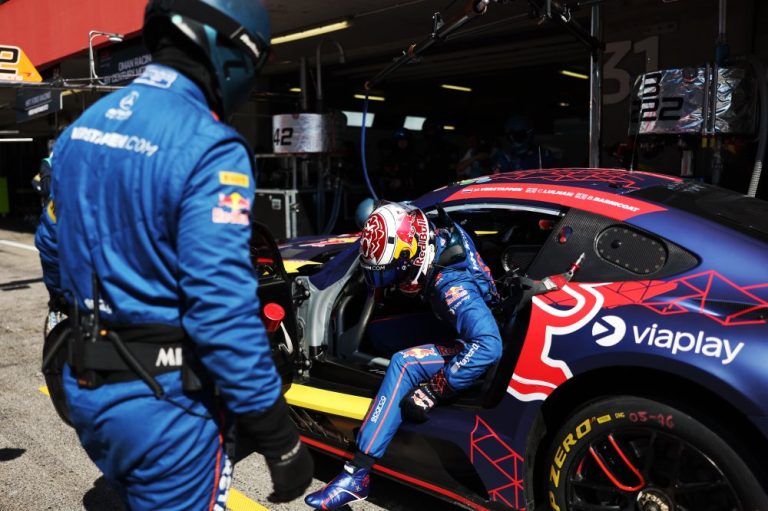
Verstappen entered the race with approximately 45 minutes remaining, rejoining in 24th place.
His first task was to negotiate a field containing several different GT3 classes, where drivers compete for separate championships despite sharing the same circuit. The Dutchman had to distinguish between competitors defending their overall positions and others concentrating on their respective class battles.
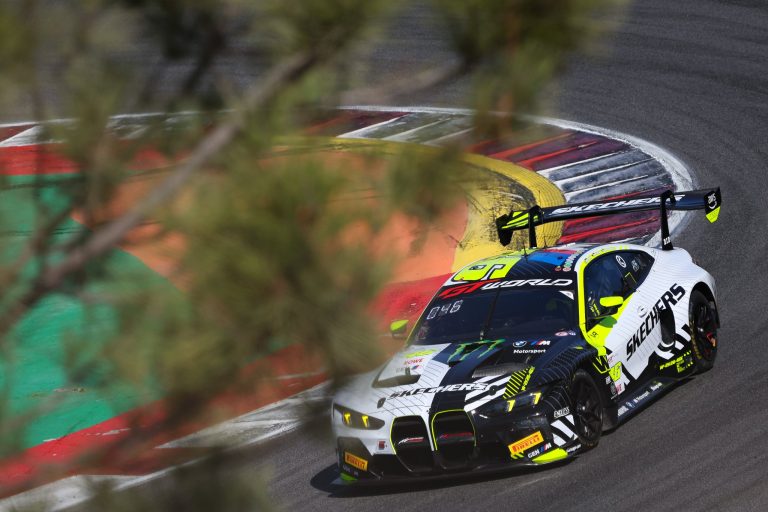
A second safety-car period then compressed the field after incidents involving the No. 96 Rutronik Racing Lamborghini and the No. 46 Team WRT BMW shared by Valentino Rossi, Max Hesse and Neil Verhagen.
Verstappen was 19th at the restart and began making rapid progress.
With 17 minutes remaining, he had reached 15th, putting him directly behind a group of Pro-class competitors. The following laps produced his most impressive sequence, as he gained another six positions in approximately ten minutes.
At one point, Verstappen exploited a battle between several cars ahead to overtake three Pro-class entries in a single sequence. He also passed Arthur Leclerc’s Ferrari during the closing stages.
The recovery took him to ninth, where he remained until the chequered flag.
| Race moment | Position | What happened |
|---|---|---|
| Lulham before penalty | 6th | Mercedes #3 fighting near the front |
| Verstappen takes over | 24th | Drive-through damage already absorbed |
| Final safety-car restart | 19th | Field compressed |
| 17 minutes remaining | 15th | Verstappen closes on Pro-class group |
| Closing laps | 9th | Six further places gained |
| Finish | 9th | 15 positions recovered in 45 minutes |
The Dutchman’s best lap was 1:44.506, recorded on lap 92 of the race’s 94 laps, indicating that he was still capable of delivering competitive pace during the final stages.
His overall average rate of recovery was one position every three minutes, although the gains were not evenly distributed and were influenced by the safety-car period and the different classes in the field.
Could Verstappen have won the race without Lulham’s penalty?
The evidence suggests that Verstappen Racing had a realistic opportunity to fight for a stronger result, potentially including the podium, but there is insufficient information to conclude that it would have won.
Three factors support the argument that the No. 3 Mercedes was competitive.
First, Barnicoat and Lulham had already moved into sixth before the collision. The crew had achieved that position through a combination of pace, strategy and overtaking rather than relying exclusively on incidents involving other cars.
Second, the team had corrected the setup problems that compromised qualifying. Verstappen confirmed that the Mercedes was considerably more competitive in the race, suggesting that its starting position understated its potential.
Third, Verstappen’s late recovery demonstrated that the car retained enough performance to overtake several competitors in a short period, including Pro-class entries.
However, the winning No. 17 GetSpeed Mercedes was also extremely competitive. Schiller controlled the final stint after taking the lead, maintaining his advantage through the closing stages and eventually winning by 5.062 seconds over the No. 80 Lionspeed Porsche.
Verstappen’s ninth-place finish, 18.556 seconds behind the winner, cannot be used to calculate what would have happened without the penalty.
The drive-through cost time, but removing it from the final result would not reproduce the race that might have unfolded. The No. 3 would have been running among different competitors, potentially facing different traffic, tyre conditions and strategic decisions.
The late safety car also helped Verstappen recover by compressing the field, meaning that part of his 15-place gain was made possible by circumstances that would not necessarily have benefited a car already running near the front.
A victory would have required Verstappen Racing to match or beat GetSpeed over the remaining distance, something that cannot be established from the final stint alone.
The strongest defensible assessment is that the penalty cost the team a genuine opportunity to challenge for a leading result. Whether that would have meant victory, a podium or another top-six finish remains uncertain.
What Verstappen’s performance reveals about his GT3 ability
Verstappen’s recovery was impressive not simply because he overtook 15 cars, but because of the environment in which he achieved it.
The GT World Challenge Europe field included more than 60 entries, with factory-supported drivers and experienced endurance specialists competing in closely matched GT3 machinery.
Unlike Formula 1, where significant performance differences between cars can influence overtaking opportunities, GT3 racing frequently involves smaller speed differences and greater dependence on braking precision, traction and traffic management.
Verstappen had also spent relatively little time racing the Mercedes-AMG GT3 at Portimão. His previous GT3 experience had been concentrated largely on the Nürburgring Nordschleife, requiring him to adapt to a different circuit, car setup and race format.
As GRANDE PRÊMIO explained in its guide to the GT World Challenge Europe, the Endurance Cup places particular emphasis on driver changes, combined qualifying performance and cooperation between teammates.
Verstappen demonstrated several qualities that have defined his Formula 1 career: the ability to judge overtaking opportunities quickly, exploit battles between other drivers and maintain concentration while progressing through traffic.
His strongest sequence came during the final 17 minutes, when he closed on a group of Pro-class cars and gained six places in approximately ten minutes.
That part of the recovery offers a more meaningful indication of his performance against experienced GT3 competitors than the overall number of positions gained, which also included cars from other classes.
The result should not be treated as proof that Verstappen would dominate GT3 racing or that his performance was superior to every specialist in the field. However, his ability to adapt quickly and deliver a competitive final stint provides strong evidence that he can compete effectively outside Formula 1.
Verstappen admits he enjoyed the recovery despite missed opportunity
After the race, Verstappen offered a balanced assessment of the team’s performance.
He acknowledged the qualifying mistake, praised his teammates and accepted that the drive-through penalty had been deserved.
The Dutchman also made clear that he had enjoyed the challenge of recovering through the field.
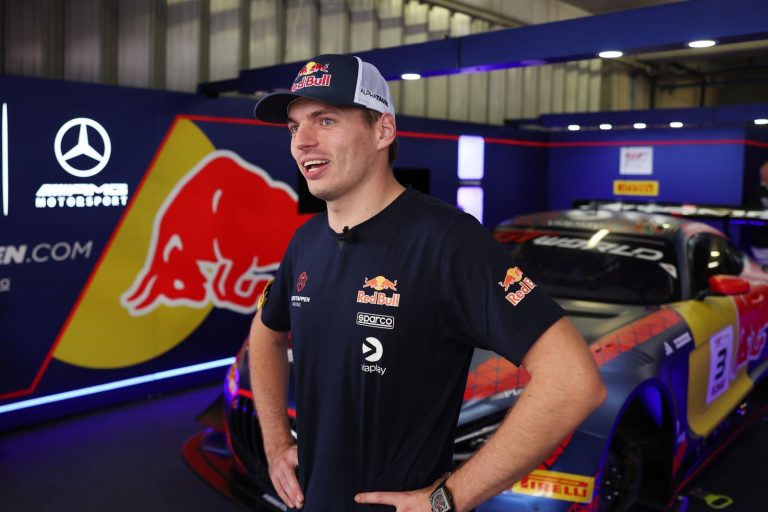
“But I had fun and the pace of our car was really good,” Verstappen said in comments published on his official website.
He described the final stint as hectic, with considerable traffic and several incidents complicating his progress.
“To finish ninth, recovering from that drive-through, I think was really strong,” he added.
Verstappen concluded that the team had learned a great deal despite failing to achieve the result it wanted.
The race was his first appearance in the GT World Challenge Europe Endurance Cup, following his previous GT3 activities at the Nürburgring.
His participation was made possible by Formula 1’s scheduled weekend off between the Singapore and United States Grands Prix.
The Dutchman will return to Red Bull for the United States Grand Prix at Austin on October 23–25, where he will attempt to secure a third consecutive Grand Prix victory after winning in Malaysia and Singapore.
GRANDE PRÊMIO will continue following Verstappen’s racing activities and his team’s endurance programme through its endurance racing coverage.