News Summary
- Fernando Alonso qualified 17th at Madring and was eliminated in Q1 despite believing he produced a strong lap.
- The Aston Martin driver criticised the influence of MGU-K deployment through the Monumental, saying F1 should allow the bravest and most skilled drivers to make the difference.
- Alonso revealed he regularly discusses the regulations with FIA president Mohammed Ben Sulayem and F1 CEO Stefano Domenicali, insisting the championship cannot wait until 2031 for major change.
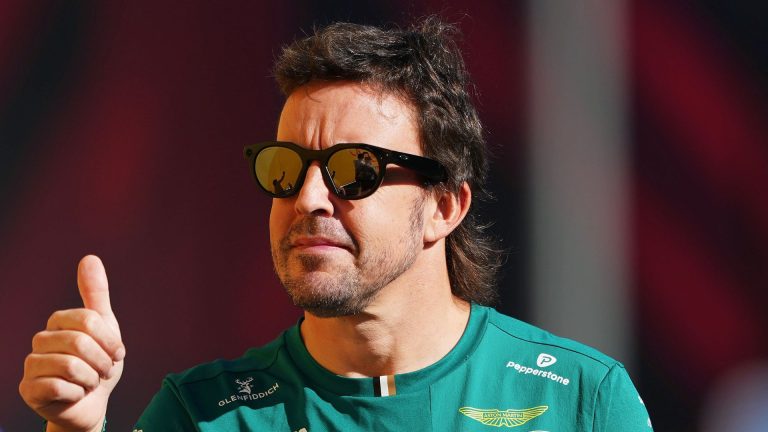
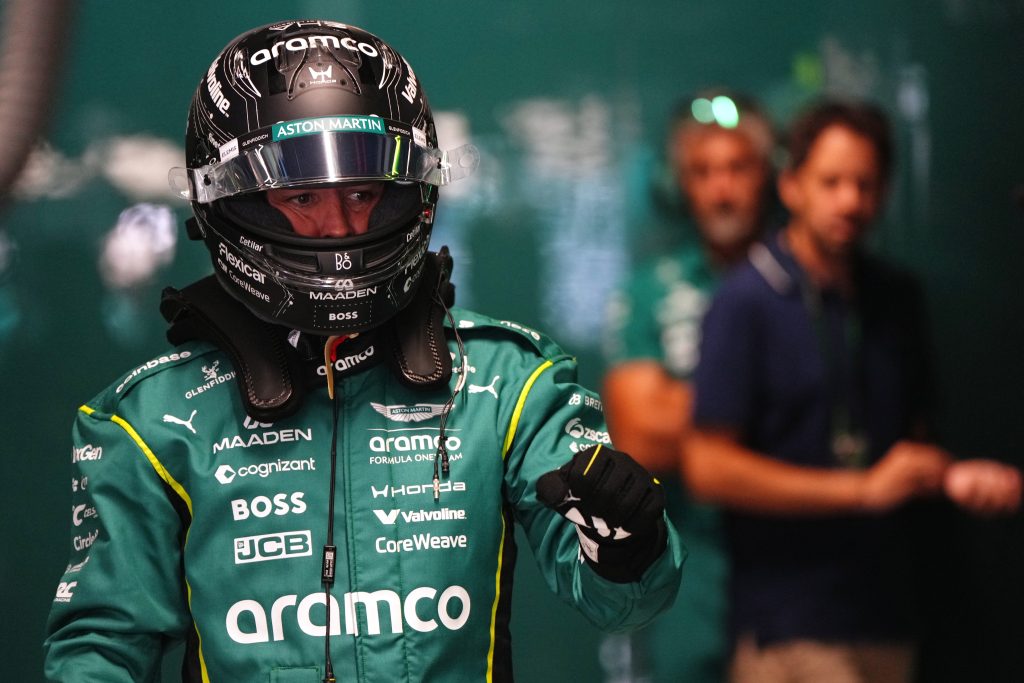
Fernando Alonso has warned that Formula 1 “cannot continue down this path” after his Q1 elimination at the 2026 Spanish Grand Prix, arguing that the current generation of cars is taking too much influence away from the driver.
Alonso qualified only 17th at Madring, continuing Aston Martin’s difficult start to Formula 1’s first weekend at the new Madrid circuit. The Spaniard’s frustration, however, extended well beyond his own result.
Speaking to AS after qualifying, Alonso focused on Madring’s signature Monumental corner and argued that it should be precisely the kind of section where driving ability separates the best from the rest. Instead, he believes the characteristics of the current power units mean electrical energy deployment has too much influence on how quickly a driver can negotiate it.
“It’s sad that with this generation of cars we come to a circuit that is very good, like this one, with challenges such as the Monumental corner, and the driver’s influence is none,” Alonso said.
He used Aston Martin press officer Michael Clayton to make his point, joking that even someone outside the F1 grid could negotiate Turn 12 flat-out because of how the MGU-K delivers its power.
Alonso’s argument was that a corner as spectacular as the Monumental should reward commitment and ability: the driver willing and able to carry more speed should gain time. Under the present regulations, he believes battery deployment can outweigh that distinction.
“F1 and motorsport should be, in a corner like the Monumental, about the bravest driver being the fastest,” he told AS.
The two-time world champion then revealed that the issue has already formed part of his conversations with senior figures in the sport.
Alonso said he has spoken with FIA president Mohammed Ben Sulayem and regularly talks to Formula 1 CEO Stefano Domenicali about the direction of the regulations. His concern is that waiting for the next major regulatory reset would take too long.
“F1 cannot continue down this path,” Alonso said, adding that the championship “cannot wait until 2031” to reach what he considers the appropriate sporting level.
His example was deliberately extreme: Alonso argued that Max Verstappen should naturally be able to make a greater difference through a corner such as the Monumental than someone without his driving ability, rather than seeing that advantage potentially neutralised by which car has more electrical energy available.
“Verstappen has to make the difference,” Alonso said. “Right now, that’s not possible.”
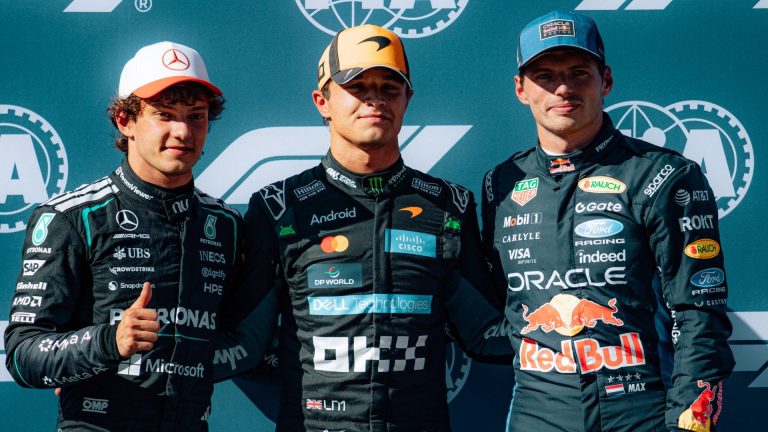
The comments came after another disappointing qualifying session for Aston Martin. Alonso was eliminated in Q1 and will start provisionally 17th after Lando Norris beat Andrea Kimi Antonelli by only 0.011s to take the first F1 pole position at Madring.
Alonso nevertheless believes the AMR26’s result disguises some of its underlying cornering performance.
The Spaniard said there is one obvious area where Aston Martin could potentially find more than one second, although he did not elaborate publicly on the specific change required. He acknowledged the frustration of another Q1 exit despite feeling that he had driven a good lap.
Alonso also compared Madring with Zandvoort, where Aston Martin produced one of its more competitive race weekends despite qualifying at the back. He noted that the team had been around half a second away from Williams there in qualifying, whereas the deficit in Madrid was approximately one tenth despite Aston Martin’s continuing weakness on the straights.
In Alonso’s assessment, that suggests the AMR26 remains genuinely competitive through the corners. The problem is extracting enough overall lap time when its straight-line and power-unit limitations are added to the equation.
His criticism of the regulations therefore fits into a wider concern he has expressed during recent races. Alonso has increasingly questioned whether the current formula gives drivers the type of racing and technical challenge he believes Formula 1 should provide.
There was, however, one aspect of the Madrid weekend Alonso embraced without reservation: the circuit and its atmosphere.
Although he still prefers permanent tracks because they allow drivers to push closer to 100% without the unpredictability of walls and changing grip levels, Alonso praised Madring as a challenge and described Madrid as one of the world’s best cities.
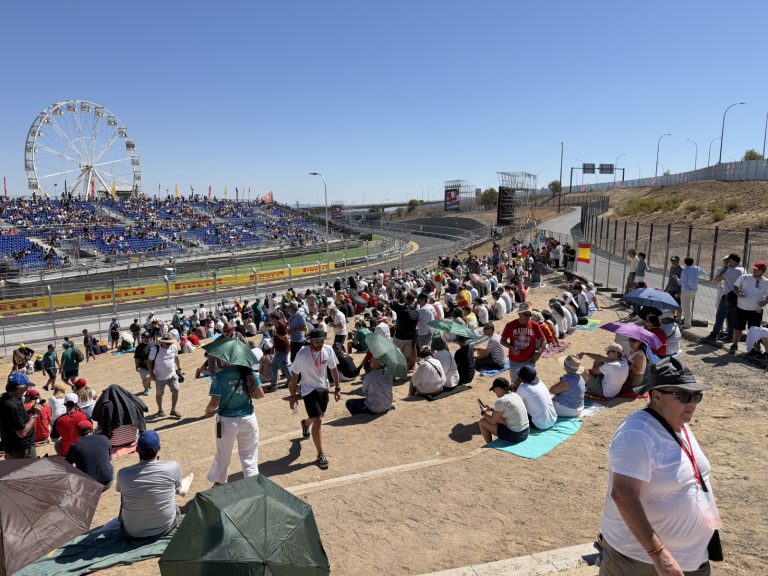
Most of all, he was struck by the home support.
Alonso said he was surprised to see grandstands filled with Aston Martin colours alongside Spanish and Asturias flags despite the team’s lack of competitiveness. He thanked the fans for continuing to arrive with enthusiasm and optimism even during a difficult season.
For Alonso, then, the problem is not Madring itself. Quite the opposite. His frustration is that a corner designed to showcase the commitment of an F1 driver has instead reinforced his concerns about where the championship’s technical regulations are heading.
FAQ
What did Fernando Alonso say about the current F1 regulations?
Alonso said Formula 1 “cannot continue down this path” and argued that the championship cannot wait until 2031 for changes that restore greater influence to driver skill. He has discussed the regulations with FIA president Mohammed Ben Sulayem and F1 CEO Stefano Domenicali.
Why did Alonso criticise F1 after qualifying at Madring?
Alonso used Madring’s Monumental corner as an example of what he believes is wrong. He argued that a demanding corner should allow drivers such as Max Verstappen to make a difference through ability and commitment, rather than performance being heavily determined by MGU-K energy deployment.
Where did Fernando Alonso qualify for the 2026 Spanish GP?
Alonso was eliminated in Q1 and qualified 17th at Madring. He nevertheless said Aston Martin’s cornering performance was encouraging and identified an area in which the team could potentially find more than one second.
Tags: Fernando Alonso, Aston Martin, Spanish GP, F1