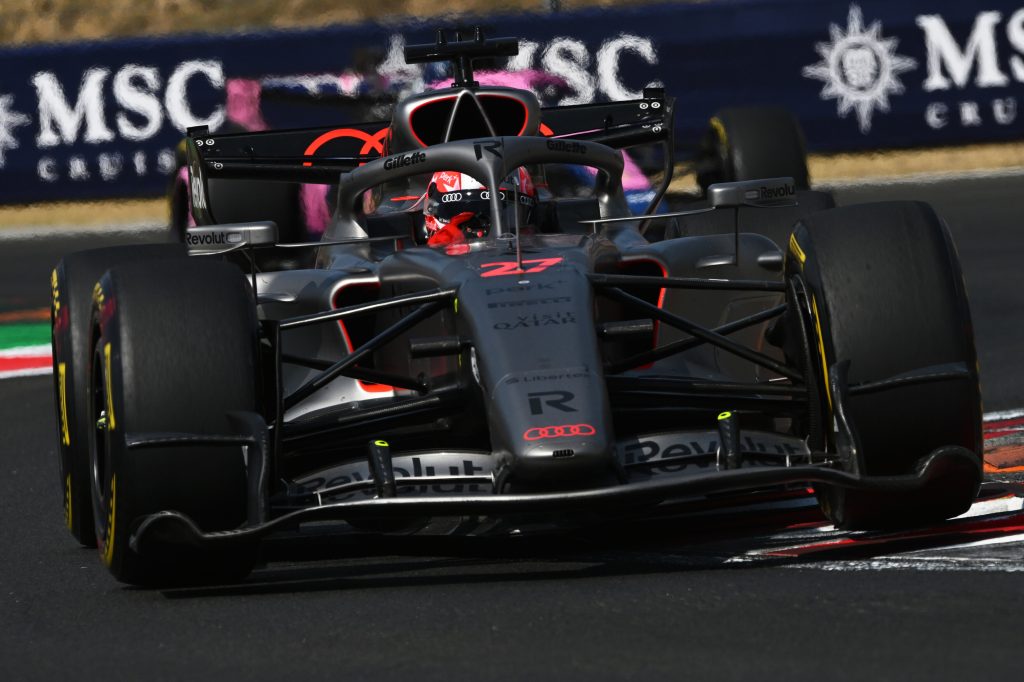
Mattia Binotto described Audi’s start in Formula 1 as positive and admitted feeling relieved to see the team competitive right in its debut season. The team boss stated that, given a completely new set of regulations, the main goal was to avoid conceptual errors that could compromise the project’s long-term development.
Speaking to PlanetF1, Binotto assessed that setting expectations for a debut manufacturer under a new technical rulebook would have been difficult. Therefore, he considers the performance delivered so far to be better than expected, particularly due to the solid foundations shown by the project.
According to the Italian, avoiding conceptual flaws was essential to prevent the team from having to waste time and resources fixing structural issues during the season.
“Considering new rules, a new team, and a new manufacturer, setting a specific target would have been wrong. It was hard to say where we needed to be, so I consider our current performance positive. It’s a surprise and, in a way, a relief to be in this position, because it’s very easy to make mistakes in Formula 1, as some teams have proven,” he stated.

Binotto highlighted that the car’s technical baseline allows Audi to focus its efforts on developing the project rather than rebuilding fundamental concepts.
“Not being in the situation some teams find themselves in is already great for us, because the foundations of the car are right. Had we gotten it wrong from the start, the amount of energy and resources needed just to solve those problems would have been a heavy burden on the project. That’s why I’m happy—not because I expected it, but because we know we have a solid base on which to build our future,” he emphasized.
The Audi boss also addressed the power unit’s development, acknowledging he realized early on that the engine project would not rank among the grid’s benchmarks in its initial development cycle. Even so, he believes the priority is to consolidate a framework capable of sustaining competitiveness in the coming years.
“When I joined the team two years ago, it became clear that the engine project was still far from some of its ambitions. But engines take time. Building know-how takes time, as does developing technology. I don’t think we are behind because we did something wrong; we are simply at a disadvantage because we started from scratch, building our own knowledge rather than buying existing F1 experience. I believe that will be a major differentiator in the long run,” he concluded.
Formula 1 is currently on summer break. The category resumes 2026 season action from August 21 to 23 with the Dutch Grand Prix at Zandvoort.