News Summary
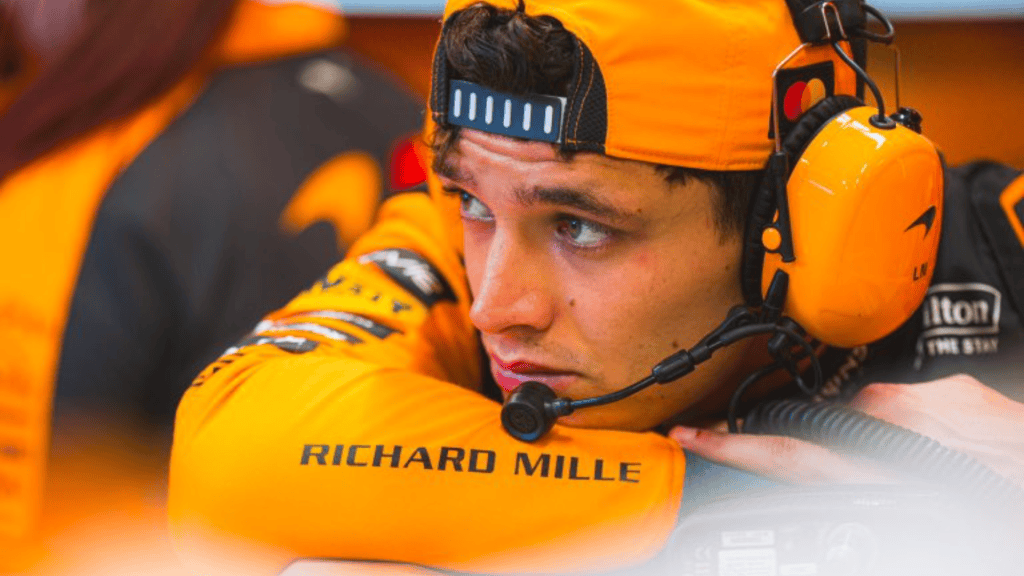
- Lando Norris starts on pole alongside Andrea Kimi Antonelli, the driver he beat to victory at Interlagos last year.
- Liam Lawson and Nico Hülkenberg share row two. George Russell is seventh, with Lewis Hamilton and Max Verstappen 20th and 21st on the FIA’s provisional grid.
- Mercedes needs to outscore Ferrari by three points to secure the constructors’ title. If the race stays dry, Pirelli favours a two-stop strategy.
Lando Norris and Andrea Kimi Antonelli finished first and second at Interlagos a year ago. This time they start alongside each other, with Norris on pole and Antonelli making his first race start as world champion. Saturday’s rain gave McLaren the first grid slot, but the dry practice sessions offered enough evidence for Mercedes to believe the race can go either way.
Behind them, the grid penalties have changed who gets the first chance to challenge. A Racing Bulls and an Audi start on row two, George Russell has three rows to clear before he can get to his teammate, and Lewis Hamilton and Max Verstappen have nearly the entire field in front of them. Here are five things to watch once the race starts.
1. Can Norris keep Antonelli behind through the first stint?
Norris was quickest in FP1 and took pole with a 1:27.470 before the rain returned in Q3. Antonelli set Friday’s fastest lap and came within 0.025s of Verstappen in dry final practice. They have both been quick, but at different points in the weekend and in very different conditions.
Antonelli also had a moment at Turn 5 on intermediates in his first wet qualifying session at Interlagos. He still qualified third and moves up because of Russell’s penalty. If the race starts in the wet, Norris has the cleaner view into the Senna S and the chance to put Antonelli in his spray. If it starts dry, watch the gap over the first stint. Antonelli’s Friday pace gives Mercedes a reason to keep him within reach of an early stop, especially if the McLaren begins to lose rear grip.

2. How long can Lawson and Hülkenberg hold the second row’s gains?
Liam Lawson and Nico Hülkenberg qualified fifth and sixth on merit, then each gained two places through the penalties for Russell and Charles Leclerc. Lawson was already second in Q2 and briefly led Q3 before traffic and the return of the rain ended his chance to improve. Hülkenberg reached the second row after losing both Friday practice sessions, a substantial recovery for an Audi that had given him very little running before Saturday.
The drivers behind them make the first stint especially interesting. Isack Hadjar starts fifth, Oliver Bearman sixth and Russell seventh. If Lawson or Hülkenberg can stay close to the front pair, they can make Russell spend more of his tyres and time fighting through traffic. If a gap opens in front of row two, the Mercedes driver can try to use the pit stops to move forward even if passing on track proves difficult.
For Lawson, the opportunity comes with his 2027 Racing Bulls seat still unresolved. He scored six points from the pit lane in Mexico City. This time he has track position from the start, with the two fastest teams in Saturday qualifying immediately ahead.
3. Can Hamilton or Verstappen get clear of the midfield early?
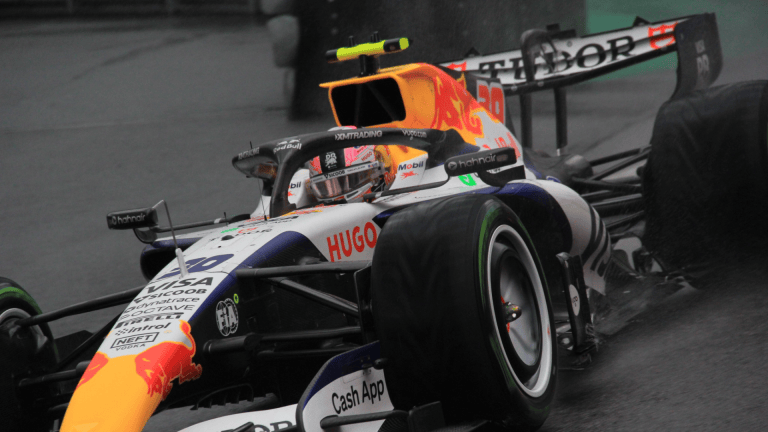
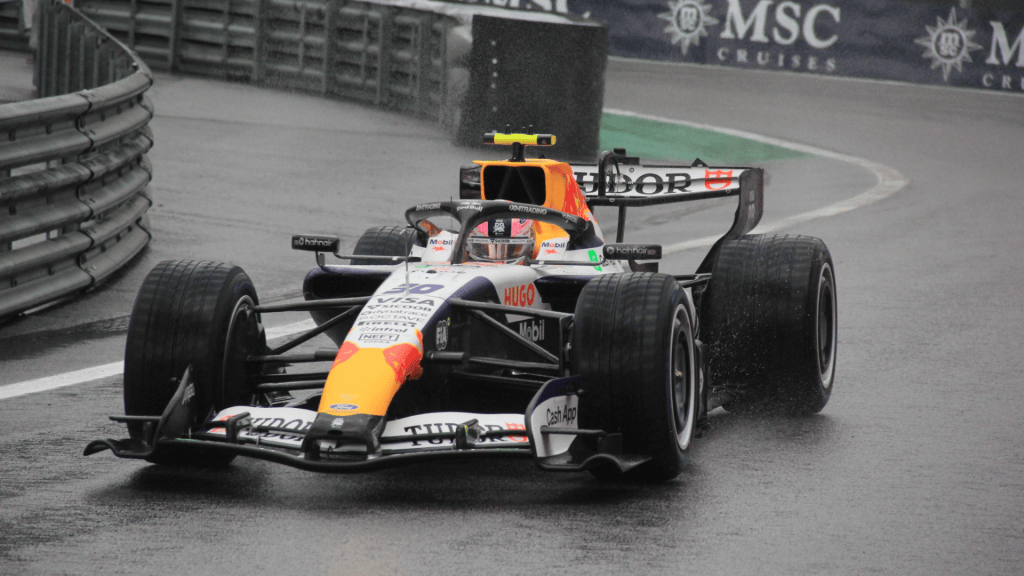
The FIA’s provisional grid puts Hamilton 20th, Verstappen 21st and Sergio Pérez 22nd. Hamilton’s 75-place total followed two sets of power unit changes, the second after his Ferrari developed trouble in FP3. Verstappen and Pérez each received 30-place penalties for exceeding the season allocation on three components.
Verstappen won from 17th in the wet in 2024 and finished third from the pit lane in last year’s dry race. In response to GRANDE PRÊMIO, he said he wanted “lots of Safety Cars” to keep the leaders within reach. He also pointed to how the 2026 cars use battery energy along the long straight, which he expects to reduce the speed difference available for a pass.
The first useful comparison is how much ground the Ferrari and Red Bull gain before the opening round of stops. A Safety Car can bring the leaders back towards them, but the timing matters. An interruption after they have cleared several cars is worth more to their recovery than one that simply keeps them at the back of a tightly packed field.
4. Does rain decide the strategy, or does tyre wear?
Saturday’s qualifying stoppage showed how quickly standing water can make parts of Interlagos unusable. The field went back out on full wets, moved to intermediates as conditions improved and then lost the chance to improve late in Q3 when rain returned. If that pattern repeats during the Grand Prix, the crossover lap between compounds could matter more than a driver’s pace in clear air.
If Sunday stays dry, Pirelli’s preferred strategy is two stints on softs and one on mediums. The supplier found more wear than expected and estimates the best one-stop plan would be around 10 seconds slower than the optimum two-stop. A cooler track could also reward the quicker warm-up of the softer compounds. For a driver stuck behind a slower car, an early stop can create a passing opportunity through the undercut, provided there is clear track on the way out.
5. Can Mercedes finish the job in the constructors’ championship?
Mercedes leads Ferrari by 126 points. There will be 129 available after São Paulo, and Mercedes holds the wins countback, so it needs to outscore Ferrari by three points on Sunday.
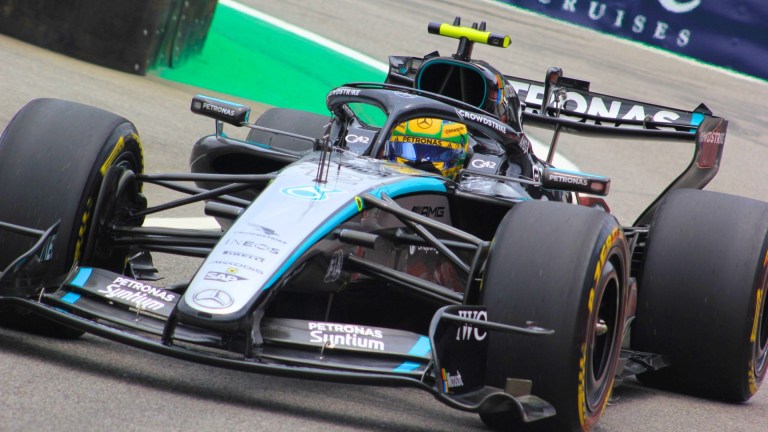
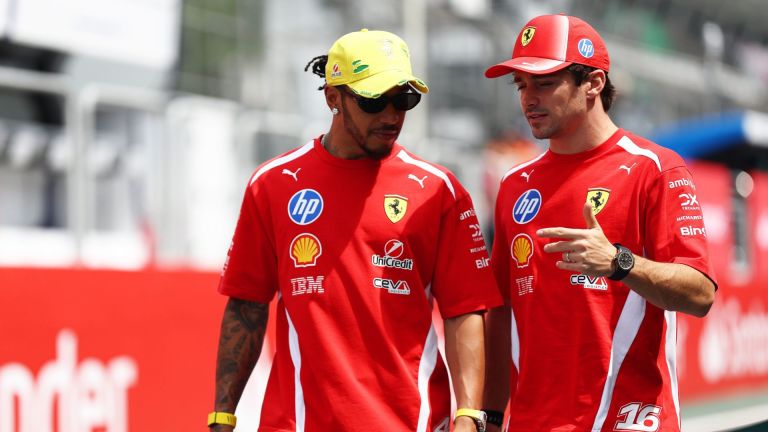
Antonelli starts second and Russell seventh. Ferrari has Leclerc 14th and Hamilton 20th on the FIA’s provisional grid. If Ferrari scores nothing, eighth place for either Mercedes driver would be enough. If a Ferrari comes through for a substantial points finish, both Mercedes cars may have to contribute. That gives Russell’s race from the fourth row a championship consequence even if the fight for the win stays between Norris and Antonelli.
GRANDE PRÊMIO is following every session of the São Paulo Grand Prix in Formula 1 live from Interlagos.