Summary
- Williams introduced a lighter chassis and aerodynamic changes at the Azerbaijan Grand Prix.
- Sainz qualified ninth before a grid penalty and recovered to tenth in the race; Albon retired after hitting the wall.
- Sepang’s longer corners will test a weakness the drivers say the Baku result did not resolve.
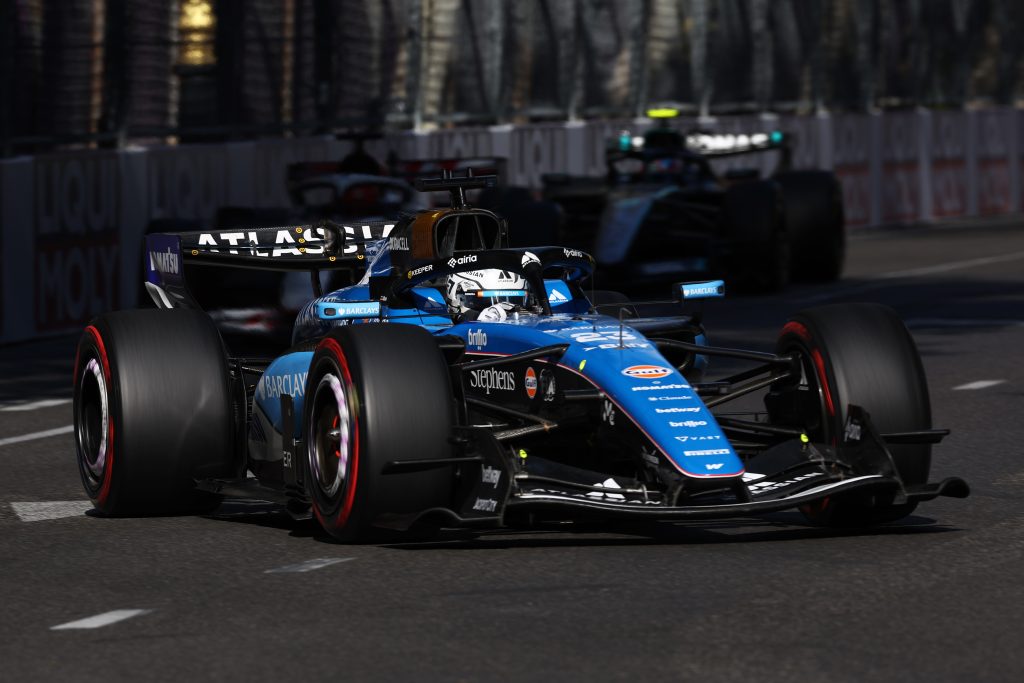
Williams finally had a reason to look forward in Baku. Carlos Sainz reached Q3 for the team’s first time this season with its extensively updated FW48, then recovered from a five-place grid penalty to finish tenth. Alex Albon did not make the finish, but said the new package had put Williams back into the midfield fight.
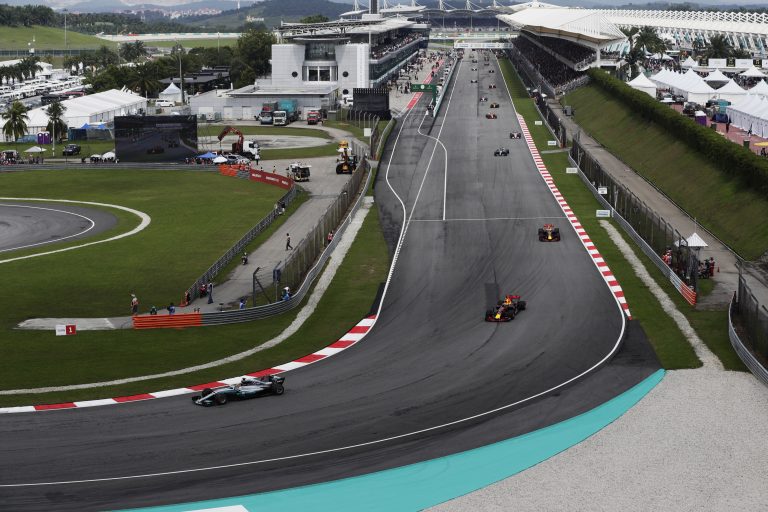
Those results make Sepang the next test, rather than confirmation of a turnaround. Williams had expected Baku to suit its car. Malaysia brings longer, faster corners alongside its long straights, giving the team a different way to measure whether its new floor, revised rear-end aerodynamics and lighter chassis have addressed more than one type of circuit.
The changes took considerable work. Williams introduced new chassis as part of a weight-reduction programme and revised several aerodynamic surfaces, including the floor and components around the rear suspension and brakes. Team principal James Vowles described the scale of the project before Baku, while making clear that a single upgrade would not finish the job.
“It’s more about building for next year and beyond,” Vowles said. “So, a step in the right direction, but not enough.”
What did Williams actually gain in Baku?
Sainz qualified ninth, the team’s strongest Grand Prix qualifying result of 2026. His five-place penalty for failing to slow sufficiently under yellow flags moved him to 14th on the grid. In the race, he had to recover through a difficult opening stint before passing Nico Hülkenberg late on to secure tenth place and one point.
Sainz welcomed the progress but rejected the idea that a Q3 appearance meant Williams could now expect points every weekend.
“I think the package is good to see, but after what I saw today, I think we’re going to need more if we want to fight for points regularly,” he said.
The race also complicated a simple reading of the result. Williams struggled for pace during Sainz’s first stint, and the Safety Car changed the shape of his recovery. Albon, meanwhile, locked up and hit the barrier at Turn 5. His retirement prevented the team from comparing both cars over a full race distance.
Vowles identified Sainz’s early stint as something Williams still needed to understand. He said the team had found itself unable to make the progress expected at that stage, even though the new package had at least brought the car into contention.
Albon’s assessment was encouraging on the upgrade itself. “In terms of the update, I think it’s exactly the step we expected. It’s put us in a midfield fight,” he said in the team’s post-race report.
That is a meaningful change for a team that had struggled with an overweight car earlier in the season. It is also a narrower conclusion than saying the FW48 can now compete throughout the remaining calendar.
Why is Sepang a harder test for the upgrade?
Baku rewarded Williams in areas where it already believed the car could be competitive. Albon said the Azerbaijani circuit suited the FW48, but identified weakness even in its limited selection of medium-speed corners.
“We probably need a bit more aero in the car,” he said. “In the two medium speed corners of the track — Turn 1 and the last corner — we were slow.”
Sepang offers a more sustained test of aerodynamic load. Its long corners ask the car to retain grip for more time through a turn, while the straights still make drag and power-unit deployment important. If Williams loses ground in those corners despite the lighter chassis, the Baku gain may prove valuable without being sufficient to change its position consistently in the midfield.
Sainz offered a similarly cautious forecast when discussing the package. He said the car was quicker because it was lighter and had gained some load, but that underlying balance problems remained. He expected Malaysia to provide a clearer picture of where Williams stood after its unusually strong Baku qualifying lap.
That distinction matters. Taking weight out of a car can produce a broad performance gain. Solving a balance or aerodynamic weakness requires the revised package to work through different corners and across different track conditions. Friday’s running at Sepang can begin to separate those effects.
What should Williams look for on Friday?
The first measure is whether Sainz and Albon can run competitive laps repeatedly, rather than producing one strong qualifying attempt. Williams will also want to see how the FW48 behaves on longer runs as fuel load, tyre wear and track temperature change.
A direct comparison with Baku lap positions would be misleading because the circuits demand different things. More useful will be Williams’ gap to its midfield rivals through Sepang’s longer corners, the drivers’ balance complaints and whether the car remains competitive over a race stint.
Albon said after Baku that Williams could explore the update further in Malaysia. The team has Friday’s two practice sessions to do it: FP1 begins at 12:30 local time on 2 October, followed by FP2 at 16:00. GRANDE PRÊMIO has the full Sepang schedule and start times for viewers outside Malaysia.
Baku established that the work on the FW48 delivered a step forward. Sepang will show more clearly what kind of step it was — and how much further Williams must go to fight for points without needing an eventful race to bring them within reach.
Williams at Sepang: frequently asked questions
What did Williams upgrade in Baku?
Williams introduced a lighter chassis and an aerodynamic package that included changes to the floor, rear bodywork, suspension surfaces and brake-duct areas.