News Summary
- Mohammed Ben Sulayem compared the security of Qatar, Mexico and Brazil during a televised exchange with George Russell and Lando Norris.
- Official British travel guidance identifies substantially different security challenges across the three countries.
- The FIA president’s remarks raise questions about institutional responsibility, transparency and the treatment of Formula 1 personnel’s security concerns.
Formula 1 spent much of 2026 assessing whether it could safely complete its season in the Middle East. Teams considered alternative travel arrangements, Imola prepared for a potential replacement Grand Prix, and other international motorsport championships modified their operations because of the conflict in the region.
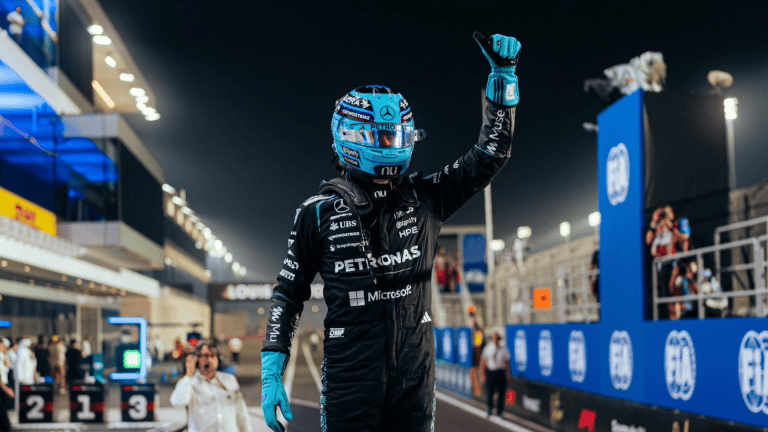
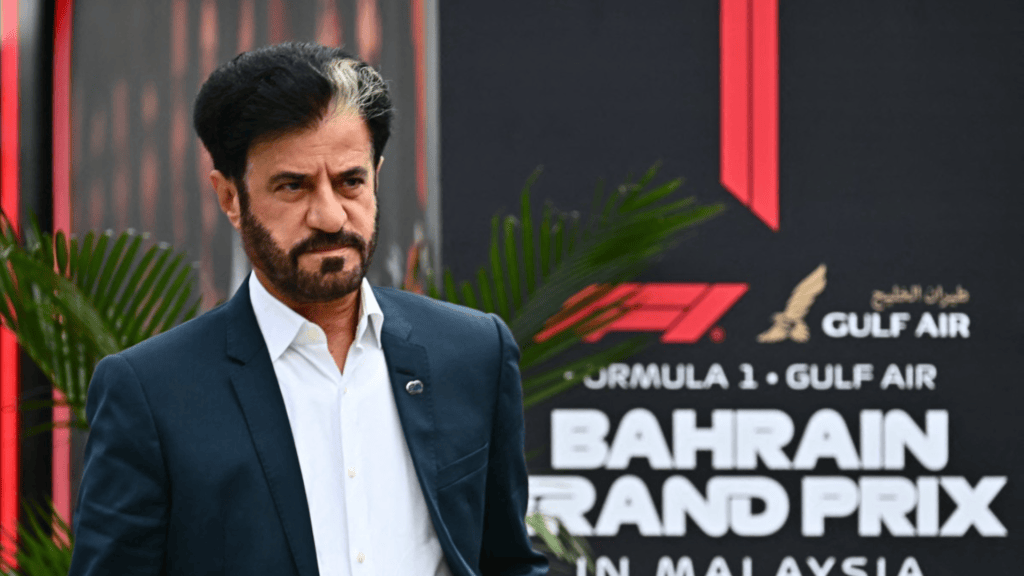
After qualifying for the Qatar Grand Prix, the president of the FIA reduced that complicated discussion to an uncomfortable question involving two other countries on Formula 1’s calendar.
“Which is more dangerous, being here or in Mexico, or Brazil?” Mohammed Ben Sulayem asked George Russell and Lando Norris.
The exchange was captured by Formula 1’s own television cameras and generated international controversy. Neither driver provided an audible answer.
The question deserves scrutiny not because Mexico and Brazil are immune to security problems, nor because Qatar should automatically be considered incapable of hosting international sporting events.
It deserves scrutiny because the person asking it is responsible for leading the international organisation that governs motorsport and promotes its safety.
The president of the FIA should be capable of defending the decision to race in Qatar without invoking two other host nations as a rhetorical shortcut.
Qatar, Brazil and Mexico face different security challenges
There is no serious basis for pretending that Brazil and Mexico do not have significant public security problems.
Both countries face challenges involving violent crime, organised criminal activity and risks that vary substantially by location. Formula 1 teams, journalists and other visitors have encountered security incidents during previous visits to both countries.
Those concerns deserve to be addressed through appropriate security measures rather than denied.
However, a Grand Prix taking place in a region affected by an international armed conflict presents a different category of operational risk.
British government travel guidance for Qatar, updated on November 18 and still current on November 29, warns of the potential for further regional attacks and sudden escalation.
It also advises travellers to prepare for possible airspace closures, flight cancellations and disruptions to international travel.
The same government’s guidance for Brazil and Mexico identifies significant security concerns, including violent crime and restrictions on travel to certain areas.
| Security consideration | Qatar | Brazil | Mexico |
|---|---|---|---|
| Criminal activity | Requires local assessment | Significant concern | Significant concern |
| Regional armed conflict | Relevant to current travel guidance | Different security context | Different security context |
| Airspace disruption linked to regional conflict | Explicitly identified in UK guidance | Not an equivalent current conflict-related warning | Not an equivalent current conflict-related warning |
| Travel restrictions | Monitor changing regional conditions | Warnings apply to specified areas | Warnings apply to specified areas |
Sources: UK Foreign, Commonwealth & Development Office travel guidance for Qatar, Brazil and Mexico.
These distinctions do not establish that one country is necessarily safer than another for every visitor in every circumstance.
They establish why a meaningful assessment requires more than a general comparison between national reputations.
The relevant questions concern the location of the event, the probability of specific incidents, the consequences of those incidents and the arrangements available to protect personnel.
A risk assessment is not a competition between countries.
Formula 1’s own decisions demonstrate why the question matters
The strongest argument against Ben Sulayem’s approach comes from the actions of Formula 1 itself throughout 2026.
The championship cancelled the Saudi Arabian Grand Prix and relocated the Bahrain Grand Prix to Malaysia following the escalation of hostilities in the Middle East.
It subsequently explored an alternative season finale in Europe.
Preparations at Imola included operational planning and reported accommodation arrangements for Formula 1 teams.
On November 10, Formula 1 informed Imola that it would no longer require the circuit, committing to the planned races in Qatar and Abu Dhabi.
Just five days later, renewed attacks in Bahrain brought regional security concerns back into focus.
None of this automatically establishes that Formula 1 made the wrong decision to proceed with the Qatar Grand Prix.
Organisers may have received credible security assessments, established effective contingency arrangements and concluded that the event could operate within acceptable risk parameters.
But the extensive preparations and calendar changes demonstrate that the concerns were genuine enough to require serious institutional attention.
They cannot reasonably be dismissed through a casual comparison with Mexico or Brazil.
The people whose safety matters are not just the drivers
The televised exchange involved two of Formula 1’s most prominent competitors.
However, the championship’s security responsibilities extend well beyond the drivers.
Mechanics, engineers, logistics personnel, journalists, photographers, television crews, contractors and spectators all participate in a Grand Prix weekend.
Their access to private transportation, medical assistance, security services and emergency departure arrangements can differ considerably.
Mercedes team principal Toto Wolff addressed this issue during the São Paulo Grand Prix, expressing support for Formula 1’s security assessment while recognising the right of employees to decide against travelling.
Ferrari adopted a similar position, and the FIA itself indicated that employees uncomfortable with travelling could be excused.
Those decisions reflect an important distinction between an organisation accepting the operational risks of staging an event and individuals assessing their own exposure to those risks.
The president of the governing body should reinforce that distinction.
Asking two drivers to compare countries in front of television cameras does little to address the concerns of employees who may have considerably fewer resources available to them.
The FIA president represents Brazil and Mexico, too
The FIA is not the representative of one government, one Grand Prix promoter or one region.
It is an international federation whose membership includes national motoring organisations and sporting authorities from around the world.
Its 2026 statutes establish the protection of human dignity, opposition to discrimination and high standards of governance among its institutional commitments.
Article 2 also identifies the representation of members’ interests and the improvement of motorsport safety as central objectives.
Mexico and Brazil are part of that international community.
Their Grand Prix organisers, national sporting authorities, competitors and supporters deserve the same institutional consideration as those in Qatar, the United Arab Emirates or any other country.
Ben Sulayem’s question does not, by itself, establish a violation of the FIA’s statutes or its ethical regulations. Nor does the available footage establish discriminatory intent.
Nevertheless, the incident raises a legitimate question about whether the president’s public conduct reflects the responsibilities of his office.
Defending one member’s ability to organise a sporting event should not require undermining the reputation of another.
Formula 1 needs greater transparency over security decisions
The FIA and Formula 1 have legitimate reasons to avoid publishing sensitive operational security information.
Detailed emergency arrangements and confidential intelligence assessments cannot necessarily be made public.
That does not prevent the organisations from explaining the general principles behind their decisions.
What criteria determine whether a Grand Prix can proceed? How frequently are those assessments reviewed? What options are available to personnel who decide not to travel? Who has the authority to suspend an event if circumstances change?
Those are the questions that matter.
The British government’s travel warnings ahead of Formula 1’s Middle Eastern finale illustrate why those explanations remain relevant even after the championship has arrived in the region.
If Formula 1’s decision to race in Qatar is supported by robust evidence, it should be possible to defend it without asking Russell and Norris to choose which country they consider more dangerous.
The FIA president had an opportunity to demonstrate confidence in the institution’s security assessment. Instead, he created a controversy involving two other countries that had welcomed the championship earlier this month.
Formula 1’s governing body should be capable of doing considerably better.
FAQ
What did Mohammed Ben Sulayem say about Qatar, Mexico and Brazil?
The FIA president asked George Russell and Lando Norris which of the three countries they considered more dangerous to visit.
Is Qatar necessarily more dangerous than Brazil or Mexico?
There is no universal answer. Each country presents different risks, and meaningful comparisons require current, location-specific assessments.
Why does the FIA president’s statement matter?
The FIA is responsible for motorsport governance and safety and represents national sporting organisations internationally. Its leadership has a responsibility to explain security decisions and treat members and personnel with respect.