News Summary
- Race Control temporarily stopped the FP3 clock with 15:38 remaining following Lewis Hamilton’s accident at the Spanish GP.
- The decision was taken because barrier repairs were still required at Madring after the Ferrari driver’s impact.
- Stopping the countdown during a Formula 1 free practice session is unusual, as the clock normally continues to run during red-flag periods.
Formula 1 Race Control took the unusual step of temporarily stopping the FP3 clock at the Spanish Grand Prix on Saturday as repairs continued to the barrier damaged in Lewis Hamilton’s accident at Madring.
The session had already been red-flagged following the Ferrari driver’s crash, but with the repair work taking longer than initially expected, Race Control announced that FP3 would be temporarily stopped with exactly 15:38 remaining on the clock.
The official message read: “FP3 will be temporarily stopped as barrier repairs continue.”
The measure is noteworthy because the countdown normally continues during a red-flag interruption in a Formula 1 free practice session. As a result, a lengthy stoppage can substantially reduce — or even effectively end — the amount of track time available to teams.
On this occasion, Race Control opted to preserve the remaining 15 minutes and 38 seconds while the barrier was being repaired, rather than allowing the session clock to continue counting down.
FP3 eventually resumed at 13:32 local time in Madrid, after marshals completed the barrier repairs required following Lewis Hamilton’s crash.
Hamilton crash forces barrier repairs at Madring
The unusual interruption followed Hamilton’s accident during the final practice session before qualifying.
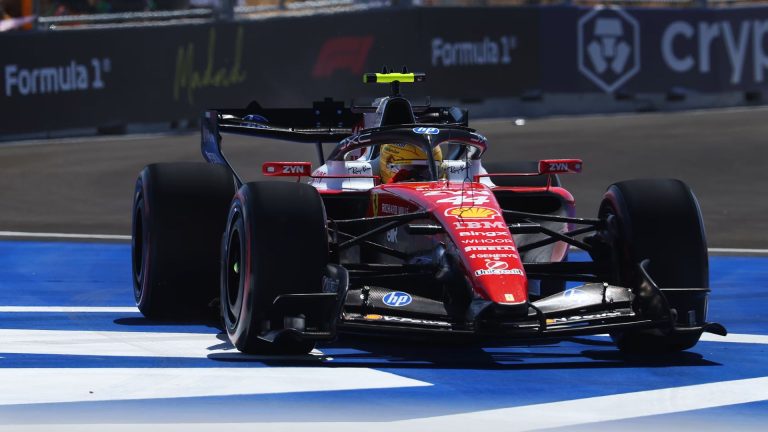
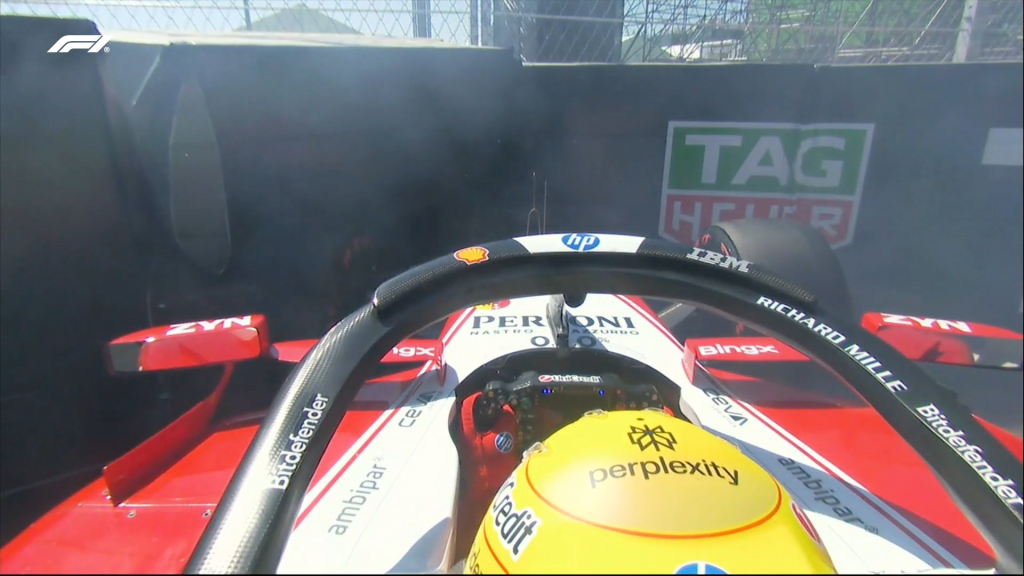
The Ferrari driver, who was fourth at the time, hit the wall and damaged the front of the SF-26. Hamilton managed to reverse away from the barrier and initially attempted to return to the pits, dragging damaged front-wing components underneath the car.
Ferrari subsequently told Hamilton to stop.
“But the car is going?” Hamilton responded over the radio before eventually parking the SF-26 further around the circuit.
The impact also damaged the barrier, forcing marshals and circuit personnel to carry out repairs before Formula 1 could safely resume running.
The interruption is another reminder of the risks posed by Madring during its first Formula 1 weekend. The new circuit combines high-speed sections with narrow stretches and barriers close to the racing line — characteristics drivers had already highlighted before taking to the track. Friday’s FP2 was also interrupted after Arvid Lindblad crashed at Turn 13, requiring a stoppage of almost 15 minutes.
Hamilton’s accident is particularly costly for Ferrari because FP3 is the final opportunity to prepare the SF-26 before qualifying.
Ferrari had shown encouraging pace on Friday, with Charles Leclerc second and Hamilton third behind Andrea Kimi Antonelli. Hamilton was again among the leading positions before his FP3 accident.
Why stopping the FP3 clock matters
Under normal circumstances, Formula 1 free practice sessions operate to a fixed duration. When a red flag is shown, cars return to the pit lane, but the session clock generally continues running.
That can make an accident particularly damaging late in FP3. Every minute lost reduces the opportunity for teams to complete qualifying simulations, evaluate setup changes and prepare the tires for the conditions expected later on Saturday.
Race Control’s decision therefore effectively protected the final 15:38 of FP3 from being consumed by barrier repairs.
It does not erase the disruption caused by Hamilton’s accident. Drivers had already lost rhythm, tires had cooled and teams had to restructure their final programs. But preserving the remaining time gives the field an opportunity to return to the circuit once it is considered safe.
The decision is especially significant at Madring because teams are operating with almost no historical information. Friday was Formula 1’s first competitive running at the new Madrid circuit, and even the long-run work in FP2 was compromised by Lindblad’s red flag.
Hamilton’s accident has now taken another substantial chunk out of Saturday’s preparation.
With qualifying expected to be particularly important because of the limited overtaking opportunities around Madring, those final minutes of FP3 could prove valuable.
GRANDE PRÊMIO follows the Spanish GP weekend from Madrid and will continue to provide the latest information from FP3, qualifying and Hamilton’s situation after the accident.
FAQ
Why was the FP3 clock stopped at the Spanish GP?
Race Control temporarily stopped the countdown at 15:38 remaining because barrier repairs were still being carried out following Lewis Hamilton’s accident. This preserved the remaining practice time until the circuit could be made safe.
Does the clock normally stop during a red flag in F1 practice?
No. During a standard free practice red flag, the session countdown normally continues, meaning drivers can lose significant track time during a lengthy interruption. That is why Race Control’s decision in Madrid was unusual.
What happened to Lewis Hamilton in Madrid FP3?
Hamilton crashed his Ferrari while running fourth, damaging the front of the SF-26 and the barrier. He initially drove away from the accident before eventually stopping further around the lap. The impact required barrier repairs and caused the lengthy FP3 interruption.