News Summary
- Ferrari has recovered the ADUO2 power unit involved in Charles Leclerc’s heavy Italian GP crash
- Frédéric Vasseur says Ferrari expects Leclerc to require an engine penalty and identified Baku as a potentially suitable place to take it
- Leclerc ran the older ADUO1 specification in Madrid and believes the performance deficit contributed to his qualifying struggles
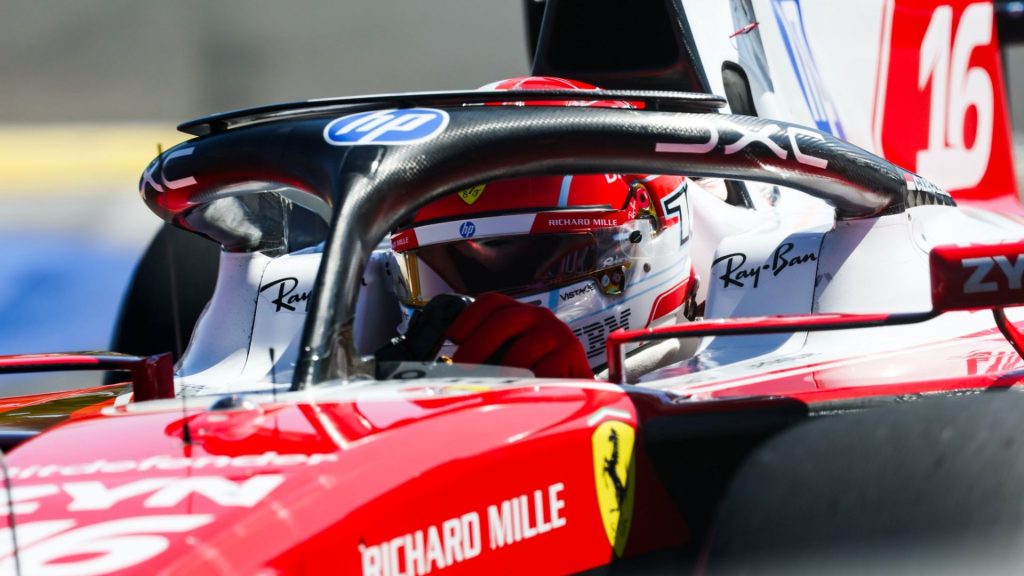
Ferrari may deliberately take an engine penalty for Charles Leclerc at the Azerbaijan GP despite successfully saving the upgraded power unit involved in his heavy Monza crash.
The Italian team is evaluating how to manage Leclerc’s engine allocation through the remaining nine rounds of the 2026 Formula 1 season, with Baku emerging as an early opportunity to introduce another unit.
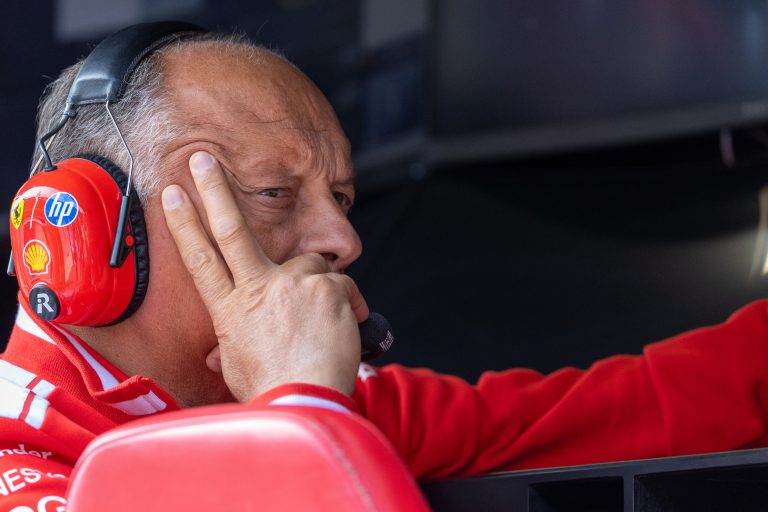
Team principal Frédéric Vasseur has acknowledged that Ferrari expects to take a penalty with Leclerc at some stage and suggested Azerbaijan could provide a relatively favourable opportunity.
“We’ll see when we have to take an engine penalty with Charles, but I think Baku should go quite well,” Vasseur told Canal+.
Pressed for more detail, the Ferrari boss stopped short of confirming the plan.
“I only said that we’ll have to take a penalty at some point,” he added.
That distinction is important. Ferrari has not yet confirmed an engine change for Baku, but the possibility is actively being considered.
Ferrari saved Leclerc’s Monza engine — but didn’t use it in Madrid
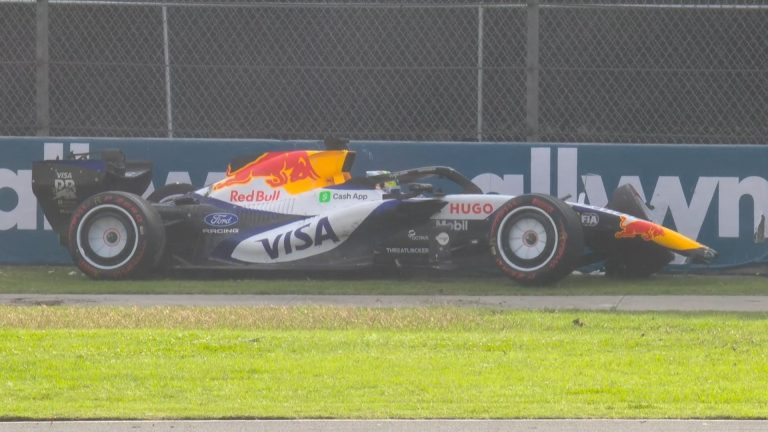
The situation is a consequence of Leclerc’s violent accident at the Italian GP.
Ferrari introduced its second ADUO power-unit development at Monza, but Leclerc crashed heavily at the Parabolica during the opening stages of the race. The impact exceeded 50G and initially created doubts over whether the upgraded unit could be recovered.
Initial inspections produced encouraging news.
As GRANDE PRÊMIO reported before the Spanish GP, Ferrari determined that the power unit had escaped major damage, allowing Leclerc to avoid an immediate engine-related grid penalty in Madrid.
But surviving the accident did not mean Ferrari was prepared to race it again immediately.
The team wanted more extensive checks on the ADUO2 unit before returning it to competition and therefore put Leclerc back on the older ADUO1 specification for the Spanish GP.
That decision provided security but came with a performance cost.
Leclerc felt old engine cost performance in Madrid
Leclerc had looked capable of challenging Mercedes during practice at Madring.
He remained inside the top three throughout the weekend’s practice sessions and entered qualifying appearing to be one of Ferrari’s strongest opportunities to challenge near the front.
Instead, he qualified fifth.
Leclerc was particularly puzzled by a loss of around 0.4s in the first sector and acknowledged that running Ferrari’s older power-unit specification could explain part of the deficit.
The Monegasque stressed that the engine alone did not explain the entire loss, but Ferrari’s rivals were able to extract more performance from newer units during qualifying while his own package effectively remained unchanged.
That experience helps explain why Ferrari is now considering a different strategic approach.
Keeping Leclerc within his existing allocation may avoid a grid penalty in the short term, but it could also leave him managing older or more heavily used equipment through the final part of the season.
Taking an additional unit would create an immediate sporting cost but provide Ferrari with a fresher engine for the races that follow.
Why Baku could be Ferrari’s preferred option
Baku’s circuit characteristics make the Azerbaijan GP a logical candidate.
The street circuit combines a long flat-out section with significant overtaking opportunities, reducing some of the damage associated with starting further down the grid. That does not make a penalty harmless. But Ferrari must choose where losing grid positions is least likely to destroy Leclerc’s entire weekend.
The alternative is to delay the change until another event later in the season.
What Vasseur’s comments make clear is that Ferrari is no longer considering whether Leclerc can simply complete the championship without confronting the issue. The question is increasingly when the team chooses to absorb the penalty. Baku is now firmly under consideration.
There is an additional strategic incentive. Ferrari’s ADUO2 specification represents its latest attempt to improve a power unit that remains behind the championship benchmark. The FIA confirmed in August that Ferrari had qualified for two additional homologation opportunities after its engine was assessed as being more than 4% behind the leading internal-combustion engine during the first ADUO review period.
Leclerc described Ferrari’s latest development as a “step in the right direction” when it arrived at Monza, even though it did not eliminate the team’s deficit.
Running fresher upgraded equipment through the final part of the season could therefore be worth more to Ferrari than simply preserving Leclerc’s grid position at every remaining race.
Ferrari faces another strategic decision before Baku
Leclerc’s Monza accident has consequently created a longer chain of consequences than initially expected.
Ferrari saved the engine and avoided a penalty in Madrid. It then chose not to use that engine while completing further checks. Leclerc subsequently felt the older specification contributed to his qualifying deficit.
Now the team has to decide whether avoiding one penalty merely postponed another.
The decision also arrives with Ferrari under pressure in the Constructors’ Championship. Mercedes leads the Scuderia by 145 points after Madrid, while McLaren remains close enough behind to make every lost result significant.
Taking an engine penalty therefore cannot be treated purely as a reliability decision. Ferrari must determine where sacrificing Leclerc’s starting position creates the best opportunity to recover enough points to limit the damage.
GRANDE PRÊMIO follows Ferrari’s development, Leclerc’s season and the championship battle throughout the year in our Formula 1 section.
FAQ
Will Charles Leclerc receive an engine penalty at the Azerbaijan GP?
Ferrari has not confirmed a penalty for Leclerc in Baku. However, team principal Frédéric Vasseur has acknowledged that an engine penalty will be required at some point and identified Baku as a circuit that could suit the strategy.
Why did Leclerc use an older Ferrari engine in Madrid?
Ferrari wanted to conduct further checks on the ADUO2 power unit involved in Leclerc’s heavy Monza crash. Although initial inspections indicated that the engine had survived, Ferrari chose the older ADUO1 specification for Madrid rather than risk the upgraded unit.
What is Ferrari’s ADUO2 engine?
ADUO2 is Ferrari’s second power-unit development under the FIA’s Additional Development and Upgrade Opportunities system for 2026. Ferrari qualified for extra development opportunities because its internal-combustion engine was assessed as more than 4% behind the leading benchmark during the first FIA review period.