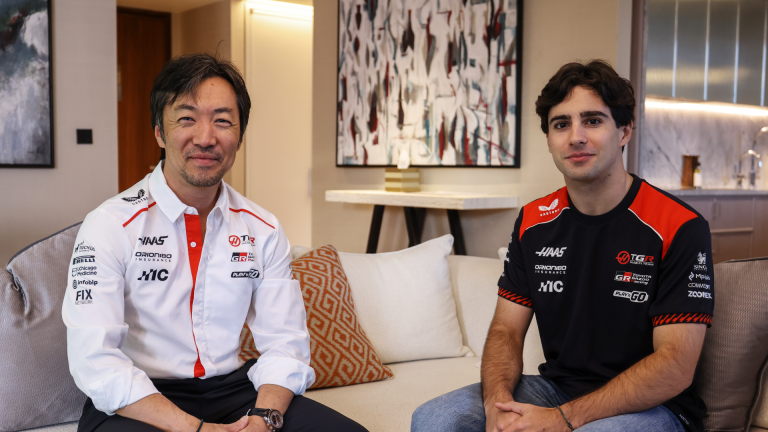
Haas team principal Ayao Komatsu has revealed that he personally travelled to Japan to discuss Rafael Câmara’s promotion to Formula 1 with Toyota chairman Akio Toyoda, after the manufacturer’s ambitions for one of its own drivers created a delicate situation ahead of the team’s 2027 line-up announcement.
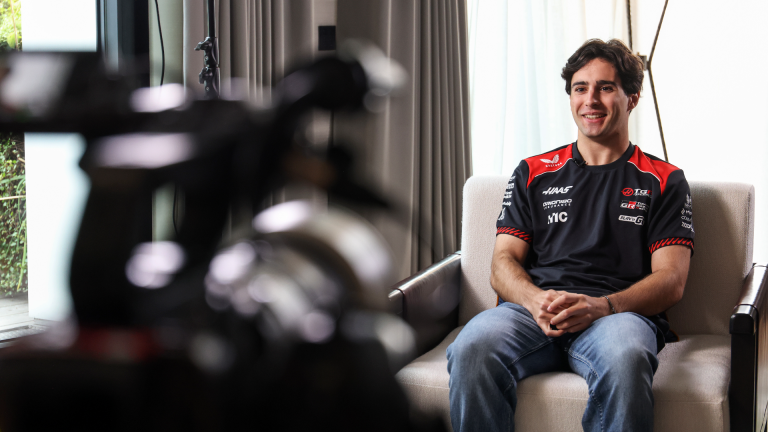
Câmara was confirmed as Esteban Ocon’s replacement for next season on Thursday (October 15), becoming the latest graduate of the Ferrari Driver Academy to secure a Formula 1 race seat with the American outfit.
However, the decision required more than convincing Haas of the Brazilian’s ability. Toyota, which has significantly expanded its technical relationship with the team, was also interested in placing one of its drivers on the grid.
The team principal travelled to Tokyo before signing Câmara’s contract because he wanted to explain the decision directly to Toyoda and avoid any misunderstanding between Haas and its technical partner.
Komatsu said he understood Toyota’s ambition but maintained that the seat had to go to the fastest available driver, regardless of the manufacturer’s preference.
Why Toyota complicated Haas’ decision on Câmara
Haas has developed a technical partnership with Toyota while retaining its long-standing relationship with Ferrari, which supplies the American team with power units and other components.
The arrangement has created opportunities for Toyota-affiliated drivers, including Ryō Hirakawa, to gain experience in Formula 1 machinery.
With Ocon’s seat becoming available for 2027, Toyota had an obvious interest in seeing one of its drivers promoted. However, Komatsu was determined that the choice should be made on sporting grounds.
The Japanese team principal acknowledged that Toyoda was particularly interested in securing a race opportunity for a Toyota driver.
Rather than allow the decision to create tensions between the organisations, Komatsu arranged a direct meeting in Tokyo before concluding the agreement with Câmara.
The situation was especially sensitive because signing the Brazilian would give Haas two drivers associated with Ferrari’s development programme if Oliver Bearman continued with the team, while Toyota was seeking a greater role in its Formula 1 activities.
The meeting allowed Komatsu to explain why he considered Câmara the strongest option, despite Toyota’s ambitions and the considerable commercial importance of its partnership with Haas.
There has been no indication that Toyota formally vetoed the choice or that the discussions caused a breakdown in relations between the manufacturer and Haas.

Portimão test convinced Komatsu to choose Câmara
The decisive sporting argument came from a private evaluation held at Portimão in late August.
Câmara faced competition from other candidates for the seat, including Hirakawa and Leonardo Fornaroli, while Oliver Bearman provided a reference point for the team’s engineers.
The Brazilian entered the evaluation with a disadvantage: unlike some of his rivals, he had never previously driven a Haas Formula 1 car.
Conditions at the Algarve circuit were also difficult, with wind, rain and changing grip levels complicating the comparison between drivers.
Nevertheless, Câmara impressed the team through his speed, adaptability and ability to understand the car as conditions changed.
Komatsu subsequently admitted that he might not have selected the Brazilian solely on the basis of his Formula 2 results and the information available from Ferrari.
The test changed that assessment and gave the team principal the evidence he needed to justify his choice.
As GRANDE PRÊMIO previously reported in its analysis of Haas’ driver selection, the Brazilian’s ability to adapt to difficult conditions was one of the main reasons he emerged ahead of his rivals.
Câmara, who won the Formula 3 championship in 2025 and currently leads the 2026 Formula 2 standings, has been part of Ferrari’s junior programme since 2021.
His promotion also strengthens Ferrari’s presence within Haas at a time when Toyota is increasing its technical involvement with the American team.
For Komatsu, however, the decisive consideration was the same one he presented directly to Toyoda: the driver selected for 2027 had to earn the seat through performance.