News Summary
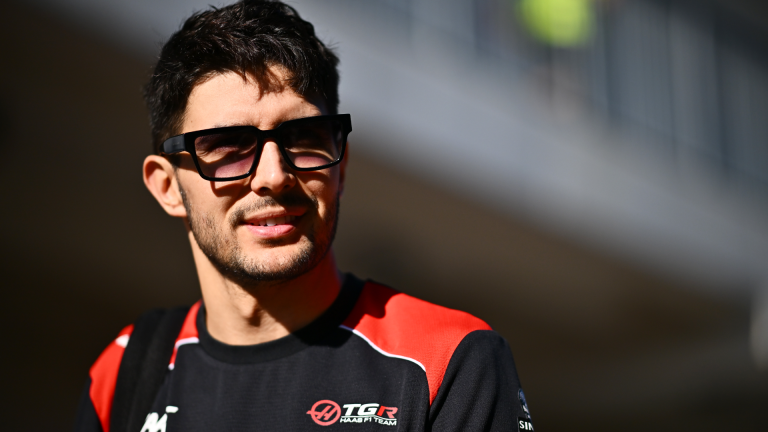
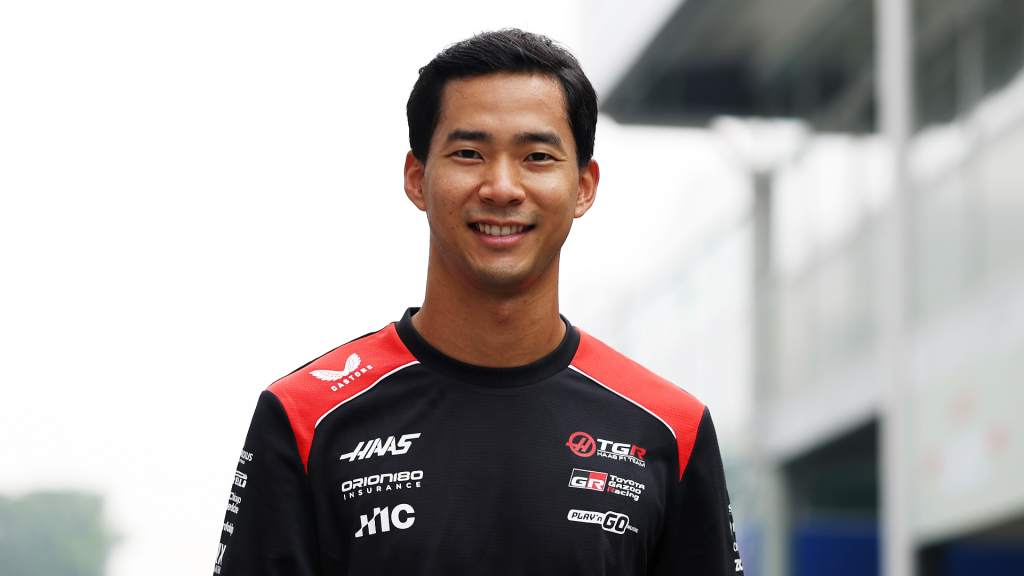
- Ryō Hirakawa is set to make his Formula 1 Grand Prix debut at 32 years, 7 months and 25 days, replacing Esteban Ocon at Haas for the 2026 Mexico City Grand Prix.
- The Japanese driver would become the oldest F1 newcomer since André Lotterer, who made his only Grand Prix start for Caterham at Spa-Francorchamps in 2014, aged 32 years and 9 months.
- Formula 1’s history includes much older debutants, particularly during the 1950s, when several established racing drivers entered the newly created World Championship in their forties and fifties.
Ryō Hirakawa is preparing to join one of Formula 1’s most unusual statistical groups after Haas unexpectedly replaced Esteban Ocon for the remainder of the 2026 Mexico City Grand Prix. If the Japanese driver takes the start on Sunday (November 1), he will become the oldest driver to make his F1 Grand Prix debut in 12 years, following André Lotterer’s appearance for Caterham at the 2014 Belgian Grand Prix.
Born on March 7, 1994, Hirakawa will be 32 years, 7 months and 25 days old on race day. His debut would come after a successful career in endurance racing, including victory at the 24 Hours of Le Mans and two FIA World Endurance Championship titles with Toyota.
The circumstances are unusual. Rather than progressing directly through the traditional single-seater ladder into a permanent Formula 1 seat, Hirakawa has spent much of his career establishing himself in other categories before receiving an unexpected opportunity with Haas.
Hirakawa follows Lotterer’s path from endurance racing to F1
The closest modern comparison is André Lotterer, who made his Formula 1 debut for Caterham at the 2014 Belgian Grand Prix at 32 years, 9 months and 5 days old.
Like Hirakawa, Lotterer had already built an impressive career in endurance racing before receiving his opportunity.
The German was a multiple Le Mans winner and a leading figure in Audi’s factory endurance programme when Caterham called him up to replace Kamui Kobayashi at Spa-Francorchamps.
Lotterer qualified ahead of teammate Marcus Ericsson, but his race lasted only one lap because of a mechanical problem. It remained his only Formula 1 World Championship start.
Hirakawa’s route is remarkably similar: both drivers arrived with extensive experience of high-performance racing machinery, major endurance victories and limited preparation time in their respective Formula 1 cars.
Another notable example is Allan McNish, who made his Grand Prix debut for Toyota at the 2002 Australian Grand Prix aged 32 years, 2 months and 2 days.
McNish had previously won the 24 Hours of Le Mans with Porsche in 1998 and spent years working towards an opportunity in Formula 1.
Unlike Lotterer, he secured a full-season race seat, competing for Toyota throughout its debut championship campaign.
Formula 1’s oldest newcomers came from the championship’s early years
Although Hirakawa’s age is unusual by modern standards, it would not have attracted the same attention during Formula 1’s earliest seasons.
When the World Championship began in 1950, many competitors were already established racing drivers who had competed before the Second World War.
The inaugural British Grand Prix at Silverstone featured several drivers in their forties and fifties, including Luigi Fagioli, Philippe Étancelin and Louis Chiron.
Fagioli was 51 years old when he competed in the first World Championship race, while Chiron was already 50.
Étancelin was also in his fifties, having established his reputation in Grand Prix racing during the pre-war period.
The following seasons brought further examples of older newcomers, including Arthur Legat and Adolf Brudes.
Legat made his World Championship appearance at the 1952 Belgian Grand Prix when he was more than 53 years old, illustrating how different the early championship was from the modern Formula 1 environment.
These drivers were World Championship newcomers, not necessarily motorsport beginners. Several had decades of competition behind them before the championship was established.
That distinction is essential when comparing their careers with those of modern drivers such as Hirakawa, Lotterer and McNish.
Oldest F1 debutants: Historical examples since 1950
The following table brings together notable drivers who made their first World Championship Grand Prix appearances after turning 30, excluding Indianapolis 500-only entries from the period when the American race counted towards the championship.
It is a historical selection rather than an exhaustive ranking. Ages are rounded where indicated, and Hirakawa’s entry remains conditional on starting the Mexican Grand Prix.
| Driver | First Grand Prix | Age at debut |
|---|---|---|
| Arthur Legat | Belgium, 1952 | 53 years, 7 months |
| Philippe Étancelin | Britain, 1950 | 53 years, 4 months |
| Adolf Brudes | Germany, 1952 | 52 years, 9 months |
| Luigi Fagioli | Britain, 1950 | 51 years, 10 months |
| Louis Chiron | Britain, 1950 | 50 years, 9 months |
| Hans Stuck | Switzerland, 1952 | 51 years, 6 months |
| Rudolf Schoeller | Germany, 1952 | 50 years, 3 months |
| George Follmer | South Africa, 1973 | 39 years, 1 month |
| Jean-Louis Schlesser | Italy, 1988 | 39 years, 1 month |
| Toshio Suzuki | Japan, 1993 | 38 years, 7 months |
| Giovanni Lavaggi | Germany, 1995 | 37 years, 5 months |
| Satoru Nakajima | Brazil, 1987 | 34 years, 1 month |
| Roland Ratzenberger | Pacific, 1994 | 33 years, 9 months |
| André Lotterer | Belgium, 2014 | 32 years, 9 months |
| Ryō Hirakawa | Mexico City, 2026 — expected | 32 years, 7 months |
| Allan McNish | Australia, 2002 | 32 years, 2 months |
| Taki Inoue | Japan, 1994 | 31 years, 2 months |
| Damon Hill | Britain, 1992 | 31 years, 9 months |
| Yuji Ide | Bahrain, 2006 | 31 years, 1 month |
| Jean-Denis Deletraz | Australia, 1994 | 31 years, 1 month |
| Andrea Montermini | Brazil, 1995 | 30 years, 9 months |
| Jean-Marc Gounon | Japan, 1993 | 30 years, 9 months |
| Michael Andretti | South Africa, 1993 | 30 years, 5 months |
Historical selection of late F1 debutants, not a complete ranking. Some drivers made unsuccessful qualifying attempts before their first race start. Hirakawa’s entry is provisional.
Late F1 debuts became increasingly rare after the 1990s
The development of Formula 1’s junior categories gradually reduced the number of drivers making their debuts after the age of 30.
By the 1990s, most teams were recruiting drivers who had progressed through Formula 3, Formula 3000 and other junior single-seater championships.
However, several exceptions remained.
Toshio Suzuki made his debut for Larrousse at the 1993 Japanese Grand Prix aged 38, while Giovanni Lavaggi entered Formula 1 with Pacific in 1995 after establishing himself in sports car racing.
Roland Ratzenberger was another late arrival, making his debut for Simtek at the 1994 Pacific Grand Prix at the age of 33.
The Austrian had previously competed in Formula 3000, touring cars and Japanese motorsport before earning his Formula 1 opportunity.
He was killed during qualifying for the San Marino Grand Prix later that month, in only his third World Championship weekend.
Satoru Nakajima also arrived relatively late, joining Lotus in 1987 at the age of 34 after becoming a multiple Japanese Formula 2 champion.
Nakajima went on to complete five seasons in Formula 1, demonstrating that an older debut did not necessarily prevent a driver from establishing a substantial Grand Prix career.
Damon Hill and Michael Andretti also arrived after turning 30
Two particularly recognisable examples from the 1990s are Damon Hill and Michael Andretti.
Hill made his Formula 1 debut with Brabham at the 1992 British Grand Prix, aged 31, after spending several years developing his career in junior single-seater racing.
The British driver subsequently joined Williams, won his first Grand Prix in 1993 and became World Champion in 1996.
His career demonstrates that a driver can reach Formula 1 relatively late and still achieve the sport’s highest honour.
Andretti followed a different route, arriving in Formula 1 after becoming one of the leading drivers in American open-wheel racing.
The 1991 CART champion joined McLaren for the 1993 season and made his debut at the South African Grand Prix at the age of 30.
Despite his experience and success in the United States, Andretti struggled to adapt to Formula 1 and left McLaren before the end of the championship.
His short-lived Grand Prix career illustrates the difficulties experienced by drivers moving between different forms of high-level single-seater racing.
Hirakawa brings Le Mans-winning experience to Haas
Hirakawa’s career before Formula 1 has been defined primarily by his achievements with Toyota.
The Japanese driver won the 2022 24 Hours of Le Mans alongside Sébastien Buemi and Brendon Hartley, helping Toyota secure another victory in the world’s most prestigious endurance race.
He also contributed to Toyota’s World Endurance Championship titles, becoming one of the manufacturer’s established factory drivers.
His relationship with Haas developed through the American team’s technical partnership with Toyota Gazoo Racing.
The collaboration created opportunities for Hirakawa to participate in Formula 1 testing and free practice sessions.
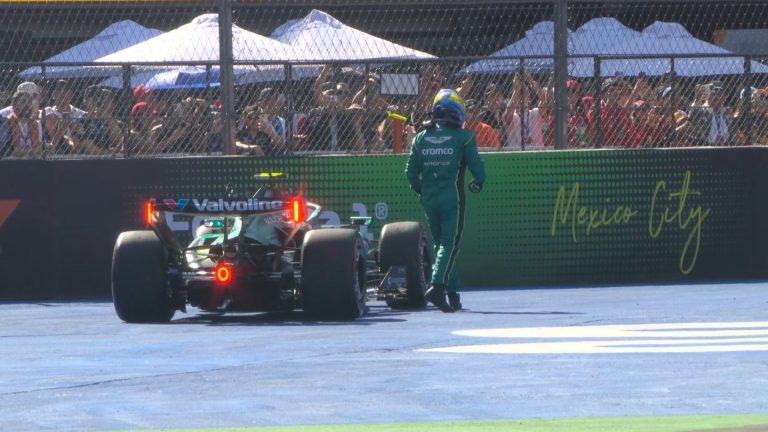
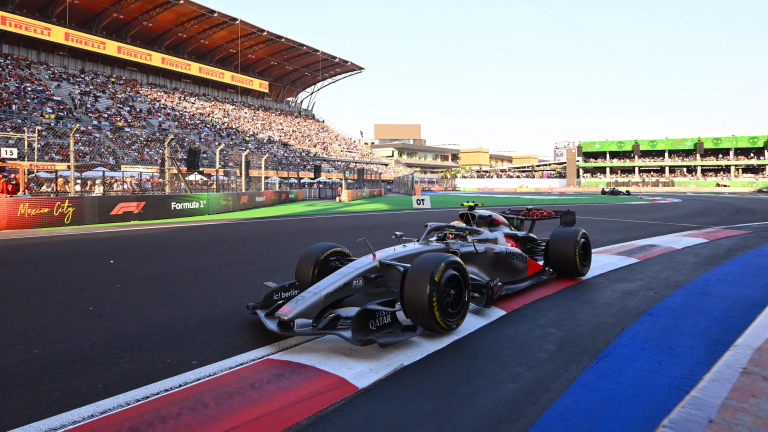
He drove for Haas during Friday’s opening practice in Mexico, completing 30 laps before Ocon returned to the cockpit for FP2.
However, the team’s plans changed unexpectedly on Saturday morning.
Haas requested permission to withdraw Ocon from the remainder of the Mexican Grand Prix and replace him with Hirakawa, a decision subsequently authorised by the FIA.
The stewards confirmed that Hirakawa would use car number 50 while retaining the engine and tyre allocations assigned to Ocon’s original entry.
The official decision did not specify why the Frenchman had been withdrawn.
Hirakawa’s debut depends on starting Sunday’s Mexican Grand Prix
Hirakawa’s participation in the remaining sessions was authorised subject to the relevant technical checks.
The Japanese driver must also satisfy the applicable sporting requirements before taking part in Sunday’s race.
The Mexican Grand Prix takes place on November 1 at the Autódromo Hermanos Rodríguez, where Hirakawa is expected to line up for his first Formula 1 World Championship start.
His age would place him between Lotterer and McNish among the notable modern examples of drivers making their Grand Prix debuts after turning 32.
The comparison is particularly relevant because all three built successful careers in endurance racing before receiving their Formula 1 opportunities.
Hirakawa’s appearance would also add another Japanese driver to the championship’s history, following predecessors including Satoru Nakajima, Takuma Sato, Kamui Kobayashi and Yuki Tsunoda.
GRANDE PRÊMIO is following every session of the Mexican Grand Prix this weekend, with breaking news, full coverage and real-time updates in its Formula 1 section.