News Summary
- Honda plans two major phases of power-unit development for the 2027 Formula 1 season, targeting improvements for the opening round and another substantial step around round eight.
- Chief engineer Shintaro Orihara admits Aston Martin will still be behind the leading manufacturers at the beginning of 2027, despite the planned winter improvements.
- Combustion performance remains Honda’s main weakness, while Aston Martin continues addressing the reliability, turbo response and energy-management problems that have affected Fernando Alonso and Lance Stroll.
Honda has revealed a two-stage development plan for its 2027 Formula 1 power unit, admitting that Aston Martin is unlikely to match the championship’s leading engine manufacturers at the beginning of next season. The Japanese manufacturer is targeting an initial improvement for the opening Grand Prix followed by a more substantial upgrade around the eighth round, as it attempts to recover from a difficult first year under Formula 1’s new regulations.
Chief engineer Shintaro Orihara outlined the programme during the United States Grand Prix weekend in Austin, explaining that Honda’s main technical weakness remains combustion performance. Although the manufacturer expects progress over the winter, its engineers believe a second development phase will be required before Aston Martin can approach the front of the field.
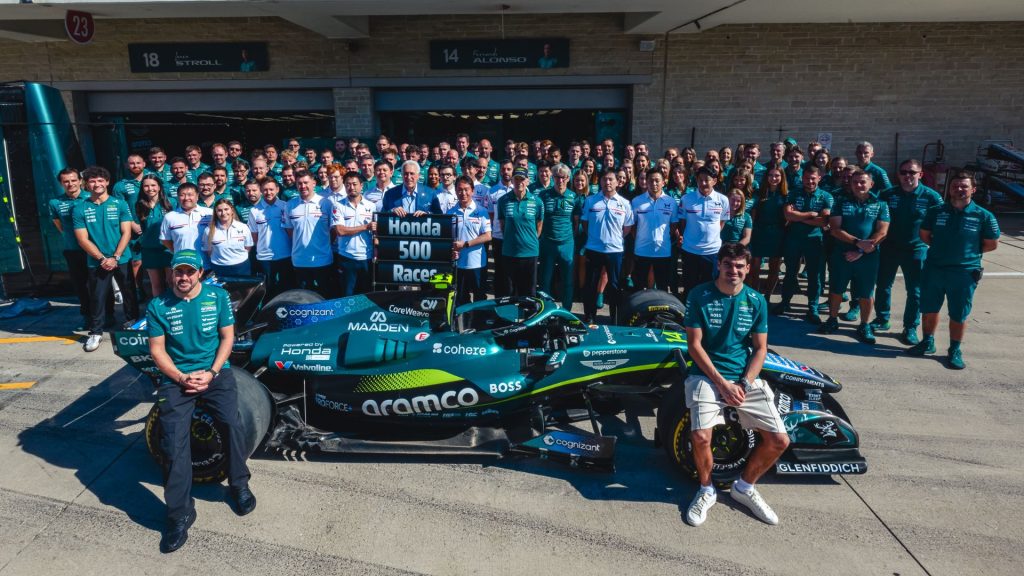
Honda targets two major steps to close Aston Martin’s engine deficit
Honda’s 2026 partnership with Aston Martin has failed to deliver the performance expected when the manufacturer returned as a full works power-unit supplier.
The AMR26 has struggled with both outright speed and the consistency of its power delivery, leaving Alonso and Stroll unable to compete regularly for points.
The manufacturer introduced upgrades during the season, but those changes have not eliminated the deficit.
Orihara explained that Honda has now established a development roadmap extending into the middle of 2027.
“We need some steps to catch up to the top competitors,” the engineer told journalists in Austin.
“Our target is to bring some steps for round one.”
However, Orihara acknowledged that the first update would not be sufficient.
“But still, at round one, we can say we wouldn’t be a top competitor, so we need one more step.”
Honda’s objective is to introduce another substantial improvement around the eighth round of the championship, although that timing remains a target rather than a confirmed homologation date.
Honda’s planned F1 power-unit development for 2027
| Stage | Target | Expected objective |
|---|---|---|
| First phase | Opening round of 2027 | Improve combustion performance and reduce the power deficit |
| Second phase | Around round eight | Deliver another major step towards the leading manufacturers |
| Long-term target | Throughout 2027 | Improve competitiveness, reliability and power delivery |
The schedule reflects Honda’s development targets. Exact specifications, approval and introduction dates remain subject to technical and regulatory requirements.
The approach represents a significant admission.
Honda does not expect its winter development programme alone to transform Aston Martin into a leading power-unit competitor.
Instead, the manufacturer is planning a gradual recovery that could continue well into the 2027 season.
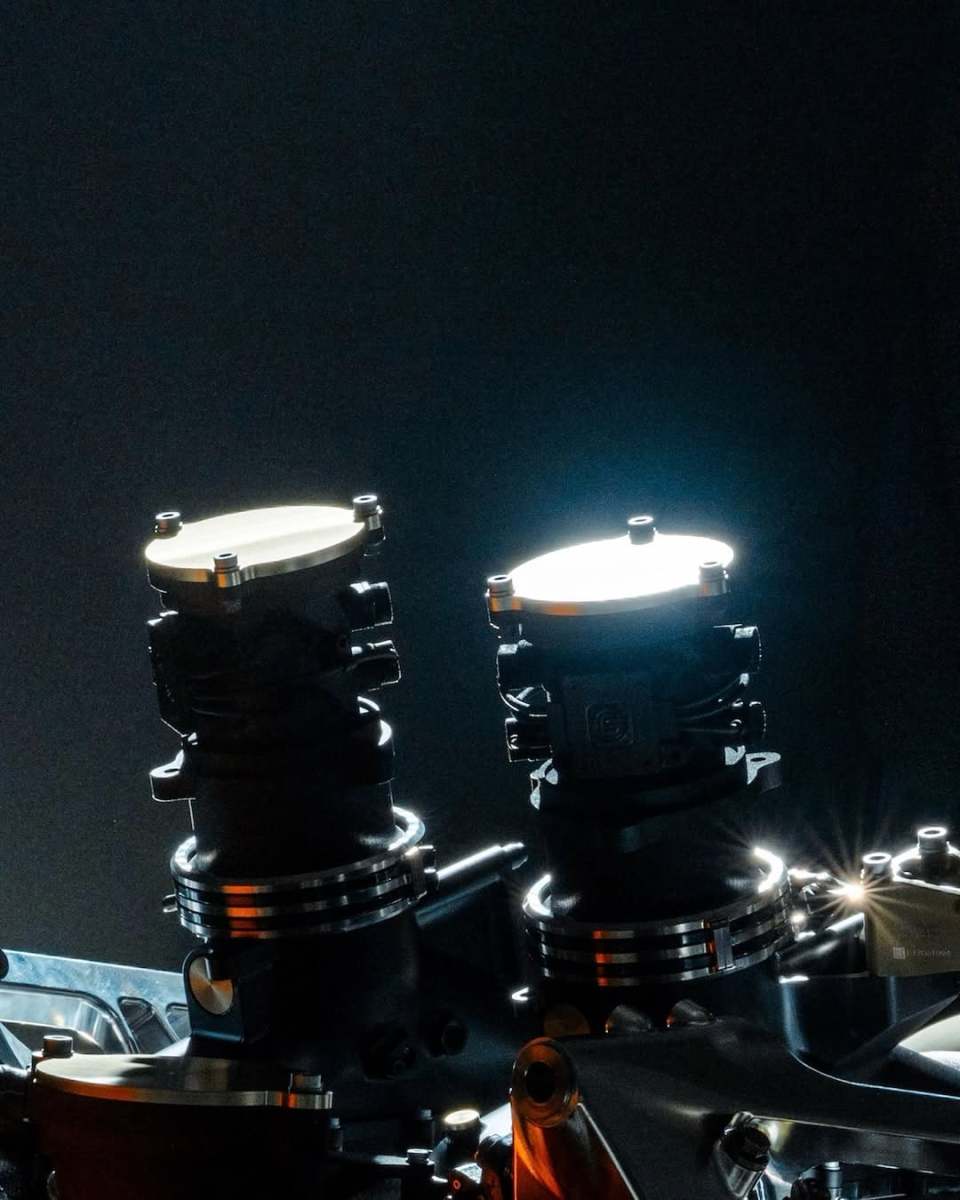
Combustion remains Honda’s biggest weakness
Orihara was particularly clear about the technical area requiring the greatest improvement.
“Our weak point is combustion,” he admitted.
Honda believes improving the internal combustion engine will become even more important in 2027 because of changes to the balance between combustion and electrical performance.
Formula 1’s current power-unit regulations introduced a much greater electrical contribution, with the MGU-K capable of delivering up to 350 kW.
However, the championship is adjusting the way performance is distributed between the combustion engine and the hybrid system.
That increases the importance of combustion efficiency and the ability to produce competitive power across different operating conditions.
For Honda, the challenge is not limited to peak horsepower.
The combustion engine must also deliver predictable torque and work effectively with the turbocharger and energy-management systems.
Problems in those areas have made the Aston Martin difficult to drive, particularly when exiting slower corners.
The manufacturer identified limitations in turbo control and the interaction between engine response and MGU-K deployment.
Those difficulties remain part of Honda’s wider recovery programme.
Aston Martin struggled despite Honda’s 2026 upgrades
Honda has already introduced significant technical changes during its first season with Aston Martin.
The manufacturer used the FIA’s Additional Development and Upgrade Opportunities mechanism, commonly known as ADUO, to address the performance deficit identified against rival power units.
The system allows manufacturers that fall behind established performance benchmarks to undertake additional development within the applicable restrictions.
Honda qualified for concessions after its combustion engine was assessed as substantially less powerful than the leading reference.
Its first major update focused on combustion efficiency, including changes to internal components designed to improve performance.
The upgraded Honda engine introduced at Zandvoort represented an important step, but did not immediately move Aston Martin into regular midfield contention.
Subsequent changes also targeted turbo response and drivability.
However, the improvements produced limited gains compared with the deficit Honda needed to recover.
Aston Martin has continued experiencing difficult weekends, particularly at circuits where straight-line speed and consistent acceleration are essential.
Lance Stroll previously estimated that the team could lose between one and two seconds per lap because of its power-unit limitations, depending on the circuit.
That assessment reflected the driver’s experience rather than a standardised FIA measurement, but illustrated the scale of Aston Martin’s difficulties.
The Canadian’s assessment of Honda’s continuing performance deficit also highlighted why the team has increasingly focused on 2027.
Newey backs Honda despite disappointing first year
Adrian Newey has acknowledged that Honda’s development progress during 2026 has not met the expectations surrounding the partnership.
The Aston Martin team principal previously worked with Honda during Red Bull’s successful period, gaining direct experience of the Japanese manufacturer’s engineering capabilities.
However, the organisation Honda assembled for its latest Formula 1 programme differs from the operation that supported Red Bull’s championship-winning cars.
After initially withdrawing from full-scale Formula 1 involvement, Honda had to rebuild parts of its engineering structure following its decision to return for the 2026 regulations.
That process contributed to delays in development.
Newey has nevertheless expressed confidence that the manufacturer can improve.
Honda has substantial resources and experience, but recovering the performance deficit will require sustained work rather than a single technical solution.
The manufacturer also changed the leadership of its power-unit development programme in October, with Yoichiro Fukao taking over from Tetsushi Kakuda.
As GRANDE PRÊMIO reported, Honda’s restructuring is intended to strengthen the project ahead of 2027.
The new development roadmap represents one of the first significant objectives for the reorganised programme.
Honda’s engine problem affects more than horsepower
Aston Martin’s difficulties have included a combination of outright power loss, vibrations, turbo lag and inconsistent acceleration.
The relationship between those problems is important.
A combustion engine with insufficient output can compromise straight-line performance, but an engine that responds unpredictably can also cost time during corner exits.
Drivers need confidence that the power unit will deliver the requested torque consistently when they accelerate.
If the response changes unexpectedly, they may be forced to adjust their driving technique or delay applying full throttle.
That can affect performance even when the engine’s peak output appears relatively competitive.
The situation is further complicated by Formula 1’s 2026 hybrid system.
The electrical motor can help compensate for delayed combustion-engine response, but doing so consumes energy that might otherwise be deployed elsewhere on the lap.
This creates a trade-off between drivability and energy efficiency.
Honda’s challenge is therefore to improve the overall behaviour of the power unit rather than concentrate solely on maximum combustion power.
The second development phase planned for 2027 could become particularly important if the initial winter changes reduce the deficit without addressing every aspect of the package.
Will Aston Martin have a competitive engine at the start of 2027?
Honda’s current position is cautious.
The manufacturer expects to improve its power unit before the opening race, but Orihara has explicitly stated that the package will probably remain behind the leading competitors.
A further major step is targeted around round eight.
That does not mean Aston Martin cannot improve its results before then.
The team is also developing its chassis, aerodynamics and mechanical systems, and those areas can produce gains independently of the power unit.
A more competitive car could help compensate for some engine limitations, particularly at circuits where aerodynamic efficiency and tyre management are decisive.
Nevertheless, Honda considers its combustion-engine deficit substantial enough to require development beyond the start of the next championship.
For Alonso and Stroll, the 2027 season could therefore begin with improved but still incomplete machinery.
The question will be how quickly Honda can implement its planned changes and whether the resulting performance gains close the gap to the leading manufacturers.
GRANDE PRÊMIO is following Honda, Aston Martin and the preparations for Formula 1’s 2027 season, with breaking news, technical analysis and full coverage in its Formula 1 section.