News Summary
- Andrea Kimi Antonelli leads George Russell by 123 points in the 2026 Formula 1 World Championship, having won nine Grands Prix compared with his Mercedes teammate’s three.
- Antonelli leads the Mercedes head-to-head 11–7 in qualifying and 13–5 in races after the United States Grand Prix, demonstrating a competitive advantage that extends beyond reliability problems.
- Russell has suffered more mechanical setbacks and struggled with the updated W17, but his admission that he had “no answers” for his Austin pace highlights the difficulties separating Mercedes’ two drivers.
Andrea Kimi Antonelli and George Russell are driving for the same Mercedes team, yet their 2026 Formula 1 seasons have developed in dramatically different directions. Antonelli is one result away from securing his first World Championship after winning nine Grands Prix, while Russell has fallen 123 points behind and is fighting to preserve second place in the standings. The contrast has become increasingly difficult to explain through car reliability alone.
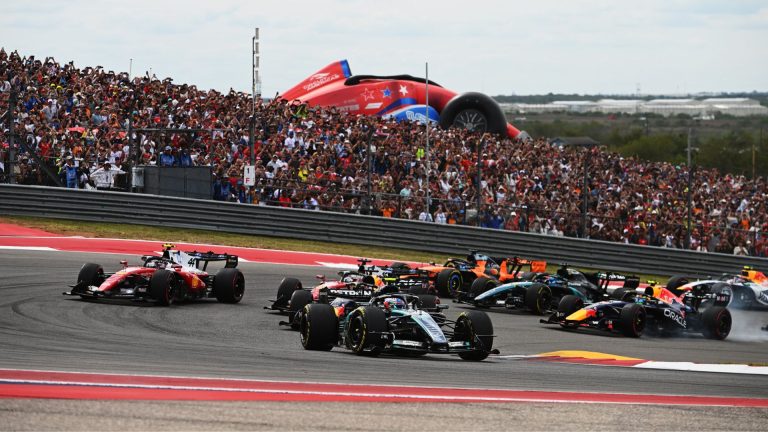
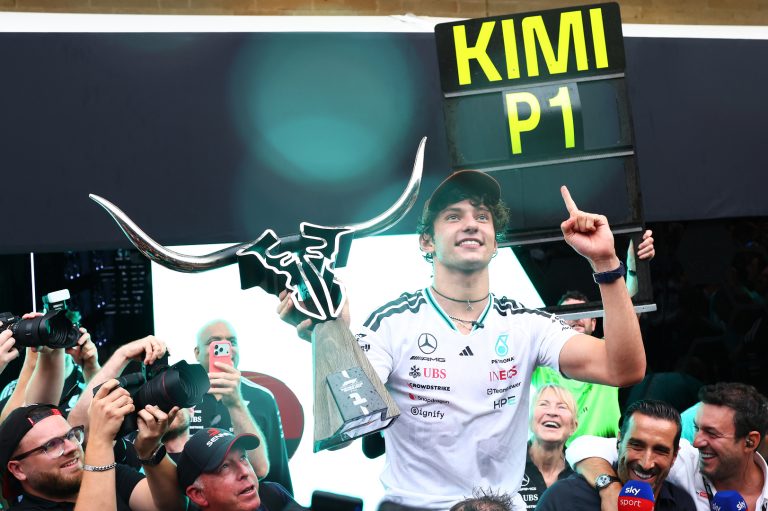
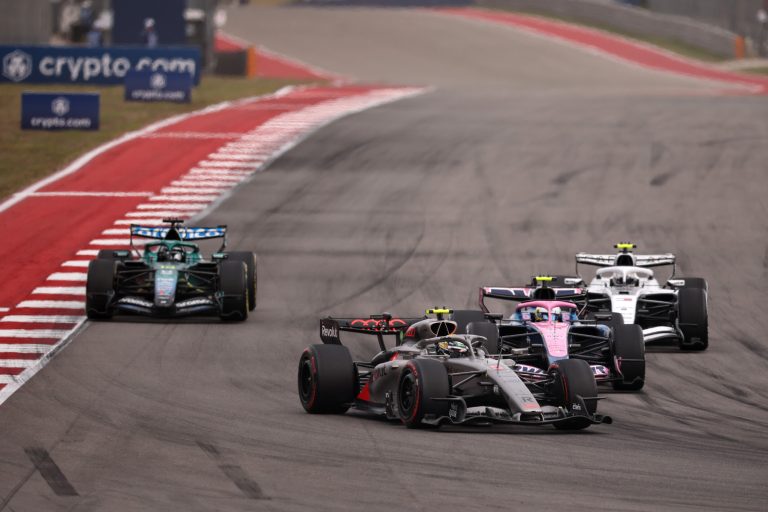
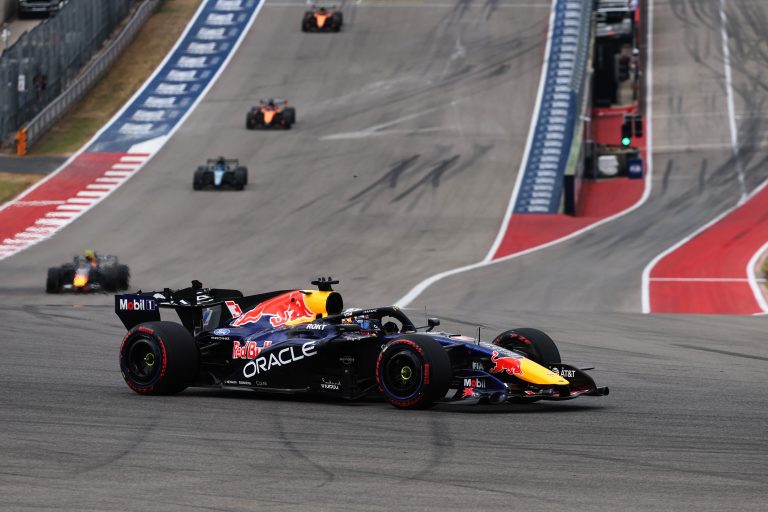
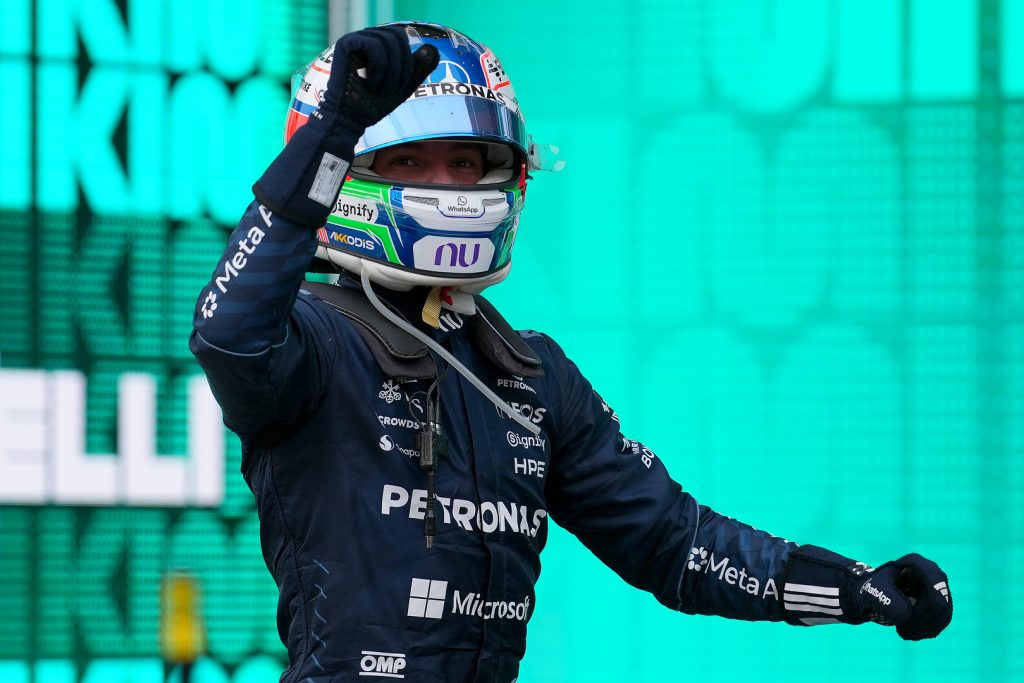
The United States Grand Prix provided the clearest illustration of that difference. Antonelli converted pole into victory with a carefully executed one-stop strategy, defeating Charles Leclerc and Max Verstappen. Russell qualified sixth, received a five-second penalty and finished eighth, later admitting that his pace had been “rubbish” and that he did not understand why he was so far behind. The result widened a championship gap that had already been growing throughout the season.
Russell vs Antonelli: The numbers behind Mercedes’ 2026 F1 gap
The most obvious difference between the two Mercedes drivers is the championship classification.
Antonelli has accumulated 365 points, while Russell has 242. The 123-point difference is particularly significant because only 125 points remain available over the final five Grands Prix.
However, the overall standings do not tell the complete story.
Russell has suffered more mechanical problems and retirements, while Antonelli has generally been more successful at converting competitive weekends into victories.
The head-to-head statistics offer another perspective.
Before Austin, the official teammate comparison showed Antonelli leading 10–7 in qualifying and 12–5 in races. The Italian’s pole and victory, combined with Russell’s sixth-place qualifying result and eighth-place finish, extended those advantages to 11–7 and 13–5.
Russell vs Andrea Kimi Antonelli — 2026 F1 comparison after Austin
| Statistic | A. K. ANTONELLI | G. RUSSELL |
|---|---|---|
| Championship points | 365 | 242 |
| Championship position | 1st | 2nd |
| Grand Prix victories | 9 | 3 |
| Qualifying head-to-head | 11 | 7 |
| Race head-to-head | 13 | 5 |
| Championship points advantage | +123 | — |
| Austin qualifying position | 1st | 6th |
| Austin race finish | 1st | 8th |
| Austin points | 25 | 4 |
Head-to-head figures extend the published Mercedes comparison after Singapore with the results from Austin. They refer to the 18 Grands Prix completed through the United States round.
The qualifying comparison is competitive rather than overwhelmingly one-sided. Russell has beaten Antonelli on seven occasions, demonstrating that he remains capable of extracting considerable performance from the W17.
The race results reveal a larger difference.
Antonelli has finished ahead of Russell in 13 of their 18 Grand Prix comparisons, reinforcing the impression that the Italian has been better at converting the car’s potential into results on Sunday.
The victory totals make the contrast even clearer.
Russell has won three Grands Prix this year, an achievement that would represent a strong campaign for many drivers. Antonelli, however, has won nine, accounting for three times as many victories as his teammate.
That difference is one of the principal reasons why the championship battle has become so uneven.
Russell was Mercedes’ established leader before Antonelli took control
The situation is particularly striking when considering the expectations surrounding Mercedes at the start of the championship.
Russell entered 2026 as the team’s established driver, having spent several seasons working within its technical structure and developing a reputation for extracting strong results from difficult machinery.
Antonelli was entering only his second full Formula 1 season after replacing Lewis Hamilton in 2025.
Although the Italian had demonstrated exceptional potential, Russell appeared to possess an important advantage in experience and familiarity with Mercedes.
The British driver had also established himself as a Grand Prix winner and was considered one of the leading candidates for the championship if Mercedes produced a competitive car under the new regulations.
However, Antonelli quickly overturned those expectations.
The Italian took his first victory of the season in China before establishing a remarkable run of success through Japan, Miami, Canada and Monaco.
Further victories followed in Belgium and Italy, while his performances continued to strengthen his position during the second half of the championship.
By September, the difference had already become difficult for Mercedes to ignore.
As GRANDE PRÊMIO examined when Antonelli held an 81-point advantage after the Madrid Grand Prix, Russell had entered the year as a title favourite but was increasingly unable to reproduce his teammate’s results.
The problem was not that Russell had suddenly become uncompetitive.
Rather, Antonelli had established a higher level of consistency while producing more race-winning performances, leaving his teammate struggling to keep pace with a championship campaign that was developing at extraordinary speed.
Reliability has hurt Russell — but cannot explain the entire deficit
There is an important qualification when comparing the two drivers.
Russell has suffered more reliability problems than Antonelli, and those setbacks have had consequences beyond the races in which they occurred.
A previous GRANDE PRÊMIO analysis of the championship gap examined how mechanical problems affected Russell during the Asian rounds.
Formula 1’s estimates suggested that the British driver could have lost as many as 56 points through reliability-related incidents during the season, compared with approximately 36 for Antonelli.
Those figures are estimates rather than points that can simply be added to the standings. They depend on assumptions about where each driver might have finished without mechanical problems.
Nevertheless, they demonstrate that Russell has not enjoyed the same level of reliability as his teammate.
His power-unit failure in Malaysia also created complications beyond the immediate retirement.
Mercedes subsequently introduced additional components for Singapore, resulting in a grid penalty that forced Russell to start near the back.
The British driver recovered to ninth, but the combination of retirement and subsequent penalty compromised two consecutive weekends.
This is one reason why a championship deficit should never automatically be interpreted as an equivalent difference in driving quality.
Mechanical failures, accidents, strategy and the timing of safety cars can substantially influence points totals.
However, Russell’s reliability difficulties do not erase Antonelli’s advantage in qualifying, race results and victories.
Even before considering the championship standings, the Italian has beaten his teammate more frequently across both Saturdays and Sundays.
That is evidence of a genuine competitive difference during 2026, although reliability has helped amplify the final points gap.
Mercedes upgrades have exposed different problems for the two drivers
The technical development of the W17 has added another layer to the comparison.
Mercedes introduced significant aerodynamic updates during the second half of the season, attempting to protect its competitiveness as Red Bull, Ferrari and McLaren developed their own cars.
However, the new package did not initially deliver a straightforward improvement.
Both drivers experienced difficulties with balance and consistency, raising questions about the car’s operating window.
The problems became serious enough for Mercedes to conduct a direct comparison between different aerodynamic specifications during the Singapore Grand Prix weekend.
Russell returned to an older specification, while Antonelli retained the newer package and tested an additional front wing.
The experiment provided valuable information.
As Mercedes subsequently confirmed, Antonelli’s newer specification proved faster in the Singapore comparison, although that did not mean the car had become easy to drive.
The development process highlighted how sensitive the W17 could be to setup and track conditions.
An upgrade can improve aerodynamic performance while also changing the car’s balance, increasing the difficulty of finding the best configuration.
Those characteristics can affect drivers differently because of their individual braking techniques, corner-entry preferences and methods of managing tyre temperatures.
The Singapore comparison therefore offered evidence that the new package had improved performance, but it did not establish that Russell’s difficulties were caused exclusively by the upgrade.
That distinction became especially relevant in Austin.
Austin exposed the biggest contrast of Mercedes’ season
The United States Grand Prix offered an unusually direct comparison because both Mercedes drivers faced the same circuit conditions and the team’s latest competitive challenges.
Mercedes struggled during practice, with Ferrari leading all three sessions.
The W17 was particularly sensitive to tyre temperatures and balance, making it difficult to maintain strong performance through the final sector.
Yet Antonelli delivered a surprise pole position ahead of Verstappen, despite Mercedes having initially expected to fight for positions further down the leading group.
Russell qualified sixth, 0.441 seconds behind his teammate.
The difference became even more pronounced during the race.
Antonelli maintained the lead from pole, managed his opening stint on medium tyres and completed the Grand Prix with a single pit stop.
Russell, meanwhile, struggled for pace and received a five-second penalty after an early incident.
The sanction compromised his result, but his own assessment suggested that the problem went considerably deeper.
Speaking to Sky Sports F1, Russell described his pace as “rubbish” and admitted he could not explain why he was so slow.
“The five seconds didn’t help things and probably cost me two or three positions,” Russell explained.
“But nevertheless, the pace was not good enough when it needed to be.”
Asked whether the problem was related to the upgraded W17, Russell declined to offer a specific explanation.
“Just not being quick enough, to be honest.”
The British driver acknowledged that he needed to understand the cause of the deficit but did not yet have an answer.
That uncertainty is significant.
Russell did not identify a single mechanical failure or setup problem that could adequately explain the difference.
Instead, he described a broader lack of performance that contrasted sharply with his teammate’s ability to deliver a pole position and victory.
Antonelli has become an active part of Mercedes’ strategic success
Antonelli’s advantage has also become evident in how he approaches race management.
The Austin victory was not simply a matter of producing faster laps than Russell.
The Italian demonstrated the ability to understand tyre behaviour, make decisions under pressure and work effectively with the Mercedes pit wall.
While Red Bull and Ferrari adopted two-stop strategies, Antonelli supported the decision to extend his opening stint on mediums and switch to hards for the remainder of the race.
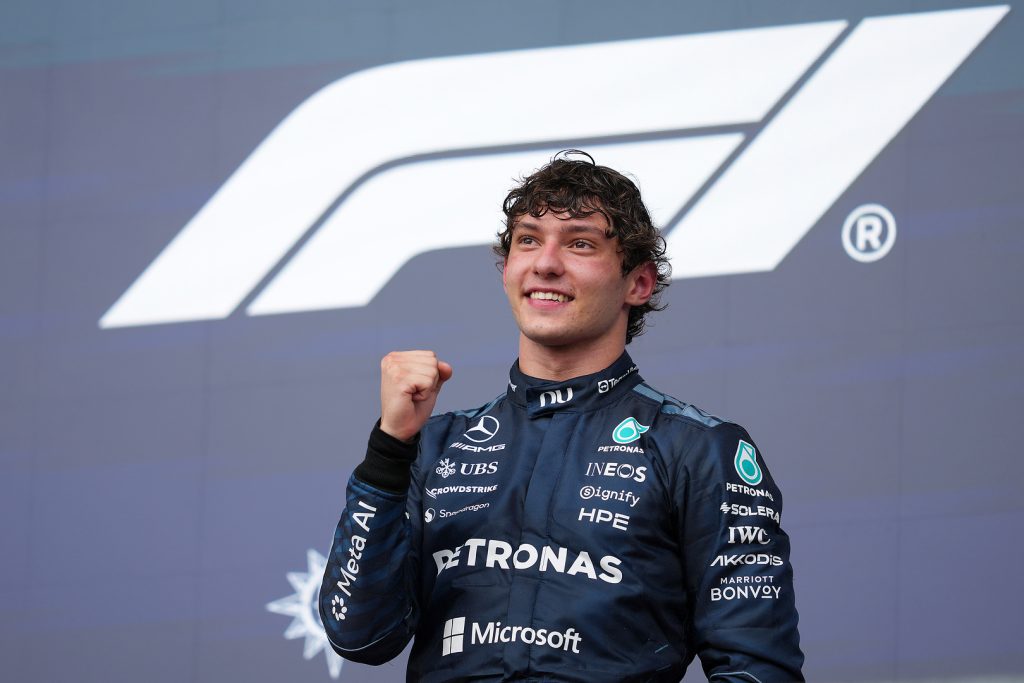
Afterwards, the Mercedes driver revealed that he had personally advocated the winning one-stop approach.
“It was an incredible team effort, especially from strategy, to believe in me and go for one stop,” Antonelli said.
The decision required confidence because Verstappen had stopped earlier, potentially threatening Mercedes through an undercut.
But Antonelli remained competitive as the Red Bull driver’s softer tyres deteriorated.
The Italian then used fresh hard tyres to recover time rapidly after his only stop, helping Mercedes regain control of the Grand Prix.
Toto Wolff subsequently explained that the team had calculated an advantage of approximately eight seconds for the one-stop strategy.
The Mercedes principal also revealed that Antonelli had approached the race with remarkable calm despite knowing he could secure the championship.
Before the start, the Italian visited Wolff’s office and explained that he simply wanted to enjoy the occasion.
Wolff praised the composure that followed.
The contrast with Russell was not merely about which driver had the faster car on Sunday. It was also about Antonelli’s ability to make the most of the circumstances available to him.
That does not mean Russell lacks strategic intelligence or race-management ability. His previous victories demonstrate otherwise.
But Antonelli has more consistently combined those qualities with the performance needed to win throughout 2026.
The championship gap has grown at every decisive stage
The progression of the championship advantage provides another way of understanding Mercedes’ contrasting seasons.
After the Madrid Grand Prix in September, Antonelli led Russell by 81 points.
Following Singapore, the gap had increased to 102.
The United States Grand Prix then extended the difference to 123.
How Antonelli’s advantage over Russell developed
| Championship checkpoint | Antonelli lead |
|---|---|
| After Madrid GP | 81 points |
| After Singapore GP | 102 points |
| After United States GP | 123 points |
| Increase from Madrid to Austin | +42 points |
The figures demonstrate that the gap did not emerge from a single disastrous weekend.
Russell’s reliability setbacks contributed, but Antonelli repeatedly capitalised on opportunities to increase the advantage.
At Austin, the difference grew by another 21 points because Antonelli won while Russell finished eighth.
The result also reduced Russell’s advantage over Hamilton in the fight for second place to just one point.
As GRANDE PRÊMIO’s complete championship standings after Austin show, Antonelli leads with 365 points, Russell has 242 and Hamilton 241.
Verstappen is fourth on 236, followed by Leclerc on 233.
That means Russell’s immediate sporting situation has changed considerably.
Instead of being Antonelli’s principal title challenger, he is now defending second place against several drivers separated by only a handful of points.
Why Russell’s struggle matters beyond the 2026 championship
Antonelli’s first World Championship is now extremely close, but Mercedes must also consider what the comparison means for its future.
The team’s competitiveness has become less predictable during the second half of 2026.
Red Bull has returned to winning form, Ferrari has demonstrated increasingly strong race pace and McLaren remains capable of challenging when circumstances suit its car.
Mercedes cannot assume it will dominate every Grand Prix in 2027.
Under those conditions, the ability to extract consistent performance from both cars becomes particularly important.
Antonelli has demonstrated that he can win even when the team does not begin a weekend as the obvious favourite.
Russell, meanwhile, has experienced several races in which he has been unable to reproduce the car’s best performance.
That creates a technical challenge for Mercedes.
The team must establish whether the differences are primarily related to setup preferences, tyre behaviour, driving technique or characteristics of its evolving aerodynamic package.
It also needs to understand why Russell’s performance sometimes varies so considerably between circuits.
The objective should not simply be to make Russell drive like Antonelli, but to ensure both drivers can exploit the W17’s available performance consistently.
A more competitive second Mercedes would strengthen the team’s Constructors’ Championship position and provide greater strategic flexibility against Ferrari, Red Bull and McLaren.
It could also restore Russell’s ability to challenge for victories more regularly.
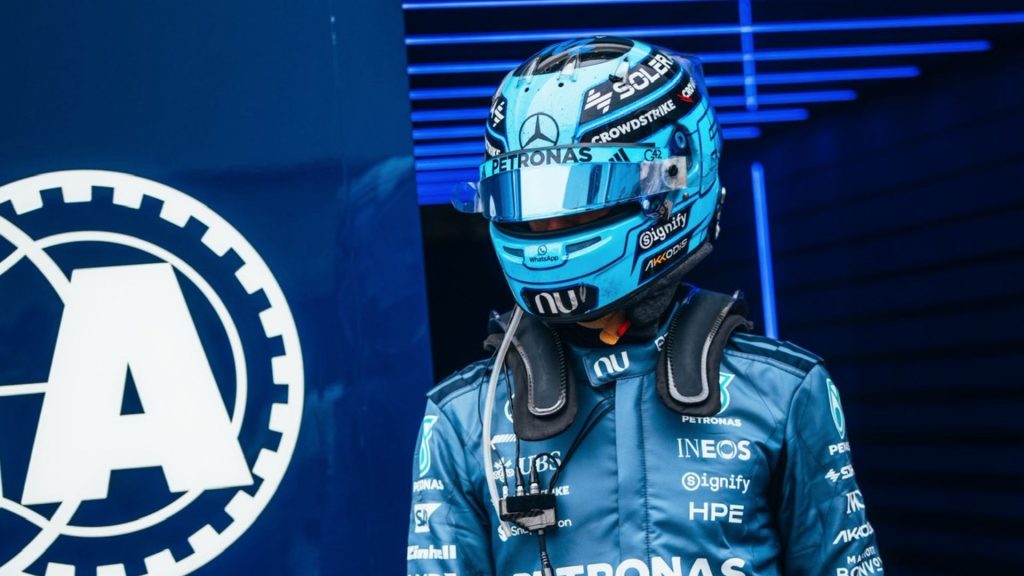
Russell can still fight for second as Antonelli approaches the title
The Mexican Grand Prix on November 1 will offer both Mercedes drivers very different objectives.
Antonelli needs only ninth place to secure the 2026 World Championship, regardless of where Russell or Hamilton finishes.
The complete mathematical scenarios for Mexico demonstrate how close the Italian is to securing the first championship of his career.
Russell, meanwhile, will attempt to recover from the disappointment of Austin and protect second place in the standings.
His one-point advantage over Hamilton leaves little margin for another difficult weekend.
Verstappen and Leclerc are also close enough to challenge for the runner-up position, particularly if Mercedes continues struggling to extract consistent performance from Russell’s car.
The situation means Russell still has important targets during the remaining five races, even if overturning Antonelli’s championship advantage is mathematically possible only under extraordinary circumstances.
For Mercedes, the Mexican Grand Prix will provide another opportunity to evaluate how its updated package behaves under different conditions.
Autódromo Hermanos Rodríguez’s high altitude creates demanding cooling and aerodynamic requirements, which could expose different strengths and weaknesses in the W17.
The result will not determine the complete explanation for Mercedes’ internal performance gap, but it may provide another useful comparison before the championship enters its final four rounds.
GRANDE PRÊMIO is following the build-up to the Mexican Grand Prix at Autódromo Hermanos Rodríguez, with championship analysis, technical developments, driver reactions and full coverage in its Formula 1 section.