News Summary
- George Russell described his pace as “rubbish” after finishing eighth at the 2026 United States Grand Prix, admitting he still does not understand why he struggled so badly in Austin.
- The Mercedes driver believes his five-second penalty cost him two or three positions, but insisted the underlying lack of performance was a more serious problem.
- Andrea Kimi Antonelli won the race for Mercedes, extending his championship advantage over Russell to 123 points, while Lewis Hamilton closed to within just one point of the British driver.
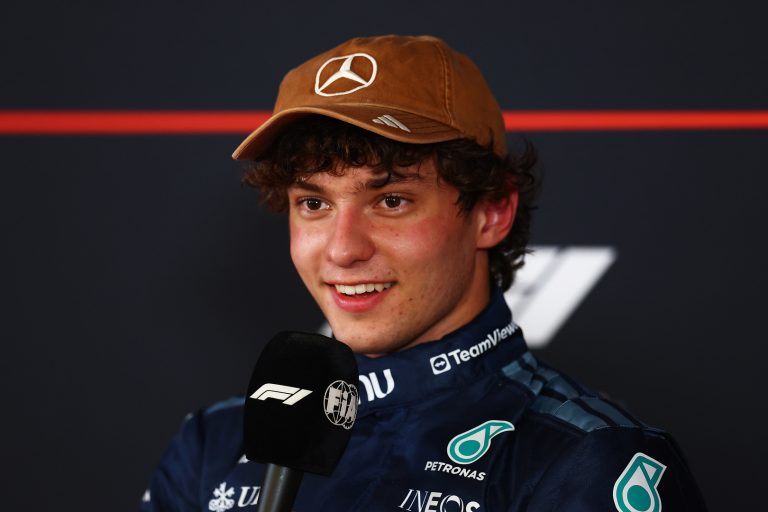
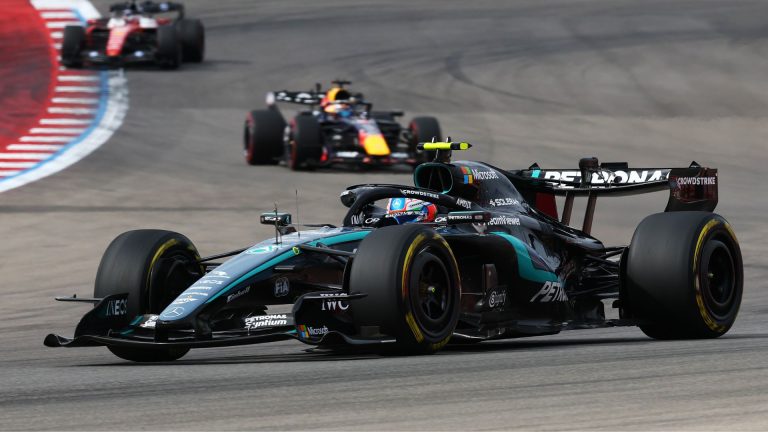
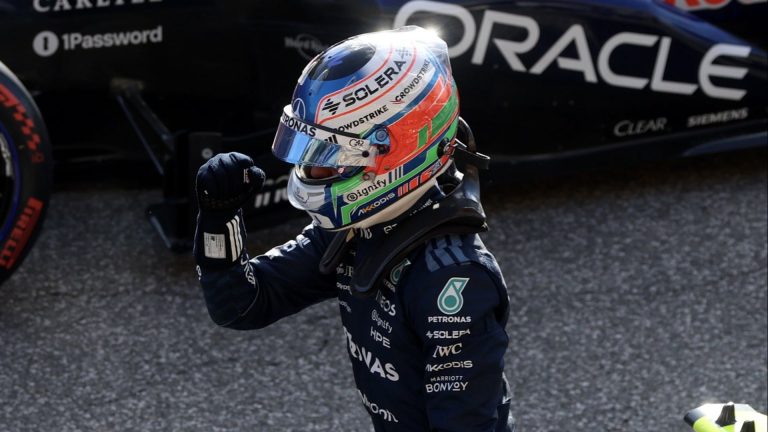
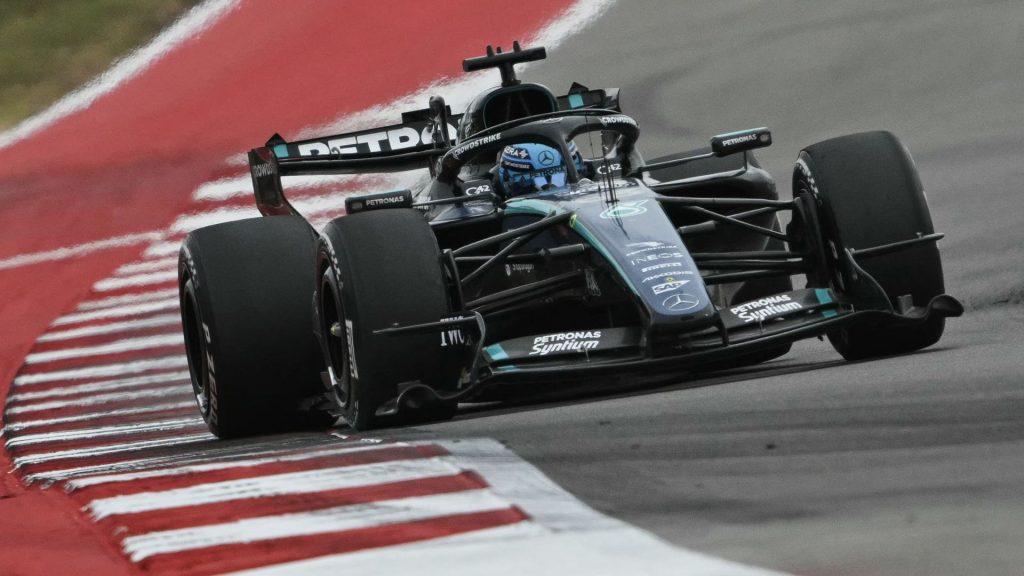
George Russell has admitted he has no answers for his disappointing performance at the 2026 Formula 1 United States Grand Prix, describing his race pace as “rubbish” after finishing eighth while Mercedes teammate Andrea Kimi Antonelli claimed a dominant victory. The British driver acknowledged that a five-second penalty cost him several positions, but insisted that his lack of speed was the main problem during Sunday’s (October 25) race at Circuit of The Americas.
Russell’s frustration was particularly striking given Antonelli’s victory with a successful one-stop strategy. While the Italian controlled the race from pole position and defeated Charles Leclerc and Max Verstappen, Russell struggled to match the pace of the leading group. The result left him 123 points behind his teammate, although his eighth-place finish was enough to delay the championship decision until at least Mexico.
Russell calls Austin pace ‘rubbish’ after disappointing Mercedes race
Russell entered the United States Grand Prix hoping to recover from a difficult qualifying session in which he had been unable to match Antonelli’s performance.
The British driver qualified sixth, 0.441 seconds behind his teammate, while Verstappen, Isack Hadjar, Leclerc and Lewis Hamilton all secured positions ahead of him.
Mercedes had experienced challenges throughout the weekend, particularly in finding the correct operating window for its updated W17. However, Antonelli overcame those difficulties to secure a surprise pole position, raising expectations that the German manufacturer could challenge for victory.
Sunday’s race exposed a considerable difference between the two Mercedes drivers.
Antonelli maintained the lead at the start and established a comfortable advantage, while Russell struggled to make progress and eventually finished eighth.
Speaking to Sky Sports F1 after the race, Russell did not attempt to disguise his disappointment.
“The pace just was rubbish today. That’s the long and short of it,” Russell said.
The British driver acknowledged that the time penalty had complicated his race, but immediately returned to the underlying performance problem.
“The five seconds didn’t help things and probably cost me two or three positions,” he explained.
“But nevertheless, the pace was not good enough when it needed to be.”
The comments suggest Russell believes his result cannot be explained solely by the penalty or the circumstances surrounding his pit stop.
Even without the sanction, the Mercedes driver felt he lacked the performance necessary to challenge his teammate and the leading contenders consistently.
Five-second penalty complicates Russell’s United States GP
Russell’s difficulties were compounded by an incident involving Oscar Piastri during the opening stages.
The Mercedes driver went off track and gained an advantage, prompting an investigation by the stewards.
The FIA subsequently imposed a five-second time penalty, forcing Russell to serve the sanction during his pit stop.
Mercedes called the British driver in on lap 23, when he completed the penalty before switching to hard tyres for the remainder of the race.
The additional time left Russell with work to do after rejoining the track, and he eventually recovered to finish eighth.
Russell believes the sanction cost him between two and three positions, an assessment that would place him potentially fifth or sixth without the penalty, although that remains hypothetical.
His result was especially disappointing given the performance demonstrated by the other Mercedes.
Antonelli made his only stop on lap 25 and maintained competitive pace on hard tyres throughout the final stint, securing his ninth victory of the season.
The success underlined the effectiveness of Mercedes’ race strategy, but Russell was unable to extract comparable performance from his car.
Team principal Toto Wolff subsequently praised Antonelli’s composure and explained why Mercedes had resisted Red Bull’s two-stop strategy.
Wolff said the team’s calculations suggested a one-stop race would be approximately 8 seconds quicker than the alternative, a prediction that proved decisive in Antonelli’s victory.
For Russell, however, the strategic outcome offered little consolation because his difficulties extended beyond pit-stop timing.
Russell admits he cannot explain lack of performance with updated W17
The most concerning element of Russell’s interview came when Sky Sports F1 questioned whether his difficulties were related to the upgraded Mercedes package.
The team introduced significant developments during the Asian rounds, but finding a consistent balance with the revised W17 has proved challenging.
Russell previously expressed concerns about the behaviour of the updated car, prompting Mercedes to compare different aerodynamic specifications in an attempt to understand the changes.
The evaluation was intended to establish whether the latest developments were delivering the expected performance and to identify any characteristics that might explain the car’s inconsistent behaviour.
However, Russell stopped short of directly blaming the upgrade for his problems in Austin.
Asked whether he was still uncomfortable with the revised package, the British driver admitted that he did not have a clear explanation.
“Just not being quick enough, to be honest,” Russell said.
“Yeah, I need to try and understand why it is.”
The Mercedes driver then acknowledged how unusual it felt to be so far from the expected performance level.
“It’s strange when you’re so far off. Hopefully there’s some answer somewhere. But at the moment, I don’t have them.”
The admission leaves Mercedes with an important question ahead of the Mexican Grand Prix.
While Antonelli has demonstrated that the W17 can deliver race-winning performance, Russell has struggled to extract similar speed consistently.
That does not establish that the latest upgrade is responsible. Differences in car setup, tyre behaviour and the drivers’ ability to operate within the available performance window could also contribute to the gap.
But Russell’s inability to identify the cause highlights the need for further analysis before the championship enters its final five rounds.
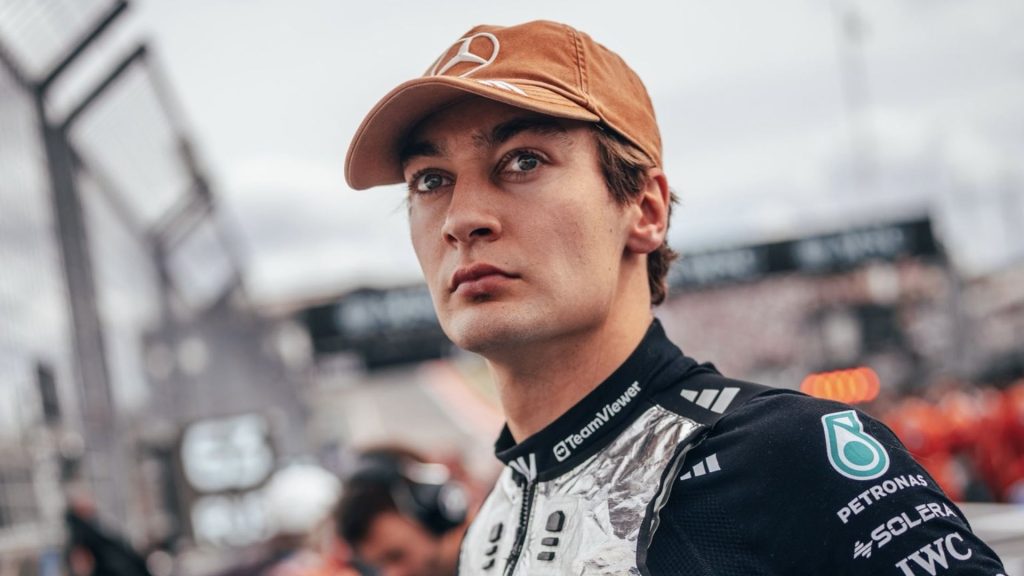
Antonelli’s victory highlights growing contrast between Mercedes teammates
The United States Grand Prix strengthened Antonelli’s position as the dominant driver of the 2026 championship.
The Italian revealed after the race that he had personally advocated Mercedes’ winning one-stop strategy, praising the team for trusting his assessment.
He also explained that the victory was particularly satisfying after a series of difficult races, during which Ferrari and Red Bull had increased the pressure on Mercedes.
Russell’s situation could hardly be more different.
While his teammate celebrated another victory, the British driver was left searching for answers about a lack of pace he could not explain.
The contrast is particularly notable because Russell has also demonstrated competitive performance during the season, including three Grand Prix victories.
Mercedes’ challenge is therefore not simply to improve its overall performance, but to understand why the two drivers have experienced such different results with the same generation of car.
The recent upgrade programme offers one possible area of investigation.
Mercedes introduced substantial aerodynamic changes at Sepang, including revisions around the sidepods, engine cover and floor.
Those developments were intended to improve performance during the final part of the championship, but the process of understanding their effects has not always been straightforward.
Antonelli himself previously described the upgraded W17 as unpredictable, underlining that both drivers have experienced difficulties with the car’s changing characteristics.
Austin provided evidence of the package’s potential through Antonelli, but Russell’s comments suggest the team still has questions to answer about consistently extracting that performance.
Russell delays Antonelli’s title but Hamilton closes to within one point
Despite his disappointing race, Russell’s eighth-place finish had an important consequence for the Drivers’ Championship.
Antonelli entered Austin with a 102-point advantage and needed victory, Russell ninth or lower and Hamilton fifth or lower to clinch the title.
The Italian completed his part by winning, but Russell collected four points for eighth and Hamilton took 12 for fourth.
As a result, Antonelli leaves Austin with 365 points, Russell has 242 and Hamilton sits third on 241.
The championship leader therefore holds a 123-point advantage over Russell, with 125 still available across the five remaining Grands Prix.
The complete standings, including the Drivers’ and Constructors’ Championships after the United States Grand Prix, confirm that only Antonelli, Russell and Hamilton remain mathematically capable of winning the title.
Although Russell delayed his teammate’s coronation, his result also allowed Hamilton to move considerably closer in the championship.
The Ferrari driver finished fourth after struggling with setup problems during the opening two stints, eventually finding a more competitive balance and overtaking Lando Norris.
Hamilton now trails Russell by just one point, while Verstappen sits fourth on 236 and Leclerc fifth on 233.
The battle for second place consequently remains extremely close, even as Antonelli approaches the World Championship.
Russell seeks answers before Mexican GP as Antonelli closes on title
Russell will have an immediate opportunity to respond when Formula 1 returns to action for the Mexican Grand Prix on November 1.
The race at Autódromo Hermanos Rodríguez presents a different technical challenge from Austin, particularly because of the circuit’s altitude and the demands it places on cooling, aerodynamic performance and tyre management.
For Russell, the priority will be understanding why his performance fell so far below expectations in Texas.
The British driver has acknowledged that the penalty cost him positions, but his most important concern is finding a more competitive balance and improving his underlying pace.
The situation also leaves his mathematical championship challenge under significant pressure.
Antonelli needs only ninth place in Mexico to clinch the title, regardless of Russell’s or Hamilton’s finishing positions.
If the Italian scores at least two points, neither rival can prevent him from becoming the youngest World Champion in Formula 1 history.
Russell must therefore focus not only on preserving his theoretical title chances but also on defending second place from Hamilton, who has reduced the gap between them to a single point.
GRANDE PRÊMIO is following the aftermath of the United States Grand Prix and the build-up to the Mexican Grand Prix, with driver reactions, technical analysis, championship updates and full coverage in its Formula 1 section.
FAQ
What did George Russell say about his pace at the United States Grand Prix?
Russell described his pace as “rubbish” and admitted he had no clear explanation for why he struggled so badly in Austin. He believes the underlying lack of speed was more serious than his five-second penalty.
How much did Russell’s five-second penalty cost him in Austin?
Russell estimated that the penalty cost him two or three finishing positions. He eventually finished eighth, collecting four championship points.
How far is Russell behind Andrea Kimi Antonelli after the United States GP?
Russell has 242 points, 123 behind Antonelli’s 365. Lewis Hamilton is third with 241, just one point behind Russell, with five Grands Prix remaining.