News Summary
- Max Verstappen admitted Red Bull chose the wrong tyres and tyre sequence for the 2026 United States Grand Prix, leaving the team committed to a two-stop strategy that proved less effective than Mercedes’ winning approach.
- The Dutchman revealed that inconsistent engine braking and gearshifts affected him throughout the weekend, making it difficult to maintain a consistent driving rhythm.
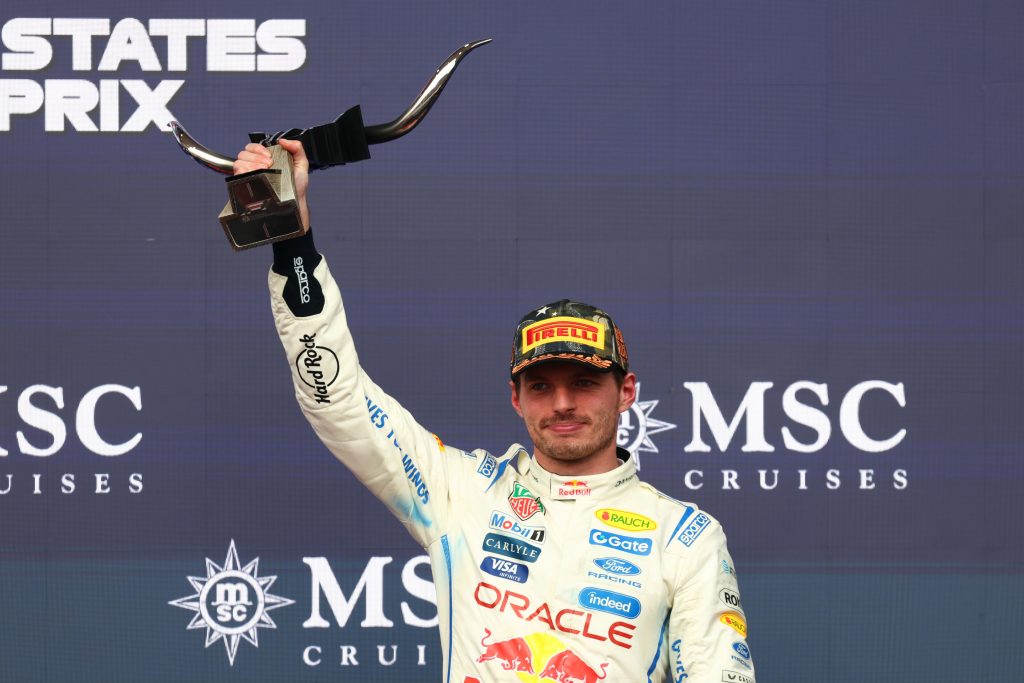
- Verstappen finished third behind Andrea Kimi Antonelli and Charles Leclerc, admitting Mercedes was too fast to beat but believing Red Bull could have finished second with better decisions.
Max Verstappen has admitted that Red Bull made the wrong tyre choices and struggled with recurring power-unit problems during the 2026 Formula 1 United States Grand Prix, contributing to his third-place finish behind Andrea Kimi Antonelli and Charles Leclerc. The Dutchman said the team’s strategy forced him into an unfavourable two-stop race, while inconsistent engine braking and gearshifts prevented him from maintaining a reliable rhythm around Circuit of The Americas.
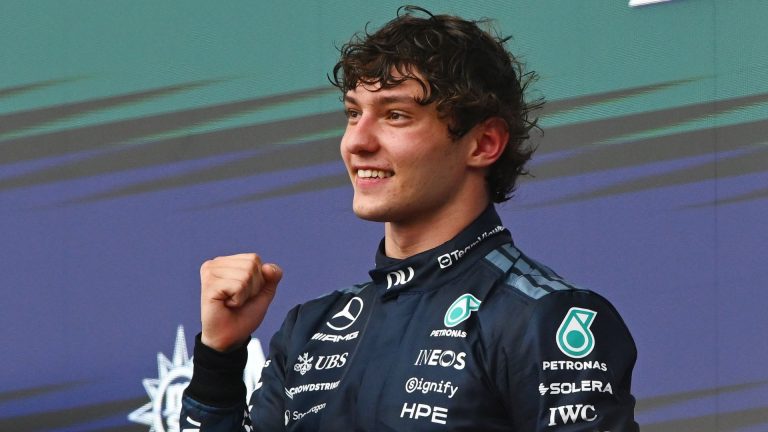
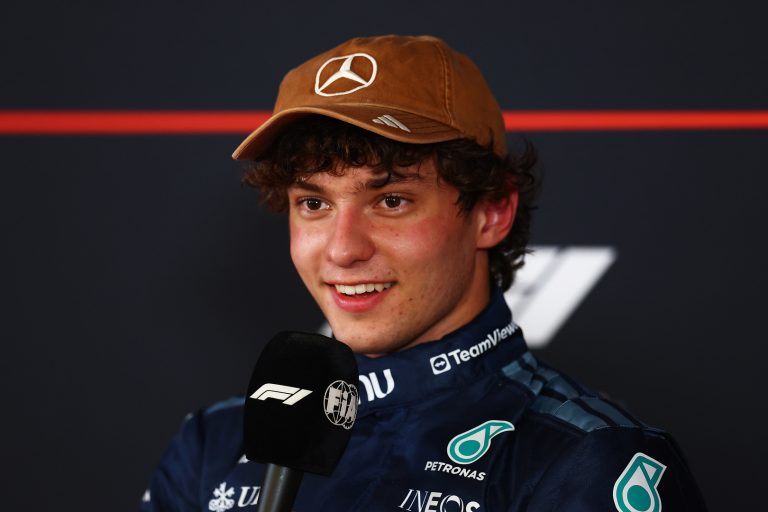
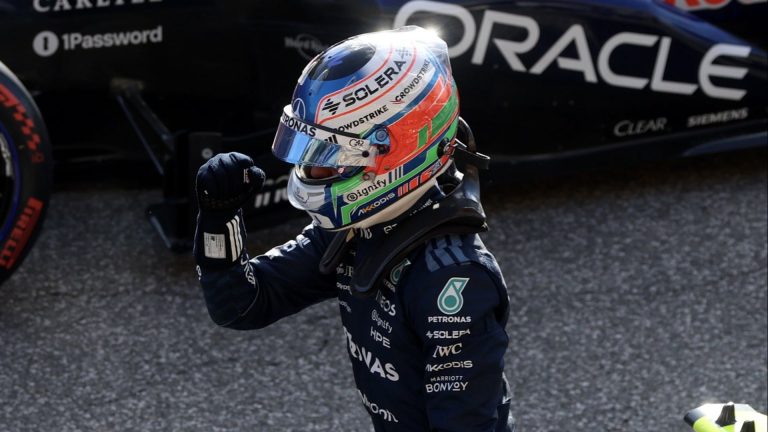
Speaking to Sky Sports F1 after Sunday’s (October 25) race, Verstappen acknowledged that Red Bull did not have the pace to beat Antonelli, who converted pole position into his ninth victory of the season. However, the four-time World Champion believed second place was achievable had the team selected its tyres differently and managed the race more effectively.
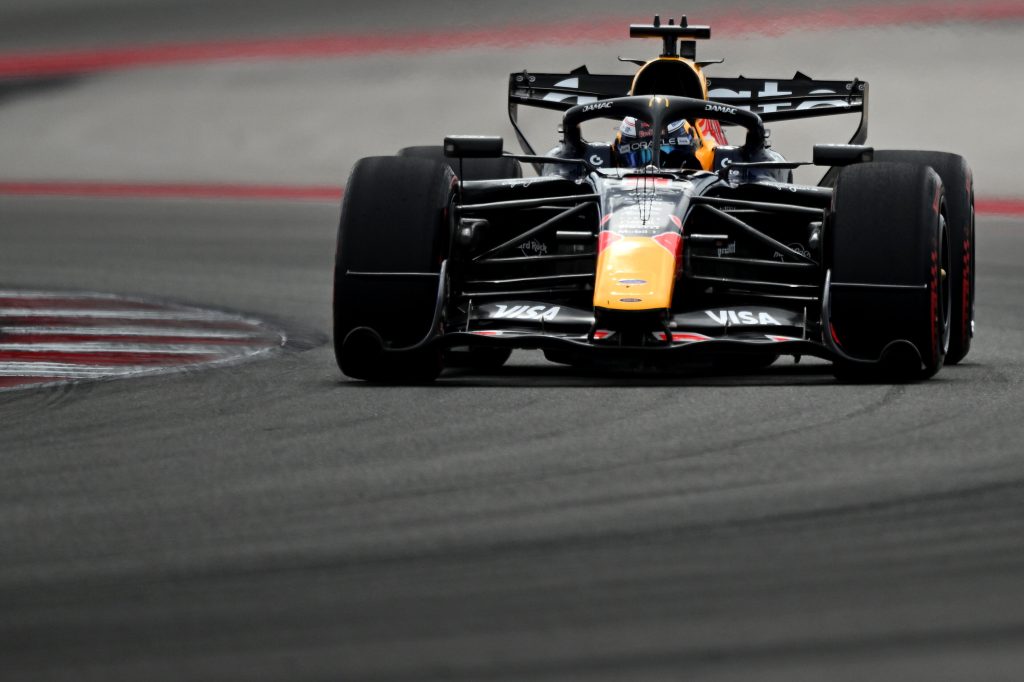
Verstappen admits Red Bull chose wrong tyres in Austin
Verstappen entered the United States Grand Prix hoping to extend Red Bull’s recent recovery after victories in Malaysia and Singapore. The team had shown encouraging pace throughout the Austin weekend, with the Dutchman qualifying second, just 0.179 seconds behind Antonelli.
However, Antonelli’s pole position had already suggested that Mercedes could overcome Red Bull’s recent advantage, particularly if the Italian could maintain control of the race from the front.
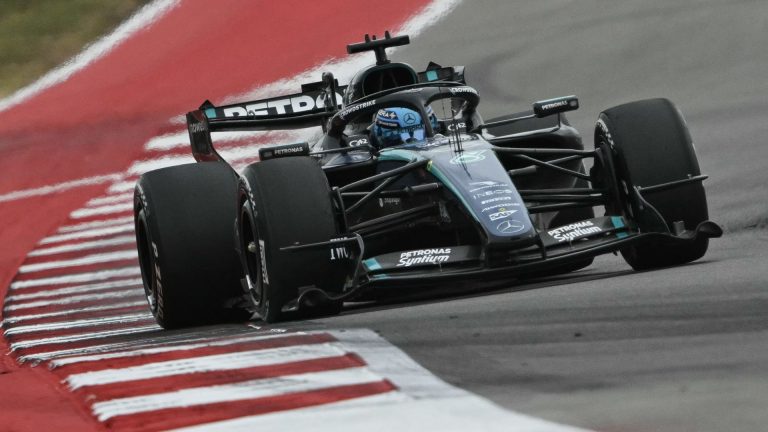
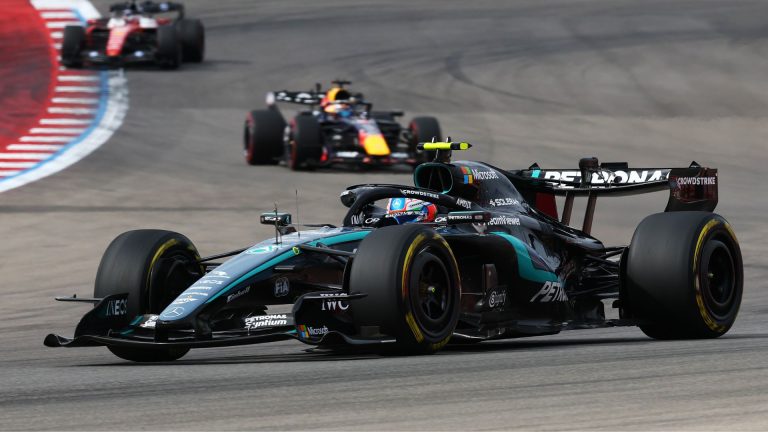
The two drivers adopted different approaches to Sunday’s Grand Prix. Verstappen started on soft tyres, hoping to exploit their stronger initial grip, while Antonelli chose mediums and focused on extending his opening stint.
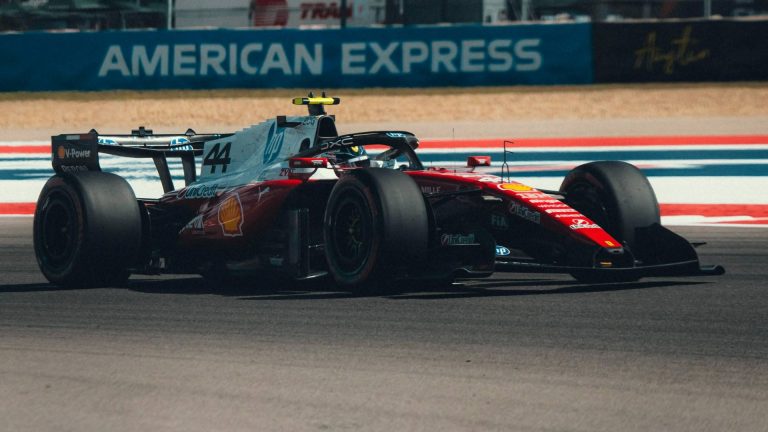
The opening moments immediately complicated Red Bull’s plan. Verstappen struggled for traction and temporarily lost second place to Ferrari’s Leclerc before recovering the position on lap two.
The Dutchman explained that the start had been affected by a familiar problem with the car.
“Just the same always in the start, the problem that we have,” Verstappen told Sky Sports F1.
But the difficulties were not limited to the opening metres. As the first stint developed, Red Bull discovered that its softer compounds were not performing as effectively as expected.
“I think, for whatever reason, the softer compounds this weekend didn’t really seem to work that well in the race for the first time in a long time,” Verstappen admitted.
“We were just on the wrong tyres. Also, I think the way that we used the tyres in the race was the wrong way around.”
The assessment suggests Red Bull’s problems extended beyond the compounds themselves. Verstappen also questioned the order in which the team used its available tyres, indicating that an alternative sequence might have allowed him to extract more performance from the car.
That decision became increasingly costly once Red Bull committed to an early first pit stop, reducing its ability to respond to Mercedes’ longer opening stint.
Red Bull’s two-stop strategy fails to match Mercedes
The strategic difference between Red Bull and Mercedes became one of the decisive elements of the race.
Verstappen made his first pit stop on lap 14, while Antonelli remained on his medium tyres and continued setting competitive times. The early stop meant Red Bull would need another tyre change before the finish.
Mercedes instead extended Antonelli’s opening stint to lap 25, when the Italian switched to hard tyres and committed to completing the remaining 31 laps without stopping again.
The approach proved successful, with Antonelli maintaining enough performance to defend his advantage while Red Bull lost time through an additional stop.
Verstappen acknowledged that his team’s tyre choices had effectively removed the possibility of following a similar strategy.
“Very quickly [we] also gave away that we had to do a two-stop,” the Dutchman explained.
His second stop came on lap 32, when Red Bull fitted medium tyres for the final stint. However, a problem during the tyre change added further time to an already difficult race.
Mercedes, meanwhile, maintained its advantage through consistent pace and tyre management.
Antonelli eventually won the United States Grand Prix with a one-stop strategy, finishing ahead of Leclerc and Verstappen.
The result reinforced the importance of the strategic questions that had surrounded the weekend. Red Bull and Ferrari had been expected to challenge Mercedes despite Antonelli’s surprise pole, but the race ultimately favoured the team that could maintain competitive pace with fewer pit stops.
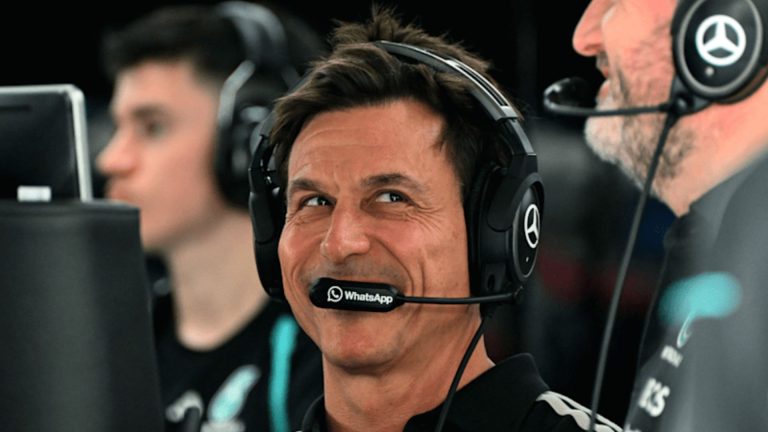
Mercedes team principal Toto Wolff later explained that the team’s simulations indicated that the one-stop strategy was approximately 8 seconds faster than the alternative. The advantage proved even greater in practice, justifying the decision not to react when Verstappen stopped early.
Verstappen reveals inconsistent engine braking and gearshifts
Beyond the tyre strategy, Verstappen identified a separate problem that had affected Red Bull throughout the United States Grand Prix weekend.
The Dutchman explained that the power unit had not delivered consistent behaviour, particularly under braking and during gear changes.
According to Verstappen, the symptoms varied between laps and even from corner to corner, making it difficult to drive the car consistently.
“Then the whole weekend already, the power unit has not been consistent,” he said.
“Lap after lap, corner after corner, I’m having different kinds of problems with my engine braking or shifts as well.”
“So I cannot be consistent. And that makes it, of course, very difficult.”
Engine braking is particularly important in Formula 1 because it affects the car’s behaviour when the driver decelerates and downshifts before entering a corner.
At Circuit of The Americas, where competitors encounter heavy braking zones, low-speed corners and rapid changes of direction, inconsistent engine-braking behaviour can make it harder to reproduce the same braking points and corner-entry speeds.
Problems with gearshift consistency can add another layer of difficulty, particularly when the driver is trying to manage traction and tyre temperatures over a long stint.
Verstappen did not identify a specific failed component, but made clear that the varying behaviour had compromised his ability to extract the car’s full performance.
The comments provide an important technical explanation for a race in which Red Bull could not maintain the momentum it had established during the preceding rounds.
Although the Dutchman remained competitive enough to finish on the podium, the combination of inconsistent power-unit behaviour and an ineffective tyre strategy prevented him from sustaining a serious challenge to Antonelli.
Verstappen admits Antonelli was too fast but believes second was possible
Despite identifying several problems with Red Bull’s race execution, Verstappen did not attempt to portray victory as an opportunity lost solely through strategic mistakes.
Instead, he acknowledged that Mercedes had the stronger package in Austin, with Antonelli demonstrating a level of performance Red Bull could not match.
However, the Dutchman believes a better strategy would have allowed him to defend second place against Leclerc.
“Even if we would have done the tyres in the right order or chosen the right compounds, I don’t think we had the pace of Kimi,” Verstappen admitted.
“But maybe we could have been second.”
The assessment reflects the final stages of the Grand Prix, when Leclerc used Ferrari’s alternative strategy to close the gap to the Red Bull.
The Monegasque had also committed to two stops but switched to hard tyres for the final stint, allowing him to maintain stronger pace as the race approached its conclusion.
Leclerc eventually overtook Verstappen on lap 49, securing second place and completing a strong recovery after Ferrari had failed to convert its impressive practice performance into pole position.
The result was particularly encouraging for the Scuderia, which had dominated the final practice session with Lewis Hamilton ahead of Verstappen.
Hamilton also recovered to fourth after passing Lando Norris, giving Ferrari two cars inside the top four.
Verstappen finished third, securing 15 championship points, but was unable to prevent Leclerc from reducing the gap between them in the Drivers’ Championship to just three points.
The result also ended Red Bull’s recent winning sequence, with Mercedes returning to the top step of the podium through Antonelli.
Red Bull has work to do despite another podium
Although Verstappen was disappointed by the missed opportunity to finish second, he acknowledged that a podium remained a positive result given the circumstances.
The Dutchman had demonstrated strong pace throughout the weekend and secured a front-row starting position, reinforcing Red Bull’s improvement over the second half of the season.
However, Sunday’s race exposed weaknesses that the team must address before the championship moves to Mexico City.
The start remains one concern, particularly with Verstappen indicating that the same problem continues to affect Red Bull’s launches.
The inconsistent power-unit behaviour represents another area requiring investigation, while the tyre strategy raises questions about how effectively the team interpreted degradation and compound performance in Austin.
Verstappen acknowledged that the weekend provided important lessons.
“This was a weekend probably where we have a few things to understand and learn from, but still a podium, which we take.”
The result leaves the Dutchman fourth in the Drivers’ Championship with 236 points, three ahead of Leclerc and five behind Hamilton.
The Mercedes driver now has 365 points, 129 more than Verstappen, with only 125 available across the final five Grands Prix.
Although the championship is no longer within his reach, Verstappen remains involved in the battle for the leading positions behind Antonelli, particularly against Hamilton and Leclerc.
The Constructors’ Championship also provides Red Bull with an important objective. The team leaves Austin level with McLaren on 355 points, making their contest one of the closest among the leading manufacturers.
Mexico offers Red Bull opportunity to solve Austin problems
The next round takes place at Autódromo Hermanos Rodríguez in Mexico City on November 1, giving Red Bull an immediate opportunity to address the issues identified by Verstappen.
The Mexican circuit presents a different technical challenge from Austin because of its high altitude, which affects engine performance, cooling requirements and aerodynamic efficiency.
The consistency of the power unit will therefore be an important area of attention, particularly after Verstappen’s complaints about engine braking and gearshifts throughout the United States Grand Prix weekend.
Red Bull will also need to reassess its tyre strategy after the softer compounds failed to deliver the expected race performance in Austin.
For Antonelli, Mexico represents an opportunity to secure his first World Championship. The Italian needs only a ninth-place finish to become champion, regardless of where George Russell and Hamilton finish.
Verstappen, meanwhile, will focus on recovering the competitiveness that delivered victories in Malaysia and Singapore, with the aim of returning to the fight for victory after a weekend in which he acknowledged that Red Bull had fallen short of Mercedes’ pace.
GRANDE PRÊMIO is following the aftermath of the United States Grand Prix and the build-up to the Mexican Grand Prix, with driver reactions, technical analysis, breaking news and full coverage in its Formula 1 section.
FAQ
What problems did Max Verstappen have at the United States Grand Prix?
Verstappen reported recurring problems with engine braking and gearshifts, saying the power unit behaved inconsistently throughout the weekend. He also criticised Red Bull’s tyre choices and strategy, which committed him to two pit stops.
Did Verstappen believe he could have beaten Andrea Kimi Antonelli in Austin?
No. Verstappen admitted Red Bull did not have the pace to defeat Antonelli, even with a better tyre strategy. However, he believed second place was possible instead of third.
Where did Verstappen finish the 2026 United States Grand Prix?
Verstappen finished third for Red Bull, behind race winner Andrea Kimi Antonelli and Ferrari’s Charles Leclerc. He collected 15 championship points, taking his total to 236.