News Summary
- George Russell says he personally proposed comparing Mercedes’ old and new W17 packages before his engine failure at Sepang.
- Russell will race the previous aerodynamic specification in Singapore, while Kimi Antonelli retains the upgrade introduced in Malaysia.
- Mercedes wants to determine whether its latest package delivered the expected improvement after an unexpectedly difficult weekend at Sepang.
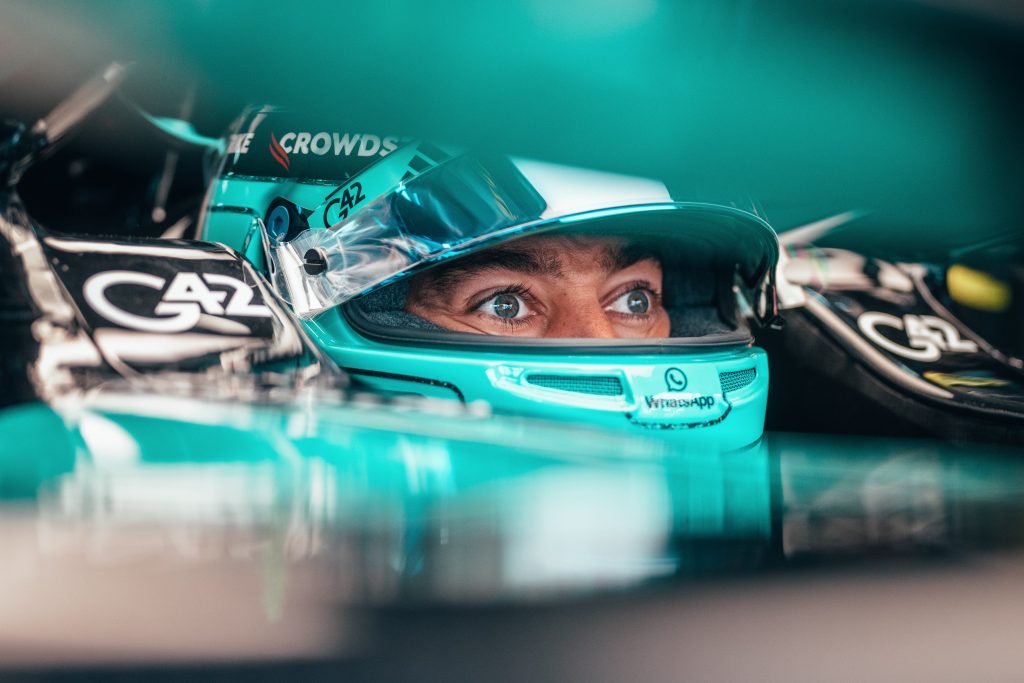
George Russell has revealed that he personally pushed Mercedes to compare its old and new W17 specifications before the engine failure that compromised his Singapore GP, with the team now deciding to run different aerodynamic packages on its two cars at Marina Bay.
Russell will return to the specification he used to dominate the Azerbaijan GP, while championship leader Kimi Antonelli will continue with the major upgrade introduced at Sepang. Mercedes expected the new package to deliver approximately 0.3s per lap, but its disappointing performance in Malaysia left the team uncertain about the actual improvement.
The decision also coincides with Russell’s power-unit penalty, which will send him to the back of the grid for Sunday’s Grand Prix. However, the Briton explained that the idea of comparing specifications had already been discussed before his retirement in Malaysia.
Russell says he proposed the comparison before Sepang
Russell confirmed that the decision was not simply a reaction to his engine failure, which occurred five laps from the finish while he was running third.
“Actually I instigated the conversation prior to the race on Sunday,” Russell said.
The Mercedes driver explained that the team had been divided over whether to conduct the experiment, but his unexpected power-unit penalty made the decision considerably easier.
“So when the failure happened, it was kind of a no-brainer, because we were kind of 50-50 about it pre-race and I was more in favour of doing it.”
Russell also stressed that Mercedes has not established that its latest aerodynamic package is worse. The team’s performance had already varied considerably between circuits before the update was introduced.
At Baku, Russell took pole by approximately eight tenths and won the race, but the same previous specification had been considerably less competitive at Budapest.
The Briton believes Sepang’s characteristics may explain much of Mercedes’ disappointing performance, rather than a fundamental problem with the new components.

Antonelli believes Mercedes should not abandon its upgrade
While Russell returns to the older package, Antonelli will continue developing the updated W17.
The championship leader believes the new specification offers genuine performance improvements, even though Mercedes struggled to demonstrate them in Malaysia.
“I think there’s an actual improvement. It’s just we didn’t quite see it in Sepang,” Antonelli said.
The Italian hopes Singapore will provide a clearer understanding of the package, particularly after the unusual track conditions at Sepang complicated Mercedes’ analysis.
Antonelli also defended the work invested in the upgrade, arguing that abandoning it after one difficult weekend would be premature.
“We really want to understand this new package and try to extract the maximum out of it because the team has done a tremendous job.”
The decision gives Mercedes a direct comparison between the previous specification and its latest aerodynamic development, with the two drivers using different configurations on the same circuit.
As GRANDE PRÊMIO detailed after Sepang, the upgrade included significant changes to the floor, sidepods and rear bodywork, making its performance difficult to isolate from circuit-specific factors.
Russell returns to the car that won in Baku
Russell’s previous specification has already demonstrated its competitiveness.
The Briton dominated qualifying at Baku before converting pole into victory, but Mercedes subsequently struggled at Sepang despite introducing its most substantial aerodynamic package of the final phase of the season.
Russell believes the comparison is particularly valuable because the previous W17 configuration is already well understood by the team.
He also noted that the engine penalty makes Singapore an appropriate opportunity to gather information, as his prospects of fighting for a podium from the back of the grid are limited.
The decision does not mean Mercedes has abandoned its development programme. Instead, the team will use the two specifications to establish whether the performance differences are caused by the aerodynamic package, circuit characteristics or the interaction between the car and its tyres.
Singapore sprint leaves Mercedes little time to compare cars
The experiment will take place during one of the most compressed weekends of the season.
Singapore hosts a sprint for the first time in 2026, meaning Mercedes has only one free-practice session on Friday before sprint qualifying. Both cars must therefore provide useful comparative data almost immediately.
The circuit also presents a different technical challenge from Sepang. Marina Bay places greater emphasis on low-speed performance, traction and mechanical grip, potentially helping Mercedes identify whether the upgrade has addressed weaknesses in those areas.
Russell’s grid penalty creates another complication. His engine failure at Sepang exhausted his permitted allocation, and the Briton has acknowledged that another power-unit penalty may be necessary before the end of the championship.
Antonelli, meanwhile, arrives in Singapore with 320 points and an 84-point advantage over Russell, placing him in a strong position as the title fight approaches its decisive phase.
The Singapore GP begins with FP1 and sprint qualifying on Friday, October 9, followed by Saturday’s sprint and Sunday’s Grand Prix. GRANDE PRÊMIO follows all the latest Formula 1 news throughout the Singapore GP weekend.
F1 today: FAQ
What time is the 2026 Singapore GP?
The Singapore GP starts at 20:00 local time on Sunday, October 11. That is 13:00 in the UK, 08:00 ET in the US and Canada and 17:30 in India. Singapore is a sprint weekend, with sprint qualifying on Friday and the sprint on Saturday.
Why does George Russell have a grid penalty in Singapore?
Russell has exhausted his permitted allocation of four engines after suffering a power-unit failure at Sepang. Mercedes must introduce another unit, triggering a grid penalty for Sunday’s Grand Prix. The penalty does not apply to Saturday’s sprint.
Can Kimi Antonelli win the F1 championship in Singapore?
No. Antonelli leads Russell by 84 points, 320 to 236, but cannot mathematically secure the 2026 title in Singapore. His first opportunity to become world champion comes at the United States GP in Austin.
Why is George Russell using the old Mercedes car in Singapore?
Russell proposed comparing the previous W17 aerodynamic specification with the latest upgrade. His engine penalty made the expe
The Briton stressed, however, that the older car should not be regarded as a major step backward. It is the same specification Mercedes used in recent races, including Baku, where Russell took pole position by 0s8 and achieved his first Grand Slam, winning the race after leading every lap and setting the fastest lap.
“Actually I instigated the conversation prior to the race on Sunday in Sepang,” Russell said. “When the failure happened it was kind of a no-brainer. This engine penalty this weekend has given us a good opportunity to roll back, it’s the car that I won in Baku with,” he said.
The Briton pointed to the large variations in performance Mercedes had already experienced with the same specification at different circuits, arguing that the team has reason to believe the difficulties in Malaysia were track-specific.
“When you look at the pace of Red Bull as well, they clearly overperformed compared to where they’ve been this season,” Russell said. “When you look at our pace compared to McLaren and Ferrari, it wasn’t too dissimilar.”
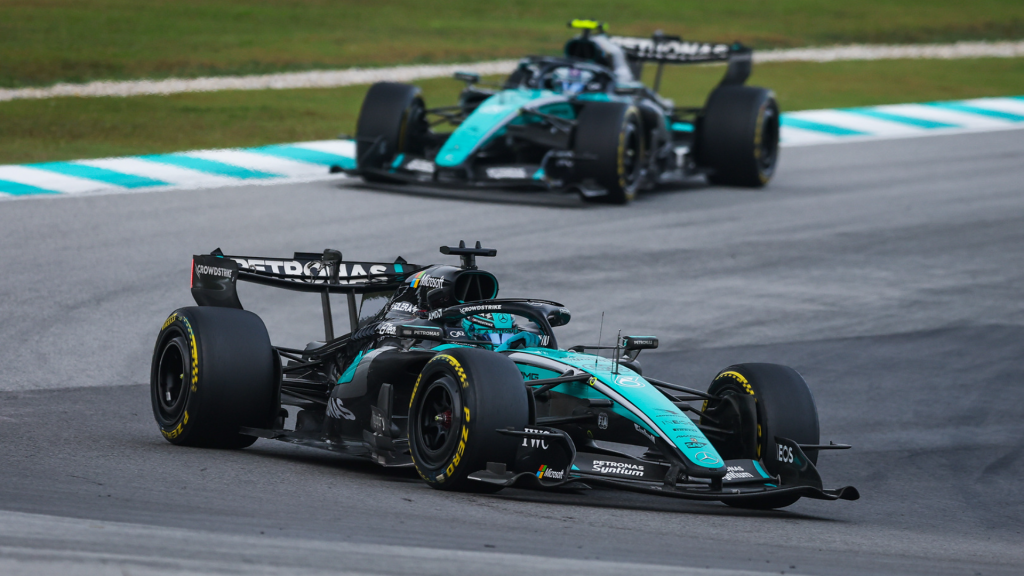
Sprint weekend leaves Mercedes with little time to compare specifications
The comparison is particularly valuable because Singapore’s Marina Bay circuit places a much greater emphasis on low-speed performance — an area where Mercedes struggled in Malaysia. But it also represents a risk.
The sprint weekend leaves the team with very little time to gather data. Singapore will feature only one free practice session before sprint qualifying, increasing the risk of drawing conclusions from an incomplete data set and potentially compromising Mercedes’ development direction for the remaining races.
F1 today: FAQ
What time is the 2026 Singapore GP?
The Singapore GP starts at 20:00 local time on Sunday, October 11. That is 13:00 in the UK, 08:00 ET in the US and Canada and 17:30 in India. Singapore is a sprint weekend, with sprint qualifying on Friday and the sprint on Saturday.
Why does George Russell have a grid penalty in Singapore?
Russell has exhausted his permitted allocation of four engines after suffering a power-unit failure at Sepang. Mercedes must introduce another unit, triggering a grid penalty for Sunday’s Grand Prix. The penalty does not apply to Saturday’s sprint.
Can Kimi Antonelli win the F1 championship in Singapore?
No. Antonelli leads Russell by 84 points, 320 to 236, but cannot mathematically secure the 2026 title in Singapore. His first opportunity to become world champion comes at the United States GP in Austin.