News Summary
- Ferrari has led all three practice sessions at Circuit of The Americas, with Charles Leclerc fastest on Friday and Lewis Hamilton topping FP3 with a 1:34.893.
- Ferrari has not secured a Grand Prix pole position in the first 17 rounds of 2026, despite winning twice and producing competitive race performances.
- Max Verstappen finished just 0.168s behind Hamilton in FP3, with Leclerc third and Kimi Antonelli fourth, leaving three manufacturers separated by only 0.303s.
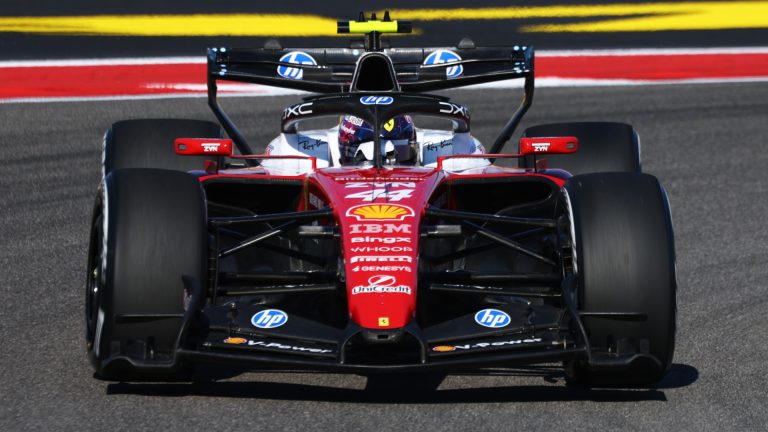
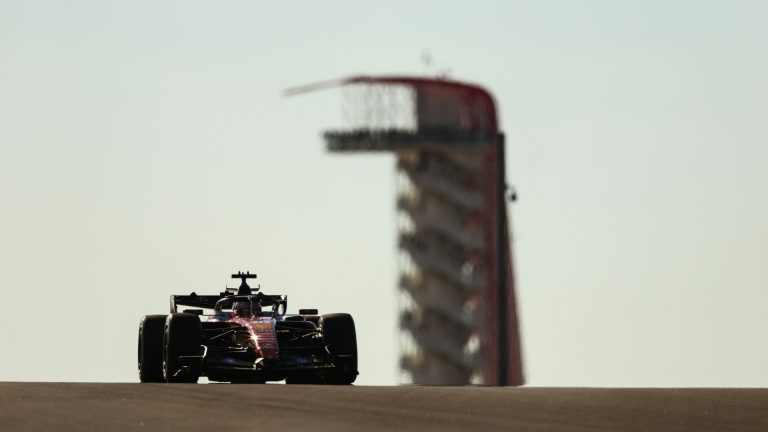
Ferrari will enter qualifying for the 2026 United States Grand Prix with perhaps its clearest opportunity yet to claim a first pole position of the season. The Italian manufacturer has topped every practice session at Circuit of The Americas, with Charles Leclerc leading both Friday sessions and Lewis Hamilton setting the benchmark on Saturday. Yet the margins suggest that Red Bull and Mercedes remain capable of preventing Ferrari from converting its practice dominance into the front row.
Hamilton’s 1:34.893 in FP3 was the fastest lap of the weekend, leaving Max Verstappen 0.168s behind. Leclerc completed the top three, 0.234s off his teammate, while championship leader Kimi Antonelli finished fourth, just 0.303s from the Ferrari.
George Russell was fifth, and Oscar Piastri completed the top six for McLaren.
The results mark the first time this weekend that Hamilton has finished ahead of Leclerc, establishing both Ferrari drivers among the principal contenders for pole.
But there is a reason why the question remains open: Ferrari has already demonstrated that it can win races in 2026 without being the fastest team in qualifying. What it has not managed is to complete a Saturday with the outright best lap.
Ferrari has two wins in 2026 — but no pole positions
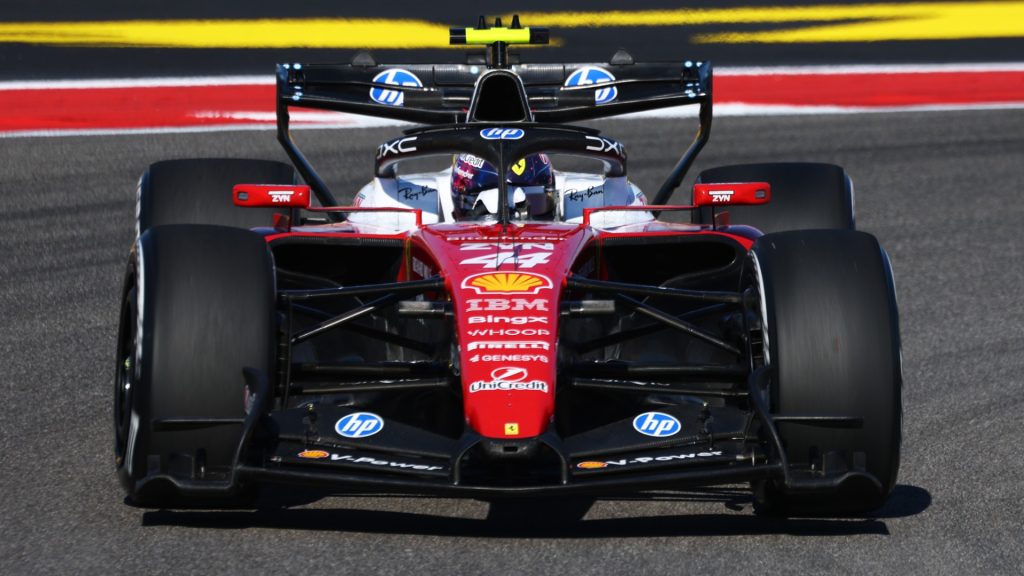
Ferrari entered the United States Grand Prix with two victories from the first 17 races.
Hamilton delivered his first victory for the manufacturer at the Spanish Grand Prix, while Leclerc won the British Grand Prix at Silverstone.
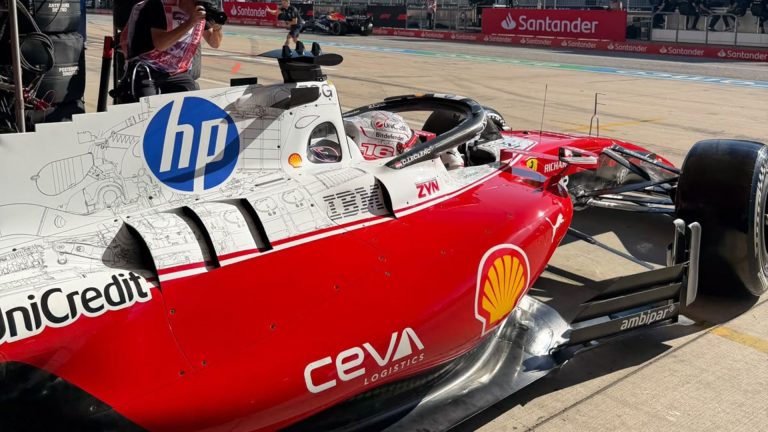
Those results established that the SF-26 is capable of winning when race pace, strategy and circumstances favour the Italian team.
However, neither driver has secured a Grand Prix pole position in 2026.
The team has frequently been competitive during practice without converting that speed into the fastest qualifying lap.
Leclerc and Hamilton have also been closely matched against one another throughout the championship. Ahead of Austin, Leclerc leads their qualifying head-to-head by nine sessions to eight.
The lack of a pole is particularly striking given Ferrari’s history in Formula 1.
The manufacturer has accumulated more than 250 pole positions across its championship history, and both current drivers have established records as successful qualifiers.
Hamilton has also claimed four poles at Circuit of The Americas during his career, while Leclerc has previously started near the front and won the United States Grand Prix in 2024.
Austin therefore offers Ferrari an opportunity to end a drought that has continued despite its improved competitiveness during the second half of the season.
Three practice sessions provide stronger evidence than Friday alone
Leclerc’s pace on Friday suggested that Ferrari had arrived in Austin with a competitive aerodynamic package.
The Monegasque led FP1 with a 1:36.052, beating Verstappen by 0.084s. He then improved to 1:35.291 during FP2, when Antonelli closed to within 0.042s.
Hamilton had been less comfortable with the SF-26, finishing sixth in the opening session and fourth in the afternoon.
The seven-time world champion acknowledged that Ferrari had experimented with set-up changes that made the car difficult to manage over the bumps.
His performance on Saturday changed the picture.
Hamilton improved to 1:34.893, becoming the first driver to break the 1min35s barrier during the weekend.
Leclerc finished third with a 1:35.127, ensuring that both Ferrari drivers remained among the strongest contenders.
| Session | Fastest driver | Team | Best lap |
|---|---|---|---|
| FP1 | C. LECLERC | Ferrari | 1:36.052 |
| FP2 | C. LECLERC | Ferrari | 1:35.291 |
| FP3 | L. HAMILTON | Ferrari | 1:34.893 |
The progression across the sessions is significant, although the raw lap times cannot be compared without considering track evolution, tyre condition and fuel loads.
The important point is that Ferrari has remained at the front as the weekend progressed, rather than producing an isolated fast lap under favourable conditions.
For Hamilton, the improvement also suggests that the team has found a more competitive direction after his complaints about the balance on Friday.
Verstappen remains Ferrari’s biggest immediate threat
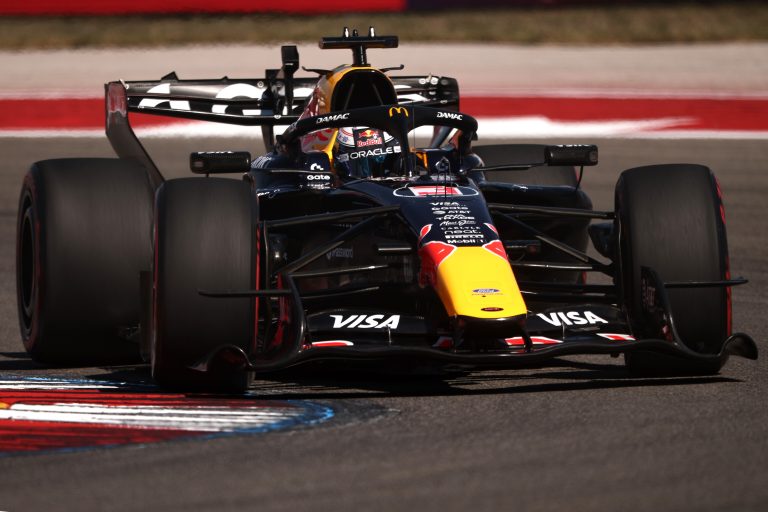
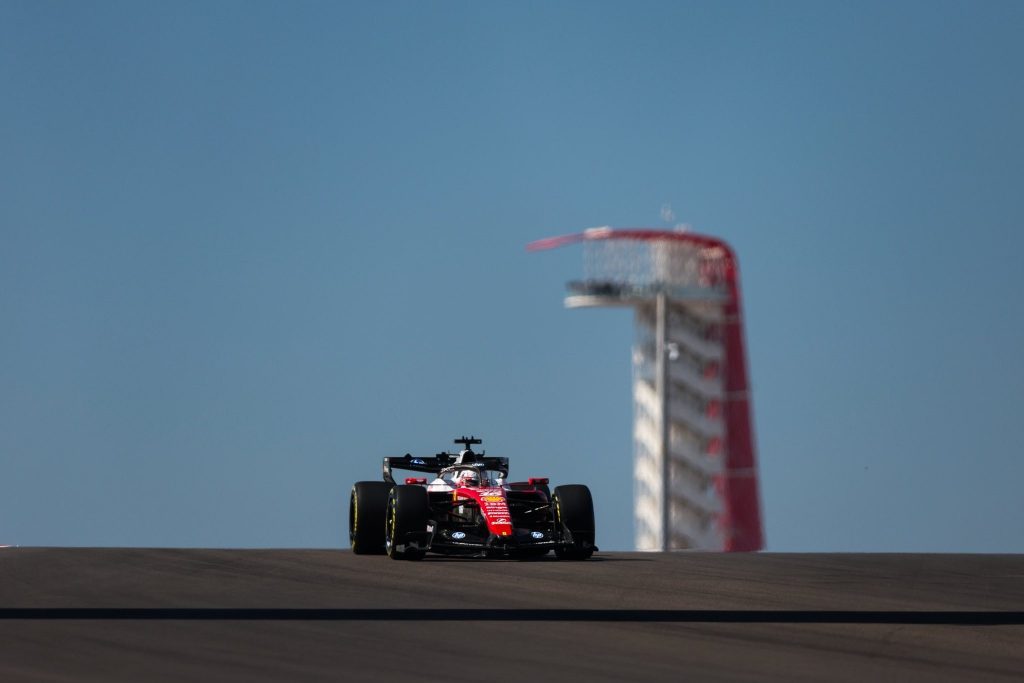
Ferrari’s strongest challenge may come from Verstappen.
The Dutchman finished second in FP1, third in FP2 and second again in FP3, remaining consistently within reach of the leading Ferrari.
His final-practice time of 1:35.061 was only 0.168s behind Hamilton.
Red Bull has also demonstrated improved competitiveness across circuits with different characteristics, winning the Malaysian and Singapore Grands Prix before arriving in Austin.
The RB22 has become more competitive following development work aimed at improving its balance and aerodynamic performance.
Verstappen’s pace during Friday’s longer runs suggested that Red Bull could also challenge Ferrari during Sunday’s race, not merely over a single lap.
The Dutchman nevertheless experienced problems during final practice.
He complained angrily over team radio about the RB22’s gearshifts, questioning why they were behaving so poorly.
The precise technical cause of the complaint has not been established, and the radio message does not by itself confirm a mechanical gearbox failure.
Red Bull had also experienced steering difficulties during FP1, which technical director Pierre Waché said were subsequently resolved.
The team’s challenge will therefore involve combining the outright performance available from the car with consistent behaviour through Austin’s demanding corners.
Even with those concerns, Verstappen remained close enough to Hamilton in FP3 to be considered a serious contender for pole.

Antonelli could overturn Ferrari’s advantage with one clean lap
Mercedes presents another significant obstacle.
Antonelli finished second in FP2, just 0.042s behind Leclerc, after the team improved the balance of the W17 between Friday’s sessions.
The Italian remained competitive in FP3, taking fourth place with a 1:35.196.
His deficit of 0.303s to Hamilton is larger than the difference recorded on Friday, but it does not eliminate Mercedes from contention.
Antonelli and Russell have been developing the latest W17 aerodynamic package, which required adjustments after both drivers initially complained about braking and corner-entry behaviour.
Mercedes subsequently found a more effective operating window.
Antonelli said the changes had produced an important improvement.
“We were able to improve that for FP2 though and we took a good step forward,” he explained after Friday’s running.
The championship leader also acknowledged that Mercedes still needed additional performance to challenge for victory.
“We will now pick through the data overnight and see if we can take another step.”
Russell also believed his Friday qualifying simulation had not shown the car’s full potential.
He lost one lap to track limits and experienced a major moment in the first sector on another attempt.
Both Mercedes drivers therefore entered Saturday with reasons to believe more performance was available.
Antonelli’s fourth place in FP3 keeps him close enough to Ferrari to remain a threat if he produces a clean Q3 lap.
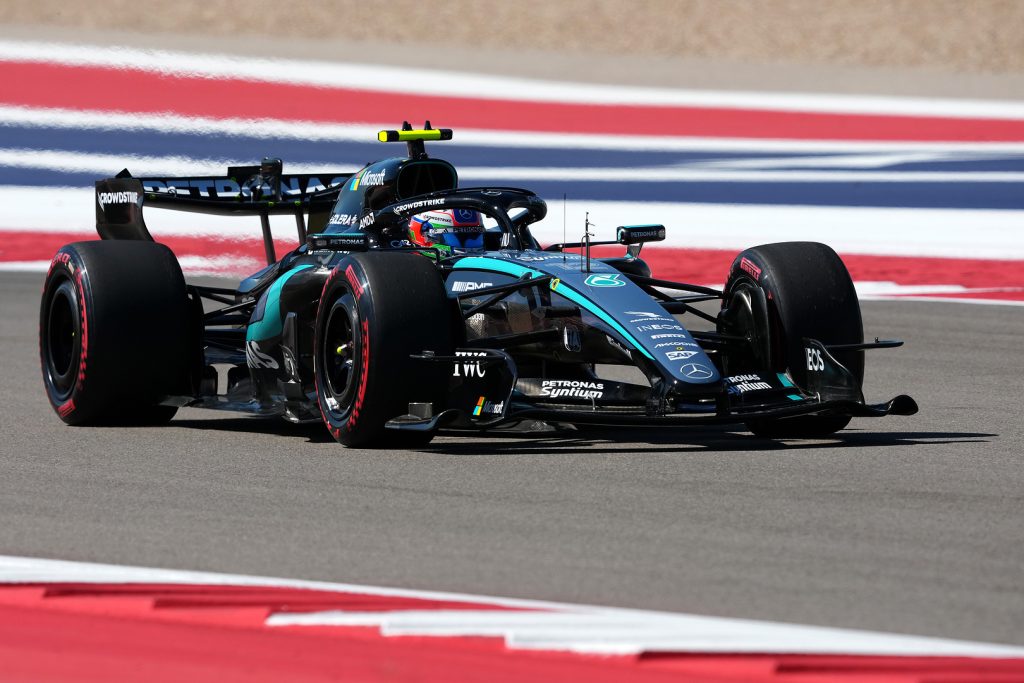
Track limits may decide who actually takes pole
One of the main difficulties throughout the weekend has been staying within the track limits.
Circuit of The Americas combines high-speed direction changes with several corners where drivers can gain time by allowing the car to run wide.
The final sector has proved particularly challenging, with drivers frequently exceeding the white lines as they attempt to maintain speed.
Leclerc, Verstappen, Antonelli and Russell have all had competitive laps affected by track-limits infringements during the weekend.
The problem was again evident in FP3, when Leclerc lost a fast lap after exceeding the limits at Turn 12.
Hamilton, by contrast, completed his fastest lap without an infringement.
That distinction could become decisive during qualifying.
A driver may possess the fastest car over a theoretical lap but lose the result by exceeding the track limits at a single corner.
The challenge is heightened by the circuit’s uneven surface, which makes braking and corner-entry behaviour more difficult to predict.
Norris and Verstappen had already criticised the bumps ahead of the weekend.
The McLaren driver questioned whether the surface would meet the standards applied to newly constructed circuits and described the physical discomfort caused by repeated impacts.
The complaints from Norris and Verstappen about Austin’s bumpy circuit explain the driving difficulties that could influence qualifying.
Does Ferrari’s upgraded floor make it the outright favourite?
Ferrari introduced aerodynamic changes at Austin intended to improve the SF-26’s balance and efficiency.
The developments appear to have provided a competitive foundation, particularly through the slower corners where the Italian team has demonstrated strong performance.
However, Leclerc himself warned against interpreting the Friday results as proof that Ferrari had established a clear advantage.
“The feeling in the car was quite good. Our upgrades worked as expected,” he said.
The Monegasque nevertheless cautioned that Ferrari’s rivals had more performance to extract.
“Kimi and Max already look very strong, and they’ll definitely be up there in qualifying,” Leclerc added.
His assessment remains consistent with Saturday’s final practice result.
Verstappen finished second, Antonelli fourth and Russell fifth, all within half a second of Hamilton.
Ferrari has shown competitive speed on different tyre runs and through all three practice sessions, but the differences remain small enough for set-up changes and execution to influence the result.
McLaren is also not completely out of contention.
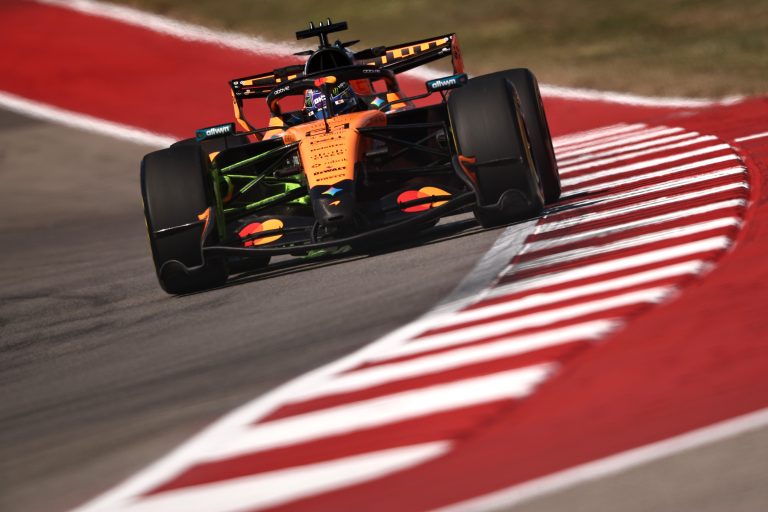
Piastri finished sixth in FP3, while Norris was eighth. The team has struggled to complete clean qualifying simulations, but its technical staff believe the MCL40 is more competitive than some of its Friday positions suggest.
The fastest driver in qualifying may therefore be decided by a combination of tyre preparation, confidence over the bumps and the ability to execute a clean final lap.
Is Hamilton or Leclerc Ferrari’s strongest pole candidate?
The internal Ferrari battle is another important feature of the weekend.
Leclerc was the team’s fastest driver throughout Friday, leading both sessions and demonstrating immediate confidence with the updated SF-26.
Hamilton, however, reversed their positions in FP3.
The Briton’s 1:34.893 was 0.234s faster than his teammate’s best lap and represented his strongest performance of the weekend.
Both drivers therefore have credible arguments for being Ferrari’s leading contender.
Leclerc has demonstrated consistency across more sessions, while Hamilton arrives at qualifying with the most recent benchmark and evidence that his set-up difficulties have been reduced.
The Briton’s previous success in Austin also provides relevant experience at a circuit where small mistakes can have significant consequences.
However, qualifying performance will depend on the final adjustments to the cars and the condition of the tyres during Q3.
There is no reliable basis for declaring one Ferrari driver certain to beat the other.
Ferrari is a favourite — but Austin has not produced a clear frontrunner
The evidence from the first three sessions places Ferrari in a stronger position than at any previous qualifying weekend of 2026.
Leclerc led Friday’s running, Hamilton took over in FP3 and both drivers have shown the pace to fight near the front.
Ferrari’s improved package has also performed competitively across the different sections of Circuit of The Americas.
But Verstappen has stayed within two-tenths of the fastest Ferrari in the most recent session, while Antonelli demonstrated on Friday that Mercedes can challenge for the best lap.
That makes Ferrari a leading candidate for pole position rather than an uncontested favourite.
The most important change is that the team’s opportunity is supported by three consecutive sessions of competitive performance, not just a strong opening practice result.
Whether that is enough to deliver its first Grand Prix pole of 2026 will be decided when the drivers begin their final qualifying runs.
When is United States GP qualifying?
Qualifying begins on Saturday, October 24, at 16:00 local time in Austin.
| Market | Start time |
|---|---|
| Austin (CDT) | Saturday, 16:00 |
| New York (EDT) | Saturday, 17:00 |
| Los Angeles (PDT) | Saturday, 14:00 |
| United Kingdom (BST) | Saturday, 22:00 |
| India (IST) | Sunday, 02:30 |
| Melbourne (AEDT) | Sunday, 08:00 |
| Brasília (BRT) | Saturday, 18:00 |
The complete broadcast information is available in the United States Grand Prix qualifying start times and live TV guide.
GRANDE PRÊMIO is following every session of the United States Grand Prix at Circuit of The Americas this weekend, with breaking news, full coverage and real-time updates in its Formula 1 section.