News Summary
- Charles Leclerc has won nine Grands Prix across eight seasons at Ferrari but has yet to win a world championship.
- His Las Vegas collision with Lewis Hamilton follows previous incidents involving Sebastian Vettel, Carlos Sainz and Hamilton himself.
- Ferrari must now weigh Leclerc’s considerable speed against his record of costly mistakes, recurring internal tensions and failure to deliver a title.
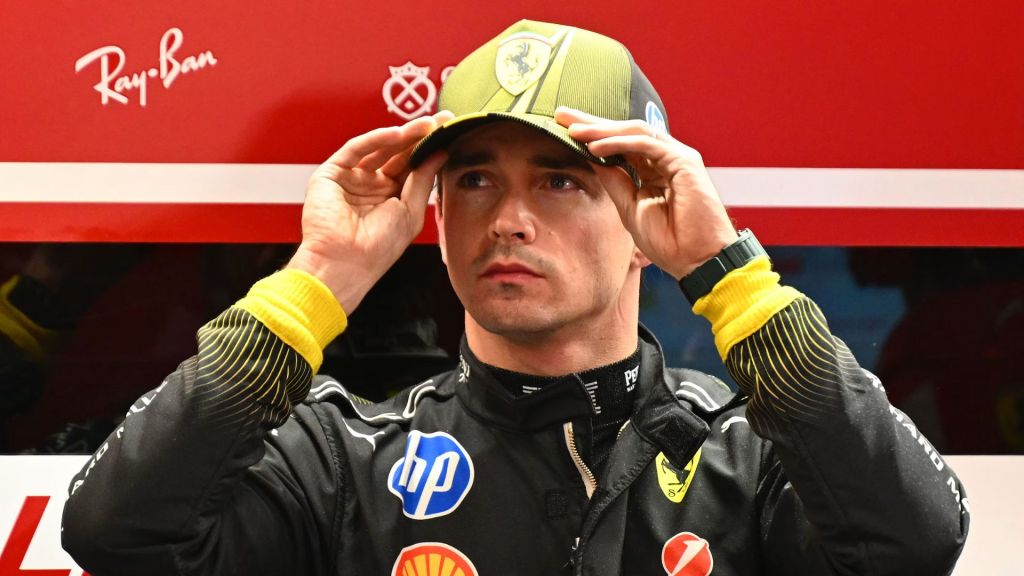
Eight years should be enough for Ferrari to know whether Charles Leclerc is the driver who can lead the team back to a Formula 1 world championship. Nine victories, no titles and another collision with a teammate suggest the answer is becoming increasingly uncomfortable.
Leclerc’s speed is beyond dispute. His qualifying performances, race victories and ability to extract results from uncompetitive machinery have repeatedly justified Ferrari’s faith.
But speed alone does not deliver championships. Neither does potential, especially after eight seasons.
The latest collision with Lewis Hamilton in Las Vegas exposed a problem that goes beyond one poorly judged overtake: Ferrari has repeatedly failed to prevent Leclerc’s internal rivalries from damaging the team.
And the driver himself has repeatedly played a part.
Nine victories in eight years: Is that enough?
Leclerc arrived at Ferrari in 2019 as one of Formula 1’s most promising talents. He immediately challenged Sebastian Vettel, won twice during his debut season and established himself as the team’s long-term investment.
Eight seasons later, he has nine Grand Prix victories and one championship runner-up finish, achieved in 2022.
That is a modest return for a driver whose career has been built around the expectation of becoming Ferrari’s next world champion.
Responsibility cannot rest entirely with Leclerc. Ferrari has repeatedly produced cars that lacked the consistency to fight for titles, while strategic mistakes, reliability failures and development problems have cost valuable opportunities.
But those shortcomings do not remove the driver’s responsibility to maximise the machinery available or avoid preventable mistakes.
The comparison with his teammates also matters. Leclerc has frequently demonstrated greater outright speed, yet Ferrari’s internal battles have too often become a distraction rather than an advantage.
After eight seasons, the question is no longer whether he possesses championship-winning talent. It is whether he has demonstrated the consistency, judgement and leadership required to convert that talent into a title.
Vettel, Sainz and Hamilton: The pattern Ferrari cannot ignore
Leclerc’s history of teammate disputes began with Vettel.
At the 2019 Brazilian Grand Prix, the pair collided and both retired. The stewards declined to assign predominant blame, but Ferrari lost two cars because its drivers could not manage their battle.
The following season, Leclerc caused a first-lap collision with Vettel at the Styrian Grand Prix. Both retired, and the Monegasque accepted responsibility.
With Carlos Sainz, tensions continued. Contact at the 2024 Spanish Grand Prix prompted public criticism between the teammates, while their dispute in Las Vegas later that year exposed disagreement over racing conduct and team instructions.
Neither incident can simply be equated with the Vettel collisions. Nevertheless, the arrival of different teammates did not eliminate Ferrari’s recurring internal friction.
Hamilton’s arrival was supposed to provide a new balance.
Instead, Monza and Mexico in 2026 brought further confrontations. Ferrari attempted to resolve the disputes internally, with team principal Frédéric Vasseur bringing the drivers together for discussions.
Then came Las Vegas.
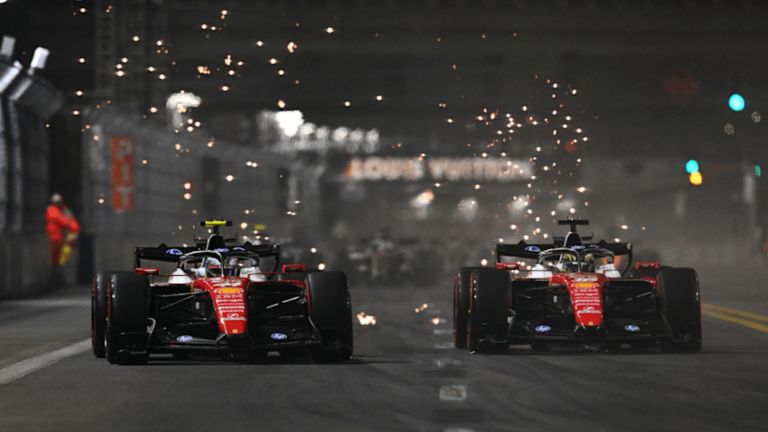
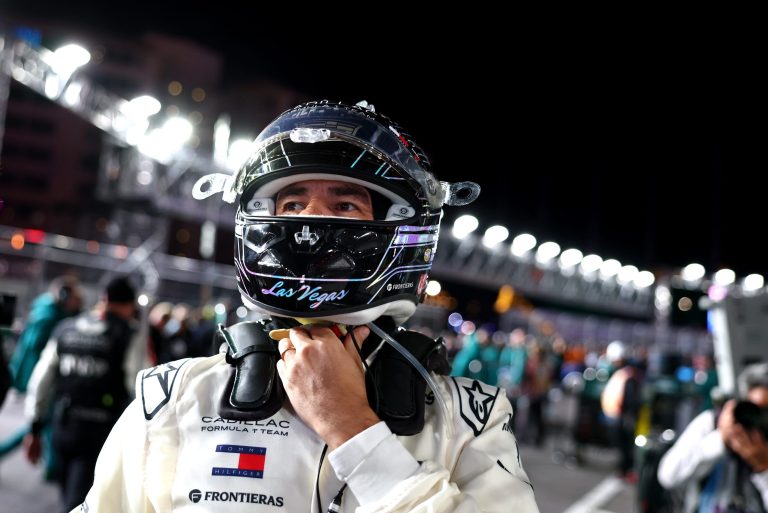
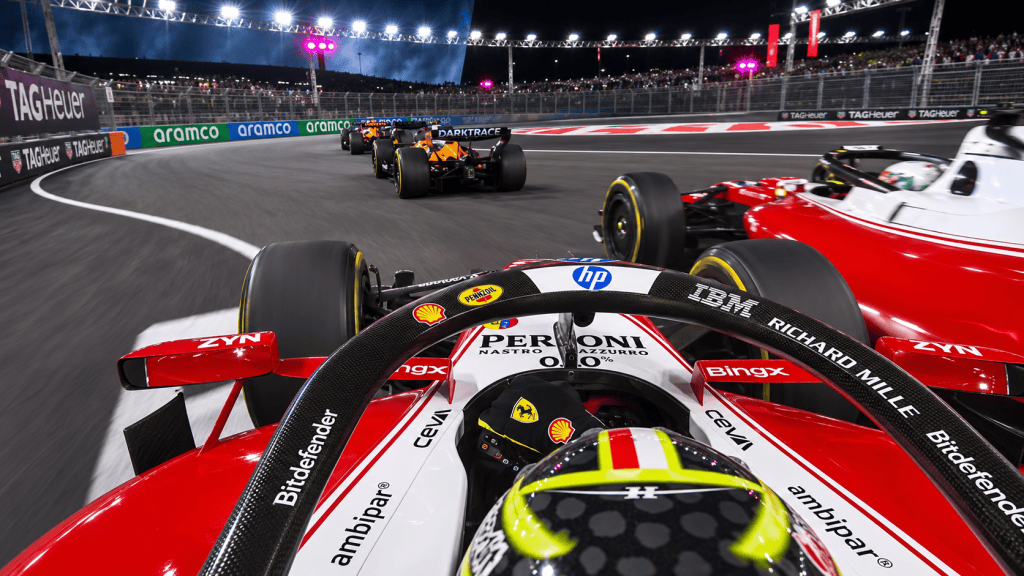
Leclerc attacked Hamilton at Turn 7, made contact and sent his teammate spinning. The FIA held him wholly responsible and imposed a ten-second penalty, dropping him to tenth.
The most damaging element was not merely the collision. It was that Ferrari had already warned its drivers.
Vasseur’s anger exposes a bigger problem
Vasseur’s reaction after Las Vegas was unusually severe — particularly towards a driver he has supported for years.
The Ferrari principal accused Leclerc of ignoring instructions to protect the team’s interests and described the incident as unacceptable.
“We clearly told Charles to think about the team when he was behind Lewis and he didn’t listen,” Vasseur told Canal+.
“You don’t have the right to ruin a result like that when people are working behind you. It’s totally unacceptable.”
This was not simply frustration with an accident. It was a public accusation that Leclerc had disregarded the team’s authority.
That distinction is crucial.
Ferrari cannot demand that its drivers stop fighting. But it can demand that they respect instructions intended to prevent avoidable damage.
A driver who ignores those instructions threatens more than his own result. He undermines the people, resources and authority of the organisation.
Leclerc subsequently accepted his penalty and admitted feeling embarrassed.
Apologies, however, do not recover lost points. Nor do they guarantee the same mistake will not happen again.

Hamilton has had enough of trying to solve Ferrari’s problems
Hamilton’s response was equally revealing.
The seven-time world champion refused to discuss the collision in detail but made clear that responsibility for resolving the situation now rests with Ferrari.
“That’s for Ferrari to decide, obviously. I’ve done all I can, and I’ve said everything and more,” he told Sky Sports F1.
“Hopefully, in the background, they eventually figure it out.”
Hamilton is no stranger to difficult teammate relationships. His championship battles with Nico Rosberg at Mercedes demonstrated how destructive internal competition can become.
But his comments suggest he no longer believes another public discussion will solve Ferrari’s problems.
He also considered a podium possible in Las Vegas, despite the team’s qualifying struggles and lack of straight-line speed.
Instead, Hamilton finished seventh after receiving a separate penalty and being spun by Leclerc.
Ferrari’s biggest failure is not allowing two ambitious drivers to compete. It is repeatedly allowing that competition to damage its results.
Ferrari renewed Leclerc’s contract. Was that a mistake?
In June 2026, Ferrari announced another multi-year agreement with Leclerc, reinforcing its long-term commitment to the Monegasque.
That decision makes an immediate dismissal complicated. The financial terms and precise duration were not disclosed, and there is no confirmed indication that Ferrari intends to terminate the agreement.
Nevertheless, a contract should not make a driver immune from scrutiny.
Ferrari has changed personnel, technical direction and management structures throughout Leclerc’s tenure. Yet its faith in him has remained remarkably consistent.
What has Ferrari received in return? Nine victories, considerable speed and no championship.
The argument for retaining him is substantial. Leclerc remains one of Formula 1’s quickest drivers, and there is no guarantee that a replacement would perform better. Much of Ferrari’s failure to win titles has resulted from the team’s own shortcomings.
Firing him without a credible alternative could exchange one problem for another.
But continuing indefinitely because of past investment would be equally questionable.
The renewal must not prevent Ferrari from examining whether its driver partnership still offers the best prospect of winning.
Ferrari must stop confusing loyalty with progress
Leclerc is 29 and approaching the end of his eighth season at Ferrari. He is no longer a young prospect whose mistakes can be explained primarily by inexperience.
He has had time to develop, lead and demonstrate that he can manage the pressures of racing for the most scrutinised team in Formula 1.
His record includes exceptional performances. It also includes avoidable incidents and an inability, shared with Ferrari, to sustain a championship-winning campaign.
That is not proof that Leclerc cannot win a world title. It is a legitimate reason to question whether he can achieve one with Ferrari.
The team must now decide what it expects from its senior driver: occasional brilliance, or the consistent execution required to become champion.
Clear internal rules and meaningful consequences are essential. So is a serious evaluation of the options available beyond the current contract.
Ferrari should not fire Leclerc simply because he collided with Hamilton in Las Vegas. But after eight seasons, it should no longer treat his future as untouchable.
The Scuderia has not won a Drivers’ Championship since 2007. Loyalty to one driver cannot become more important than ending that drought.
With two races remaining in 2026, Ferrari enters the Qatar Grand Prix facing another difficult weekend under the spotlight.
Leclerc’s immediate challenge is to demonstrate that he can race Hamilton without creating further damage. Ferrari’s larger challenge is deciding how much longer it is prepared to wait.
GRANDE PRÊMIO is following every session of the 2026 championship and the latest developments in Formula 1.
FAQ
How many Formula 1 races has Charles Leclerc won for Ferrari?
Leclerc has won nine Grands Prix during his eight seasons with Ferrari, from 2019 through 2026, without securing a Drivers’ World Championship.
Why is Leclerc under pressure after the Las Vegas Grand Prix?
He was penalised for colliding with Lewis Hamilton, and Ferrari team principal Frédéric Vasseur accused him of ignoring instructions to protect the team’s interests.
Is Ferrari planning to fire Charles Leclerc?
There is no confirmed decision to dismiss Leclerc. Ferrari renewed his contract in June 2026, but his results and repeated teammate disputes raise legitimate questions about the team’s long-term strategy.