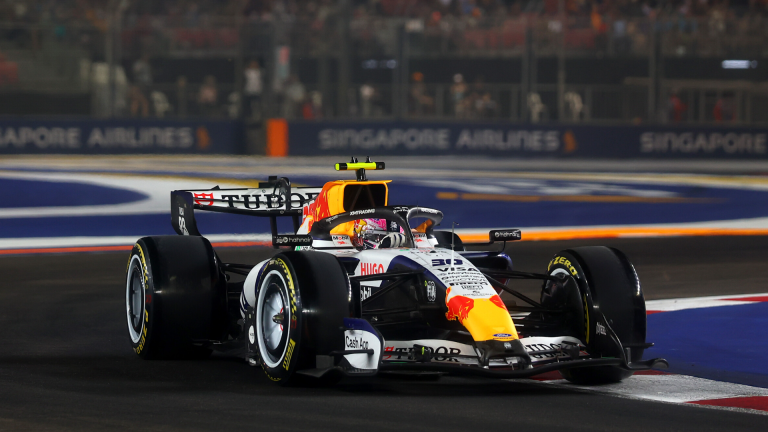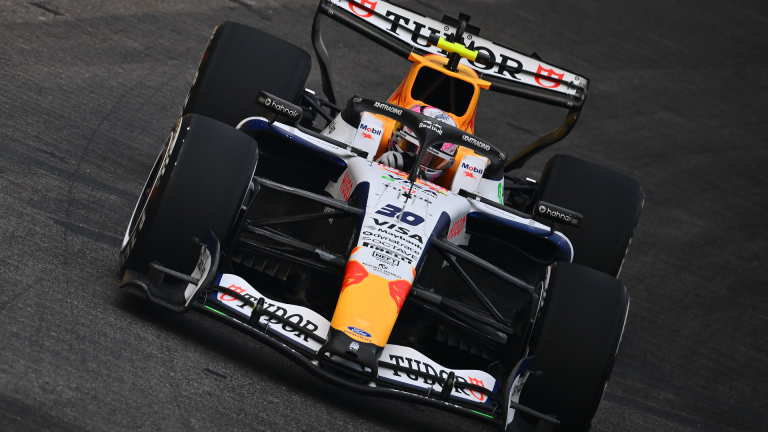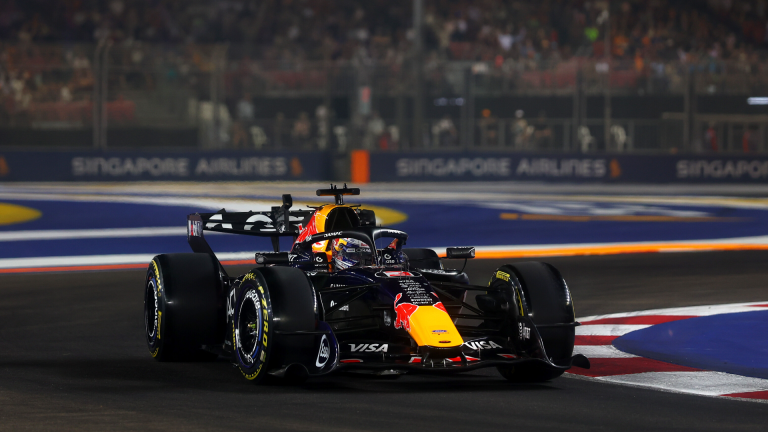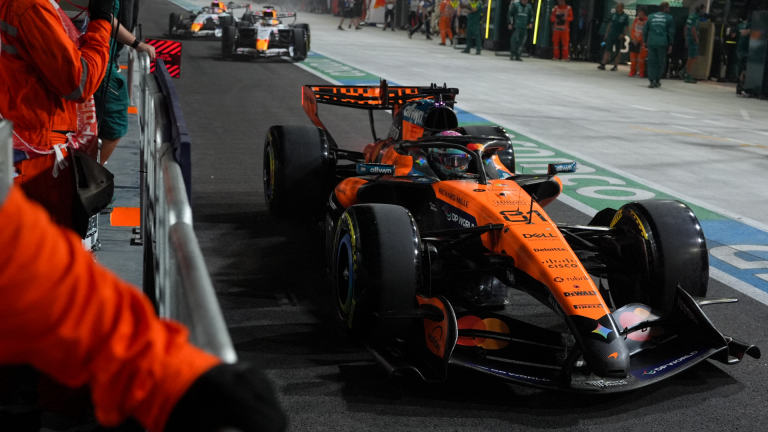
Following the opening practice session in Zandvoort, the FIA released its official technical report confirming various power unit component swaps executed across the Formula 1 paddock for the Dutch Grand Prix. Drivers from Ferrari, Mercedes, Red Bull, McLaren, Aston Martin, Williams, and Racing Bulls introduced fresh elements to start the second half of the 2026 season.
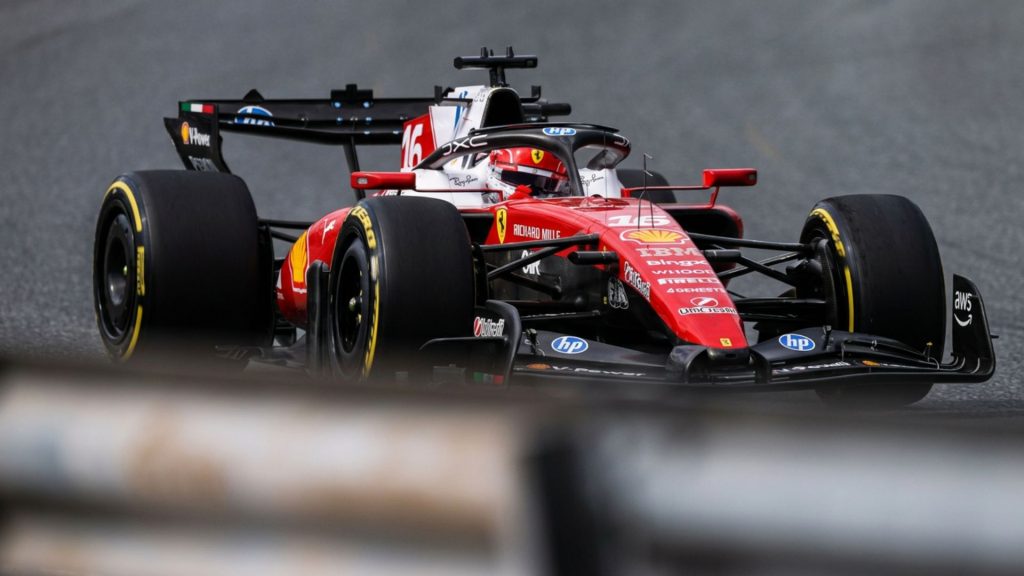
Ferrari swapped the exhaust systems (EX) on both Lewis Hamilton and Charles Leclerc’s SF-26s. Both drivers are now on their third exhaust unit of the campaign, leaving one remaining penalty-free change available under current regulations.
Mercedes installed a fourth new exhaust system on George Russell’s W17. Unlike his Ferrari rivals, the British driver has now reached the maximum seasonal limit of four penalty-free exhausts; any further change will trigger a grid penalty.
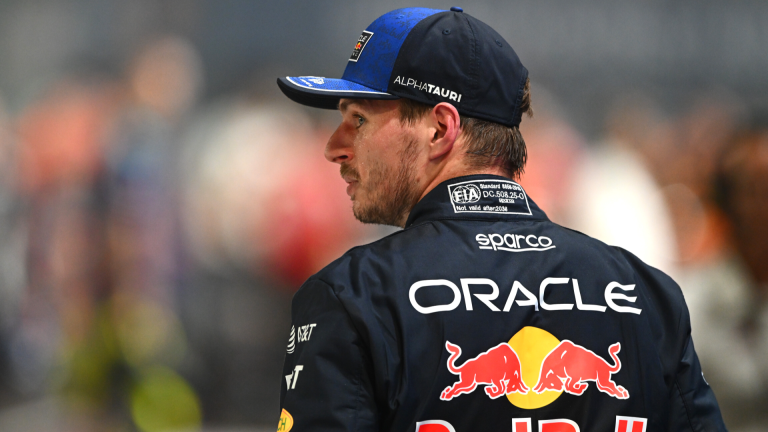
At Red Bull, both Max Verstappen and temporary teammate Liam Lawson received new MGU-K units. Lawson, filling in for the injured Isack Hadjar, inherits Hadjar’s power unit allocation pool. McLaren also introduced a new MGU-K on Oscar Piastri’s car. Both Red Bull entries have reached their seasonal limit for the MGU-K, while Piastri retains one remaining penalty-free allocation.
Williams fitted a new internal combustion engine (ICE) onto Alexander Albon’s car, bringing the Thai driver to his seasonal cap. Racing Bulls changed both the ICE and turbocharger (TC) on rookie Arvid Lindblad’s car, as well as his exhaust system, leaving him with one penalty-free buffer remaining for each element.
Aston Martin introduced new ICE and turbocharger components across both cars, reaching the maximum allocation limit. Additionally, Lance Stroll received a sixth auxiliary component (ACN), hitting the absolute limit permitted by the technical regulations.
Formula 1 action continues at Zandvoort with Sprint Qualifying for the 2026 Dutch Grand Prix. GRANDE PRÊMIO covers all the track action live from Zandvoort with reporter Leonid Kliuev. Follow all paddock updates on our news page.
Power unit components introduced at Zandvoort
| Driver | Team | Component changed | Current total (2026) | Penalty status |
| Lewis Hamilton | Ferrari | Exhaust (EX) | 3 / 4 | No penalty |
| Charles Leclerc | Ferrari | Exhaust (EX) | 3 / 4 | No penalty |
| George Russell | Mercedes | Exhaust (EX) | 4 / 4 | At limit |
| Max Verstappen | Red Bull | MGU-K | 4 / 4 | At limit |
| Liam Lawson | Red Bull | MGU-K | 4 / 4 | At limit |
| Oscar Piastri | McLaren | MGU-K | 3 / 4 | No penalty |
| Alexander Albon | Williams | Internal Combustion Engine (ICE) | 4 / 4 | At limit |
| Arvid Lindblad | Racing Bulls | ICE, Turbocharger (TC), Exhaust (EX) | 3 / 4 (ICE/TC), 3 / 4 (EX) | No penalty |
| Fernando Alonso | Aston Martin | ICE, Turbocharger (TC) | 4 / 4 | At limit |
| Lance Stroll | Aston Martin | ICE, Turbocharger (TC), ACN | 4 / 4 (ICE/TC), 6 / 6 (ACN) | At limit |
Session schedule: Dutch Grand Prix 2026
| Session | Local time (CEST) | UTC |
| Free Practice 1 | Friday, August 21 – 12:30 | 10:30 |
| Sprint Qualifying | Friday, August 21 – 16:00 | 14:00 |
| Sprint Race | Saturday, August 22 – 11:30 | 09:30 |
| Qualifying | Saturday, August 22 – 15:00 | 13:00 |
| Race | Sunday, August 23 – 15:00 | 13:00 |
Frequently asked questions (FAQ)
1. Did any driver receive a grid penalty for engine changes at the Dutch GP?
No drivers received grid penalties for the component changes introduced during Friday’s practice session, as all teams remained within their maximum seasonal allocations.
2. Which drivers are now at risk of engine penalties for future races?
George Russell, Max Verstappen, Liam Lawson (Hadjar’s car allocation), Alexander Albon, Fernando Alonso, and Lance Stroll have reached their seasonal limits on specific power unit elements and will incur grid penalties if further new parts are introduced.
3. Why is Liam Lawson sharing Isack Hadjar’s engine allocation?
Under F1 sporting regulations, when a driver replacement occurs during a season, the substitute driver inherits the component usage tally of the entry’s original car pool.