News Summary
- Lando Norris recorded the fastest average among the comparable soft-tyre race simulations during Friday practice in Mexico City, despite finishing 0.103s behind Charles Leclerc on the FP2 timesheets.
- Norris averaged approximately 1:21.319, ahead of George Russell’s 1:21.442 and Max Verstappen’s 1:21.490, although run lengths and conditions differed.
- Ferrari remains a leading contender after Leclerc topped both sessions, but his longer run on medium tyres makes a direct race-pace comparison with McLaren, Mercedes and Red Bull unreliable.
McLaren emerged from Friday’s (30) practice sessions at the 2026 Mexico City Grand Prix with encouraging evidence that it could challenge Ferrari for Sunday’s victory, despite Charles Leclerc topping both sessions at the Autódromo Hermanos Rodríguez. Lando Norris produced the strongest average pace among the leading drivers running comparable soft-tyre simulations, suggesting that the battle for the race could be considerably closer than the outright timesheets indicate.
Leclerc established himself as the fastest driver over a single lap with a 1:17.827 in FP2, finishing 0.103s ahead of Norris and 0.106s clear of George Russell. However, the longer runs provided a different perspective, with McLaren demonstrating consistent pace while Ferrari evaluated the medium compound.
Norris delivers strongest comparable soft-tyre race simulation
Norris completed one of the most encouraging long runs of Friday afternoon, producing an average lap time of approximately 1:21.319 on soft tyres.
The McLaren driver maintained a competitive rhythm across his run, providing the team with useful information about the MCL40’s behaviour over multiple laps.
Russell completed a comparable simulation for Mercedes, averaging approximately 1:21.442, while Verstappen recorded 1:21.490 for Red Bull.
The figures placed Norris 0.123s per lap ahead of Russell and 0.171s ahead of Verstappen on their respective recorded averages.
Mexican GP 2026 — Selected Friday soft-tyre long runs
| Driver | Team | Tyre | Average lap |
|---|---|---|---|
| L. NORRIS | McLaren | Soft | 1:21.319 |
| G. RUSSELL | Mercedes | Soft | 1:21.442 |
| M. VERSTAPPEN | Red Bull | Soft | 1:21.490 |
The averages come from selected Friday long-run samples. Differences in fuel load, tyre age, run length and track conditions mean they are not definitive measures of race pace.
Norris’s performance was particularly relevant because McLaren had experienced a difficult period in which the team struggled to match the leading cars consistently.
The British driver’s speed over both a single lap and longer runs suggested that the car was operating in a more competitive window at Mexico City.
McLaren’s advantage in the selected soft-tyre comparison was small but measurable, particularly against Mercedes and Red Bull.
The question for Sunday is whether Norris can maintain that performance across the longer stints required during the 71-lap Grand Prix.

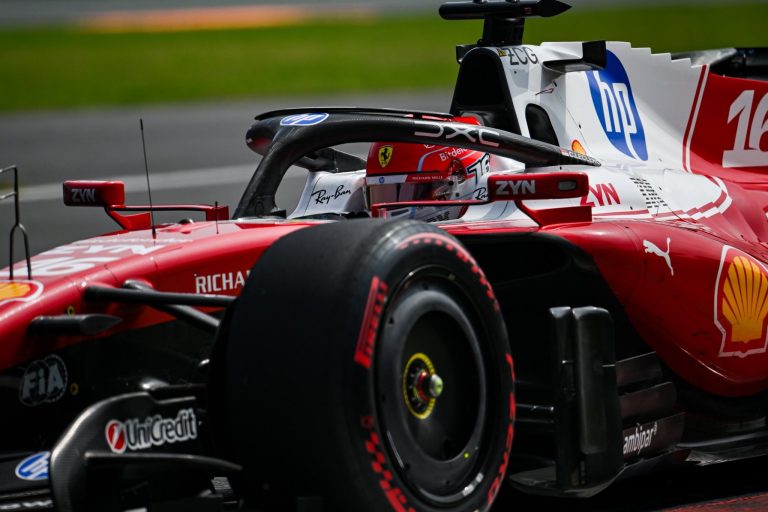
Leclerc’s medium-tyre pace keeps Ferrari in contention
Ferrari adopted a different approach to its longer-running programme.
While Norris, Russell and Verstappen completed their selected simulations on soft tyres, Leclerc concentrated on the medium compound, making direct comparisons more difficult.
The Ferrari driver nevertheless demonstrated encouraging pace and consistency.
His longer run included some slower laps that affected the overall average, but he subsequently returned to competitive times.
Without complete information about fuel loads, tyre condition and traffic, those slower laps cannot automatically be attributed to tyre degradation.
The medium compound is also expected to play an important role during Sunday’s race because of its balance between performance and durability.
Leclerc’s Friday performance therefore offered Ferrari encouragement beyond its qualifying simulations.
The Monegasque was fastest on both the medium and soft compounds during the opening sessions, according to Pirelli’s assessment of the day’s running.
That versatility could become important if teams adopt different strategies during the Grand Prix.
Ferrari’s strongest argument is that Leclerc combined outright speed with competitive longer-run performance, even though the available data does not establish a clear advantage over Norris.
The Italian team will use Saturday’s final practice session to refine its understanding of tyre behaviour before qualifying determines the starting grid.
Ferrari’s Friday advantage does not guarantee Sunday victory
Leclerc’s performance made Ferrari one of the leading candidates for pole position, but the competitive margins were extremely narrow.
The leading four drivers were separated by only 0.217s, with Andrea Kimi Antonelli finishing fourth for Mercedes.
Such small differences mean that changes in track temperature, tyre preparation or aerodynamic balance could alter the competitive order.
Qualifying performance is particularly important at the Autódromo Hermanos Rodríguez because the long run towards Turn 1 creates opportunities for slipstreaming and overtaking at the start.
However, the race also rewards consistency through the slower stadium section and careful management of tyres and energy deployment.
A driver who starts behind a rival may still have a competitive opportunity if the car can maintain better pace over longer stints.
For McLaren, that possibility is especially relevant given Norris’s Friday race simulation.
The evidence suggests Ferrari has an advantage over a single lap, but McLaren has demonstrated enough pace to challenge over the race distance.
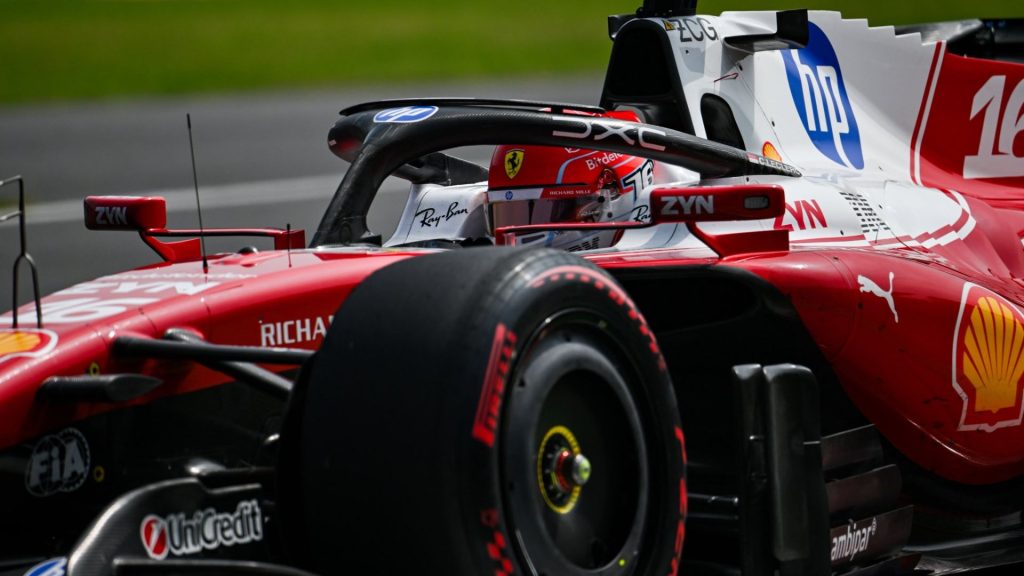
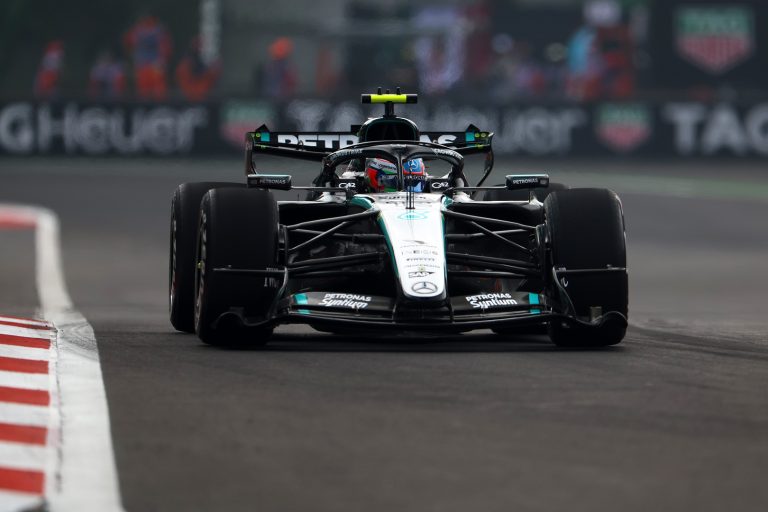
Russell keeps Mercedes in the fight for Mexico victory
Mercedes also emerged from Friday with reasons for optimism.
Russell finished third in FP2, just 0.106s behind Leclerc, despite missing the opening practice session while reserve driver Fred Vesti completed the team’s young-driver programme.
The British driver then produced a competitive soft-tyre race simulation, averaging approximately 1:21.442.
That placed him only 0.123s behind Norris in the selected comparison.
Russell acknowledged that the competitive order