
Summary
- Mercedes declared seven updates, the largest package submitted for Sepang.
- Seven teams listed changes, with 14 update entries across the grid.
- Williams, Aston Martin, Audi and Cadillac submitted no new updates for this event.
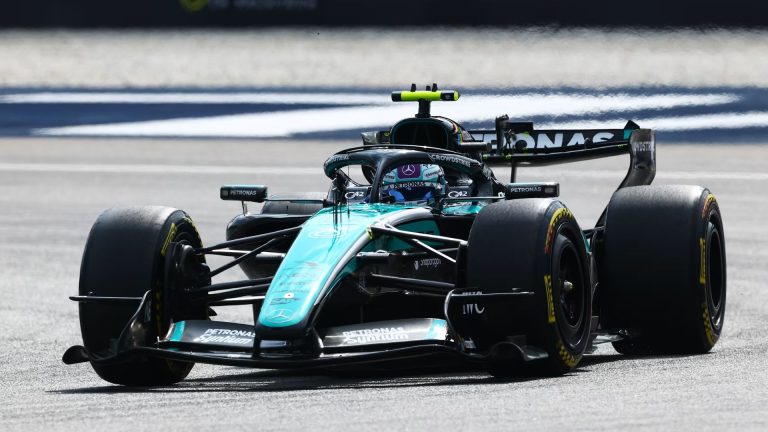
Mercedes has brought the largest declared upgrade package to the Bahrain Grand Prix in Malaysia, with seven changes targeting the floor and rear of its W17. The FIA’s car presentation document lists updates from seven of the 11 Formula 1 teams for the return to Sepang.
The championship-leading team has revised four areas of its floor, alongside the rear suspension fairings, rear corner and rear bodywork. Together, those changes aim to improve airflow and increase aerodynamic load.
Red Bull and Ferrari have submitted smaller aerodynamic developments, while McLaren and Alpine have introduced changes addressing cooling requirements. Racing Bulls lists two updates and Haas one.
What has Mercedes changed at Sepang?
The floor is the centrepiece of Mercedes’ package. Its submission identifies changes to the floor board, leading edge, corner and main body, including the diffuser.
The rear suspension update concerns the aerodynamic fairings surrounding the components, rather than a declared wholesale redesign of the suspension’s mechanical layout. Mercedes has also revised the rear-corner winglets and rear bodywork so those areas work with the new floor.
These are interconnected developments: the team is changing how air reaches the rear of the car and how the surrounding surfaces contribute to downforce. All seven entries are classified as performance updates, rather than circuit-specific cooling modifications.
The package began its track evaluation in Friday’s opening practice. George Russell finished second, 0.383 seconds behind Max Verstappen, while Kimi Antonelli placed fifth, 1.060 seconds off the fastest time.
That opening result provides an initial reference, but establishing the upgrade’s effectiveness also requires assessing tyre behaviour and performance over longer runs.
Red Bull and Ferrari bring focused aerodynamic changes
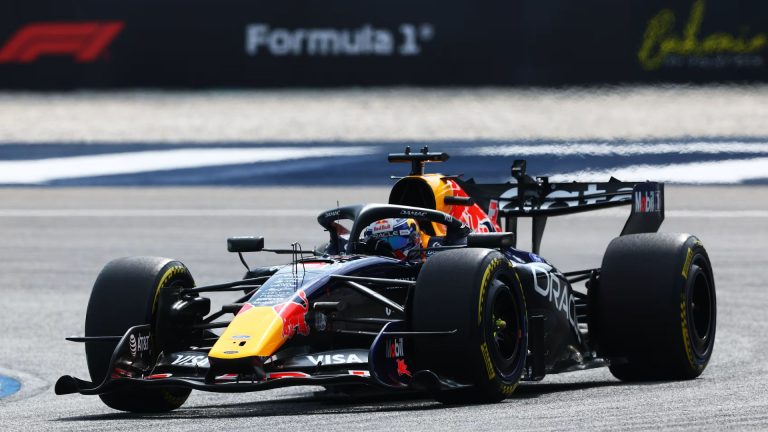
Red Bull has revised its floor-board geometry, seeking additional aerodynamic load while maintaining stable airflow behind the front tyres. Its submission lists one update entry, compared with Mercedes’ seven.
Ferrari’s development is concentrated around the outboard winglets of the diffuser. The team identifies it as a broader performance improvement, rather than a part designed exclusively for Sepang.
The difference in the number of entries describes the scope of the submissions. It does not establish how much lap time each team will gain: a single development can affect several aspects of the car’s performance.
McLaren and Alpine prioritise cooling
McLaren has introduced a high-cooling engine cover, designed to increase airflow through the cooling system. The change addresses the demands of Malaysia and upcoming circuits.
Alpine has modified the exit of its front brake drums to increase brake-cooling capacity. Its submission also links the development to thermal management at forthcoming venues.
Those changes have a different immediate purpose from Mercedes’ aerodynamic package. Maintaining suitable operating temperatures is essential to sustaining performance in Sepang’s demanding conditions.
Racing Bulls and Haas refine their cars
Racing Bulls has listed a longer-chord front-wing flap to extend its aerodynamic balance options. The submission specifies that the front wing was introduced at the previous event; the flap provides the load range required for Sepang.
The team has also revised its rear-wing support components to improve aerodynamic efficiency.
Haas, meanwhile, has updated the geometry of its rear impact structure, making an additional device available to help tune the car’s characteristics for the circuit.
Williams, Aston Martin, Audi and Cadillac declared no updates for this event. That refers to this weekend’s car presentation submissions and does not mean they have stopped developing their cars.
Bahrain GP in Malaysia: team-by-team upgrades
| Team | Declared update entries | Components and purpose |
|---|---|---|
| Mercedes | 7 | Floor board, floor leading edge, floor corner, floor body, rear suspension fairings, rear corner and rear bodywork |
| McLaren | 1 | High-cooling engine cover |
| Red Bull | 1 | Revised floor-board geometry |
| Ferrari | 1 | Diffuser outboard winglets |
| Racing Bulls | 2 | Front-wing flap and rear-wing support components |
| Haas | 1 | Rear impact structure geometry |
| Alpine | 1 | Front brake-drum exit for cooling |
| Williams | 0 | No updates submitted |
| Aston Martin | 0 | No updates submitted |
| Audi | 0 | No updates submitted |
| Cadillac | 0 | No updates submitted |
| Total | 14 | Seven teams submitted changes |
Teams continue evaluating their cars in FP2 at 16:00 local time on Friday, 2 October. The Sepang Friday practice schedule includes session times for the UK, North America, India and Australia.
Formula 1 is racing this weekend, from 2–4 October, in Malaysia, which hosts the Bahrain Grand Prix. GRANDE PRÊMIO will cover all the action at Sepang.
F1 today: FAQ
Who was fastest in Bahrain GP practice at Sepang?
Max Verstappen topped FP1 with a 1:37.520, beating George Russell by 0.383 seconds. Isack Hadjar finished third, ahead of Charles Leclerc and championship leader Kimi Antonelli.
What time does F1 FP2 start in Malaysia?
FP2 starts on Friday, 2 October, at 16:00 in Malaysia. That is 09:00 BST in the UK, 04:00 EDT in New York and Toronto, 01:00 PDT in Los Angeles and Vancouver, 13:30 IST in India and 18:00 AEST in Sydney and Melbourne.
Why is the Bahrain Grand Prix being held in Malaysia?
The original race at Sakhir was cancelled because of the conflict in the Middle East. Sepang is hosting the replacement event while retaining the Bahrain Grand Prix name, bringing Formula 1 back to the Malaysian circuit for the first time since 2017.
What upgrades has Mercedes brought to Sepang?
Mercedes declared seven updates covering four floor areas, the rear suspension fairings, rear corner and rear bodywork. The package targets aerodynamic performance.