News Summary
- Mercedes has postponed its ADUO engine upgrade beyond Austin, with Mexico City also considered unlikely and São Paulo emerging as the earliest possible introduction.
- George Russell is expected to incur another grid penalty when he receives new power-unit components, having already exceeded his permitted allocation.
- Both Mercedes drivers will use the latest chassis specification in Austin, despite the engine upgrade remaining unavailable.
Mercedes has delayed the introduction of its upgraded Formula 1 power unit, ruling out its debut at the United States Grand Prix and making an appearance in Mexico City unlikely. The German manufacturer had originally targeted the American leg of the championship for its development under the FIA’s Additional Development and Upgrade Opportunities (ADUO) system, but the revised specification is not yet ready.
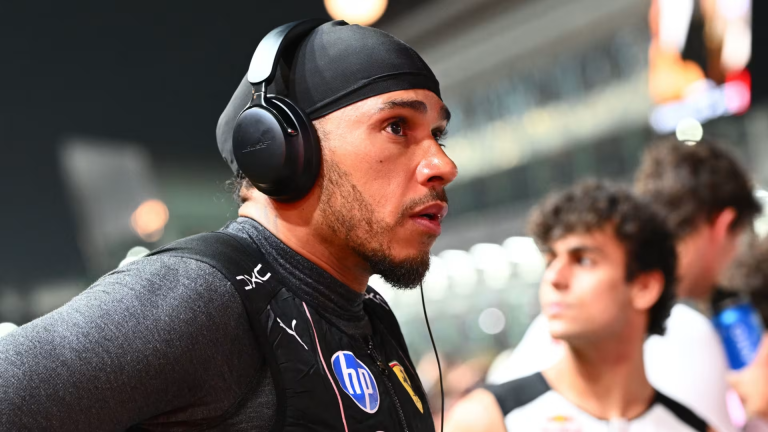
The decision affects George Russell in particular, with the British driver planning to combine the introduction of the updated engine with an unavoidable grid penalty. Russell has already exceeded his permitted allocation of power-unit components and must consider the sporting consequences of another change.
The São Paulo Grand Prix, scheduled for November 6–8, has emerged as the earliest realistic opportunity for Mercedes to introduce the new specification. However, the team has not confirmed that the engine will be available at Interlagos.
Mercedes is understood to be prioritising confirmation of a genuine performance improvement rather than introducing the development before its benefits have been established.
The delayed programme comes as championship leader Kimi Antonelli prepares for his first mathematical opportunity to secure the 2026 World Championship in Austin.
Why Mercedes has delayed its ADUO engine upgrade
Mercedes received permission to develop its combustion engine under Formula 1’s ADUO system, which allows manufacturers whose power units fall behind the performance benchmark to introduce additional upgrades.
The mechanism was incorporated into the 2026 regulations to prevent manufacturers from remaining at a significant disadvantage throughout the new technical cycle.
The FIA’s assessment placed Mercedes more than 2% behind the leading combustion engine, operated by Red Bull Powertrains-Ford, making the German manufacturer eligible for an additional development opportunity.
Mercedes initially expected to introduce its revised specification during the American rounds of the championship, with Austin and Mexico City identified as potential dates.
However, the development work has taken longer than anticipated.
The team will therefore continue using its existing engine specification at Circuit of The Americas, while the revised unit remains in preparation.
Although São Paulo is now a possible destination for the upgrade, its introduction will depend on the final development and validation work.
An ADUO development allowance does not require Mercedes to deploy the upgrade at a particular race. The manufacturer can choose when to introduce the new specification, provided it complies with the applicable homologation requirements.
Russell must reconsider when to take another engine penalty
Russell’s season has been complicated by reliability problems and the resulting consumption of his permitted power-unit components.
The British driver was forced to retire from the Malaysian Grand Prix following an engine problem, which affected Mercedes’ plans for the closing stages of the championship.
He subsequently received a major grid penalty at the Singapore Grand Prix after taking replacement components beyond his allocation.
Mercedes had originally intended to manage Russell’s remaining mileage so that his next power-unit change would coincide with the upgraded specification.
That arrangement would allow him to accept the sporting penalty while gaining access to a potentially more competitive engine.
However, the delayed upgrade has forced the team to reconsider its timetable.
Speaking to Sky Sports F1 earlier in October, Russell acknowledged that the new power unit might not arrive until the closing rounds.
“It will probably be later in the season now to be honest — maybe Las Vegas,” he said.
The Mercedes driver explained that the team could choose when to introduce the components and wanted to minimise the consequences of the grid penalty.
“Now we have the choice to take it when we wish,” Russell added.
He said Mercedes would favour circuits where overtaking opportunities could make recovering lost grid positions easier.
The São Paulo Grand Prix could offer one such opportunity, although the team has not confirmed that Russell will take his penalty at Interlagos.
The Las Vegas Grand Prix, scheduled for November 20–22, remains another possibility.
Why a new Mercedes engine could trigger another grid penalty
Formula 1 limits the number of power-unit components each driver may use during a championship season.
Those restrictions apply to individual elements, including the internal-combustion engine, turbocharger, MGU-K, energy store and control electronics.
A driver who installs an additional component beyond the permitted allocation receives a grid penalty under the sporting regulations.
The ADUO upgrade itself does not automatically trigger a penalty. The sanction arises when a driver introduces components that exceed their permitted annual allowance.
Russell’s situation is particularly difficult because he has already used more than the permitted number of several power-unit elements.
Mercedes must therefore decide whether the expected performance gain justifies a penalty at a particular circuit.
The team must also balance that decision against the condition and remaining mileage of Russell’s existing components.
The manufacturer’s original strategy was to avoid introducing another engine unnecessarily before the upgraded version became available.
That approach has become more complicated as the development programme has slipped beyond its original timetable.
Russell previously discussed how the team intended to combine its engine development and component-allocation strategy, as detailed in GRANDE PRÊMIO‘s analysis of Mercedes’ ADUO upgrade and his potential grid penalty.
Antonelli also faces engine-allocation complications
The situation is different for Antonelli, although the championship leader has also encountered reliability and component-allocation problems this season.
The Italian took a new power unit at the Italian Grand Prix in September, exceeding his allocation and receiving a back-of-the-grid penalty.
He recovered from 19th on the grid to win at Monza, but the replacement unit did not include the performance modifications permitted by the ADUO system.
Mercedes had to introduce the existing specification because Antonelli’s available engine pool had been reduced by earlier reliability problems.
The team’s original expectation was that both drivers could eventually receive the updated engine during the closing stages of the championship.
However, Antonelli’s component usage differs from Russell’s, meaning any additional grid penalty will depend on which elements are replaced.
Mercedes has not confirmed when either driver will receive the ADUO specification.
Mercedes brings chassis upgrades to Austin despite engine delay
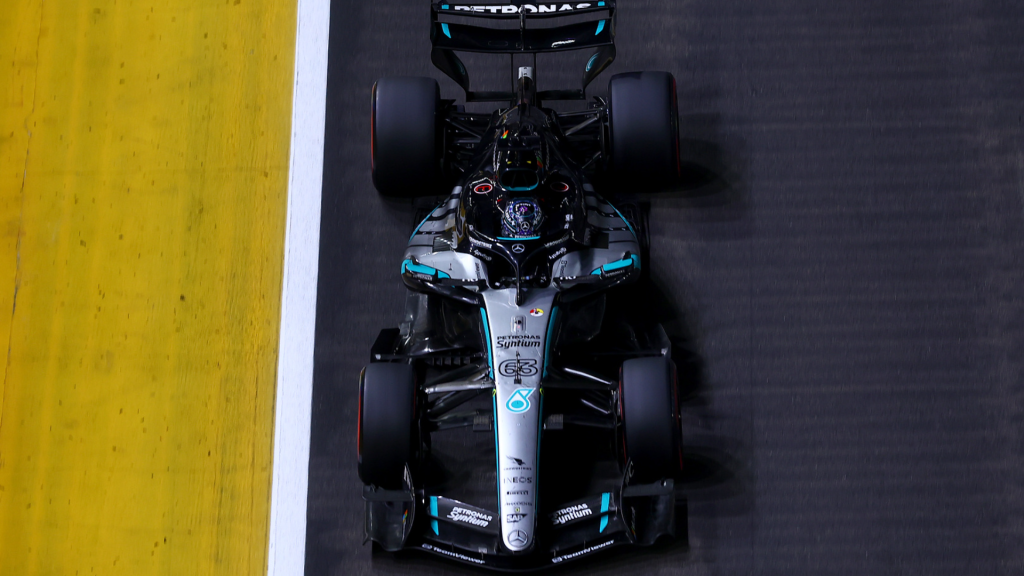
The delay to the engine programme does not mean Mercedes has stopped developing the W17.
Both Antonelli and Russell will use the latest chassis specification during the United States Grand Prix weekend, following an unusual comparison between two versions of the car at Singapore.
Mercedes introduced a substantial aerodynamic package in Malaysia, but encountered difficulties extracting the expected performance.
At Singapore, Antonelli used the newer specification while Russell returned to an earlier version.
Team principal Toto Wolff explained that the different specifications helped Mercedes compare their characteristics and understand why the latest developments required changes in the team’s approach to setting up the car.
The German manufacturer will reunite both drivers on the updated specification at Austin, with further aerodynamic work intended to improve the W17’s competitiveness.
Wolff has acknowledged that Mercedes needs to better understand the operating requirements of the latest package, particularly as Red Bull has become increasingly competitive.
Max Verstappen won the Malaysian and Singapore Grands Prix, while Antonelli remains firmly in control of the Drivers’ Championship.
The Italian leads Russell by 102 points ahead of Austin, with an opportunity to secure the title on Sunday depending on his result and those of his closest rivals.
The engine delay therefore comes at a moment when Mercedes is balancing its remaining 2026 objectives with preparations for 2027.
Mercedes could use late-season upgrade to prepare for 2027
Even if the updated power unit is introduced with only a few races remaining, the development work could provide useful information for Mercedes’ 2027 engine programme.
The technical regulations introduced in 2026 will remain the basis of next season’s power-unit development.
Mercedes can therefore use competitive running to evaluate the effectiveness of its combustion-engine changes, validate simulation results and identify areas requiring further development.
The potential benefit is not limited to the remaining Grands Prix of 2026.
However, the manufacturer’s priority remains confirming that the new specification represents an improvement before committing to its introduction.
The United States Grand Prix takes place at Circuit of The Americas from October 23–25. Mercedes will continue using its existing power unit while Russell and Antonelli evaluate the latest aerodynamic specification during Friday’s practice sessions.
GRANDE PRÊMIO is following every session of the United States Grand Prix at Circuit of The Americas this weekend, with breaking news, full coverage and real-time updates in its Formula 1 section.