News Summary
- Hamilton held repeated meetings with Stefano Domenicali and contacted presidents of African countries as part of his campaign to bring Formula 1 back to the continent.
- The seven-time world champion welcomed Rwanda’s ten-year agreement, saying Africa deserves representation on the F1 calendar.
- Hamilton also discussed colonialism, education and ongoing international conflicts, calling for greater awareness of the political and humanitarian situation in several countries.
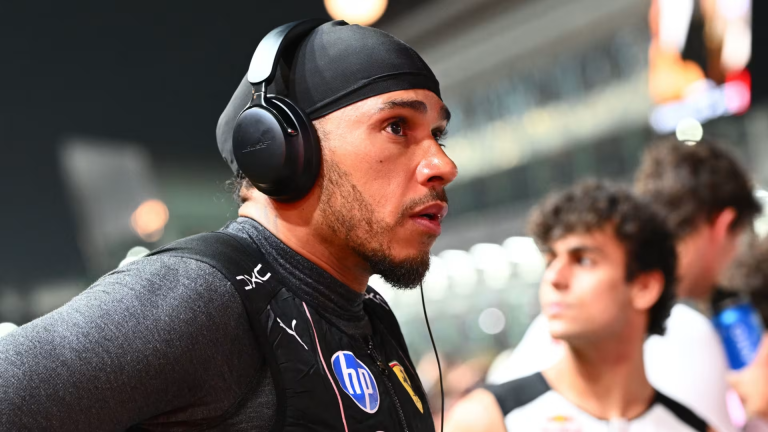
Lewis Hamilton has revealed the extent of his involvement in efforts to bring Formula 1 back to Africa, explaining that he spent years holding meetings with championship executives and contacting political leaders across the continent before the announcement of a ten-year agreement to stage a Grand Prix in Rwanda.
Speaking during Thursday’s press conference ahead of the United States Grand Prix in Austin, the Ferrari driver welcomed the confirmation that Formula 1 will return to Africa for the first time since 1993. Rwanda was announced as the host on October 13, with a new purpose-built circuit planned in Bugesera, near Kigali, and the inaugural race expected in the early 2030s.
Hamilton, who has repeatedly called for an African Grand Prix, said his involvement extended beyond public statements. He maintained frequent contact with Formula 1 president Stefano Domenicali and participated in discussions involving political leaders from different African countries.
“I’ve been advocating for a race in Africa for many, many, many years,” Hamilton said.
The seven-time world champion explained that he held numerous meetings with stakeholders, including conversations at Domenicali’s London office and during race weekends. He also described repeated telephone calls about the progress of negotiations, the countries being considered and the political representatives involved.
Hamilton reveals years of meetings with Domenicali and African presidents
Hamilton explained that he followed the negotiations closely, regularly questioning Formula 1 management about its efforts to secure a Grand Prix on the continent. He also confirmed that his involvement included direct contact with presidents from different African countries, although he did not identify the leaders or disclose the details of those discussions.
The British driver has long argued that Africa’s absence from the championship is inconsistent with Formula 1’s global reach. He welcomed the Rwanda announcement but insisted that the importance of hosting a race extends beyond the interests of a single country.
“It’s a place that deserves to have a Grand Prix. It’s more than just about one country. It’s about the continent in itself,” Hamilton said.
Hamilton also highlighted the opportunity for Formula 1 to introduce international audiences to African countries, their cultures and their people. He argued that the championship can influence how younger generations perceive places they may know little about, particularly when those destinations become part of a globally televised sporting calendar.
The announcement represents a significant change for Formula 1. Its last African race was the 1993 South African Grand Prix at Kyalami, won by Alain Prost. Rwanda will become the third African country to host a World Championship Grand Prix, following Morocco and South Africa.
As GRANDE PRÊMIO reported when Formula 1 confirmed the ten-year Rwanda agreement, the new circuit will be constructed near Bugesera International Airport and must meet the FIA’s Grade 1 requirements before hosting the championship.
Hamilton addresses Rwanda concerns and Africa’s colonial history
Hamilton also addressed criticism and political concerns surrounding Formula 1’s choice of Rwanda, acknowledging that conflicts and humanitarian problems must remain part of the discussion.
The Ferrari driver said he was aware of reports about the situation in different parts of Africa but argued that international audiences should approach these issues with greater knowledge of the continent’s history.
“Of course, I don’t get to choose where we go. And naturally there’s problems all over the world today,” Hamilton said.
He criticised the lack of education about African history during his childhood in England and called for the subject to receive greater attention in schools. Hamilton also expressed the view that colonialism and subsequent Western intervention continue to influence many of the challenges faced by African countries.
The seven-time champion highlighted Africa’s natural resources, cultural influence and contributions to international design and industry. He also expressed hope that African countries would develop stronger cooperation in the future.
Hamilton’s remarks came after Rwanda secured the agreement ahead of competing proposals involving South Africa, which continues pursuing its own return to the Formula 1 calendar.
The Rwanda project has also attracted scrutiny over the country’s human rights record and its involvement in regional conflicts. Those concerns were examined in GRANDE PRÊMIO‘s analysis of why Formula 1 selected Rwanda despite the absence of a completed circuit.
Hamilton did not directly assess individual allegations against the Rwandan government during Thursday’s press conference. Instead, he argued that staging an international sporting event should not mean ignoring problems affecting the host country or neighbouring regions.
Hamilton calls for greater attention to Congo, Sudan, Syria and Palestine
Towards the end of his answer, Hamilton broadened his comments beyond the African Grand Prix and urged greater international attention to several ongoing conflicts.
The Ferrari driver said he hoped Formula 1’s return to Africa would encourage spectators to learn more about the continent’s history and the circumstances affecting its people.
He concluded with a direct appeal involving the Democratic Republic of Congo, Sudan, Syria and Palestine.
“I think we need to make sure we’re pushing to free Congo, free Sudan, free Syria, free Palestine,” Hamilton said.
Hamilton also expressed hope for greater peace in those regions. His comments represented a political and humanitarian appeal made during the press conference, rather than a statement of Formula 1 policy.
When will Formula 1 race in Rwanda?
Formula 1 has signed a ten-year agreement for the African Grand Prix, but the inaugural race date has not been officially confirmed. The championship expects the event to begin in the early 2030s, once the new circuit in Bugesera has been completed and homologated.
The facility will be developed as part of a wider infrastructure and tourism project near Rwanda’s new international airport. Formula 1, the FIA and the local organisers are expected to provide further information about construction milestones and the first race date.
Hamilton was asked whether he expected to be competing when the African Grand Prix takes place, but he did not provide a specific answer about his Formula 1 future.
His comments came ahead of the United States Grand Prix, where Ferrari will introduce its latest developments as Mercedes driver Kimi Antonelli attempts to secure the 2026 World Championship. Hamilton has also publicly supported Antonelli’s title challenge and praised the driver who replaced him at Mercedes.
GRANDE PRÊMIO is following every session of the United States Grand Prix at Circuit of The Americas this weekend, with breaking news, full coverage and real-time updates in its Formula 1 section.