News Summary
- Formula 1 has signed a ten-year agreement with Rwanda, although the planned Bugesera circuit has not yet been built and no inaugural race date has been confirmed.
- Rwanda hosted the FIA’s General Assembly and annual awards in 2024, strengthening its international motorsport profile before securing the grand prix agreement.
- South Africa’s existing Kyalami circuit remains without an F1 race, while Amnesty International has criticised the Rwanda agreement over human rights concerns.
Formula 1 has finally confirmed its return to Africa, but the choice of destination raises a question that the celebrations in Kigali have not fully answered: why has a country without a completed Formula 1 circuit secured a ten-year grand prix agreement while established motorsport venues remain outside the calendar?
Rwanda was announced on October 13 as the future home of the African Grand Prix, ending a continental absence that dates back to the 1993 South African Grand Prix at Kyalami.
The agreement is a major diplomatic and commercial achievement for President Paul Kagame’s government, which has spent years using international sporting events and sponsorships to increase Rwanda’s global visibility.
For Formula 1, the decision provides a long-awaited route back to Africa, a continent the championship estimates has more than 100 million fans.
But the announcement also exposes the difference between securing a commercial agreement and demonstrating that a race can actually be delivered.
The planned circuit in Bugesera does not yet exist as an operational racing facility. Its construction remains part of a wider infrastructure project, and Formula 1 has not announced the year in which the first grand prix will take place.
The situation deserves particular scrutiny because Rwanda’s relationship with the FIA has grown considerably in recent years, while the country’s international reputation remains contested over human rights and its involvement in the conflict in neighbouring Democratic Republic of Congo.
A ten-year contract for a circuit that still has to be built
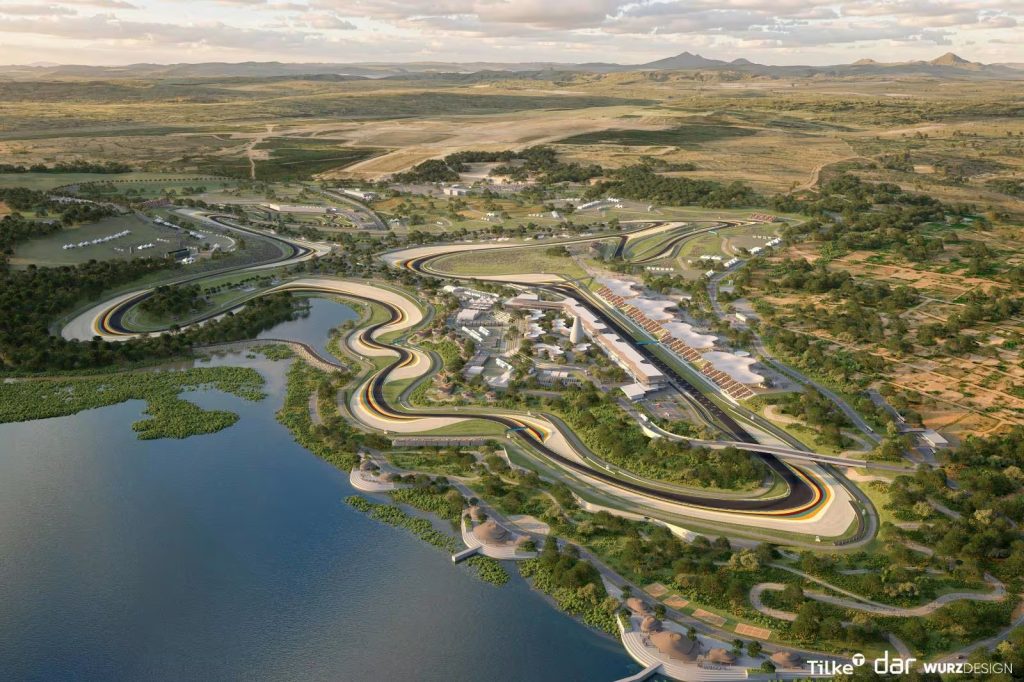
The proposed African Grand Prix will take place in Bugesera, approximately 40 kilometres south of Kigali, near Rwanda’s new international airport.
The circuit is being designed with the involvement of former Formula 1 driver Alex Wurz and the Tilke organisation, with plans for a permanent facility built to FIA Grade 1 standards.
The project envisages a circuit of approximately six kilometres, featuring 17 corners and substantial elevation changes.
Its proposed layout follows the natural terrain, with designers highlighting a difference of approximately 197 metres between its highest and lowest points.
The official presentation depicts a modern racing complex surrounded by hills, with extensive spectator facilities and infrastructure intended to support international events.
However, those images represent a proposed development, not an existing Formula 1 venue. The distinction is important.
The FIA Grade 1 licence required to host a grand prix cannot be granted to an uncompleted circuit. The venue must first satisfy the governing body’s technical and safety requirements, including track design, barriers, medical facilities, race control and emergency access.
Formula 1 has acknowledged that the inaugural event depends on construction being completed, with the first race expected in the early 2030s. No definitive opening date has been announced.
Nor has the public announcement provided a detailed construction timetable, a final budget or a complete breakdown of how the circuit and associated infrastructure will be financed.
That does not mean the project lacks funding or that construction cannot be completed. It means the commercial commitment has been announced before several essential delivery milestones have been publicly demonstrated.
Formula 1 has previously agreed to stage races at new facilities before construction was finished. Rwanda is therefore not unprecedented in that respect.
The relevant question is what guarantees the championship received before committing to the project, and how those guarantees will be monitored over the coming years.
Why did F1 choose Rwanda instead of Kyalami?
Rwanda’s selection is particularly striking because South Africa has spent years pursuing Formula 1’s return.
Kyalami hosted the most recent African Grand Prix in 1993 and remains one of the continent’s best-known permanent racing circuits.
The South African venue already has an established motorsport history and much of the infrastructure associated with international racing.
However, it does not currently possess the FIA Grade 1 homologation required for Formula 1. Hosting a modern grand prix would therefore require upgrades and regulatory approval.
That is an important distinction: Kyalami has an existing circuit, but it is not immediately ready to host Formula 1 without additional work.
South Africa has also faced difficulties assembling the political, financial and commercial commitments required to secure a long-term agreement.
Rwanda, by contrast, has presented its grand prix as part of a broader national development programme involving tourism, infrastructure, international business and the new Bugesera airport.
The government has demonstrated a willingness to invest in international sporting events and commercial partnerships, making its proposal attractive from a long-term planning perspective.
The F1 agreement is being developed with the Rwanda Development Board and will be promoted under the Visit Rwanda brand.
Nevertheless, the full commercial terms have not been disclosed.
Without comparable public information about the financial guarantees, promoter commitments and infrastructure budgets of the competing proposals, it is impossible to establish precisely why Rwanda prevailed over South Africa.
That lack of transparency leaves an important question unanswered: did Rwanda offer a stronger sporting project, a more attractive commercial arrangement or a combination of both?
As previously reported by GRANDE PRÊMIO, Formula 1 confirmed Rwanda’s historic ten-year agreement, but the announcement did not provide a detailed comparison with the competing African proposals.

Rwanda’s growing relationship with the FIA
The decision also follows a period of increasing institutional cooperation between Rwanda and international motorsport authorities.
In December 2024, Kigali hosted the FIA General Assembly and annual prize-giving ceremony, bringing leading motorsport figures to the Rwandan capital.
The event was attended by FIA president Mohammed Ben Sulayem and President Paul Kagame, with the country becoming the first African host of the federation’s annual awards ceremony.
The gathering was supported by the Rwanda Automobile Club and several commercial partners, including Visit Rwanda and RwandAir.
The choice of Kigali was significant because the FIA’s annual events provide an opportunity for national sporting authorities, commercial partners and political leaders to develop relationships with the international motorsport community.
Rwanda’s government had already expressed its ambition to bring Formula 1 to the country, and the 2024 event helped establish Kigali as a location capable of hosting major international sporting gatherings.
Two years later, Ben Sulayem participated in the announcement of the African Grand Prix agreement alongside Kagame and Formula 1 president Stefano Domenicali.
The sequence demonstrates a sustained institutional relationship between Rwanda and the FIA, but it does not establish that the country received preferential or improper treatment.
Formula 1 negotiates commercial agreements with race promoters, while the FIA is responsible for the sporting and regulatory requirements, including circuit homologation.
Those are different responsibilities, even when the organisations cooperate on new events.
The relevant questions concern the transparency of the selection process, the technical evaluation of the proposed venue and the extent to which competing African projects were assessed against comparable criteria.
The public announcements have not provided enough information to answer all of them.
Motorsport expansion or a national branding strategy?
Rwanda’s Formula 1 project cannot be separated from its wider investment in international sport.
The country has developed high-profile partnerships through Visit Rwanda, using global competitions and clubs to promote tourism, attract investors and increase its international recognition.
The strategy has included agreements involving major European football organisations, as well as the hosting of international events.
In 2025, Kigali staged the UCI Road World Championships, becoming the first African city to host the competition.
The Formula 1 agreement represents a much larger commitment, combining a permanent circuit, international broadcasting exposure and a long-term commercial relationship.
President Kagame has argued that such projects can generate employment, technical expertise, tourism and business opportunities.
The proposed development near Bugesera airport is intended to support those objectives beyond the grand prix weekend.
There is a credible economic argument for using major sporting events to attract infrastructure investment and international visitors.
However, the long-term benefits depend on whether the facilities are completed, how much public money is committed and whether the infrastructure generates activity outside Formula 1.
Permanent circuits can become expensive assets if their operating costs exceed the economic benefits they deliver.
The financial arrangements surrounding Rwanda’s project will therefore be central to evaluating its success.
For now, the precise cost of the circuit, the government’s financial exposure and the division of investment between public and private partners have not been fully disclosed in the official announcement.
Human rights criticism complicates F1’s return to Africa
The controversy extends beyond motorsport infrastructure.
Amnesty International has criticised Formula 1’s agreement with Rwanda, arguing that the championship risks helping the government improve its international image while serious human rights concerns remain unresolved.
The organisation described the deal as a potential sportswashing initiative, referring to the use of major sporting events to divert attention from allegations of political repression and abuses.
Human Rights Watch has also documented restrictions on political opposition, freedom of expression and civil society in Rwanda.
Its 2026 reporting raised serious concerns about the country’s involvement in eastern Democratic Republic of Congo, including support for the M23 armed group.
The organisation has documented abuses involving arbitrary detention, forced recruitment and violence against civilians in areas affected by the conflict.
Rwanda’s government has disputed allegations concerning its conduct and has maintained that its regional security policies are intended to address threats along its borders.
Those disputes are separate from the technical requirements of hosting a grand prix, but they are relevant to Formula 1’s decision to enter a long-term commercial relationship with the country.
The criticism does not mean Rwanda should be excluded from international sport solely because of its political controversies. It does, however, raise legitimate questions about the human rights standards and due-diligence processes applied by Formula 1 when selecting new venues.
The championship has defended its African expansion as an opportunity to engage new audiences and contribute to economic development.
Its leadership has emphasised the importance of bringing Formula 1 back to a continent that has been absent from the calendar for more than three decades.
The question is whether those ambitions can be pursued alongside transparent safeguards and meaningful accountability.
The challenge of bringing Formula 1 back to Africa
The absence of an African Grand Prix since 1993 has long been a weakness in Formula 1’s claim to be a truly global championship.
Lewis Hamilton has repeatedly advocated for the sport’s return to the continent, highlighting the importance of African representation and the potential of its growing audience.
Formula 1’s decision to sign a ten-year agreement with Rwanda therefore addresses a genuine gap in the calendar.
But Africa’s return to Formula 1 and Rwanda’s selection as the host are two different questions.
The first concerns the championship’s geographical reach and its responsibility to engage a continent with a substantial motorsport audience.
The second concerns the financial, political and sporting merits of a particular project.
A successful African Grand Prix would require more than a high-profile announcement. It would need a completed circuit, sustainable financing, effective transport infrastructure, qualified personnel and a commercially viable event.
Rwanda has presented a long-term vision intended to address those requirements, but the practical delivery phase is only beginning.
South Africa’s unsuccessful efforts also demonstrate that having an existing circuit does not automatically guarantee a place on the Formula 1 calendar.
The championship’s selection process is influenced by commercial negotiations, infrastructure commitments and government support as well as sporting history.
That makes transparency particularly important when a new destination is chosen over established alternatives.
The questions F1 and Rwanda still need to answer
Several aspects of the project will determine whether the agreement becomes a lasting success.
The first is construction. Formula 1 has not announced a definitive opening date, and the proposed circuit must be completed and homologated before it can host a world championship event.
The second is financing. The public has not yet received a complete breakdown of the circuit’s cost, the financial guarantees underpinning the agreement or the division of responsibilities between the government and commercial partners.
The third is economic sustainability. Rwanda’s broader development plans may create benefits beyond motorsport, but those benefits will need to be assessed against the long-term costs of the project.
The fourth concerns governance and human rights. Formula 1 must decide how it will respond to the concerns raised by organisations such as Amnesty International and Human Rights Watch while maintaining its commercial relationship with the host country.
Finally, there is the question of sporting development. A permanent Formula 1 circuit could help expand motorsport participation in East Africa, but that outcome will depend on whether local competitors, engineers and sporting organisations gain meaningful access to the new infrastructure.
A landmark agreement still has to become a race
Rwanda’s agreement is a significant achievement for the country and a potentially historic development for Formula 1.
It also represents a substantial commitment to a project whose most important physical asset has yet to be completed.
The choice of Rwanda does not, by itself, demonstrate favouritism or improper influence. Nor does the existence of an established circuit at Kyalami automatically make South Africa the stronger commercial candidate.
But the available information leaves important questions about the selection process, financing and delivery timetable unanswered.
Formula 1 has committed to bringing its world championship back to Africa through Rwanda. What remains to be demonstrated is whether the country can turn that commitment into a sustainable grand prix — and whether the process will withstand the scrutiny that accompanies such a high-profile decision.