News Summary
- Hamilton and Leclerc have repeatedly expressed frustration with Ferrari’s race management, particularly over strategy, pit-stop timing and cooperation on track.
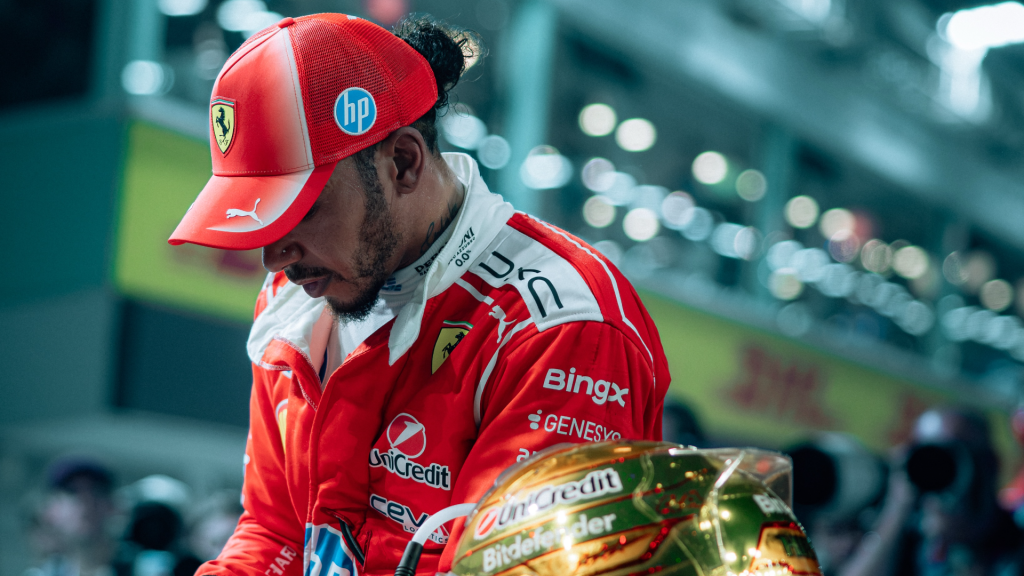
- Singapore provided the latest setback when Hamilton missed a pit call during the Virtual Safety Car, losing a potential podium after choosing a different tyre strategy.
- Frédéric Vasseur faces questions about Ferrari’s leadership, with Christian Horner linked to his position despite the team’s public support for its current boss.
Ferrari’s difficulties during the 2026 Formula 1 season have increasingly extended beyond the performance of its car. A series of disagreements involving Lewis Hamilton, Charles Leclerc and the team’s strategic decisions has raised questions about the level of trust within the Scuderia, with the Singapore Grand Prix providing another example of how quickly competitive opportunities can disappear.
The Italian team has shown enough pace to challenge for victories at different stages of the championship, but its results have frequently been undermined by operational problems, disagreements over race management and difficulties coordinating its two drivers.
Hamilton and Leclerc have both questioned Ferrari’s decisions publicly. On several occasions, their individual priorities have also conflicted, particularly when one driver has been faster than the other or when different tyre strategies have required cooperation.
The situation has become increasingly sensitive for team principal Frédéric Vasseur, whose position has attracted speculation following comments from former Red Bull boss Christian Horner about a possible future at Maranello.
Zandvoort exposed Ferrari’s team orders problem
One of the clearest examples of Ferrari’s internal difficulties came at the Dutch Grand Prix in August.
Hamilton found himself behind Leclerc while running on a different strategy and with fresher tyres, believing he had the pace to challenge the Mercedes drivers ahead.
The seven-time world champion repeatedly asked Ferrari to intervene, arguing that he was losing valuable time behind his team-mate.
“I’m faster than Charles. My tyres are better,” Hamilton told his race engineer.
Ferrari did not immediately instruct Leclerc to surrender the position, and the delay frustrated Hamilton.
The Briton subsequently questioned the team’s decision-making, comparing Ferrari’s approach with Mercedes, which had coordinated a position change between Kimi Antonelli and George Russell.
Hamilton argued that Mercedes had reacted immediately when its drivers were on different strategies, while Ferrari had allowed its own cars to compromise each other’s races.
The disagreement intensified when Leclerc delayed a planned pit stop, leaving Hamilton behind him for longer than expected.
Hamilton responded sarcastically over the radio, criticising the time lost.
After the race, Leclerc also questioned Ferrari’s strategy, although for different reasons.
The Monegasque believed the timing of his second pit stop had compromised his opportunity to challenge Mercedes later in the race.
“We need to talk about that kind of choice,” Leclerc said.
He also played down suggestions of a personal conflict with Hamilton, acknowledging that disagreements were inevitable when two competitive drivers shared a team.
“Sometimes it’s a team game,” Leclerc explained, adding that both drivers would experience frustration at different moments.
The episode demonstrated a recurring problem: Ferrari was struggling to reconcile the interests of its two drivers with the broader objective of maximising the team’s result.

Monza turned strategic frustration into an on-track confrontation
The tensions became more visible at the Italian Grand Prix in September.
Hamilton and Leclerc started alongside each other on the second row, but their battle through the opening corners nearly resulted in a collision.
Leclerc moved across Hamilton’s path, forcing the Briton onto the gravel and costing him several positions.
The incident produced another disagreement over responsibility.
Leclerc acknowledged that both drivers had pushed their battle too far, while Hamilton rejected the suggestion that responsibility should be shared equally.
The Briton subsequently insisted that the two maintained a good working relationship, but called for clearer rules governing how they raced each other.
Vasseur also acknowledged that Ferrari needed to review its internal racing guidelines, particularly after an incident that had compromised both drivers at the team’s home event.
The Ferrari boss later explained that he had spoken with Hamilton and Leclerc and that the situation had been addressed internally.
However, the confrontation reinforced concerns that the team’s two drivers were not always working towards the same immediate objective on track.
For a team attempting to challenge Mercedes and Red Bull, the risk of losing positions through internal competition added another problem to an already difficult championship campaign.
Sepang showed Hamilton no longer trusted every strategic call
The Bahrain Grand Prix at Sepang provided another example of Ferrari’s difficulties in coordinating race strategy.
With the track wet before the start, Hamilton requested intermediate tyres, but Ferrari chose slicks.
The decision initially proved costly, with the Briton losing substantial ground as he struggled for grip.
Ferrari subsequently instructed Hamilton to change tyres, but the seven-time champion refused, insisting that he wanted to remain on track until conditions improved.
Hamilton’s decision ultimately worked, allowing him to recover and finish third.
The result demonstrated that the driver could sometimes identify opportunities that the team’s strategic calculations had not fully anticipated.
However, the episode also exposed a communication problem.
A driver openly rejecting a strategic instruction is not necessarily evidence of a breakdown in trust, particularly in changing weather conditions. But combined with the disagreements at Zandvoort and Monza, it reinforced the impression that Ferrari’s decisions were being questioned repeatedly from inside the cockpit.
Leclerc also expressed dissatisfaction with the team’s strategic execution at Sepang.
The Monegasque argued that Ferrari needed to learn from Red Bull’s ability to make consistently effective decisions, particularly in difficult conditions.
The contrast was significant: Hamilton’s refusal to follow Ferrari’s preferred strategy produced a podium, while Leclerc questioned why the team had failed to respond as effectively as its rivals.

Singapore reversed the situation — and Hamilton accepted responsibility
The Singapore Grand Prix produced a different outcome.
Hamilton started third, behind Leclerc, and elected to begin the race on medium tyres rather than follow the strategy used by the leading competitors.
The choice was intended to create an opportunity through an alternative pit-stop sequence, particularly at a circuit where overtaking is difficult.
However, the medium tyres degraded more quickly than expected, forcing Hamilton to stop earlier than planned.
The Briton subsequently found himself behind Leclerc again, this time on a different tyre strategy.
Hamilton questioned the situation, but Ferrari did not immediately order the Monegasque to surrender his position.
The most significant incident came during a Virtual Safety Car period triggered by Lance Stroll’s retirement.
Leclerc entered the pits, while Hamilton remained on track despite Ferrari’s intention to bring both drivers in.
Initially, the decision appeared to be another questionable strategic call from the team.
However, Vasseur subsequently clarified that Ferrari had instructed Hamilton to stop.
The team principal explained that both drivers had been called into the pits, but Hamilton missed the entry.
That distinction is important because the incident was not simply another example of Ferrari refusing to support one of its drivers.
Hamilton later accepted responsibility for the decision and acknowledged that his strategy had failed.
“Today we didn’t get the result we were looking for, and that was on me,” he said.
The seven-time champion also apologised to Ferrari for the points lost, explaining that he had attempted a different approach because overtaking at Marina Bay was so difficult.
Leclerc finished second, while Hamilton dropped to sixth after struggling with tyre degradation during the closing stages.
The result denied Ferrari a potential double podium despite the competitive pace demonstrated by both cars.
Vasseur insists Ferrari has no internal crisis
The recurring incidents have increased scrutiny of Vasseur’s management, particularly his handling of two drivers accustomed to competing for victories.
The Frenchman has repeatedly defended Ferrari’s internal processes and rejected suggestions that the team is experiencing a leadership crisis.
Following the Monza confrontation, Vasseur explained that Hamilton and Leclerc had discussed their differences and that Ferrari had reinforced its expectations regarding cooperation.
He also emphasised the importance of allowing both drivers to compete while protecting the team’s interests.
The challenge is particularly difficult because neither Hamilton nor Leclerc is prepared to accept a permanently secondary role.
Both have demonstrated the pace to win races, and both expect Ferrari to provide the strategy and operational support necessary to maximise their results.
Ferrari’s difficulty is not necessarily that its drivers refuse to cooperate, but that its procedures have repeatedly failed to prevent their competing priorities from becoming public disputes.
Christian Horner speculation adds pressure on Vasseur
The situation has become more complicated by renewed speculation linking Christian Horner with Ferrari.
The former Red Bull team principal has expressed interest in returning to Formula 1 and has acknowledged that Ferrari represents a particularly attractive opportunity.
His comments intensified speculation about Vasseur’s future, particularly as Ferrari struggled to maintain its early-season competitiveness.
The pressure also reflects the expectations established when Vasseur took charge of the team, with Ferrari seeking to return to consistent championship contention.
However, Ferrari has publicly reaffirmed its confidence in Vasseur, with chairman John Elkann and chief executive Benedetto Vigna backing his leadership.
Hamilton and Leclerc have also defended their team principal.
Leclerc described Vasseur as an important figure in Ferrari’s development and criticised speculation about his future.
Hamilton similarly expressed support for the Frenchman, highlighting the progress made by the team despite its continuing competitive difficulties.
The public backing is significant because it contradicts suggestions that the drivers are actively seeking a change of leadership.
Nevertheless, the Horner speculation has created another source of external pressure at a time when Ferrari is attempting to improve its sporting and technical performance.
The possibility of a leadership change remains speculative, and no official decision to replace Vasseur has been announced.
Ferrari’s problem is bigger than one missed pit stop
The incidents at Zandvoort, Monza, Sepang and Singapore reveal different aspects of the same challenge.
At Zandvoort, Hamilton questioned why Ferrari had not coordinated its drivers more effectively.
At Monza, the two drivers came close to contact while fighting for position.
At Sepang, Hamilton rejected the team’s preferred strategy and ultimately benefited from his own decision, while Leclerc questioned Ferrari’s strategic execution.
At Singapore, Hamilton made the wrong strategic choice and missed a pit call, before publicly accepting responsibility.
These episodes do not establish that Hamilton and Leclerc distrust each other personally. They do, however, show a team still struggling to build consistent confidence in its strategic decisions, race management and internal coordination.
That distinction matters because Ferrari’s competitiveness depends on more than the outright performance of its car.
The Scuderia must also ensure that its drivers understand when they are free to compete, when cooperation is necessary and who has the final authority over strategic decisions.
With Mercedes leading the championship and Red Bull showing renewed competitiveness, Ferrari has little room to lose points through operational mistakes.
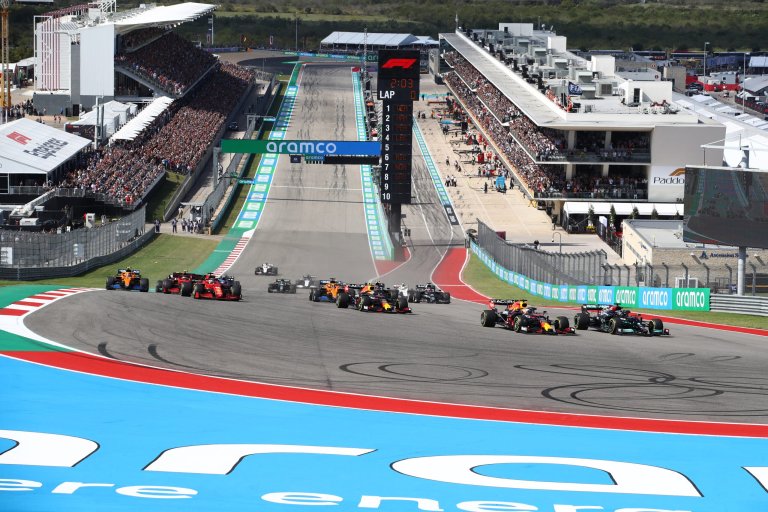
The United States Grand Prix at Austin, scheduled for October 23–25, will provide another opportunity to assess whether Ferrari has improved its coordination.
The full United States GP schedule and start times are available on GRANDE PRÊMIO.